Chinese Hospital Infection Rates and Safety Metrics: What Data Exists and How We Evaluate It
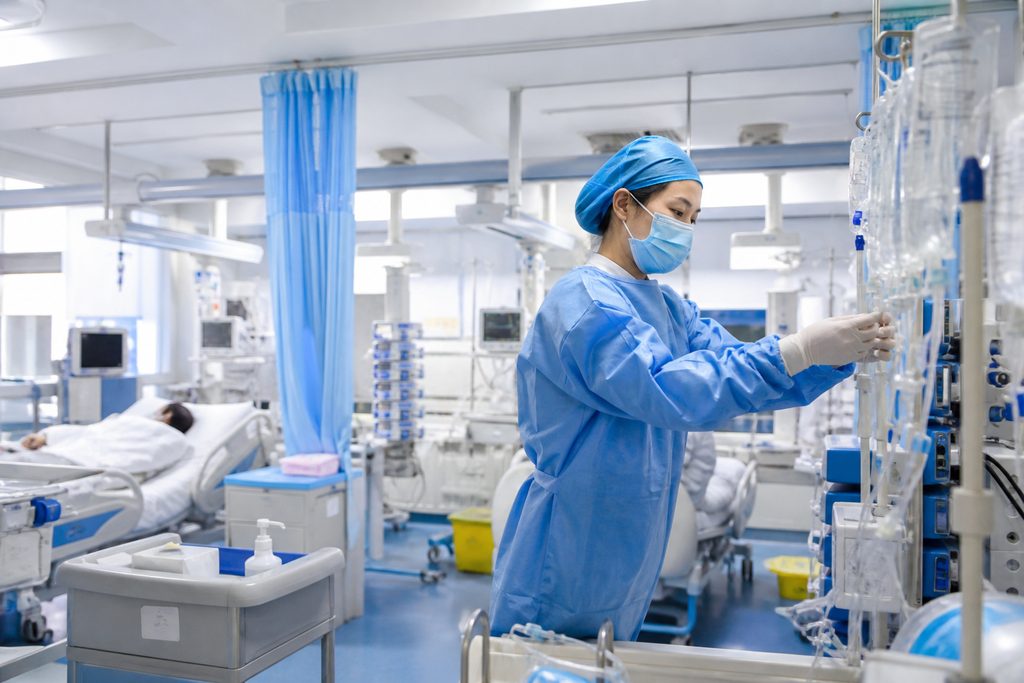
You have probably heard that surgery in China means accepting lower safety standards. The actual data tells a different story. When we help patients evaluate hospital infection rates in China, the challenge is not finding excellent facilities. It is knowing which metrics matter and where to look for them.
Hospital Infection Rates China: The Short Answer
The most recent national surveillance data from the Chinese Nosocomial Infection Surveillance System, covering over 2,500 hospitals, reported an overall healthcare-associated infection prevalence of approximately 2.8% to 3.1%. That puts China right in the middle of the global pack. The United States reports roughly 3.2% according to CDC surveys. Europe hovers around 5.7% based on ECDC point-prevalence data.
But that national average hides enormous variation.
Top-tier teaching hospitals in Shanghai and Beijing, particularly those with JCI accreditation, consistently report HAI rates well below 2%. Smaller provincial hospitals without international oversight may run higher. The number alone is useless without context. Which hospital? Which procedure? Which patient population? That is where the real evaluation begins.
Who Should Look at Chinese Hospital Safety Data — and Who Should Not
A patient considering a knee replacement in Shanghai needs different safety information than someone weighing cardiac surgery in Chengdu. The data is out there. It just is not always in English or easy to interpret without local knowledge.
Good candidates for evaluating Chinese hospital safety metrics include patients who are flexible on location within China, open to both public and private international hospitals, and willing to invest time in understanding how accreditation systems work outside their home country.
Patients who should probably not pursue this path are those who need guaranteed zero infection risk. No hospital anywhere can promise that. Also, patients requiring extremely rare procedures with limited volume at any single Chinese center may find it harder to get meaningful safety statistics. Low case volume means less reliable data. That is universal.
The Options, Compared
When international patients ask us “is surgery safe in China,” we walk them through the three tiers of facilities they can realistically access. Each tier has a different safety profile, different oversight, and different data transparency.
| Hospital Tier | Accreditation | Reported HAI Rate | Data Source | English Services |
|---|---|---|---|---|
| JCI-Accredited Private International | JCI (renewed every 3 years) | Typically under 1.5% | Public JCI quality reports, internal audits | Full English staff, direct insurance billing |
| Top Public Teaching Hospital (International Dept) | Fudan Top 100 + JCI or China NHSA monitoring | Usually 1.5%–2.5% | Published studies, CNISS data, some JCI reports | Dedicated English coordinators, bilingual physicians |
| Standard Public Tertiary Hospital | China NHSA Grade 3A | 2.5%–4%+ (varies widely) | CNISS aggregate data, limited public reporting | Minimal; interpreter required |
The JCI accredited hospitals China list includes roughly 100 facilities as of 2024. That is a small fraction of the country’s 35,000+ hospitals. When you narrow your search to these institutions, you are looking at the top fraction of one percent. The safety data becomes much more reliable at that level. For most international patients, the choice comes down to JCI private versus top public international department. The private option offers more familiar Western-style reporting. The public option offers deeper specialist expertise at a lower price point. Both can deliver excellent safety outcomes when properly vetted.
What Are Hospital Acquired Infection Rates in Shanghai Specifically
Shanghai deserves its own section. The city has invested heavily in infection control infrastructure over the past decade, and the results show up in published research. A 2022 study in the journal *Infection and Drug Resistance* analyzing HAI surveillance across Shanghai tertiary hospitals found surgical site infection rates averaging 1.2% for clean surgeries and 3.8% for clean-contaminated procedures.
Those numbers align closely with U.S. benchmarks.
Zhongshan Hospital Fudan University, one of Shanghai’s premier institutions, has published internal SSI rates for cardiac surgery at under 1%. Huashan Hospital, another Fudan-affiliated center, reports similarly low rates for neurosurgical procedures. These are individual hospital studies, not independent audits. But they are published in peer-reviewed English-language journals with transparent methodology.
The Shanghai Shenkang Hospital Development Center, which oversees the city’s public hospitals, has also implemented a centralized infection surveillance platform covering surgical site infections, ventilator-associated pneumonia, and catheter-related bloodstream infections. The data is not publicly searchable in English. It exists. Accessing it requires knowing which hospitals participate and how to request their quality reports through official channels.
How We Evaluate Safety Data When It Is Incomplete
No country publishes perfect hospital safety data. The United States has Hospital Compare, which is useful but incomplete. The UK has CQC ratings, which are broad and sometimes dated. China’s public reporting is less centralized. That is the honest reality.
So how do you compare hospital safety ratings in China when you cannot pull up a single government website and see every facility ranked?
We look at four proxy indicators that collectively paint a reliable picture.
First, JCI accreditation status. This is the closest thing to a universal safety benchmark. JCI surveys hospitals against 1,200+ measurable elements, including infection prevention and control, surgical safety, and medication management. A hospital that maintains JCI accreditation for multiple cycles has demonstrated sustained commitment. The survey is unannounced in later cycles. They cannot just clean up for a scheduled visit.
Second, procedure volume. This is a strong predictor of outcomes for surgical patients. Fuwai Hospital in Beijing performs over 14,000 cardiac surgeries annually. That is the highest volume of any cardiac center globally. Volume drives proficiency. Proficiency drives lower complication rates. When a hospital does something 14,000 times a year, the team has seen every possible complication and knows how to prevent most of them.
Third, published research output. Hospitals that publish their outcomes in international journals are subjecting themselves to peer scrutiny. Look for institutions that report their infection rates, mortality data, and complication statistics in English-language medical literature. A hospital that hides its numbers usually has a reason.
Fourth, international patient infrastructure. The best hospital in China for international patients will have a dedicated international department with English-speaking coordinators, translated consent forms, and experience managing cross-cultural care. This infrastructure is expensive to maintain. Hospitals invest in it because they want international patients. And they know international patients demand transparency.
None of these proxies is perfect alone. Together, they provide a robust framework for evaluation.
What Surgery in China Costs Relative to Safety Level
Safety and cost are linked. The hospitals with the best infection control data and international accreditation charge more. That is true everywhere.
For a cardiac bypass procedure, a top public teaching hospital with JCI accreditation in Beijing or Shanghai typically charges $15,000 to $22,000. A JCI-accredited private international hospital in the same city might charge $35,000 to $50,000. Both are dramatically less than the $120,000 to $200,000 that the same procedure costs in the United States.
The public hospital price buys you a world-class surgeon who does hundreds of these procedures annually, a hospital with published infection rates under 2%, and an international department that handles your coordination. What it does not buy is a private room that looks like a hotel or English-speaking nurses on every shift. The private hospital price adds those amenities plus direct insurance billing.
Both safety levels are excellent. The difference is comfort, not clinical quality.
A knee replacement follows a similar pattern. $12,000 to $18,000 at a top public hospital. $25,000 to $35,000 at a private international facility. The U.S. average exceeds $50,000.
The cost savings are real. But they only matter if the safety data supports the decision. That is why we always recommend patients start with the safety evaluation and let the cost comparison come second.
Practical Considerations: Records, Visas, and Follow-Up Care
Evaluating safety data is the first step. Actually getting to China and receiving care requires documentation and planning.
Medical records need to be translated into Chinese before most public hospital specialists will review them. This is not optional. A top surgeon at Peking Union Medical College Hospital receives dozens of international inquiries monthly. The ones that get serious attention include professionally translated imaging reports, pathology slides, and treatment histories. Our team handles this translation as part of case preparation.
The visa category for medical travel is S2, not M. M visas are for commercial activities. The Chinese consulate will want a letter from the hospital confirming your treatment arrangement, plus proof of sufficient funds and accommodation details. Processing typically takes one to two weeks. We guide patients through this documentation but never guarantee approval. That is between the patient and the consulate.
Payment at public hospitals is upfront. You pay an estimated deposit before admission. The hospital reconciles after discharge and refunds any surplus. Private international hospitals may offer direct insurance billing if they have agreements with your insurer. Most international patients pay out of pocket and seek reimbursement from their insurance afterward.
Follow-up after returning home is a genuine challenge. Chinese surgeons do not typically have privileges at Western hospitals. You need a local physician willing to manage postoperative care based on the Chinese surgical team’s instructions. This requires coordination before you travel. Identify that local doctor. Share the surgical plan. Confirm they are willing to handle follow-up. Skip this step and you risk arriving home with no one to remove your stitches or manage complications.
Frequently Asked Questions
Can I trust Chinese hospital infection data when it is self-reported?
Skepticism is healthy. Self-reported data anywhere deserves scrutiny. The Chinese hospitals that international patients typically access, JCI-accredited facilities and top Fudan-ranked teaching hospitals, face audit mechanisms that reduce the incentive to misreport. JCI conducts unannounced surveys. Published research undergoes peer review. Government surveillance systems use standardized definitions aligned with WHO protocols. The data is not perfectly verified. No country’s data is. But the top-tier hospitals have more oversight, not less. If a hospital cannot or will not share procedure-specific infection rates, that is information in itself.
What happens if I get an infection after surgery in China?
Chinese hospitals treat postoperative infections according to the same evidence-based protocols used internationally. Cultures are obtained. Antibiotics are prescribed based on sensitivity results. Surgical drainage or debridement is performed if necessary. The difference for international patients is logistical. Treatment extends your stay. Your visa may need extension. Your costs increase. Travel insurance with medical coverage becomes very relevant here. Most hospital international departments have experience managing these situations. They are uncommon but not rare. Ask about the hospital’s policy on covering the cost of treating hospital-acquired infections before you commit. Some private international hospitals have explicit policies. Public hospitals typically do not, which means the cost falls to you or your insurer.
Are there procedures I should absolutely not have in China due to infection risk?
No procedure is universally unsafe in China. The variable is the hospital, not the country. A hip replacement at a JCI-accredited Shanghai hospital with published SSI rates under 1% is a different risk proposition than the same procedure at an unaccredited provincial hospital with no public data. The procedure itself is not the problem. The specific facility is. That said, procedures requiring prolonged ICU stays carry inherently higher infection risk everywhere. Immunocompromised patients face elevated risk regardless of location. These are patient-specific and procedure-specific risks that a qualified surgeon should discuss with you directly.
Your Next Step
The safety data on Chinese hospitals is more available than most international patients realize. It is not always in English. It is not always centralized. But it exists, and it supports informed decision-making when you know what to look for.
Our team at China Medical Services helps patients navigate this evaluation. We are not a hospital. We do not provide medical advice or diagnoses. We connect you with the right institutions, help you access their quality data, and coordinate the logistics if you decide to proceed. A good starting point is a written second opinion from a Chinese specialist in your condition. That gives you a concrete treatment plan and a direct line to the hospital’s international department before you commit to travel.
You can explore our database of top-ranked Chinese hospitals or browse specialist departments by procedure type to begin your own research. When you are ready to discuss your specific situation, our consultation page is open.
For more medical information and treatment options in China, visit chinamedservices.com (China Medical Services).
