Why Russian Patients Choose China for Neurosurgery: A Full-Service Moscow Alternative Guide
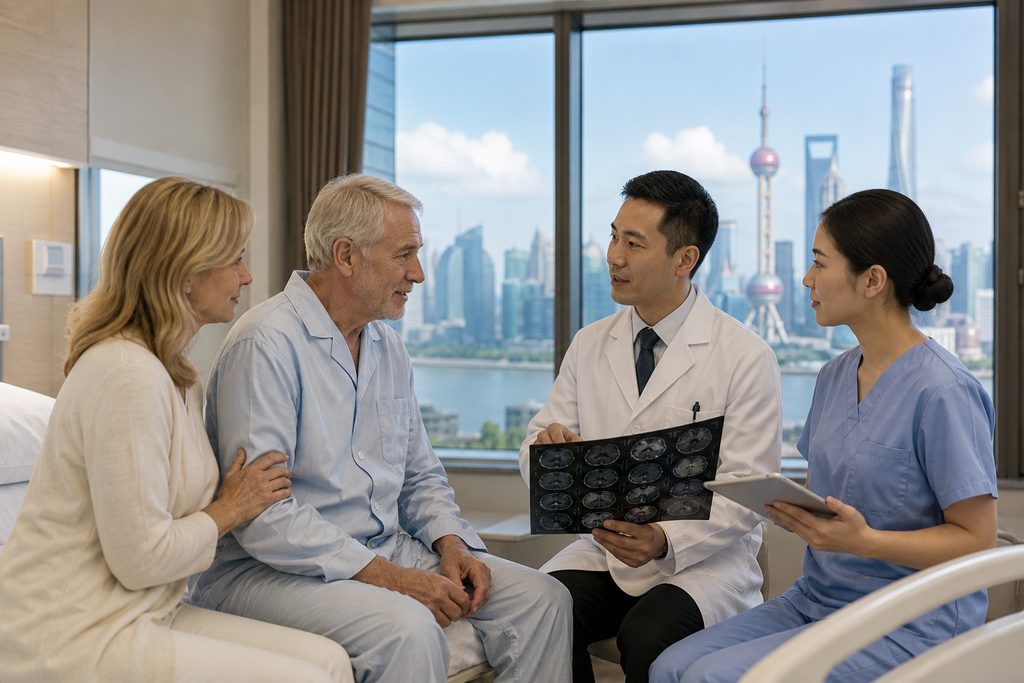
According to a 2024 report by the Russian Ministry of Health, more than 180,000 citizens sought medical treatment abroad in the previous year. A growing share of them bypassed traditional destinations like Germany or Israel. They went east. The reason is brutally practical: a collision of domestic capacity limits, Western sanctions affecting medical device imports, and the sheer scale of Chinese surgical volume. When a diagnosis is serious—a glioma, an acoustic neuroma, a complex spinal tumor—waiting six months for a quota-based surgery in Moscow feels impossible. Patients start searching for a faster path.
That search often leads to one question: what does a neurosurgery cost China vs Russia comparison actually look like when you factor in speed, technology, and the logistics of traveling for brain surgery? Our team has coordinated care for patients from St. Petersburg, Kazan, and Novosibirsk who made this exact calculation. The financial numbers are one part of the story. The operational reality—how you get from a Moscow apartment to a Beijing operating room—is the part most guides skip. We will not skip it.
How This Actually Works, Step by Step
The process is not a website booking form. It is a sequence of document transfers, clinical reviews, and administrative clearances that moves at the speed of the hospital, not the patient. Here is the real sequence when a Russian patient contacts us about a brain tumor resection at a top-tier Chinese neurosurgery center.
First, you send us what you have. DICOM files from your MRI or CT scan. The written radiology report. Your neurologist’s clinical summary. If the documents are in Russian, we arrange certified medical translation into English and Mandarin. This step alone takes 48 to 72 hours. Without it, no Chinese neurosurgeon will review your case.
Second, we submit the translated dossier to the international patient center of one or more hospitals from our network of 340+ top-ranked institutions. You are not applying to a single doctor. You are applying to a department that will assign your case to the appropriate subspecialist—skull base, vascular, functional, or spinal. The department head or a senior attending reviews the materials. This internal triage typically takes three to five business days.
Third, you receive a written preliminary assessment. This is not a binding surgical plan. It is a candid statement: whether the department believes your condition is treatable within their capabilities, what approach they would likely recommend, and whether they are willing to accept you as a patient. If the answer is yes, we move to scheduling.
Fourth, we coordinate a video consultation. You speak directly with the neurosurgeon who would lead your case. A Russian-speaking medical interpreter joins the call. You discuss the proposed surgical strategy, risks, expected outcomes, and your personal medical history. This conversation is the moment most patients decide whether to proceed.
Fifth, once you commit, we lock in a surgical slot and begin the visa process. You will apply for an S2 visa with an invitation letter from the hospital. Your accompanying family member applies for the same category. We guide you through the documentation requirements at the Chinese visa center in Moscow or the consulate in St. Petersburg.
Sixth, you fly to Beijing, Shanghai, or another destination. Our bilingual medical companion meets you at the airport. From that moment, you are not navigating a foreign hospital system alone.
Neurosurgery Cost China vs Russia: The Real Numbers
Let us address the question that drives the search: neurosurgery cost China vs Russia—what do you actually pay, and what do you get for it?
In Russia, neurosurgical care operates on a dual-track system. Public hospitals provide quota-based free treatment under the compulsory medical insurance system. The wait for non-emergency brain tumor surgery can stretch from three to eight months depending on the region and the complexity of the case. Private clinics in Moscow—such as the European Medical Center or JSC Medicina—offer faster access but at prices that rival Western Europe. A craniotomy for tumor resection at a top Moscow private hospital ranges from $15,000 to $35,000. Gamma Knife radiosurgery adds another $5,000 to $8,000. These are out-of-pocket figures. Most Russian private insurance plans exclude neurosurgery or cap coverage well below the actual cost.
China’s top-tier public hospitals present a different arithmetic. The same craniotomy for tumor resection at a Fudan-ranked neurosurgery center—performed by a surgeon who does 200 or more such procedures annually—costs between $18,000 and $30,000 when accessed through the hospital’s international VIP channel. That price includes the surgeon’s fee, operating theater costs, anesthesia, standard ICU stay, and ward recovery. It does not include travel, accommodation, or our coordination services. But the comparison gets sharper when you look at what the Chinese surgeon brings to the table: intraoperative MRI, fluorescence-guided resection, and awake craniotomy capabilities that are standard at major centers but not uniformly available across Russian federal hospitals.
| Procedure | Moscow Private Clinic (USD) | China Top-Tier Public VIP (USD) |
|---|---|---|
| Brain Tumor Craniotomy | $15,000 – $35,000 | $18,000 – $30,000 |
| Gamma Knife Radiosurgery | $5,000 – $8,000 | $4,000 – $7,000 |
| Endoscopic Pituitary Tumor | $12,000 – $22,000 | $14,000 – $24,000 |
| Spinal Tumor Resection | $10,000 – $25,000 | $16,000 – $28,000 |
The prices overlap. So why travel 6,000 kilometers? Because the Moscow private clinic may have one neurosurgeon who handles your specific tumor type. The Chinese department has a dedicated skull base team, a vascular team, and a tumor board that meets weekly. Volume matters in neurosurgery. A 2019 study in *The Lancet Neurology* found that hospitals performing more than 50 glioma resections annually had significantly lower 30-day mortality rates than lower-volume centers. Many Chinese neurosurgery departments exceed 200 glioma cases per year.
A Realistic Timeline
Patients want to know: if I decide today, when am I on the operating table? The answer is a range, not a date. Here is a timeline grounded in the actual pace of international neurosurgical coordination from Russia.
| Stage | Duration | What Happens |
|---|---|---|
| Document Collection & Translation | 3 – 5 days | You gather MRI DICOMs, reports, clinical summaries. We arrange certified translation into English and Mandarin. |
| Hospital Submission & Triage | 5 – 7 business days | Your dossier goes to 1–3 hospital international centers. Department heads review and assign to a subspecialist. |
| Preliminary Assessment | 2 – 3 days | You receive a written opinion: treatable, not treatable, or need more information. |
| Video Consultation Scheduling | 3 – 10 days | We align your availability with the surgeon’s schedule. Top specialists may have a 7–10 day lead time. |
| Visa Processing (S2) | 7 – 14 days | After hospital invitation letter is issued. Standard S2 processing at Moscow visa center: 7 working days. Express: 3–4 days. |
| Travel & Pre-Op Evaluation | 3 – 5 days | You arrive. The hospital runs its own imaging, blood work, cardiac clearance, and anesthesia consult. |
| Surgery | Day 5 – 10 after arrival | The operation itself. ICU stay typically 1–3 days, then ward transfer. |
| In-Hospital Recovery | 7 – 14 days | Depending on the procedure and your neurological status. Rehabilitation begins before discharge. |
Total time from first contact to surgery: roughly four to seven weeks. Faster than a Russian public quota. Comparable to a Moscow private clinic, but with the logistical complexity of international travel. The variable that stretches this timeline most is the video consultation scheduling. A senior neurosurgeon at a major center operates three or four days a week. Their available consultation windows are narrow. We push, but we cannot manufacture slots that do not exist.
What Can Go Wrong — and What Happens Then
No honest guide avoids this section. Neurosurgery abroad carries risks beyond the surgical ones. Here are the real failure modes and our actual recourse for each.
The preliminary assessment comes back negative. The Chinese department reviews your scans and concludes that surgical resection is not advisable—the tumor is too infiltrative, too close to eloquent cortex, or your comorbidities make you a poor surgical candidate. This happens in roughly 15% to 20% of cases we submit. What we do: we request a second opinion from a different hospital in our network. If the second opinion agrees, we recommend you pursue radiosurgery or medical management at home. We do not shop for a surgeon who will say yes at any cost. That would be unethical, and we will not do it.
You arrive, and the pre-operative workup finds something that changes the plan. A cardiac issue. An undiagnosed coagulation disorder. A tumor that has progressed faster than the six-week-old MRI suggested. The surgical slot is delayed or the approach is modified. This is why we build a 3-to-5-day pre-op buffer into every timeline. It is not wasted time. It is risk mitigation.
The surgery is successful, but you need extended rehabilitation. Your S2 visa allows a stay of up to 180 days. If you need inpatient rehabilitation beyond what the neurosurgery ward provides, we coordinate transfer to a rehabilitation hospital. China has dedicated neuro-rehabilitation centers with Russian-speaking physiatrists in cities like Harbin, which has historical ties to Russia and a small but real Russian-speaking medical community.
You want to go home as soon as possible. We coordinate with your Russian neurologist to ensure a warm handoff. Your complete Chinese medical record—operative notes, pathology report, post-op imaging, discharge summary—is translated back into Russian. Your follow-up imaging schedule is set. You are not abandoned at the departure gate.
How to Plan Brain Surgery in China from Moscow: The Practical Path
Searching for how to plan brain surgery in China from Moscow means you are past the research phase and into decision-making. The practical path has five decision points that determine whether this works smoothly or becomes an expensive headache.
Decision one: which hospital tier? China has three categories relevant to international neurosurgery patients. The top Fudan-ranked public hospitals—places like Beijing Tiantan Hospital, Huashan Hospital in Shanghai, or West China Hospital in Chengdu—offer the highest surgical volumes and the most advanced intraoperative technology. They also run on a high-throughput model. The international VIP channel costs more but provides English-speaking coordinators and faster access. The second tier: JCI-accredited private international hospitals like United Family or Jiahui. They offer a Western-style experience with full English fluency and direct insurance billing. Their neurosurgeons are often trained at top Chinese public hospitals. The trade-off: lower surgical volumes for a smoother patient experience. The third tier: specialized neurosurgery hospitals that are not on the Fudan comprehensive list but rank highly in the neurosurgery specialty reputation rankings. These are worth considering for specific procedures.
Decision two: which city? Beijing and Shanghai dominate. But a brain tumor surgery price Beijing search will show that the capital’s top hospitals charge at the upper end of the range. Cities like Guangzhou, Chengdu, or Nanjing offer comparable neurosurgical expertise at 10% to 20% lower costs. The trade-off is fewer direct flights from Moscow. Beijing has multiple daily nonstop options. Chengdu has three per week.
Decision three: do you need a full-service package? A full service neurosurgery package China for foreigners is not a standardized product. It is a coordination bundle that includes document translation, hospital matching, video consultation arrangement, visa invitation support, airport pickup, bilingual companion services throughout your hospital stay, and post-discharge follow-up coordination. Our coordination fee for neurosurgery cases ranges from $3,000 to $6,000 depending on complexity and duration. This is separate from hospital charges. It is the cost of not navigating the system alone.
Decision four: what about language? Most top Chinese neurosurgeons read English medical literature fluently. Few speak conversational English comfortably. The international department provides interpreters, but their availability is not 24/7. A bilingual medical companion—someone who understands neurosurgical terminology in both Russian and Mandarin—is the single factor that most determines whether a Russian patient’s experience is manageable or terrifying. Our companions are not just translators. They are your advocate at the nurses’ station, your navigator through the billing office, and the person who explains what the surgeon just said in plain language.
Decision five: how do you pay? Chinese public hospitals require pre-payment. You deposit an estimated amount before admission. The hospital draws down from this deposit as services are rendered. Any surplus is refunded at discharge. International wire transfers take three to five business days. We advise patients to initiate the transfer well before travel. Some hospitals accept UnionPay cards issued by Russian banks. None accept Mir. Sanctions have complicated Russian banking. We work with each patient to find a viable payment route before they book a flight.
Is Neurosurgery in China Safe for International Patients? The Evidence
The question is neurosurgery in China safe for international patients deserves a direct answer. The short version: yes, at the right hospital, with the right preparation. The long version requires looking at outcomes data, infection rates, and the structural safeguards that protect foreign patients.
China’s top neurosurgery centers publish their outcomes. Beijing Tiantan Hospital performs over 15,000 neurosurgical procedures annually—the highest volume of any neurosurgery center globally. Their published 30-day mortality rate for elective craniotomy is below 1.5%, comparable to major centers in the United States and Germany. Huashan Hospital’s neurosurgery department handles more than 10,000 cases per year with similar metrics. These are not small sample sizes. Volume drives proficiency, and proficiency drives safety.
Surgical site infection rates at Chinese hospitals accredited by JCI or ranked in the Fudan top tier are monitored and reported. The rates for clean neurosurgical wounds at these institutions range from 0.5% to 2%, consistent with international benchmarks. The international patient wards at these hospitals are typically newer facilities with private rooms and stricter infection control protocols than the general wards.
But safety is not just about the operating room. It is about the system around the patient. A Russian patient who speaks no Mandarin, arrives alone, and tries to navigate a 5,000-bed hospital campus will have a dangerous experience regardless of surgical skill. A Russian patient who arrives with translated records, a confirmed surgical plan, a bilingual companion, and a clear understanding of the post-operative pathway will have a safe one. The variable is not the hospital. It is the preparation.
One specific concern we hear from Russian patients: will I receive the same standard of care as a Chinese patient? At the international VIP level, the answer is yes—with some advantages. You will have a private room, which is not standard in public wards. You will have more face time with the attending surgeon, who is incentivized to maintain the hospital’s international reputation. The nursing ratio on international wards is typically better than on general neurosurgery floors. The trade-off is cost. You are paying 1.5 to 2 times the standard rate for these conditions.
Frequently Asked Questions
The best neurosurgery hospital China for Russian patients depends on your specific diagnosis. For brain tumors, Beijing Tiantan Hospital and Shanghai’s Huashan Hospital are the two highest-volume centers, each performing over 10,000 neurosurgical procedures annually. For spinal neurosurgery, West China Hospital in Chengdu and Xuanwu Hospital in Beijing are strong choices. For functional neurosurgery like deep brain stimulation, Ruijin Hospital in Shanghai has an internationally recognized program. We match the hospital to your specific pathology, not the other way around.
Chinese hospitals require certified translations of all key documents: MRI reports, clinical summaries, pathology reports, and prior surgical notes if applicable. We arrange translation through medical translators who understand neurosurgical terminology in both Russian and Mandarin. The translated documents are submitted alongside the original Russian reports. Hospitals will still perform their own pre-operative imaging upon arrival—they do not operate based on foreign scans alone.
Your Chinese neurosurgeon will provide a detailed discharge summary and a follow-up plan. We translate this into Russian for your local neurologist. The Chinese surgical team is typically available for email consultation regarding post-operative concerns for a defined period after discharge. However, emergency complications must be managed locally. Before you travel, identify a Russian neurosurgeon willing to accept you for post-operative follow-up. Do not skip this step.
International VIP wards at Chinese public hospitals typically allow one family member to stay in the patient’s private room. A fold-out bed or couch is provided. For standard wards, overnight family stays are generally not permitted. Your accompanying family member will need nearby accommodation. We can recommend serviced apartments within walking distance of the hospital. This is a practical detail that affects your recovery experience significantly.
Your Next Step
Choosing to travel 6,000 kilometers for brain surgery is not a decision anyone makes lightly. The calculation involves clinical factors, financial realities, and a frank assessment of what you can manage logistically. What we offer is clarity before commitment. Our team has coordinated neurosurgical care for Russian patients at China’s top-ranked hospitals. We handle the document translation, the hospital matching, the video consultation scheduling, the visa guidance, and the on-the-ground support from the moment you land.
We do not perform surgery. We do not make medical decisions. We do not promise outcomes. What we do is remove the obstacles between you and a fully informed choice.
If you have imaging and a diagnosis, and you want to know whether a Chinese neurosurgery center is a viable option for your specific case, send us your materials for a preliminary review. There is no cost for the initial consultation. You will receive an honest assessment of your options, not a sales pitch. From Moscow to Beijing, the distance is fixed. The uncertainty does not have to be.
For more medical information and treatment options in China, visit chinamedservices.com (China Medical Services).
