Why Nepali Patients Choose China for Complex Orthopedic Surgery: A Complete Guide
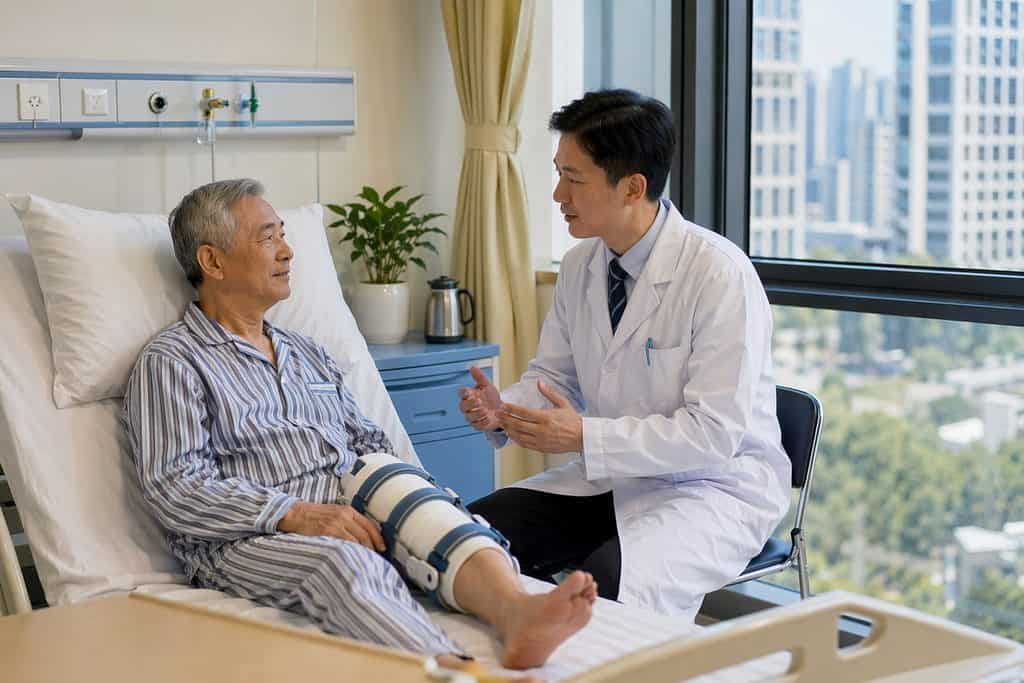
According to data from China’s National Health Commission, international patient arrivals for orthopedic procedures grew by over 40% between 2019 and 2024. For Nepali families facing a diagnosis that requires advanced bone surgery, the math becomes intensely personal. A total hip replacement that costs $35,000 in Delhi or $45,000 in Bangkok can be performed at a Fudan-ranked Chinese hospital for $8,000 to $15,000. The complex orthopedic surgery cost China offers isn’t just lower — it comes with surgical volumes that top hospitals in the region simply cannot match.
But cost is only part of the equation. The real question Nepali patients ask us is harder: Can I actually get there, communicate with the surgeon, and recover safely — without someone exploiting my situation? This guide answers that directly. No vague promises. Just how the pathway works, where the risks hide, and what a realistic timeline looks like when you travel from Kathmandu to Shanghai or Beijing for a knee, hip, or spine procedure.
How This Actually Works, Step by Step
The process starts before you book a flight. Most Nepali patients we work with already have imaging — X-rays, MRIs, CT scans — done locally. That’s step one. You send those records, along with a brief medical history summary, to a Chinese hospital’s international department or a coordination team like ours.
What happens next is not an instant surgery date. A specialist reviews your films and writes an assessment. This typically takes three to five working days. The report tells you whether your case is suitable for treatment in China, what technique the surgeon recommends, and a preliminary cost range. You get this in English.
If you agree to proceed, the hospital’s international office issues a treatment invitation letter. That document is essential — you cannot apply for the correct visa without it. You then submit it with your passport to the Chinese Visa Application Service Centre in Kathmandu. Processing takes four to seven working days for an S2 visa, which is the short-stay category used for private medical treatment. Your accompanying family member applies under the same category.
Once the visa is stamped, you confirm dates with the hospital. You fly in. You attend the in-person consultation — this is mandatory at all public hospitals, even if you had a remote assessment. The surgeon examines you physically, reviews the imaging again, and finalizes the surgical plan. Admission usually follows within two to five days, depending on bed availability and pre-operative clearance.
Post-surgery, the inpatient stay varies. For a total hip replacement, expect five to seven days. For complex spinal fusion, ten to fourteen days. After discharge, you need to remain in the city for at least one follow-up visit and suture removal before flying home. Most Nepali patients plan for a total stay of three to five weeks.
Why Nepali Patients Are Looking North, Not Just South
For decades, the default for Nepali families needing surgery beyond local capacity was India. That remains a valid option. But three shifts have changed the calculation.
First, the cost gap has narrowed dramatically. A knee replacement in a reputable Indian private hospital now runs $6,000 to $10,000 for international patients. At a Fudan-ranked Chinese public hospital’s international wing, the same procedure ranges from $7,000 to $14,000 — comparable, and sometimes lower when implant quality is matched. The complex orthopedic surgery cost China offers becomes especially competitive for procedures like revision joint replacements or multi-level spinal fusions, where Indian quotes can spike unpredictably.
Second, surgical volume matters. China’s top orthopedic centers perform thousands of joint replacements annually. A single campus like Shanghai Sixth People’s Hospital handles over 20,000 orthopedic surgeries each year. Volume correlates with complication rates — studies published in The Journal of Bone and Joint Surgery consistently show that higher-volume centers have lower rates of infection, dislocation, and revision. For a Nepali patient traveling abroad, choosing a center that does your exact procedure hundreds of times a year is not a luxury. It’s risk management.
Third, implant access has changed. Chinese hospitals now routinely stock the same FDA-approved and CE-marked implants used in Western operating rooms — Stryker, Zimmer Biomet, DePuy Synthes. A decade ago, this was not the case. Today, you can verify the implant brand and model before consenting to surgery. That transparency was hard to get in the region even five years ago.
A Realistic Timeline
Here is what a typical pathway looks like for a Nepali patient seeking knee or hip replacement in China. This assumes no major medical complications and prompt document submission at every stage.
| Stage | What Happens | Duration |
|---|---|---|
| Week 1 | You submit medical records and imaging via email or secure upload. Translation into Chinese begins if needed. | 2–3 days for document preparation |
| Week 2 | Specialist reviews your case remotely. Written assessment and preliminary cost estimate delivered in English. | 3–5 working days |
| Week 3 | You accept the plan. Hospital issues treatment invitation letter. You apply for S2 visa in Kathmandu. | 5–10 days for invitation letter + visa processing |
| Week 4 | Visa approved. You confirm travel dates and book flights. Accommodation arranged near the hospital. | 3–5 days coordination |
| Day 1 in China | Arrival. Rest. Next morning: in-person consultation with the surgeon. Physical exam, review of imaging, surgical consent. | 1–2 days |
| Day 3–5 | Pre-operative tests: blood work, ECG, chest X-ray, anesthesia clearance. Surgery scheduled. | 2–3 days |
| Surgery day | Procedure performed. Immediate post-op recovery in PACU. | 1 day |
| Post-op week 1 | Inpatient rehabilitation begins. Physiotherapy twice daily. Pain management. Wound care. | 5–7 days inpatient |
| Post-op week 2–3 | Discharged to nearby accommodation. Daily outpatient physiotherapy. Suture removal around day 14. | 7–14 days |
| Week 5–6 | Final follow-up with surgeon. Clearance to fly. Return to Kathmandu. | 1 day final consult |
Total time away from Nepal: typically four to six weeks. The biggest variable is the visa invitation letter — some hospitals issue it within two days, others take over a week. Plan for the slower end.
What Can Go Wrong — and What Happens Then
No honest guide skips this section. Things do not always go smoothly. Here are the real failure modes and what recourse exists.
The surgeon changes after you arrive. This happens more often than hospitals admit. The specialist who reviewed your case remotely may be unavailable on your admission date due to a conference, emergency, or scheduling conflict. Another surgeon in the same department takes over. Legally, the hospital can do this unless your contract names a specific surgeon. If having a particular specialist is non-negotiable for you, confirm in writing before travel that your case is assigned to that person — and understand that this may increase the coordination fee and reduce scheduling flexibility.
Intraoperative findings change the plan. A pre-op MRI might suggest a straightforward total knee replacement. But once the surgeon opens the joint, they find more bone loss than expected, requiring a more constrained implant or bone grafting. This extends surgery time, increases the implant cost, and lengthens recovery. The hospital will inform your family in the waiting area and seek consent for the change. The final bill will be higher than the estimate. You should budget a 20–30% contingency above the quoted price for exactly this scenario.
Infection or complication. The infection rate for joint replacement at top Chinese orthopedic centers is below 1%, consistent with international benchmarks. But it is not zero. If a surgical site infection develops, treatment may require extended IV antibiotics, additional surgery for debridement, and a prolonged stay. Your travel insurance or medical coverage needs to account for this possibility. Check whether your policy covers complications arising from elective surgery abroad — many standard travel policies explicitly exclude this.
Visa delay or rejection. The S2 visa application is generally straightforward with a proper treatment invitation letter. But consular officers have discretion. Incomplete documentation, discrepancies between your stated purpose and supporting letters, or broader geopolitical factors can cause delays or refusals. There is no appeal mechanism that resolves quickly enough to salvage a scheduled surgery date. The practical mitigation is to apply as early as possible and to have the hospital’s international office review your application package before submission.
How to Evaluate a Hospital When You’re 2,000 Kilometers Away
You cannot tour the facility or meet the surgeon before committing. So you evaluate differently. Here are the signals that separate reliable centers from risky ones.
Look at case volume first. Ask directly: “How many of this exact procedure did your department perform last year?” A credible answer is specific — “342 primary total hip replacements in 2024” — not “many” or “we are very experienced.” If the hospital appears on the Fudan University Hospital Ranking for orthopedics, that is a meaningful signal. The ranking is based on peer reputation and clinical output, not advertising budgets. You can verify this independently on the Fudan ranking website. Our orthopedics department directory lists Fudan-ranked hospitals with their specialty strengths.
Ask about the implant. “Which brand and model of prosthesis do you plan to use, and why this one for my case?” A surgeon who can explain their implant choice in plain terms — referencing your age, bone quality, and activity level — is thinking about your outcome. A surgeon who says “we use the best one” without specifics is not.
Check the rehabilitation protocol. Orthopedic surgery succeeds or fails as much in the physiotherapy gym as in the operating theater. Ask: “How many physiotherapy sessions per day will I receive as an inpatient? What is the outpatient rehab schedule after discharge? Will the physiotherapist speak English?” If the answers are vague, that is a problem. China’s top orthopedic hospitals have dedicated rehabilitation wards with structured daily protocols. If the hospital cannot describe theirs, consider that a red flag.
The question is China good for orthopedic surgery is too broad. The right question is: is this specific department good for my specific procedure? A hospital that excels at sports medicine may be mediocre at complex trauma reconstruction. The Fudan ranking breaks orthopedics into sub-specialties for exactly this reason. Do not choose a hospital by brand name alone. Choose by sub-specialty volume.
Practical Considerations: Records, Visas, Payment, and Follow-Up in Kathmandu
Medical records need to be in English or Chinese. If your imaging reports are in Nepali, get them translated before sending. DICOM files — the raw digital format from MRI and CT scans — are preferred over printed films. Most diagnostic centers in Kathmandu can provide these on a CD or USB drive. Upload them via a secure file transfer service; email attachments over 25 MB will bounce.
The visa category is S2, not M. This is non-negotiable. An M visa is for commercial and trade activities. Arriving on an M visa for surgery can result in denied entry or complications with hospital registration. The S2 application requires a treatment invitation letter from the admitting hospital, a completed visa form, a recent passport photo, and your passport with at least six months validity. Processing time at the Chinese Visa Application Service Centre in Kathmandu is typically four to seven working days. Expedited service may be available for an additional fee.
Payment is almost always required upfront. Chinese public hospitals, including their international wings, operate on a deposit system. You pay a deposit upon admission — typically 50–80% of the estimated total — and settle the balance before discharge. Payment methods accepted usually include UnionPay, major credit cards (Visa, Mastercard), and sometimes wire transfer. Cash in RMB is also accepted but impractical for large amounts. Confirm the accepted payment methods with the hospital’s international office before you travel. If you are asking how much is hip replacement in China for foreigners, the answer ranges from $8,000 to $15,000 for the hospital portion, but the deposit system means you need that amount available immediately, not after insurance reimbursement.
Insurance rarely pays upfront. Most international insurance plans work on a reimbursement model: you pay the hospital, get detailed invoices and medical reports, and submit a claim. Chinese public hospitals do not typically do direct billing with foreign insurers. Private international hospitals like United Family or Jiahui in Shanghai do offer direct billing, but their surgical fees are two to three times higher — a hip replacement at a private international hospital in Shanghai can run $25,000 to $40,000. You are trading convenience against cost. For most Nepali patients, the public hospital international wing is the practical choice, and that means paying first and claiming later.
Follow-up in Nepal requires planning. Before you leave China, get a detailed discharge summary in English, a copy of the operative note, the implant sticker, and a rehabilitation protocol. Identify an orthopedic surgeon in Kathmandu who can see you for follow-up visits at six weeks, three months, and one year. Share the Chinese surgical records with them before your first visit. If a complication arises after you return, having a local surgeon who already knows your case makes all the difference. Some patients arrange a video follow-up with their Chinese surgeon at the three-month mark. This is available through most international departments for a fee — typically $100 to $300.
Frequently Asked Questions
Some hospitals and medical travel coordinators offer bundled packages. These typically include the surgery, inpatient stay, a specified number of physiotherapy sessions, and basic accommodation nearby. Flights are almost never included. A total knee replacement package for international patients at a Fudan-ranked public hospital generally ranges from $10,000 to $16,000, excluding airfare. Read the package inclusions carefully — some exclude the implant cost, which can add $2,000 to $5,000. If you are looking to book knee surgery China medical package, ask for a line-item breakdown before committing. The package price should clearly state what is and is not covered.
Shanghai Sixth People’s Hospital handles the highest orthopedic surgical volume in the city — over 20,000 procedures annually — and is consistently ranked in the top tier by Fudan for orthopedics. Shanghai Ninth People’s Hospital is another top-ranked center, particularly strong in joint reconstruction and bone tumor surgery. For international patients, both have dedicated international medical centers with English-speaking staff. The best hospital for bone surgery in Shanghai depends on your specific condition — Sixth for trauma and microsurgery, Ninth for joint replacement and complex reconstruction. We help match the hospital to the case, not the other way around.
Yes. Several top Chinese hospitals have spine surgery departments with English-speaking coordinators. Peking University Third Hospital is widely considered the leading spine center in China, particularly for cervical and complex deformity cases. Xuanwu Hospital in Beijing and Changzheng Hospital in Shanghai are also highly ranked for spine. The international departments at these hospitals employ English-speaking staff who handle admission, consent, and discharge coordination. For patients seeking spine surgery abroad with English translator China, the key is confirming that a bilingual coordinator will be present not just at admission, but during the surgeon consultation and the consent process — those are the moments where misunderstanding carries the highest risk. Our bilingual medical companions are present for exactly these conversations.
Surgical site infection rates at Fudan-ranked orthopedic centers in China are generally below 1% for joint replacement — comparable to rates in the US and Western Europe. These hospitals follow international sterilization protocols and many have JCI accreditation or China’s equivalent national standard. The larger risk for international patients is not the operating room sterility but post-discharge wound care. If you return to accommodation with poor hygiene or skip physiotherapy sessions, infection and stiffness become more likely. The hospital will teach you wound care before discharge. Follow their instructions precisely.
Your Next Step
You now know the pathway, the costs, the risks, and the questions to ask. The decision to travel abroad for orthopedic surgery is never easy, and it should not be. What makes it manageable is having clear information and someone on the ground who can navigate the parts you cannot see from Kathmandu — the appointment
For more medical information and treatment options in China, visit chinamedservices.com (China Medical Services).
