Cardiac Surgery in Shanghai: A Foreigner’s Guide to Costs and Care
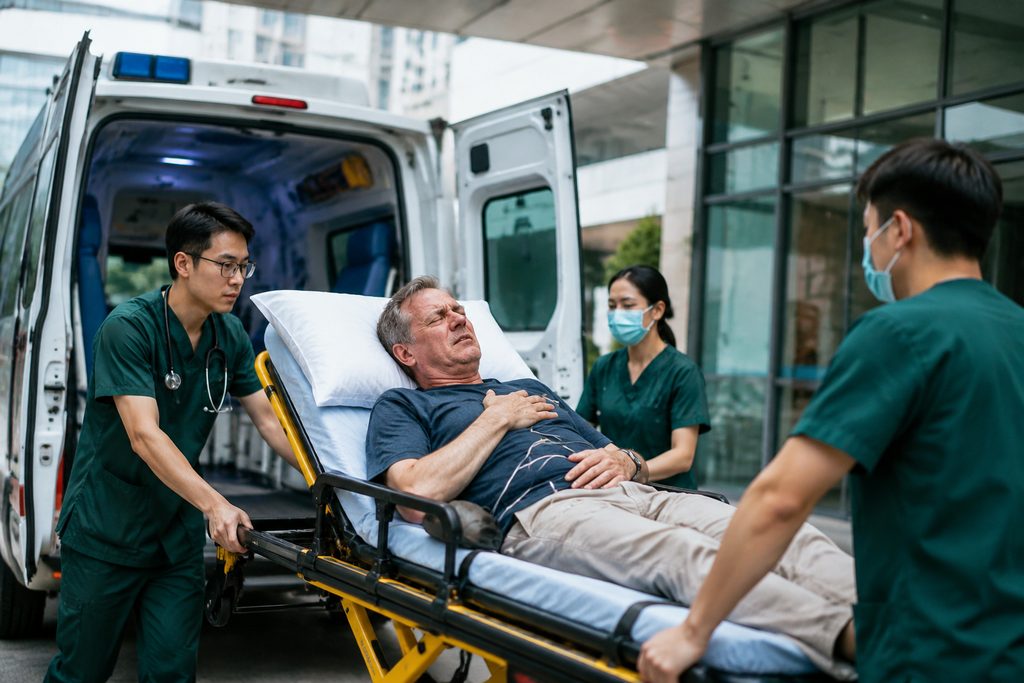
Cardiac Surgery in Shanghai: What Foreigners Should Know
Open-heart surgery in the United States averages well over $100,000. The same procedure at a top-tier Shanghai hospital often lands between $12,000 and $20,000 — and the surgeons doing the work frequently operate on more hearts in a year than most Western centers see in three. That gap between price and volume is the whole story of cardiac care in China. For a foreigner weighing whether to fly halfway around the world for heart surgery, the heart bypass surgery cost Shanghai hospitals quote is only one piece of the puzzle. The rest is logistics, language, and knowing which door to walk through.
This guide covers what Shanghai’s cardiac hospitals actually offer international patients, what the numbers look like, how to book cardiac surgery in Shanghai without wasting a trip, and where the real risks sit. We are not doctors. We are the team that helps patients navigate the system — China Medical Services connects international patients with 340+ top-ranked hospitals across 37 cities. Here is what we tell families who ask about heart surgery in Shanghai.
How This Actually Works, Step by Step
Most foreigners assume they book a surgeon the way they would at home: pick a hospital, pick a date, show up. Shanghai’s public hospitals don’t work that way. The sequence matters, and getting it out of order costs time and money.
It starts with your records, not a phone call. You gather your existing examination reports — echocardiogram, coronary angiography, CT, stress test results, medication list, prior surgical history — and send them for translation and review. A cardiac specialty team at the relevant Shanghai hospital reads those reports and returns a written assessment: whether surgery is indicated, which procedure, and roughly what it would involve.
From there, the path branches.
- Written second opinion — the specialty reviews your reports and returns written analysis and treatment direction. No travel required.
- Video consultation — you speak with the cardiac team online, explain your symptoms and goals, and hear their recommendations directly.
- Proxy consultation — you name a city, hospital, department, or specialist, and we assist with registration, creation of the hospital medical card, and an in-person proxy visit using your materials.
- Surgery in China — once a feasible plan is clear and you agree, we coordinate arrival support, hospital communication, and available green-channel logistics.
Here is the rule that surprises people most: at most public hospitals, you cannot book surgery from overseas without an in-person consultation first. The surgeon needs to examine you before scheduling. That means a two-trip reality for many patients — one visit to confirm, one to operate — unless you go through a hospital’s international department, which can sometimes compress the timeline. Any later admission remains subject to hospital rules. Nobody can promise a specific date in advance.
Shanghai’s Cardiac Hospitals and What They Cost
Shanghai holds 18 hospitals in the Fudan Top 100 ranking — second only to Beijing. For cardiac work specifically, the city’s flagship is Zhongshan Hospital, Fudan University, whose cardiac surgery department ranks among China’s top ten. Ruijin Hospital, also Fudan-affiliated, carries a strong reputation in cardiovascular medicine. For the highest surgical volumes in the country, many patients look north to Fuwai Hospital in Beijing — the world’s busiest cardiac surgery center, performing over 14,000 heart operations a year.
What you pay depends heavily on which channel you enter through.
| Procedure | Shanghai top public hospital | US average |
|---|---|---|
| Coronary artery bypass graft (CABG) | $12,000 – $20,000 | $120,000+ |
| Heart valve replacement | $15,000 – $25,000 | $150,000 – $200,000 |
| Coronary angioplasty with stent | $5,000 – $12,000 | $30,000 – $60,000 |
| Pacemaker implantation | $6,000 – $14,000 | $40,000 – $80,000 |
These are ranges, not quotes. Final pricing varies by hospital, case complexity, materials used, and length of stay. How much does heart valve replacement cost in China? Usually a fraction of the Western figure — but a mechanical valve, a biological valve, and a complex multi-valve case sit at very different points on that range.
One more number matters. The public-channel prices above assume you go through standard registration. If you want a senior specialist, English-speaking staff, and the ability to coordinate ahead of arrival, you enter through the hospital’s international or VIP department — and those prices run roughly 1.5 to 2 times the standard channel. That premium buys access and communication, not better surgery.
A Realistic Timeline
Patients consistently underestimate how long the front end takes. Here is a realistic picture, with the waiting steps people forget.
| Stage | Typical duration |
|---|---|
| Gather and translate medical records | 3 – 10 days |
| Written second opinion returned | 3 – 7 days after records received |
| Video consultation scheduled and held | 1 – 2 weeks |
| S2 visa application and processing | 1 – 3 weeks (varies by consulate) |
| Travel and arrival | 1 – 2 days |
| In-person consultation and pre-op testing | 2 – 5 days |
| Surgery scheduling after confirmation | Days to a few weeks, depending on hospital load |
| Hospital stay for CABG | 7 – 14 days |
| Recovery before flying home | 2 – 4 weeks (surgeon’s clearance required) |
Add it up and a straightforward case runs six to ten weeks from first contact to flying home. Complex cases, or those needing a second trip, run longer. Document translation and visa processing are the two steps patients most often forget to budget time for.
What Can Go Wrong — and What Happens Then
Honesty matters more here than anywhere else in this article.
The records aren’t enough. Sometimes the reports you send don’t tell the surgeon what they need. They may ask for a repeat echocardiogram or additional imaging. That adds days. It is not a rejection — it is the surgeon doing their job.
The surgeon declines the case. This happens. Some patients are not good candidates for surgery in China — because of complexity, comorbidities, or a need for a specific technique the hospital doesn’t offer. When that happens, you have lost only the cost of the consultation, and you have gained a clear answer.
The consultation happens but surgery isn’t scheduled. Public hospitals cannot guarantee a slot. If the surgical schedule is full, you may wait. This is the single biggest reason patients choose to coordinate through an international department rather than arrive cold.
Complications after surgery. No cardiac surgery anywhere is risk-free. If a complication arises, you are in a large public hospital with full ICU capability — but your family may be far away and the language barrier is real. This is exactly why bilingual support exists.
Insurance won’t reimburse. Many Western insurers do not cover elective surgery abroad, or reimburse only a fraction. Check before you commit. Do not assume.
How to Tell a Good Cardiac Program From a Weak One
Volume is the first filter. Cardiac surgery outcomes improve with experience — surgeons and hospitals that perform more complex cases tend to have better results. Fuwai’s 14,000-plus annual operations and Shanghai’s top programs sit in a different category from a mid-tier hospital doing a few hundred.
Second: does the hospital have an international department? Not every top cardiac program does. Those that do can coordinate ahead, provide English-speaking staff, and handle the paperwork international patients need. Those that don’t require you to navigate a system built for 10,000-plus daily outpatients — in Chinese.
Third: ask what happens after. Who manages your follow-up? How do you get your operative notes and imaging in a form your cardiologist at home can read? A program that thinks about your discharge and handoff is a program that thinks about you.
Is heart surgery in China safe? At the top public hospitals, the clinical standards and equipment are comparable to major Western centers. The variable is not surgical quality — it is communication, coordination, and continuity. That is where the risk actually lives for a foreign patient.
If you are comparing options, our list of Fudan-ranked hospitals by city is a useful starting point, and the Shanghai city page covers the local hospital landscape in more detail.
Practical Considerations: Records, Visa, Payment, Language
Records. Bring everything. Original imaging on disc, not just reports. A translated medication list. Prior surgical notes. The more complete your file, the faster the review.
Visa. Foreigners coming to China for medical treatment use the S2 visa, annotated for medical purposes. Stays beyond 180 days require the S1. Accompanying family members also apply for S2. Note clearly: the M visa is for commercial and trade activity — it is not a medical visa. Requirements shift, so confirm current rules with the Chinese embassy or consulate in your country and bring supporting hospital documents.
Payment. Public hospitals require prepayment; insurance reimbursement happens afterward, at home. Private international hospitals may bill insurers directly. Budget for the full estimate plus a margin.
Language. This is not a minor inconvenience. A hospital seeing 10,000 outpatients a day is not set up for English. Bilingual medical companions handle registration, queuing, payment, wayfinding, and translation — from $300 per day. For cardiac patients and their families, that support is often the difference between a manageable experience and a chaotic one.
Follow-up at home. Arrange it before you leave. Your surgeon in Shanghai should provide operative notes and imaging your cardiologist can use. Get these before discharge, not after.
Frequently Asked Questions
Not directly for a specific date. Public hospitals require an in-person consultation before scheduling surgery. What you can do remotely is get a written second opinion or video consultation to confirm whether surgery is appropriate, then travel for the in-person visit that leads to scheduling. International departments can sometimes shorten the gap between consultation and surgery, but no one can guarantee a date in advance.
A coronary bypass typically runs $12,000 to $20,000 at a top public hospital; valve replacement $15,000 to $25,000. Add travel, accommodation, bilingual support, and a recovery stay, and a realistic all-in budget lands meaningfully higher. Prices vary by hospital and case complexity, so treat every figure as a range until a hospital reviews your specific case.
At top-ranked hospitals like Zhongshan and Ruijin in Shanghai, or Fuwai in Beijing, surgical standards and technology are comparable to major Western centers. The genuine risks for foreign patients are coordination, language, and follow-up continuity — not the surgery itself. Planning those carefully is what makes the difference.
Medical travel to China uses the S2 visa with a medical annotation; stays over 180 days use S1. Accompanying family members apply for S2 as well. The M visa is for business and trade only and does not apply to medical treatment. Always confirm current requirements with your nearest Chinese embassy or consulate.
It happens, and it is useful information. If a hospital declines your case — because of complexity, comorbidities, or technique — you have a clear answer and have spent only the consultation cost. From there you can explore other hospitals or reconsider treatment at home.
Your Next Step
Cardiac surgery in Shanghai is genuinely accessible to international patients, and the cost advantage is real. But it rewards preparation over improvisation. Get your records reviewed first, understand which channel fits your case, and only then commit to travel.
We are China Medical Services — a coordination team, not a medical provider. We do not diagnose, operate, or promise outcomes. We translate records, arrange consultations through official hospital channels, and provide bilingual support on the ground. If you are weighing heart surgery in Shanghai, start with a free consultation. It costs nothing and answers the questions that matter most.
This article is for general information only and is not medical advice. Always consult a qualified physician about your individual condition and treatment options.
For more medical information and treatment options in China, visit chinamedservices.com (China Medical Services).
