Why Malaysian Patients Come to China for Dental Tourism: Full Mouth Restoration Full Guide
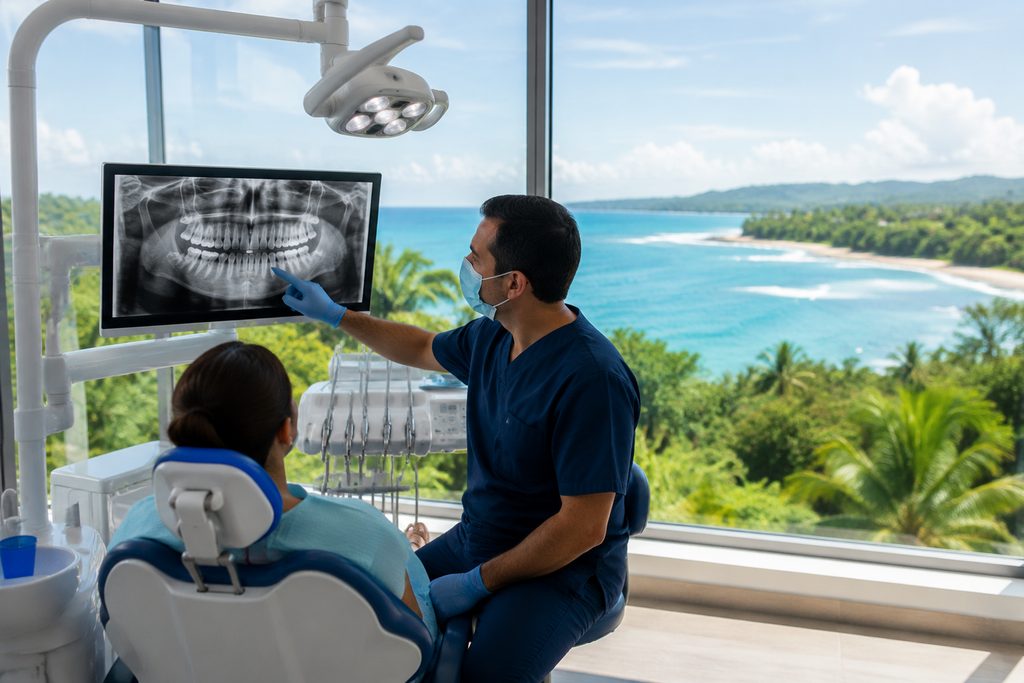
When 54-year-old Tan from Penang bit into an apple and felt three of his remaining teeth shift, he knew the time for temporary fixes was over. His local dentist had been frank: the bone loss was too advanced. Full arch rehabilitation was the only path forward. The quote, however, stopped him cold. RM 120,000 for a single arch. For both jaws, the figure nearly doubled. That evening, his daughter typed “full mouth restoration cost China” into Google, and a different kind of conversation began.
The Tan family is not alone. Every month, our team hears from Malaysians who have reached the same inflection point. They have the diagnosis. They understand the clinical need. What they lack is a financial path that does not require liquidating their retirement fund or taking on a decade of debt. This guide lays out exactly what full mouth restoration in China entails for a Malaysian patient: the real costs, the timeline, the clinical standards, and the logistical steps that turn a Google search into a completed treatment plan.
Key Takeaways
- Full mouth restoration in China typically costs between $8,000 and $18,000 per arch, roughly 50–70% less than equivalent private-sector treatment in Malaysia and up to 80% less than in Singapore or Australia.
- Top Chinese dental hospitals handle thousands of implant cases annually, a surgical volume that directly correlates with lower complication rates and more predictable long-term outcomes.
- Treatment requires two separate trips to China, spaced 4–6 months apart, and patients must plan for a total in-country stay of 12–18 days across both visits.
- Quality varies widely by facility. The best outcomes come from university-affiliated stomatology hospitals, not commercial dental chains that market heavily to tourists.
The Problem: Dental Costs in Malaysia Are Pushing Full Restoration Out of Reach
Malaysia has good dentists. That is not the issue. The issue is the arithmetic of complex implantology performed in a private healthcare market with high equipment amortization costs, steep indemnity insurance premiums, and a limited pool of surgeons who perform full-arch rehabilitations regularly.
Let’s look at the numbers. A single full-arch restoration using the All-on-4 or All-on-6 technique in a private Kuala Lumpur clinic runs between RM 80,000 and RM 150,000 per arch. For both jaws, a patient is looking at RM 160,000 to RM 300,000. That is roughly $34,000 to $64,000 USD. Government hospitals offer lower prices, but waiting lists for complex prosthetic work can stretch beyond 18 months, and the prosthodontic options are often limited to removable dentures rather than fixed implant bridges.
For a Malaysian approaching retirement, these figures represent an impossible choice. Spend down their EPF savings on teeth, or live with the cascading health consequences of poor dentition: nutritional decline, accelerated bone resorption in the jaw, and the social withdrawal that accompanies tooth loss. A 2019 study in the Journal of Prosthodontic Research found that complete edentulism was independently associated with a 21% higher risk of all-cause mortality after adjusting for confounding factors. This is not a cosmetic issue. It is a systemic health problem with a price tag that shuts too many people out.
Why China Delivers Full Mouth Restoration at a Fraction of the Cost
The price gap is real. So is the skepticism. Every patient we speak to asks the same question: if it is cheaper, what is being sacrificed? The answer, backed by surgical volume data and hospital infrastructure, is that the savings come from structural economic differences, not from cutting clinical corners.
Surgical Volume That Builds Specialist Expertise
Consider the math of a typical implantologist’s week. A busy private practitioner in Malaysia might place 20 to 30 implants in a good month. A specialist at the Peking University School of Stomatology or the West China Hospital of Stomatology places that many in a single day. These are teaching hospitals attached to major universities. Their implant departments function as high-throughput surgical centers where junior surgeons train under senior faculty who have each placed tens of thousands of fixtures over their careers.
Volume matters in implantology. A 2017 systematic review in Clinical Oral Implants Research found that surgeon inexperience was one of the strongest predictors of early implant failure, with operators who had placed fewer than 50 implants showing significantly higher failure rates. When you choose a high-volume Chinese stomatology hospital, you are choosing a team that has seen and managed the complications that a lower-volume provider might encounter only occasionally. That experience translates into better surgical judgment, faster procedures, and more conservative treatment plans that preserve bone rather than over-grafting.
Cost Structure: Where the Savings Actually Come From
Let’s be precise about why full mouth restoration cost China is lower. It is not because Chinese implants are inferior. The top hospitals use the same implant systems found in Malaysian and Australian clinics: Straumann, Nobel Biocare, and Osstem are standard. The savings come from three structural factors.
First, labor costs for surgical teams, dental technicians, and nursing staff are lower in China than in Malaysia or Singapore. A senior prosthodontist’s professional fee in Chengdu is a fraction of what a similarly qualified specialist charges in Petaling Jaya. Second, the in-house dental laboratories at major Chinese stomatology hospitals operate at enormous scale. They produce thousands of prosthetic frameworks per month, which drives down the per-unit cost of CAD/CAM-milled titanium bars and zirconia bridges. Third, hospital overheads—sterilization, imaging, facility maintenance—are spread across a far larger patient base.
None of these factors reduce the quality of the implant or the skill of the surgeon. They are purely economic efficiencies of scale.
Technology That Matches or Exceeds Regional Standards
Walk into the digital dentistry unit at Shanghai Ninth People’s Hospital, and you will see equipment that would be familiar to any Australian prosthodontist. Cone-beam CT for three-dimensional bone mapping. Intraoral scanners that eliminate the need for physical impressions. Milling machines that produce a full-arch provisional bridge within hours of implant placement. The difference is not the technology. It is how routinely it is used. When a hospital performs 20 full-arch cases in a week, the digital workflow is not a premium add-on. It is the standard operating procedure, and the cost of the technology is amortized across thousands of cases annually.
What Full Mouth Restoration in China Actually Costs: A Real Price Breakdown
This is the section most readers will scroll to first. We will give you real numbers, but we need to preface them with an important caveat: every mouth is different. Bone volume, sinus position, the need for extractions, and the choice between acrylic and zirconia final prostheses all shift the final price. The figures below are based on actual treatment plans coordinated for Malaysian patients at top-tier Chinese stomatology hospitals in 2024 and 2025.
| Treatment Option | Price Range (USD) | Approx. RM Equivalent | What Is Included |
|---|---|---|---|
| All-on-4, single arch (acrylic bridge) | $8,000 – $12,000 | RM 37,500 – RM 56,300 | Surgery, 4 implants, provisional bridge, final acrylic prosthesis |
| All-on-6, single arch (acrylic bridge) | $10,000 – $14,500 | RM 46,900 – RM 68,000 | Surgery, 6 implants, provisional bridge, final acrylic prosthesis |
| All-on-4, single arch (zirconia bridge) | $12,000 – $16,000 | RM 56,300 – RM 75,000 | Surgery, 4 implants, provisional bridge, final zirconia prosthesis |
| All-on-6, single arch (zirconia bridge) | $14,000 – $18,000 | RM 65,700 – RM 84,500 | Surgery, 6 implants, provisional bridge, final zirconia prosthesis |
| Full mouth (both arches, acrylic) | $16,000 – $26,000 | RM 75,000 – RM 122,000 | Bilateral surgery, 8–12 implants, two provisional bridges, two final prostheses |
| Full mouth (both arches, zirconia) | $22,000 – $34,000 | RM 103,000 – RM 159,500 | Bilateral surgery, 8–12 implants, two provisional bridges, two final zirconia prostheses |
Compare these figures to the RM 160,000–300,000 range for equivalent private treatment in Malaysia, and the arithmetic becomes clear. Even after adding two round-trip flights from Kuala Lumpur to Guangzhou or Chengdu, 12–16 nights of accommodation, and our coordination fee, the total cost in China lands at roughly 50–65% of the Malaysian private-sector price. For patients considering Singapore or Australia, where full-mouth zirconia restorations routinely exceed $80,000 USD, the savings are starker still.
What about hidden costs? The main one to budget for is bone grafting. If your CT scan shows insufficient bone volume in the posterior maxilla or mandible, you may need sinus lifts or ridge augmentation. These procedures add $1,500–$4,000 per arch depending on the graft material and complexity. A reputable hospital will identify this need during the initial consultation—not after you have already paid for surgery.
How Long Does Full Mouth Restoration Take in China: The Two-Trip Timeline
The question “how long does full mouth restoration take in China” has two answers, because the process is split into two distinct phases separated by a healing period. Understanding this timeline is critical for planning leave from work and booking flights.
Trip One: Surgery and Provisional Restoration (7–10 days in China)
Day 1 is for the clinical examination and cone-beam CT scan. The surgical team maps your bone anatomy in three dimensions and finalizes the implant positions. If you need extractions, these happen on day 1 or 2. The implant surgery itself—placing 4 to 6 fixtures per arch—takes 2 to 4 hours under local anesthesia, sometimes with conscious sedation. Within 24 to 48 hours of implant placement, the dental laboratory delivers your screw-retained provisional bridge. You leave China with a full set of fixed teeth. They are acrylic, not the final material, but they are functional. You can eat, smile, and speak normally.
The remaining days of your first trip allow for post-operative checks and any adjustments to the provisional bridge. We recommend planning for 8 full days in the city where your hospital is located. Do not book a flight home on day 5.
The Healing Gap: 4 to 6 Months
Osseointegration—the biological process where your jawbone fuses to the titanium implant surface—takes time. For most patients, 4 months is sufficient for the mandible and 5 to 6 months for the maxilla. During this period, you live normally with your provisional bridge. You return to Malaysia. You eat carefully, avoiding hard or sticky foods. You maintain meticulous oral hygiene around the implant sites. The hospital will schedule a video check-in at the 3-month mark to review any concerns.
Trip Two: Final Prosthesis Delivery (5–7 days in China)
You return to China once osseointegration is confirmed. The provisional bridge is removed. The implant stability is checked. Digital impressions are taken—no goopy impression material, just a quick intraoral scan. The final zirconia or high-performance acrylic bridge is milled, sintered, and finished in the hospital’s laboratory. This takes 2 to 3 days. You try in the framework, the occlusion is adjusted, and the final prosthesis is screwed into place. You leave China with your definitive teeth.
Total in-country time across both trips: 12 to 18 days. Total elapsed time from first surgery to final prosthesis: 5 to 7 months.
Is Full Mouth Restoration Safe in China? How to Separate Quality Hospitals from Tourist Traps
This is the question that keeps patients awake at night, and we respect it. “Is full mouth restoration safe in China” is not a naive worry. It is the right question to ask. The honest answer is that safety depends entirely on which hospital you choose. China has some of the world’s finest dental hospitals. It also has commercial clinics that invest more in Google Ads than in sterilization protocols.
The safest hospitals for international patients are the stomatology departments of major public universities. These are not private dental chains. They are academic medical centers that train China’s implantologists, publish in international journals, and operate under the same infection control standards as any JCI-accredited hospital. Examples include the Peking University Hospital of Stomatology, the West China Hospital of Stomatology in Chengdu, and the Shanghai Ninth People’s Hospital Department of Oral and Maxillofacial Surgery. These institutions treat complex cases—cancer reconstructions, trauma, congenital defects—alongside routine implantology. Full mouth restoration is well within their daily workflow.
How do you verify a hospital’s credentials? Look for three things. First, university affiliation. If the hospital’s name includes a major Chinese university, it is subject to academic oversight and regular external review. Second, publication record. Search the hospital’s implantology department on PubMed. If senior surgeons are publishing peer-reviewed research on implant survival rates, they are accountable to scientific standards. Third, implant system partnerships. A hospital that is an official training center for Straumann or Nobel Biocare has been audited by the implant manufacturer itself.
What should make you pause? Clinics that promise same-day zirconia final bridges. Zirconia requires precise milling and a multi-day sintering process. A “zirconia in 24 hours” claim usually means something else is being delivered. Also be wary of clinics that do not require a pre-operative CT scan. Placing implants without three-dimensional bone imaging is below the standard of care, regardless of how experienced the surgeon claims to be.
Practical Considerations for Malaysian Patients Traveling to China for Dental Work
Planning dental tourism China from Malaysia price and logistics requires attention to details that have nothing to do with dentistry. Get these right, and your trips will be uneventful. Overlook them, and you create stress that complicates your recovery.
Visa requirements. Malaysian passport holders enjoy 15-day visa-free entry to China for tourism purposes, a policy that was extended through 2025. This covers the typical 7- to 10-day first trip and the 5- to 7-day second trip comfortably. If your treatment plan requires a longer stay—for example, if complex bone grafting extends your recovery—you will need to apply for an S2 short-term private affairs visa before travel. Do not overstay the visa-free period. The penalties are serious and can affect future entry.
Medical records to bring. Bring a panoramic X-ray taken within the last 3 months. If you have had a cone-beam CT in Malaysia, bring the DICOM files on a USB drive. Bring a list of medications you take, including traditional and herbal supplements. Bring the contact information of your Malaysian dentist, who will be responsible for your follow-up care between trips.
Payment methods. Chinese hospitals do not typically accept international credit cards for large treatment payments. You will need to transfer funds via bank wire, use Alipay linked to an international card, or carry a combination of cash and UnionPay-compatible cards. The hospital will provide a detailed invoice for insurance reimbursement, but most Malaysian insurance plans do not cover dental treatment abroad. Budget as if you are paying entirely out of pocket.
Language and interpretation. Even at top university hospitals, English proficiency among nursing staff and laboratory technicians is limited. The senior surgeons often speak functional English, but the flow of a hospital visit—registration, payment, pharmacy, radiology—runs entirely in Mandarin. This is where a bilingual medical coordinator becomes essential, not as a luxury but as a practical necessity. You need someone who can read the CT order form, explain the post-operative instructions accurately, and catch the detail that the pharmacist’s label says “three times daily” not “twice daily.”
Follow-up after returning to Malaysia. Your Malaysian dentist should be informed of your treatment plan before you travel. Provide them with the hospital’s contact information and the implant passport that documents the exact implant system, diameter, and placement date. Your dentist will need this to manage any future maintenance or complications. The Chinese hospital will provide a written aftercare protocol. Follow it. The most common cause of late implant failure is poor oral hygiene, not surgical error.
Frequently Asked Questions
Can I really book full mouth dental implants China package without visiting for a consultation first?
You can initiate the process remotely, but no reputable hospital will finalize a surgical plan without examining you in person. What happens instead is a two-step evaluation. First, you send your panoramic X-ray, CT scan if available, and clinical
For more medical information and treatment options in China, visit chinamedservices.com (China Medical Services).
