Why Saudi Patients Choose China for Cardiac Surgery: Heart Bypass and Valve Full Service
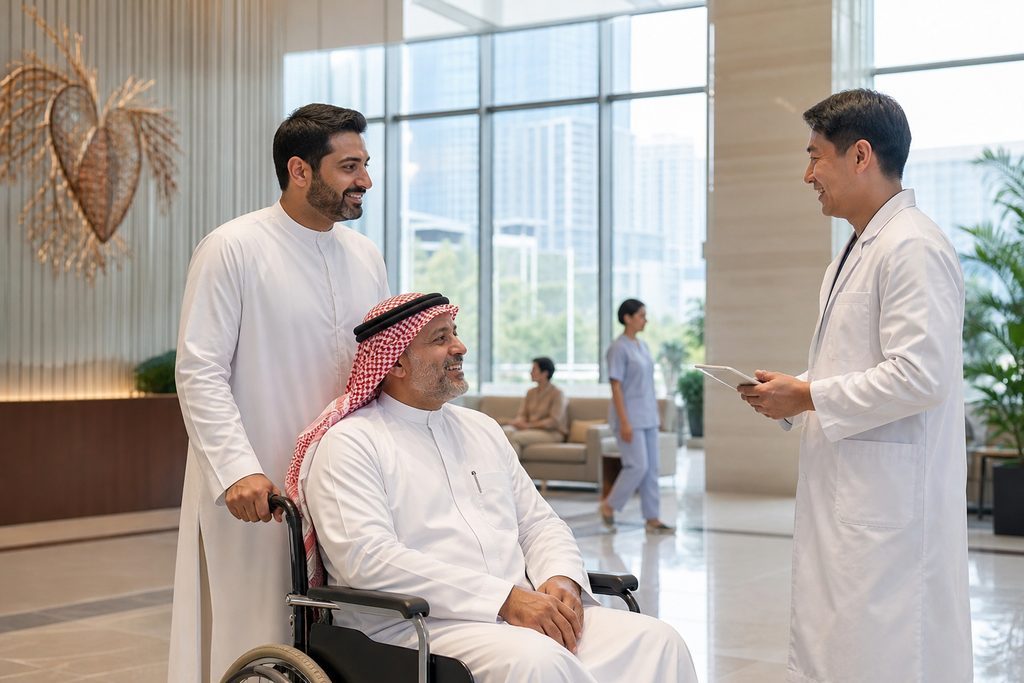
While a patient in the United States can expect a bill exceeding $120,000 for a coronary artery bypass graft, the same procedure at a top-tier Chinese cardiac center typically ranges from $12,000 to $20,000. Fuwai Hospital in Beijing alone performs over 14,000 cardiac surgeries annually—more than any other center on the planet. The economics are compelling, but for Saudi patients, the equation runs deeper than price.
Key Takeaways
- China’s elite cardiac centers perform surgery volumes unmatched globally—Fuwai Hospital completes over 14,000 cardiac procedures yearly, building a depth of experience that directly influences complication rates.
- A full heart bypass or valve replacement package in China costs roughly 70-90% less than in the United States, and often 40-60% less than private hospitals in Saudi Arabia, without sacrificing clinical quality.
- Language, visa logistics, and navigating a foreign hospital system are real barriers—but structured international patient programs now make the process predictable for Arabic-speaking travelers.
- Not every patient is a candidate for travel. Remote pre-evaluation through a written second opinion or video consultation is the essential first filter before booking any flight.
The Problem: When Cost and Wait Times Block Lifesaving Care
Cardiovascular disease remains the leading cause of death in Saudi Arabia, accounting for approximately 46% of all non-communicable disease mortality according to the World Health Organization. The Kingdom has invested heavily in domestic cardiac care—centers like the King Faisal Specialist Hospital deliver world-class results. But capacity has not kept pace with demand.
For Saudi nationals without access to government-subsidized tier-one hospitals, or for expatriates living in the Kingdom whose insurance excludes complex cardiac surgery, the out-of-pocket costs can be staggering. A single valve replacement at a private Jeddah or Riyadh hospital can exceed $40,000. A bypass can push past $50,000. And that assumes the surgeon and bed are available when you need them. For patients facing a six-month wait with a failing aortic valve, time is a luxury they simply do not have.
That reality forces a hard question: where else in the world can a patient access high-volume, high-quality cardiac surgery at a price that does not wipe out a family’s savings? For a growing number of Saudi medical travelers, the answer is China.
Why China’s Cardiac Surgery System Delivers Results That Rival the West
The skepticism is understandable. Western and Gulf patients often associate Chinese healthcare with crowded public wards and language chaos. That picture is about twenty years out of date—at least at the top. China’s tier-one cardiac centers now operate on a scale and with a technological sophistication that most Western hospitals cannot match, precisely because of the patient volumes they manage daily.
Volume Creates a Different Kind of Surgeon
Consider the numbers. A busy cardiac surgeon in the United States might perform 100 to 150 bypass procedures in a good year. At Fuwai Hospital’s adult cardiac surgery center, individual surgical teams routinely complete over 400 to 500 cases annually. The hospital’s total annual cardiac surgical volume—over 14,000 procedures—dwarfs the Cleveland Clinic’s roughly 4,000. This is not abstract. Multiple studies, including a widely cited 2017 analysis in The Lancet, have demonstrated an inverse relationship between hospital procedure volume and operative mortality for complex surgery. When a surgical team sees a rare complication once a month instead of once a year, their response is muscle memory, not a conference call.
For Saudi patients, this volume translates into a surgeon who has likely managed your exact pathology—whether it is a triple-vessel bypass with a calcified aorta or a minimally invasive mitral valve repair—hundreds of times before.
Technology Deployed at Scale
China’s top cardiac centers were built late. That is an advantage. They leapfrogged directly to hybrid operating rooms, robotic-assisted systems, and advanced imaging suites without the legacy infrastructure drag that slows down older Western hospitals. Fuwai Hospital, Zhongshan Hospital in Shanghai, and West China Hospital in Chengdu all routinely employ minimally invasive techniques that are still considered “advanced” in many Gulf hospitals. Totally endoscopic coronary artery bypass, transcatheter aortic valve replacement (TAVR) via femoral access, and robotic mitral repairs are standard offerings—not experimental protocols.
The scale also changes the economics of device pricing. A biological tissue valve that might cost a Saudi private hospital $8,000 to procure can cost a Chinese high-volume center significantly less, simply because the center negotiates for 2,000 units a year instead of 50. Those savings pass through to the patient.
Cost Without Compromise
Let us address the elephant in the room directly. The heart bypass surgery cost China patients encounter—typically $12,000 to $20,000 for a standard CABG at a top public hospital’s international wing—is not low because corners are cut. It is low because the underlying cost structure is different. A senior cardiac surgeon’s annual salary in China, while rising, is a fraction of a US or Gulf surgeon’s compensation. Hospital construction costs, nursing labor, and pharmaceutical pricing all operate on a different baseline. The result is a price point that makes affordable cardiac surgery packages China for international patients a genuine category, not a marketing slogan.
When you compare this to the cost of heart surgery in China vs Saudi Arabia, the gap narrows but remains significant. A private-pay bypass in Riyadh or Jeddah commonly lands between $30,000 and $55,000. The Chinese option, even after adding flights, accommodation, and a bilingual companion service, still often comes in 30-50% lower. For a valve replacement, the savings are similar.
What a Full-Service Cardiac Surgery Journey Actually Looks Like
Saudi patients do not just buy a surgery. They buy a process. Understanding what that process entails—step by step—is what separates a smooth recovery from a logistical nightmare. Here is the real timeline, not the brochure version.
Phase 1: Remote Evaluation (1-2 weeks before travel)
You do not fly to Beijing and hope for the best. The journey starts with a written second opinion. You send your existing coronary angiogram (on CD or DICOM files), echocardiogram reports, and recent blood work to the Chinese cardiac team. A senior surgeon reviews the imaging directly—not a case manager—and produces a written analysis with a proposed surgical plan. This costs $300 to $500 and answers the threshold question: is surgery in China actually indicated for you, and can the team handle your specific anatomy? For patients who want a live conversation, a video consultation with the surgeon ($500 to $800) adds a layer of personal confidence that a written report cannot provide.
Phase 2: Pre-Arrival Coordination (concurrent)
Once the surgical plan is confirmed, the logistics engine starts. Your S2 visa application requires an invitation letter from the hospital’s international department—a document that also serves as proof of the planned medical treatment for the Chinese embassy or consulate. Flights are booked. A hospital-assigned or independent bilingual coordinator confirms your admission date, the required deposit amount (typically 50-70% of the estimated total, paid via wire transfer or UnionPay), and the exact sequence of pre-operative tests you will undergo upon arrival.
Phase 3: Arrival and Pre-Op (3-5 days before surgery)
You land, and within 24 hours you are inside the hospital. The pre-operative workup is intensive: repeat labs, a fresh echocardiogram, possibly a CT angiogram if your existing imaging is more than a month old, and consultations with the anesthesiologist and cardiologist. This is not bureaucracy. It is the surgical team verifying every data point before they open your chest. A bilingual medical companion handles registration, payment queues, and translation during every consultation—this is the moment where navigating alone would be nearly impossible without Mandarin.
Phase 4: Surgery and ICU (surgery day + 2-4 days)
The procedure itself follows the same protocols you would see at the Cleveland Clinic. For a bypass, expect a sternotomy, cardiopulmonary bypass, and graft harvesting (saphenous vein and/or internal mammary artery). For a valve replacement, the approach depends on your anatomy—mechanical or tissue, open or transcatheter. Post-op, you spend 2 to 4 days in the cardiac surgical ICU, monitored continuously. Family access is limited during this window, but the international department typically provides daily updates in English or Arabic via a liaison.
Phase 5: Ward Recovery and Discharge (7-10 days post-op)
Once stable, you transfer to a private or semi-private ward room. Physiotherapy starts on day two or three post-extubation. By day seven, you are walking the hallway. Discharge typically happens between day 10 and day 14, assuming no complications. The hospital provides a detailed discharge summary in English, a medication schedule, and a wound care plan.
Phase 6: Post-Discharge and Return (1-2 weeks in-country after discharge)
You do not fly home the day you leave the hospital. Most surgeons recommend staying in a nearby hotel or serviced apartment for at least one week post-discharge. You return to the hospital for a wound check and a final echocardiogram before clearance to fly. The flight back to Saudi Arabia should be in business class or with a lie-flat seat—sitting upright in economy for 9 hours ten days after a sternotomy is a bad idea, and your surgeon will tell you so directly.
Choosing the Right Center: Not All “Top Hospitals” Are Equal for Cardiac Surgery
China has over 35,000 hospitals. Our database tracks roughly 340 that meet the threshold for international patient care. For cardiac surgery, that list shrinks dramatically. The question is not “which hospital is good” but “which hospital’s cardiac team has the specific volume and infrastructure for my procedure.”
The Fudan University China Hospital Rankings—the closest equivalent China has to the US News & World Report hospital rankings—publish a specialty reputation list for cardiac surgery. The names that consistently appear in the top tier include Fuwai Hospital (Beijing), Zhongshan Hospital Fudan University (Shanghai), and West China Hospital (Chengdu). Fuwai is the undisputed volume leader globally. Zhongshan is renowned for minimally invasive valve work and has a dedicated international medical center with strong English-language support. West China Hospital in Chengdu handles the largest single-center cardiac volume in western China and has invested heavily in hybrid OR technology.
For Saudi patients, Beijing and Shanghai are the natural entry points—direct flights from Riyadh and Jeddah land daily, and both cities have established Arabic-speaking communities and halal food infrastructure that make a three-week stay far more comfortable than in a smaller city. The cardiac surgery department rankings on our site provide a detailed breakdown of which centers excel in which sub-specialties.
| Procedure | China (Top Public Hospital International Wing) | Saudi Arabia (Private Hospital, Cash Pay) | United States (Average List Price) |
|---|---|---|---|
| Coronary Artery Bypass Graft (CABG) | $12,000 – $20,000 | $35,000 – $55,000 | $120,000+ |
| Aortic Valve Replacement (Surgical) | $15,000 – $22,000 | $40,000 – $60,000 | $130,000+ |
| Mitral Valve Repair (Minimally Invasive) | $18,000 – $25,000 | $45,000 – $65,000 | $110,000+ |
| TAVR (Transcatheter Aortic Valve) | $28,000 – $38,000 | $55,000 – $80,000 | $150,000+ |
Note: All prices are estimates in USD for international patients paying out-of-pocket. Actual costs vary by hospital, case complexity, length of stay, and implant choice. Chinese public hospital pricing reflects international wing/VIP channel rates, which are higher than standard domestic rates but include English-language coordination.
Practical Considerations: Visas, Payments, and What Happens After You Fly Home
The surgery itself is only half the equation. The logistics around it determine whether the experience is manageable or overwhelming.
Visas. Medical travelers to China apply for an S2 short-term private affairs visa, which covers medical treatment. The hospital’s international department issues an invitation letter that you submit with your application. Processing time at the Chinese embassy in Riyadh or Jeddah is typically 4 to 7 business days. Do not book a non-refundable flight until the visa is in your passport. Family members traveling with you apply for their own S2 visas with the same supporting documents. The M visa—a common point of confusion—is strictly for commercial and trade activities and is not appropriate for medical travel.
Payments. Chinese public hospitals require pre-payment. The international department will quote a deposit amount—usually 50-70% of the estimated total—due before or on admission day. Payment is typically made via international wire transfer (allow 3-5 business days for settlement) or by UnionPay card at the hospital. Some international wings now accept Visa and Mastercard, but this is not universal. Do not assume you can swipe a credit card on arrival without confirming first. The final bill is settled at discharge, with any overpayment refunded—a process that can take several weeks for international bank transfers.
Post-operative follow-up. You will leave China with a discharge summary, a CD of your post-op echocardiogram, and a medication regimen. Your cardiologist in Saudi Arabia needs to receive these records and take over your long-term management. The Chinese surgical team will typically offer one post-discharge video consultation (included in the package) to review your recovery at the 4-week mark. After that, your care transfers fully back to your local physician. This handoff is critical—do not skip it. Schedule the appointment with your Saudi cardiologist before you even travel.
Frequently Asked Questions
At the top-tier cardiac centers that international patients access—Fuwai, Zhongshan, West China—the short answer is yes. Operative mortality rates for isolated valve replacement at these centers are consistently below 2%, in line with benchmarks from the Society of Thoracic Surgeons in the United States. The key qualifier is “at these centers.” China’s healthcare system has enormous variation between its best hospitals and its average ones. The safety of your procedure depends entirely on selecting a high-volume cardiac surgery department with a dedicated international patient program. A written second opinion that confirms both your candidacy and the specific team’s experience with your valve pathology is the minimum due diligence before traveling.
A private-pay coronary bypass in Saudi Arabia typically ranges from $35,000 to $55,000 depending on the hospital and complexity. In China, the same procedure at a top public hospital’s international wing costs $12,000 to $20,000. Add roughly $3,000 to $5,000 for flights, accommodation, and a bilingual companion service for a two-week stay. The total all-in cost in China still lands at roughly half of the Saudi private rate. However—and this matters—if you have access to government-subsidized care at a tier-one Saudi public hospital, your out-of-pocket cost may be zero. The Chinese option is most relevant for patients facing high cash-pay bills or long wait times in the Saudi private sector.
Patients searching for a way to book heart bypass surgery abroad fast track are usually facing a ticking clock—a blocked artery that cannot wait six months. The reality is that China’s top centers can often schedule surgery within 2 to 4 weeks of receiving a complete medical file and deposit, assuming the surgeon confirms the case is appropriate. But “fast track” does not mean skipping steps. You cannot book a surgery date without a prior remote evaluation. You cannot skip the pre-operative workup upon arrival. The process is accelerated, not abbreviated. The fastest path is: submit your full file for a written second opinion, complete a video consultation within the same week, and then lock in a surgical date once the team confirms you are a candidate. That entire sequence can happen in under 14 days.
What if something goes wrong during or after surgery?
This is the question every patient should ask. The top Chinese cardiac centers carry international accreditation (many are JCI-accredited or have obtained equivalent Chinese hospital certifications with rigorous quality standards) and maintain cardiac surgical ICU capabilities on par with major Western centers. Complication rates are tracked and published internally. That said, if a serious complication occurs, you are in a foreign country far from your family doctor. Your family in Saudi Arabia receives updates through the international department liaison. If an extended ICU stay becomes necessary, costs will exceed the initial
For more medical information and treatment options in China, visit chinamedservices.com (China Medical Services).
