Cancer Treatment at Union Hospital Wuhan: Full Coordination for International Patients
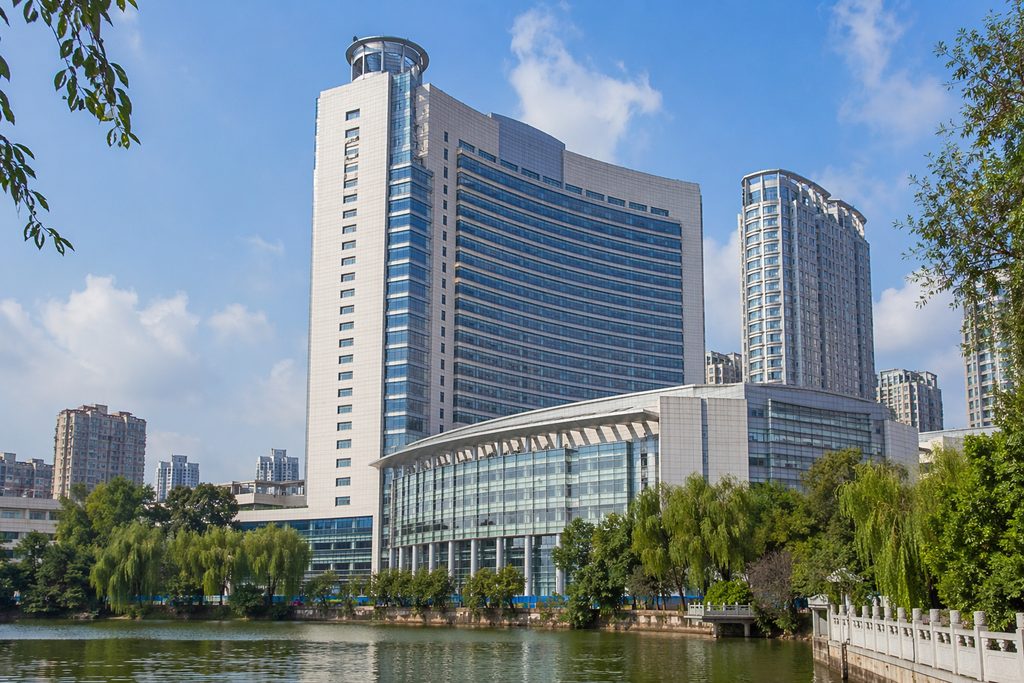
When 42-year-old Michael first heard the diagnosis, he had no idea where to start looking for treatment. His oncologist in Manchester had delivered the news clearly, but the wait for surgery stretched to nine weeks. Nine weeks of watching a tumor grow. He started searching. That search led him to a name that kept appearing in oncology rankings: Union Hospital, Tongji Medical College, HUST. But the question that stopped him cold was the same one every international patient asks: can I actually make this happen from 5,000 miles away?
The answer is yes. But not in the way most people assume. You cannot simply book a surgery slot online and show up. What you can do is engage a structured coordination process that handles the language barrier, the hospital’s international department protocols, and the mountain of paperwork that stands between a foreign patient and a Chinese operating room. This article lays out exactly what that process looks like, what it costs, and who it genuinely works for.
Cancer Treatment at Union Hospital Wuhan: The Short Answer
Union Hospital affiliated with Huazhong University of Science and Technology (HUST) runs one of China’s highest-volume oncology programs. Its cancer center handles over 120,000 inpatient admissions annually across all tumor types. For international patients, the hospital’s International Medical Service Center provides a dedicated entry point. The cancer treatment cost at Union Hospital Wuhan typically ranges from $15,000 to $45,000 for a full surgical and adjuvant therapy package, depending on cancer type, stage, and treatment complexity. That figure represents roughly 20-30% of comparable private-pay rates in the United States.
But here is the catch no brochure will tell you. The International Medical Service Center is not a travel agency. It does not hold your hand through visa applications, airport pickups, hotel bookings, or the dozens of small logistical decisions that make or break a medical trip. That gap is where coordination services become essential — and where most independent attempts fail.
Who This Is Right For — and Who It Isn’t
Let us be blunt. Traveling to another country for cancer treatment is not a decision you make lightly. It works for some people. It is a bad idea for others. Here is how to tell which group you are in.
Typically a good candidate:
- You have a confirmed diagnosis with complete imaging, pathology, and staging reports ready to share
- Your condition is stable enough for international travel — your home oncologist has not advised against flying
- You need a complex surgery where volume matters, and Union Hospital’s surgical teams perform hundreds of your specific procedure annually
- You are paying out of pocket or your insurance allows overseas treatment with reimbursement
- You have a family member or companion who can travel with you for at least 4-6 weeks
Probably should not pursue this path:
- Your cancer is highly advanced with multiple organ involvement requiring ICU-level care during transit
- You are in an active clinical trial at home with a protocol that cannot be interrupted
- You expect Western-style hotel-like hospital rooms — Chinese public hospital wards are functional, not luxurious
- You need treatment to start within 7 days — the coordination, visa, and hospital scheduling process realistically takes 2-4 weeks minimum
- You have no companion and limited mobility — navigating a Chinese hospital alone with cancer is not something we would ever recommend
Being honest about the “no” list is what makes the “yes” list credible. If you see yourself in the second group, staying in your home system is almost certainly the better call.
The Options, Compared
When international patients research how to get cancer treatment at HUST medical center, they are usually comparing three real pathways. Each has different trade-offs in cost, speed, and support level.
| Pathway | Typical Cost (USD) | Time from Contact to Treatment | Support Level | Who It Suits |
|---|---|---|---|---|
| Independent (DIY) | Hospital charges only | 6-12 weeks (or never) | None — you handle everything | Fluent Chinese speakers with local connections |
| Hospital International Center Direct | Hospital charges + international department fees | 4-8 weeks | In-hospital coordination only | Patients with simple logistics who speak some Chinese |
| Full-Service Medical Coordination | Hospital charges + coordination fee (from $3,000) | 2-4 weeks | End-to-end: visa docs, records translation, scheduling, bilingual companion, accommodation | First-time visitors to China, complex cases, anyone who wants a single point of contact |
The independent route looks cheapest on paper. In practice, it often fails. We have seen patients arrive at Union Hospital’s main gate with printed medical records in English, expecting to walk into an oncology consultation. They discover that the registration desk does not accept foreign documents, the doctor they read about online only sees patients through the international department, and nobody at the general information counter speaks English. They waste days. Some give up and fly home.
The direct international center route works better — if you already know exactly which department you need, have your documents professionally translated into Chinese, and have someone on the ground to manage the non-hospital parts of your stay. For most first-time international patients, the full coordination pathway ends up being the only one that actually results in treatment.
What “Full Coordination” Actually Means at HUST Medical Center
This is the section that answers the question behind the question. People searching for HUST medical center cancer package price are not just asking for a number. They are asking: what exactly happens after I send that first email?
The process follows a sequence that has been refined through hundreds of international patient cases. It is not a package you buy off a shelf. It is a staged workflow where each step confirms the next one makes sense.
Stage 1: Remote Evaluation (5-10 business days)
You send your complete medical records — imaging files (DICOM format preferred), pathology reports, blood work, staging documentation, and a summary of prior treatments. These get translated into clinical Chinese by medical translators who understand oncology terminology. The translated records go to the relevant department at Union Hospital for a written second opinion. This step costs $300-500 and answers the threshold question: does this hospital’s oncology team believe they can help you? If the answer is no, you have spent a few hundred dollars to learn something invaluable, and you stop there.
Stage 2: Treatment Plan and Cost Estimate (3-5 business days after Stage 1)
If the second opinion is positive, the department provides a preliminary treatment plan with an itemized cost estimate. This is where the cancer treatment cost at Union Hospital Wuhan becomes a concrete number rather than a range. The estimate includes surgery fees, anesthesia, inpatient stay (estimated days), chemotherapy or radiotherapy if indicated, and international department service charges. It does not include airfare, accommodation, meals, or coordination service fees. Expect $15,000-25,000 for a standard surgical resection with 7-10 days inpatient recovery. Complex multi-modal treatment plans run higher.
Stage 3: Scheduling and Visa Documentation (1-2 weeks)
Once you approve the treatment plan, the hospital issues an official invitation letter and treatment confirmation document. These are the core supporting materials for your S2 visa application — the short-stay visa category used for private medical treatment in China. Your coordination team prepares the full visa application package, including a cover letter explaining the medical purpose. Visa processing times vary by embassy, but most international patients receive their S2 visa within 5-10 business days of submission.
Stage 4: Arrival and Treatment (on the ground)
You land in Wuhan. Someone meets you at the airport. Your accommodation near the hospital is already arranged. The next morning, a bilingual medical companion walks you into the International Medical Service Center, where your pre-scheduled consultations begin. Blood draws, imaging reviews, surgical consent discussions — all happen with a translator at your side who understands both the language and the hospital’s internal workflow. This is not a tour guide. This is someone who knows which floor handles pre-op ECG, which window processes international patient payments, and how to get your CT results expedited when the surgical team is waiting.
What It Costs — and What Drives the Variance
The question every patient asks first: is Wuhan Union Hospital good for cancer treatment and what will I actually pay? The hospital’s oncology outcomes are strong enough to place it consistently among the top-tier cancer centers in China’s national hospital rankings. But “good” means different things to different patients. If you measure by surgical volume and experience with complex resections, Union Hospital belongs in the conversation with any major Western cancer center. If you measure by hotel-like amenities and private suites, you will be disappointed.
On cost, here is what drives the final number:
- Cancer type and stage. A stage I thyroid cancer treated with surgery alone costs far less than a stage III esophageal cancer requiring neoadjuvant chemoradiation followed by surgery and extended ICU stay.
- Surgical complexity. A straightforward lobectomy runs $8,000-12,000. A Whipple procedure with vascular reconstruction can exceed $30,000 in surgeon and OR fees alone.
- Length of stay. Inpatient ward fees at the international department range from $150-400 per day depending on room type. ICU days cost more. A 7-day stay and a 21-day stay produce very different bills.
- Adjuvant therapy. Chemotherapy drug costs vary enormously by regimen. Some targeted therapies and immunotherapies are priced similarly to Western markets even in China.
- Coordination service level. Basic appointment coordination starts around $300. Full end-to-end VIP coordination with dedicated companion, accommodation management, and post-discharge follow-up runs $5,000-8,000.
One important note on the HUST medical center cancer package price concept. The hospital does not sell “cancer treatment packages” the way a travel agency sells vacation packages. What exists is a coordinated care pathway where the international department provides bundled pricing for its service components (translation, appointment scheduling, inpatient coordination) on top of standard hospital charges. Any coordination service you engage separately should be transparent about this distinction.
Practical Considerations: Records, Visas, and Payment
The logistics are where most plans fall apart. Here is what you actually need to have ready before starting the process.
Medical records. Chinese oncology departments expect comprehensive documentation. Send everything. Imaging must be in DICOM format on a CD or USB, not just printed films or JPEG screenshots. Pathology slides may need to be physically shipped for re-reading by Union Hospital’s pathologists — this adds 7-10 days to the evaluation timeline. If your records are incomplete, the second opinion will be delayed or declined.
Visa category. You will apply for an S2 visa with medical treatment as the stated purpose. The hospital’s invitation letter is essential supporting documentation. Your accompanying family member applies for their own S2 visa. Do not let anyone tell you to apply for an M visa — that is for commercial and trade activities, and using it for medical treatment creates problems at the border and with hospital registration.
Payment method. Union Hospital’s international department accepts wire transfers and major credit cards. Some international patients use a hospital prepayment card system where you deposit funds upfront and charges are deducted as services are rendered. Expect to prepay the estimated treatment cost before admission. Your home insurance may reimburse you afterward — the hospital provides itemized receipts and translated discharge summaries for claims submission, but it does not bill foreign insurers directly.
Language reality. Outside the International Medical Service Center, Union Hospital is a Chinese-language environment. The corridors, the signage, the cafeteria, the pharmacy — all Chinese. Your bilingual companion is not a luxury add-on. They are the difference between getting your post-op medications from the right pharmacy window and standing confused in a hallway while your discharge paperwork sits unsigned.
Frequently Asked Questions
You can book consultations and secure a treatment slot through the International Medical Service Center with proper coordination, but you cannot skip the in-person evaluation. Chinese law requires a face-to-face consultation before any surgical consent is valid. What the coordination process does is compress the timeline — your records are reviewed in advance, your specialist is identified, and your consultation happens within days of arrival rather than weeks. You are not jumping a queue. You are eliminating the dead time that independent patients spend figuring out where to go and who to see.
This happens regularly. Chinese oncology teams sometimes propose more aggressive surgical approaches than Western guidelines, particularly for gastrointestinal and thoracic cancers where Chinese surgical volumes are among the highest in the world. You are never obligated to proceed. The second opinion stage exists precisely so you can evaluate the recommended plan before committing to travel. If the proposed treatment does not make sense to you, you walk away with a written second opinion that cost a few hundred dollars — and you take that back to your home oncologist for discussion.
Union Hospital’s cancer center ranks consistently in the top tier of Chinese hospitals for oncology, particularly in thoracic surgery, gastrointestinal oncology, and hematologic malignancies. Its affiliation with HUST’s Tongji Medical College means it is an academic center with active research programs. For foreign patients specifically, the relevant question is not just clinical quality but accessibility. The hospital has a functioning international department with English-speaking coordinators — which is not universal among Chinese top-tier hospitals. That infrastructure makes it one of the more practical choices among the best oncology hospital China for foreigners options, alongside centers in Beijing and Shanghai that have more established international programs.
Your discharge package includes a full treatment summary in both Chinese and English, operative notes, pathology reports, and imaging on CD. Your home oncologist receives a complete record. Union Hospital’s international department can arrange follow-up video consultations at $100-300 per session if your home team has questions. But day-to-day post-operative care, wound management, and adjuvant therapy administration happen in your home country. This is not a model where you stay connected to the Chinese surgical team for months of follow-up. You come for the definitive procedure, recover sufficiently to travel, and transition care back to your local system. Anyone who tells you otherwise is not being honest about the limitations of cross-border surgical care.
Your Next Step
If you have read this far, you are probably serious about exploring treatment at Union Hospital. The next step is not a commitment. It is a conversation. Our team works with the International Medical Service Center to handle the coordination that makes the difference between a plan that works and a plan that stalls. We are not a hospital. We do not diagnose, treat, or make medical recommendations. What we do is translate records, schedule consultations, prepare visa documentation, and provide the bilingual companion support that lets you focus on your treatment instead of the logistics.
Start with a free consultation. Tell us your diagnosis, what you have done so far, and what you are hoping to achieve. We will tell you honestly whether Union Hospital — or another center in our network of 340+ top-ranked hospitals across 37 Chinese cities — makes sense for your situation. Sometimes the answer is no. We say so when it is. But when the answer is yes, you will have a clear path forward that you did not have to build alone. Reach out for a free consultation today and let us help you understand your options without pressure or obligation.
For more medical information and treatment options in China, visit chinamedservices.com (China Medical Services).
