Getting Your Comprehensive Care at First Affiliated Hospital Zhejiang University Hangzhou: Full Guide
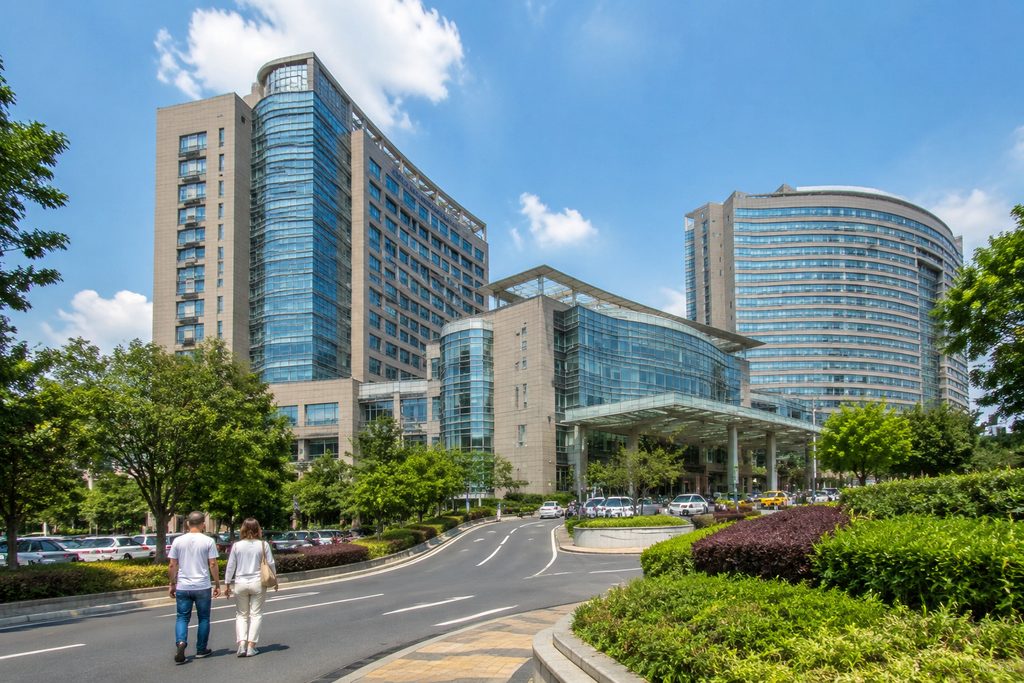
When 42-year-old Michael first heard the diagnosis, he had no idea where to start looking for treatment. A routine executive physical back in London had flagged something. Nothing urgent, his GP said. But the NHS wait for a specialist gastroenterology consult stretched to 14 weeks. Michael runs a sourcing office in Yiwu. He spends half his year in Zhejiang province. “Can I just get the full workup done in Hangzhou?” he asked our team. “And what will it actually cost me?”
The short answer: yes, and the numbers are far more transparent than you might expect. The First Affiliated Hospital Zhejiang University international patient price list is not a single published document you download from a website. It is a structured, quote-driven system based on the specific packages and specialist consultations you require. For a self-funded international patient, a comprehensive executive health screening at their International Healthcare Center typically ranges from $800 to $3,500 USD, depending on depth. A full, multi-day inpatient deep-dive with advanced imaging can run higher. That covers the hospital. Our coordination—the logistics, translation, and appointment lock-in—starts from $300 for the booking alone.
Key Takeaways
- Cost reality: Executive screening packages at this hospital start near $800 and can exceed $3,500 for advanced diagnostics. Specialist consultations add separate fees.
- Clinical weight: The First Affiliated Hospital of Zhejiang University ranks in the top tier (A++++ bracket) of China’s 34,000+ hospitals and handles over 20,000 inpatient surgeries annually.
- Language barrier is real: The International Healthcare Center has English-speaking staff, but navigating registration, cashier counters, and imaging suites without help is difficult.
- No walk-in booking: Foreign patients cannot simply arrive and request a VIP package. Pre-arrangement through the hospital’s international channel is mandatory.
The Problem: Fragmented Care and Opaque Pricing at Home
For many expats and international patients, healthcare back home means waiting. In Canada, the median wait time for a specialist referral to treatment hit 27.7 weeks in 2023, according to the Fraser Institute. In the UK, the NHS target of 18 weeks from referral to treatment has been missed consistently since 2016. Even when you have private insurance, coordinating a full-body screening, cardiology consult, and advanced imaging in one trip can take months of phone calls.
And the cost? A comparable executive health screening at a major London private hospital easily crosses £5,000. At the Mayo Clinic in the US, a comprehensive executive physical starts around $5,000 and can exceed $10,000 with add-ons. Patients like Michael are not just looking for a cheaper bill. They want a single, efficient, high-quality sweep of their health status—without the administrative fragmentation. That is exactly the gap a top-tier Chinese university hospital can fill, provided you know how to access it.
Why the First Affiliated Hospital of Zhejiang University Delivers Results
This is not a small community clinic. The First Affiliated Hospital, often called ZJU Hospital or simply “Zhejiang First,” anchors one of China’s most respected medical universities. It sits in the A++++ bracket of the Fudan University Hospital Rankings—the highest tier, shared by only a handful of institutions including Peking Union and West China Hospital. For international patients evaluating whether this hospital is good for foreign patients, the institutional weight matters. This is a 3,000-bed academic medical center that functions like a small city for healthcare.
Clinical Volume Drives Diagnostic Accuracy
Volume breeds pattern recognition. A radiologist here reads more chest CTs in a month than many Western counterparts see in a year. The hospital’s health management center processes thousands of executive screenings annually. That repetition matters when a subtle shadow on a scan could be nothing—or could be an early-stage malignancy. The sheer case volume means the pathway from “finding something” to “getting a definitive answer” is compressed. If your screening flags a lung nodule, you are not sent back to a GP for a new referral. The center coordinates an immediate thoracic surgery or respiratory consult within the same hospital system, often within the same day.
Technology Density in One Campus
The International Healthcare Center houses its own dedicated imaging suite. PET-CT, 3.0T MRI, low-dose spiral CT, and advanced ultrasound are all on-site, reserved for health screening patients. This is not a shared radiology department where screeners compete with emergency cases for slots. The physical separation means a full executive panel—blood work, imaging, cardiology, endoscopy—can be completed in 4 to 6 hours on a single floor. For a busy executive, that operational design is worth the trip. No shuttling between outpatient buildings. No three-week gap between the blood draw and the stress test.
Cost Structure: Why the Numbers Are Lower
Let’s address the obvious question. How can a top-tier hospital charge $1,500 for a package that costs $6,000 in the US? The answer is structural, not qualitative. Chinese public hospitals operate on a high-volume, lower-margin model. Physician salaries are a fraction of US levels—not because of lower skill, but because of different labor market economics. The hospital’s VIP and international wings cross-subsidize the public wards, keeping the premium tier accessible. A cardiac bypass here runs $15,000 to $22,000 against $120,000 or more in the US. The executive screening follows the same math. Lower cost does not signal lower quality. It signals a different economic model entirely.
What Is Included in an Executive Health Screening Package
When patients ask us what is included in executive health screening package China, they often expect a simple checklist. The reality is more nuanced. ZJU Hospital’s International Healthcare Center offers tiered packages, and the contents shift based on age, gender, and risk profile. A standard premium package for a 45-year-old male typically covers:
– Comprehensive blood panel: complete blood count, liver and kidney function, lipid profile, fasting glucose, HbA1c, thyroid panel, and tumor markers (CEA, AFP, CA19-9, PSA for men)
– Imaging: low-dose chest CT, abdominal ultrasound (liver, gallbladder, pancreas, spleen, kidneys), thyroid ultrasound
– Cardiology: resting ECG, echocardiography, and often a treadmill stress test or coronary calcium scoring for those over 40
– Gastroenterology: gastroscopy under sedation (biopsy if needed, tested for H. pylori)
– Specialist reviews: internal medicine summary consult, cardiology review, and a final report discussion with a senior physician
Women’s packages add gynecological ultrasound, mammography or breast ultrasound, and cervical screening (HPV and ThinPrep). The full written report is delivered in both Chinese and English, typically within 3 to 5 working days. This is not a quick glance at your numbers. The final consult walks you through every abnormal finding, assigns risk levels, and recommends follow-up timelines.
How Much Does a Comprehensive Health Checkup Cost at ZJU Hospital Hangzhou
This is the question our team fields most often. The answer depends on the tier, but here is the real-world range based on the hospital’s current international patient pricing structure:
| Package Tier | Typical Inclusions | Estimated Cost (USD) |
|---|---|---|
| Standard Executive | Blood panel, basic imaging, ECG, internal medicine consult | $800 – $1,200 |
| Premium Comprehensive | Above + low-dose chest CT, full abdominal ultrasound, cardiac stress test, tumor markers | $1,500 – $2,200 |
| Deluxe Deep-Dive | All above + gastroscopy, colonoscopy, coronary calcium scoring, specialist consults (cardiology, gastroenterology, urology/gynecology) | $2,800 – $3,500+ |
| Bespoke Add-Ons | PET-CT, brain MRI, genetic screening panels, extended tumor marker profiles | $500 – $1,500 per add-on |
These figures reflect the hospital’s charges for the screening itself. They do not include our coordination fee, which starts from $300 for appointment booking and document preparation. The numbers also fluctuate. A 60-year-old with a smoking history will need a more extensive lung workup than a 35-year-old non-smoker. The hospital prices accordingly.
Is First Affiliated Hospital Zhejiang University good for foreign patients? The clinical answer is a clear yes. The operational answer requires honesty. The International Healthcare Center has English-speaking nurses and physicians. But the moment you step out of that dedicated wing—to the cashier, to the pharmacy, to the main imaging department for a specialized scan—you are in a Mandarin-only environment. This is not a United Family Hospital with fully bilingual hallways. It is a Chinese public hospital with an excellent international unit inside it. That distinction matters.
Zhejiang University Hospital Medical Tourism Packages: What They Actually Cover
The phrase “medical tourism packages” can be misleading. ZJU Hospital does not sell all-inclusive bundles on a website like a resort stay. What exists is a structured coordination pathway that the International Healthcare Center offers to pre-arranged foreign patients. When patients search for Zhejiang University hospital medical tourism packages cost, they are usually asking about the total outlay—hospital plus logistics.
A typical 2-day comprehensive screening engagement looks like this:
Day 1 morning: Arrive at the International Healthcare Center at 7:30 AM. Blood draw, urine sample, and baseline vitals. Then imaging—chest CT, abdominal ultrasound, thyroid scan, and ECG. By 11 AM, you are drinking the prep solution for an afternoon gastroscopy. The procedure is done under sedation. You are discharged to your hotel by 4 PM.
Day 2: Return for cardiac stress testing if needed, specialist consults, and the summary physician discussion. If a colonoscopy was part of the package, that happens on Day 2 as well. By early afternoon, you have a preliminary verbal summary. The full written English report follows within the week.
The hospital’s portion for this type of engagement runs $2,200 to $3,200. Our end-to-end coordination—including appointment scheduling, document translation, a bilingual medical companion for both days, and report delivery—adds from $1,200. This is not a hidden fee. It is the cost of ensuring you do not spend two hours lost in the wrong building, trying to explain your penicillin allergy to a Mandarin-only nurse.
How to Book a Medical Checkup in Hangzhou for International Patients
Booking a medical checkup in Hangzhou for international patients is not a matter of calling the hospital’s general line. The public appointment system does not handle international screening packages. You must go through the International Healthcare Center’s dedicated channel. Here is the step-by-step reality:
First, you need a clear scope. Are you coming for a general wellness screen, or do you have a specific concern—a breast lump, persistent abdominal pain, an abnormal PSA? The package gets built around that answer. Second, the hospital requires a basic medical history and a copy of your passport before they will reserve a slot. Third, slots for the international wing fill 2 to 4 weeks in advance, especially for packages requiring sedation (gastroscopy, colonoscopy). This is not a walk-in service.
Our team handles this sequence daily. We collect your medical history, translate it into the format the hospital expects, and submit it to the International Healthcare Center. We confirm the package, the date, and the exact cost before you book a flight. On the day, a bilingual companion meets you at the center entrance, guides you through every station, translates physician questions and answers in real time, and ensures nothing gets lost. The companion also handles the pharmacy run if medications are prescribed, the cashier payments, and the final report collection.
The visa side is straightforward but specific. You need an S2 visa, which covers private medical treatment in China. The hospital provides an invitation letter and treatment confirmation that supports the visa application. Do not apply for an M visa—that is for commercial trade, not medical care. The S2 typically allows a 30 to 60-day stay, which is ample for a screening trip. Our team guides you through the documentation, but final approval always rests with the Chinese embassy or consulate in your country.
Practical Considerations: Documentation, Payment, and Follow-Up
Before you commit to a trip, there are concrete logistics to handle. The hospital will need your passport copy, a brief medical history summary, and any prior imaging or lab reports that are relevant. If you had an abnormal mammogram in your home country six months ago, bring the actual DICOM files on a CD or USB, not just the written report. The radiologist here will want to compare images directly.
Payment is upfront and in Chinese yuan. The hospital’s international wing accepts UnionPay, major credit cards, and wire transfers. But as noted, foreign-issued Visa and Mastercard sometimes fail on local POS terminals. We advise clients to confirm with their bank before travel or to arrange a wire transfer to the hospital’s designated account. The hospital does not accept international health insurance for direct billing. You settle the bill and file for reimbursement with your insurer afterward. Get a detailed, itemized receipt in English before you leave—this is critical for insurance claims.
Language is the single largest friction point. The International Healthcare Center physicians speak functional to fluent English. The nursing staff varies. The technicians operating the CT and MRI machines, the cashiers, the pharmacy staff, and the endoscopy suite nurses generally do not speak English. A bilingual companion is not a luxury here. It is the difference between a smooth 4-hour experience and a frustrating 8-hour ordeal where you nod through a medication explanation you did not understand.
After you return home, the full English report arrives via email within 5 to 7 working days. It includes all lab values with reference ranges, imaging findings, and the summary physician’s recommendations. If a finding requires follow-up—say, a thyroid nodule that needs a 6-month repeat ultrasound—the report will specify the timeline. You can bring that report to your home-country physician. If you choose to return to Hangzhou for the follow-up, we can coordinate that as well.
Frequently Asked Questions
Can I just walk into the International Healthcare Center and request a checkup?
No. The center operates on a pre-booked appointment basis for comprehensive screening packages. Walk-in patients may be able to see a general outpatient physician, but the full executive screening requires advance scheduling, a confirmed package, and prepayment. Showing up unannounced almost guarantees you will not get the package you want on that day.
What happens if the screening finds something serious?
This is the scenario the system is built for. If a scan reveals a suspicious mass, the International Healthcare Center coordinates an immediate specialist referral within the same hospital. You see a thoracic surgeon, an oncologist, or a gastroenterologist—usually within 24 to 48 hours. You are not discharged with a “see your doctor” note and left to navigate alone. The hospital’s internal referral mechanism kicks in, and our team adjusts your coordination on the ground. If you need surgery or extended treatment, the S2 visa can be extended, and we handle the hospital admission logistics.
Is the quality of imaging and lab work comparable to Western standards?
Yes, with a caveat. The equipment is current—3.0T Siemens and GE MRI machines, Philips CT scanners, automated lab lines from Roche and Abbott. The technology is identical to what you would find in a top US or European hospital. The difference is in the reporting style. Chinese radiology reports tend to be more detailed and descriptive. They list every finding, including incidental ones that a Western report might omit as clinically insignificant. This can be alarming if you are not prepared for it. The summary physician will contextualize everything, but expect a longer, more granular report than you are used to.
Can my spouse get screened at the same time?
Absolutely. Many of our clients book tandem executive screenings. The hospital can schedule both packages on the same days, with staggered timing so you are not both sedated for procedures at the exact same moment. The package contents will differ by gender and age, but the operational flow works well for couples.
Your Next Step
The First Affiliated Hospital of Zhejiang University offers something rare: a genuinely top-tier academic medical center where a comprehensive health screening can be completed in two days for a fraction of the Western private-pay cost. The clinical capability is not in question. The challenge is entirely operational—booking the right package, navigating the language barrier, and ensuring nothing gets lost in translation.
Our team exists to solve that operational layer. We are not a hospital and we do not provide medical advice or diagnoses. We are the bridge: we translate your history, lock in the appointment, confirm the pricing, and put a bilingual companion at your side from check-in to final report. If you are considering a comprehensive screening in Hangzhou, start with a conversation. Tell us what you need, and we will tell you what is possible—and what it will cost. No pressure. Just clarity. For more medical information and treatment options in China, visit chinamedservices.com (China Medical Services).
