Medical Tourism from Africa to China: Your African Patient Visa, Treatment & Full Support Hub
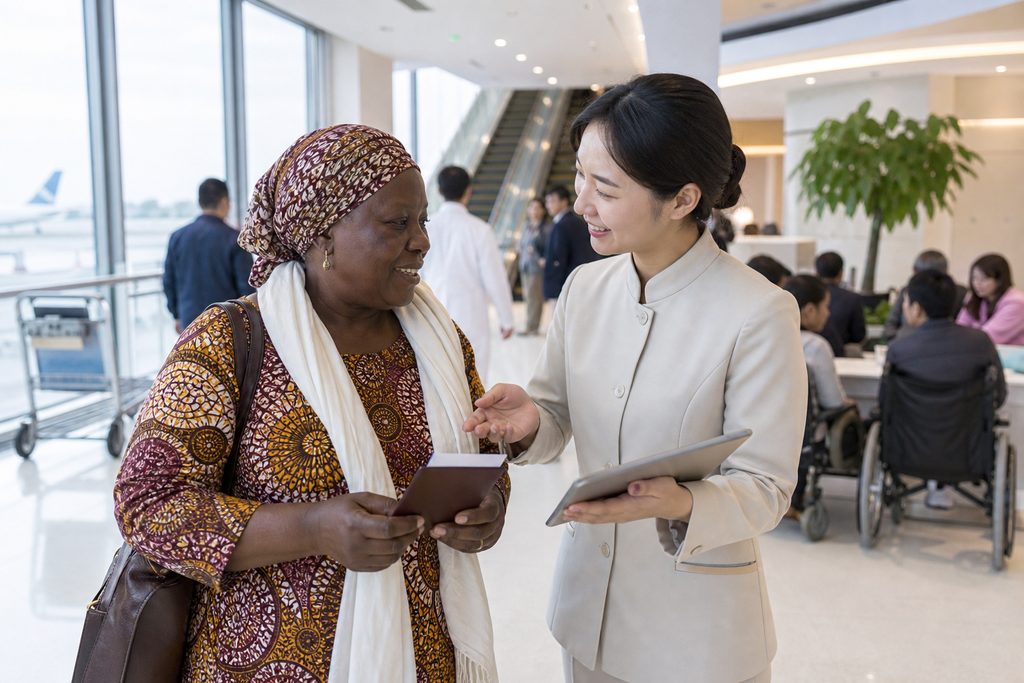
When 45-year-old Adebayo from Lagos finally got a quote for his needed cardiac procedure, the figure stopped him cold. $95,000. That was the out-of-pocket estimate at a private hospital in India, and it did not include flights, lodging, or the months of waiting. His insurance would not cover it. He started searching for alternatives and found himself typing “medical tourism package China from Africa” into his phone late one night. The numbers he discovered shifted his entire perspective. A comparable procedure at a top-tier Chinese public hospital, using the international patient channel, could start from $18,000—a fraction of the cost, with access to surgeons who perform thousands of these operations every year.
This is not an isolated story. Across the continent, from Nairobi to Accra, patients are facing a brutal arithmetic: world-class care at local private hospitals is often unaffordable, while public systems can buckle under overwhelming patient loads. The search radius is expanding. China has become a serious destination in the global medical travel conversation, not by accident, but by design. Our team at China Medical Services has spent years building the bridge between African patients and China’s top-ranked hospitals. We handle the logistics so you can focus on one thing: getting better.
Key Takeaways
- China’s top 5% of hospitals, ranked by Fudan University, handle patient volumes that directly correlate with better outcomes—Fuwai Hospital alone performs over 14,000 cardiac surgeries annually.
- A full medical tourism package from Africa to China must address the S2 visa correctly; the M visa is for commercial trade and will get your application rejected.
- Without a bilingual medical companion, navigating a Chinese public hospital—where single-day outpatient volumes can hit 10,000—is functionally impossible for a non-Mandarin speaker.
- Hip replacement safety in China for African patients is not a question of technology but of coordination; the implants are the same globally, but the success hinges on pre-operative planning and post-operative rehabilitation logistics.
The Problem: When Local Options Run Out
Africa’s healthcare landscape is not a monolith, but a common thread ties many patient stories together: a severe shortage of specialist surgeons. The Lancet Commission on Global Surgery established a benchmark of 20 surgeons per 100,000 people. Many sub-Saharan nations operate with fewer than 2. The result is a waitlist that isn’t measured in weeks, but in life-years. A patient needing a complex spinal fusion or a pediatric cardiac repair in a public teaching hospital in Dar es Salaam or Douala might wait 18 months. Some never get the call.
Private options exist. But they come with a price tag that forces families to liquidate assets or launch public fundraisers. A hip replacement in a premium private wing in Johannesburg or Cairo can easily exceed $25,000. Cancer treatment protocols involving immunotherapy or proton therapy might simply not be available locally at any price. The clinical gap is not about the skill of African doctors—it is about a structural deficit in infrastructure and the sheer density of specialized caseloads.
That gap is what drives the search for a medical tourism package from Africa to China. It is not a luxury purchase. It is a hard-nosed economic and clinical calculation. And it often starts with a single, urgent question: where can I get this fixed safely, now, and without bankrupting my family?
Why China Delivers Results for African Patients
The argument for China is built on three pillars that directly address the failures of the status quo: clinical volume, transparent cost structures, and a visa pathway that, while specific, is navigable with the right guidance.
Clinical Volume Drives Better Outcomes
There is a well-documented relationship in medicine between volume and outcome. Surgeons who do a procedure 300 times a year have complication rates that statisticians can distinguish from those who do it 30 times a year. This is not a theory. It is a finding replicated across orthopedics, cardiac surgery, and oncology. In China’s top-ranked hospitals—the 340+ institutions in our network—this volume is structural. Fuwai Hospital in Beijing is the world’s highest-volume cardiac surgery center. A joint replacement surgeon at a major Shanghai orthopedic hospital might perform 400 procedures annually, compared to the US average of roughly 65.
This matters for African patients because complex cases—revision surgeries, multi-vessel bypasses, late-stage tumor resections—benefit most from pattern recognition. When a surgical team has seen your exact complication a thousand times, the intraoperative decision-making is faster and more precise. The hospitals we connect you with are drawn from the Fudan University Hospital Rankings, which classify China’s top 100 hospitals into tiers (A++++ to A) and rank the top 10 in 45 specific specialties. This is not a marketing list. It is a rigorously maintained national benchmarking system.
Technology and Efficiency at Scale
A common misconception is that lower cost implies older technology. The reality of Chinese academic medical centers is the opposite. Because these hospitals serve massive domestic populations, capital investment in diagnostic equipment is amortized across enormous patient volumes. A 3.0T MRI or a Da Vinci surgical robot is not a rare, scheduled asset—it is running constantly. For the international patient, this means diagnostic turnaround times that can compress what takes weeks at home into 48 hours. You arrive, you scan, your case is reviewed by a multidisciplinary team, and a treatment plan is on the table. The operational tempo is simply different.
Cost Advantage Without Quality Compromise
Let’s address the elephant in the room. When you see a quote for heart surgery cost in Beijing for foreigners that is 70% lower than a US or European bill, the instinct is suspicion. The differential is not a mirage, and it is not a reflection of inferior care. It is a function of labor economics, hospital efficiency, and the absence of the multi-layered insurance billing bureaucracy that inflates costs in Western systems. A coronary artery bypass graft at a top-tier Beijing public hospital’s international wing can range from $18,000 to $25,000. The comparable US figure often exceeds $120,000. The prosthetic valve, the suture material, the heparin drip—these are globally standardized. What you are not paying for is the administrative overhead and the litigation insurance premium built into every US hospital bill.
How to Get a Medical Visa from Africa to China
The visa question is the single biggest source of anxiety for our callers. It should not be a mystery. The correct pathway is clear, but it is also unforgiving of errors. For medical treatment, you need an S2 visa. This is a short-stay private affairs visa, and it is the category used for foreign nationals seeking medical care in China. Your accompanying family member applies under the same S2 category. The M visa is for commercial and trade activities. Submitting an M visa application for a hospital visit will result in refusal. We have seen it happen.
The application requires an invitation letter from the Chinese hospital where you are scheduled for treatment. This is not something you can generate yourself. The hospital’s international patient office issues a formal document confirming your admission or consultation appointment. Our team coordinates directly with these offices to ensure the letter meets the specific format required by the Chinese embassy or visa center in your home country—whether you are applying in Abuja, Pretoria, Nairobi, or Addis Ababa. Processing times vary by jurisdiction, but you should budget a minimum of two to four weeks from document submission to passport return. Start this process early. Do not book a non-refundable flight before the visa is physically in your hands.
Is Hip Replacement in China Safe for African Patients?
This question deserves a direct answer. The safety of a total hip arthroplasty in a Chinese top-tier hospital is on par with international benchmarks. The implants used—from manufacturers like Johnson & Johnson, Zimmer Biomet, and Stryker—are the same devices implanted in operating rooms in London or Boston. The infection control protocols, the anesthesia monitoring standards, and the post-operative deep vein thrombosis prophylaxis regimens are protocolized and audited. The question of safety for an African patient, however, introduces a specific variable: the risk of deep vein thrombosis (DVT) and pulmonary embolism may differ by population, and your surgical team needs to know your full medical history to adjust anticoagulation protocols accordingly. This is a standard pre-operative discussion.
The more practical safety consideration is not the surgery itself but the recovery environment. You will be in a foreign country, possibly during a humid Shanghai summer or a dry Beijing winter. Your body needs to heal. You need a rehabilitation plan that begins before you leave your home country—pre-habilitation exercises to strengthen the muscles around the joint—and continues after you return. We coordinate with physiotherapy teams in China who can provide in-hospital and outpatient rehab, and we advise on the handoff to your local physiotherapist back home. A hip replacement is a partnership between the surgeon’s skill and your own commitment to recovery. The surgeon’s part is reliable. Your part requires planning.
Best Hospitals in Shanghai for Cancer Treatment
Shanghai is not a single-hospital city. It is a dense ecosystem of specialized oncology centers, and the best hospital in Shanghai for cancer treatment depends entirely on your diagnosis. A patient with hepatocellular carcinoma needs a different team than one with nasopharyngeal carcinoma or triple-negative breast cancer. The Fudan University Specialty Reputation Rankings provide a transparent map. Fudan University Shanghai Cancer Center consistently ranks at the top for breast, pancreatic, and colorectal cancers. For thoracic oncology, Shanghai Chest Hospital is a national referral center with a surgical volume that is difficult to match elsewhere. For hematologic malignancies and bone marrow transplantation, Ruijin Hospital’s hematology department, affiliated with Shanghai Jiao Tong University School of Medicine, is one of the most cited centers in the world for acute promyelocytic leukemia research.
When an African patient asks us about the best hospitals in Shanghai for cancer treatment, we do not give a one-size-fits-all answer. We request your pathology report and imaging first. A written second opinion from the relevant specialty team—priced from $300 to $500—provides a treatment recommendation before you ever board a plane. This step confirms that your case is appropriate for the center you are considering and that the proposed protocol aligns with your expectations. It also gives you a tangible document to discuss with your local oncologist. You are not committing to travel. You are gathering intelligence.
| Procedure | Estimated Cost in China (USD) | Typical US Cost (USD) |
|---|---|---|
| Coronary Artery Bypass Graft (CABG) | $18,000 – $25,000 | $120,000+ |
| Total Hip Replacement (unilateral) | $12,000 – $18,000 | $40,000 – $65,000 |
| Laparoscopic Gastric Sleeve | $8,000 – $13,000 | $20,000 – $35,000 |
| Comprehensive Cancer Workup & Written Second Opinion | $300 – $500 | $2,000 – $5,000 |
| Video Consultation with Oncology Specialist | $100 – $300 | $500 – $1,500 |
Note: All costs are estimates in USD and vary by hospital, case complexity, and length of stay. These figures represent the international patient channel at public academic medical centers. Private international hospitals in China, such as United Family or Jiahui, operate on a different fee schedule with direct insurance billing and English-speaking staff throughout.
Practical Considerations: Documents, Payments, and Follow-Up
You have your visa. You have your hospital appointment. What now? The practical layer is where a medical tourism package from Africa to China either holds together or falls apart. First, payment. Chinese public hospitals, including their international departments, typically require a deposit before admission. This is paid via wire transfer or, in some cases, by international credit card on arrival. The hospital will issue a formal receipt and a detailed cost breakdown upon discharge. If your insurance plan offers out-of-network international reimbursement, these documents are essential. Most African patients pay out-of-pocket and seek reimbursement later. Confirm your insurer’s policy before you travel, and get pre-authorization in writing if possible.
Second, language. A top-ranked Chinese surgeon may read and write English fluently but feel uncomfortable explaining a complex consent form verbally. The nursing staff on the ward will almost certainly speak only Mandarin. A bilingual medical companion—a service our team provides from $300 per day—bridges this gap. This person is not a translator on a phone app. They physically accompany you to registration, to the blood draw station, to the CT scan queue, and into the consultation room. They ensure your allergy list is communicated, your medication schedule is understood, and your discharge instructions are clear. In a hospital where 10,000 outpatients move through the system daily, having a human guide is the difference between a smooth process and a disorienting ordeal.
Third, follow-up. Your Chinese surgeon will want to see you for a post-operative check—typically at two weeks and again at three months, depending on the procedure. For many African patients, returning to China for a brief follow-up is not feasible. We work with your team to arrange a structured handoff to your local physician, including translated operative notes, a medication taper schedule, and imaging benchmarks that your doctor at home can review. The continuity of care does not end at the departure gate.
Frequently Asked Questions
Organ transplantation in China is governed by strict legal and ethical frameworks. We do not market, facilitate, or offer packages for solid organ transplantation, including liver transplants, and we cannot provide information on donor availability, wait times, or eligibility for foreign nationals. Our focus is on connecting patients with life-saving treatments that do not depend on donor organ allocation—such as complex cardiac surgery, orthopedic procedures, and advanced oncology care. For any questions about transplantation policy, we advise direct contact with the relevant national health authorities.
A realistic timeline is six to eight weeks. The first two weeks involve document collection and remote case review by the Chinese specialty team. The next two to four weeks are for the S2 visa application at your local Chinese embassy or visa center. Once the visa is approved, we coordinate your arrival, hospital admission, and procedure schedule. Urgent cases can sometimes be accelerated, but the visa processing time is outside anyone’s control. We never advise patients to bypass the visa process or travel on an incorrect visa category.
This happens. It is not a sign of error on either side—it reflects different clinical cultures and available technologies. You are under no obligation to accept the Chinese team’s recommendation. You can take the written second opinion back to your local doctor for discussion. If the recommendations diverge significantly, a multidisciplinary video consultation (priced from $1,500) can bring both perspectives into the same virtual room. The goal is clarity, not compliance. You make the final decision.
No legitimate provider will quote a single fixed price for a complex medical procedure before the hospital has reviewed your case. What we provide is a transparent estimate based on the hospital’s published international patient rates and your specific diagnostic profile. The final hospital bill is determined by the actual length of stay, the specific consumables used in surgery, and any unexpected clinical needs. Our coordination fee is fixed and agreed upon in advance. Any video consultation or written second opinion fee you pay is credited in full toward our on-the-ground coordination service if you proceed with treatment within 90 days. This credit applies to the coordination fee only, never to hospital charges.
Your Next Step
You have seen the data, the costs, and the practical roadmap. The decision to travel across continents for medical care is not a small one, and it should never be made under pressure. Our role at China Medical Services is to give you the information and the logistical support to make a clear-eyed choice. We are not a hospital. We do not offer diagnoses or guarantees of outcome. What we offer is a structured pathway: a written second opinion to confirm your clinical direction, a coordinated S2 visa process, and a bilingual companion on the ground so that language and bureaucracy do not stand between you and your treatment. If you are ready to explore what a medical tourism package from Africa to China could look like for your specific case, the next step is a free consultation. We listen, we ask for your records, and we map the route. From there, you decide.
For more medical information and treatment options in China, visit chinamedservices.com (China Medical Services).
