Matching Your Case: Neurosurgery Sub-Specialties in China for Brain Tumor, Spine, and Vascular Care
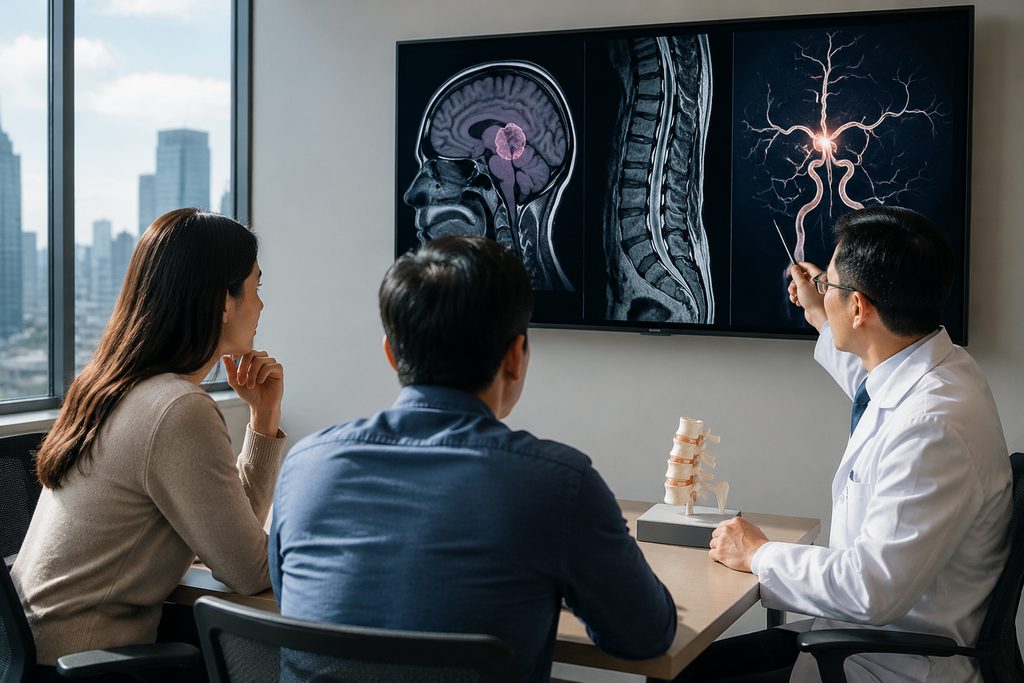
When 42-year-old Michael first heard the diagnosis—a glioma nestled in his left temporal lobe—he had no idea where to start looking for treatment. His insurance coordinator in London handed him a list of three UK centers. The wait for a first consultation was eleven weeks. The quote, without adjuvant therapy, hovered around £45,000 for a self-pay pathway. He started searching online. The volume of information was paralyzing. A search for the best hospital for brain tumor surgery China returned dozens of names, but the real question was sharper: which team actually specializes in *his* type of tumor, using the specific intraoperative protocols his case demanded?
That is the hidden complexity of neurosurgery. It is not one field. It is a federation of sub-specialties, and the surgeon who performs 150 spinal fusions a year is not the same person you want resecting a glioblastoma near your language cortex. Our team has spent years helping international patients map these distinctions onto China’s top-tier hospital system. The goal is never to find a famous hospital name. The goal is to match the specific pathology—brain tumor, degenerative spine disease, or vascular malformation—to a team that treats that condition as their dominant, daily work.
Key Takeaways
- China’s top neurosurgery centers are organized into distinct sub-specialty teams; a hospital ranked #1 for brain tumors may not be the top choice for a spinal schwannoma, and vice versa.
- High clinical volume directly correlates with better outcomes in neurosurgery—a single major Chinese center may perform over 7,000 brain tumor resections annually, dwarfing many Western institutions.
- The most significant barrier for international patients is not surgical quality but pre-admission logistics: you cannot simply email a top surgeon and book a surgery date without a formal in-country evaluation pathway.
- Before contacting any hospital, you need a clear, sub-specialty-specific shortlist—understanding the difference between a cerebrovascular team and a skull-base tumor team is the first critical step.
The Problem: A Generalist Search in a Specialist World
Neurosurgery is one of medicine’s most fragmented disciplines. The microsurgical techniques, intraoperative monitoring equipment, and adjuvant treatment protocols for a vestibular schwannoma have almost nothing in common with those for a thoracolumbar burst fracture. Yet most international patients start with the same broad Google search. They look for “brain surgery abroad” and then try to figure out the rest from there.
This creates a dangerous mismatch. A hospital may have an outstanding reputation in functional neurosurgery—deep brain stimulation for Parkinson’s, for example—but a comparatively low-volume cerebrovascular program. If you arrive with an unruptured middle cerebral artery aneurysm, you have walked into the wrong room. The data backs this up. A 2019 analysis in the Journal of Neurosurgery showed that high surgeon-specific caseloads for a particular procedure significantly reduced complication rates, but the benefit did not transfer across different procedure types. A high-volume spine surgeon is not a high-volume aneurysm surgeon. The skill sets are distinct.
For patients seeking care in China, the challenge is amplified. The Fudan University hospital rankings, which our team uses as a primary reference, list “Neurosurgery” as a single specialty. The top 10 hospitals for neurosurgery overall are well-documented. But that list does not tell you that Hospital A’s neurosurgery department actually allocates 60% of its beds and operating time to cerebrovascular cases, while Hospital B’s similarly ranked department is a national referral center for endoscopic skull-base tumor resection. The ranking is a starting point. The real work is understanding the internal structure.
Why China’s Sub-Specialty Model Delivers Results
Clinical Volume Drives Technical Precision
Let’s talk about raw numbers. At a top-tier Chinese neurosurgery center like Beijing Tiantan Hospital, the annual surgical volume for brain tumors alone exceeds 7,000 cases. To put that in perspective, a major US academic medical center might perform 500 to 800 brain tumor resections per year. The neurosurgeons at Tiantan are organized into dedicated teams: one group handles only pituitary adenomas via a transsphenoidal approach, another focuses exclusively on intraventricular tumors, and yet another manages brainstem gliomas. A surgeon on the pituitary team may perform over 300 transsphenoidal procedures annually. That level of repetition, combined with institutional protocols refined across tens of thousands of cases, creates a depth of experience that is difficult to replicate in lower-volume settings.
This volume-driven model extends to spine and vascular care. Xuanwu Hospital in Beijing is a national center for cerebrovascular neurosurgery, performing over 1,200 aneurysm clippings and interventional coiling procedures each year. For complex spine cases—such as intramedullary spinal cord tumors or severe scoliosis corrections—the orthopedics-neurosurgery combined spine units at hospitals like Peking University Third Hospital manage caseloads that attract patients from across Asia. The pattern is consistent: the system does not rely on a single brilliant generalist. It relies on high-repetition, team-based specialization.
Intraoperative Technology Is Standard, Not a Luxury
A common concern we hear is whether lower costs mean older equipment. The reality is the opposite. Because many of China’s top neurosurgery hospitals have been built or extensively renovated in the last 15 years, their intraoperative technology suites are often newer than those in older Western institutions. Intraoperative MRI (iMRI), used to scan the brain mid-surgery to confirm complete tumor resection, is available in multiple Chinese centers. The same applies to intraoperative CT, 5-ALA fluorescence-guided surgery for gliomas, and advanced neuro-navigation systems. These are not experimental add-ons. For a glioma resection at a top center, the combination of iMRI and 5-ALA fluorescence is a standard protocol, not a special request.
For vascular neurosurgery, hybrid operating rooms that combine endovascular and open surgical capabilities are increasingly common. This matters for complex aneurysms and arteriovenous malformations (AVMs), where the surgical plan may need to shift mid-procedure from a clipping to a bypass or a combined approach. The technology is integrated into the workflow, not bolted on.
Cost Advantage Without Quality Compromise
The cost of brain tumor removal surgery Shanghai or Beijing runs roughly $20,000 to $40,000 for a standard craniotomy and resection, including hospital stay and standard post-operative care. That is approximately one-fifth to one-quarter of the US self-pay price for an equivalent procedure. Complex skull-base tumor resections, which may require a multidisciplinary team and an extended ICU stay, range from $35,000 to $55,000. Spine surgery packages for medical tourism in China are similarly structured: a single-level lumbar fusion might cost $15,000 to $22,000, compared to $80,000 or more in the US.
These figures are not low because of compromised safety. They reflect structural economic differences: lower labor costs across the entire hospital ecosystem, higher patient throughput that distributes fixed costs more efficiently, and a medical device market where many implants and instruments are manufactured domestically to international standards. The clinical outcomes at top centers, measured by metrics like the Gross Total Resection rate for gliomas or the post-operative infection rate for instrumented spine fusions, are comparable to international benchmarks published in major journals.
How to Match Your Specific Condition to the Right Team
Matching your case is a diagnostic exercise in itself. You need to identify not just the broad category—brain, spine, or vascular—but the precise sub-type that dictates which team’s skills are most relevant. This is how we break it down for patients who contact us.
Brain Tumor: It Depends on Location and Pathology
Not all brain tumors are neurosurgical in the same way. A convexity meningioma—a typically benign tumor on the brain’s surface—is a straightforward resection that any competent neurosurgeon can handle. But a petroclival meningioma, nestled deep at the skull base and wrapped around critical nerves and arteries, demands a dedicated skull-base surgeon who works with an ENT colleague for endoscopic access. Similarly, a diffuse intrinsic pontine glioma (DIPG) in the brainstem is often biopsied rather than resected, and the key specialist is a pediatric neuro-oncologist, not a surgeon performing a heroic operation.
For gliomas, the critical question is the tumor’s relationship to eloquent brain regions—areas controlling speech, movement, or vision. If the glioma is near the motor cortex or Broca’s area, you need a center that routinely performs awake craniotomies with intraoperative brain mapping. This is a specific skill set. Not every high-volume brain tumor center performs a high volume of awake procedures. When patients ask us how to choose a neurosurgeon for spine vs brain tumor China, the answer starts with this level of granularity: for a left frontal glioma near the language cortex, you filter hospitals by their awake craniotomy volume, not their overall neurosurgery ranking.
Spine: Degenerative, Traumatic, or Tumor?
Spine surgery is equally segmented. A patient with a herniated lumbar disc seeking a microdiscectomy has a completely different risk profile and recovery trajectory than someone with a metastatic spinal tumor causing cord compression. The former is a high-volume, relatively low-risk procedure; the latter requires a multi-disciplinary team including a spine surgeon, a radiation oncologist, and a medical oncologist to sequence surgery, radiation, and systemic therapy.
For degenerative conditions like cervical spondylotic myelopathy or lumbar stenosis, the key differentiator is the surgeon’s experience with the specific approach—anterior vs. posterior cervical decompression, or minimally invasive vs. open lumbar fusion. China’s top orthopedic spine centers, such as those at Peking University Third Hospital, have developed specialized protocols for these high-volume procedures. For spinal tumors, the referral pattern shifts toward neurosurgery-led spine teams at hospitals like Shanghai’s Huashan Hospital, where the neurosurgery department manages a dedicated spinal cord tumor unit.
Vascular: Clipping, Coiling, or Bypass?
Is vascular neurosurgery safe in China? The answer, as with any country, depends entirely on the center and the specific procedure. For a straightforward anterior communicating artery aneurysm, both microsurgical clipping and endovascular coiling are mature, safe techniques at any major Chinese cerebrovascular center. The complication rates at top-volume hospitals are in the low single digits, consistent with international standards.
The more complex the vascular lesion, the more the choice of center matters. A giant fusiform aneurysm that requires a high-flow extracranial-to-intracranial (EC-IC) bypass is a highly specialized procedure. Only a handful of surgeons in any country perform these regularly. In China, centers like Xuanwu Hospital and Shanghai’s Changhai Hospital have built dedicated cerebrovascular teams that handle a high volume of complex bypass cases. For AVMs, the decision tree includes microsurgical resection, endovascular embolization, and stereotactic radiosurgery—often in combination. The best centers have all three modalities under one roof and a multidisciplinary team that meets to plan each case.
The Real-World Path to Booking Surgery: What to Expect
There is a persistent myth that you can book brain tumor surgery abroad in China with a few emails and a deposit. That is not how the public hospital system works. The pathway is more structured, and understanding it upfront will save you weeks of frustration.
First, a remote evaluation is the essential first step. You send your complete medical records—imaging studies on a CD in DICOM format, pathology reports, operative notes from any prior surgeries, and a summary of your current clinical status. The Chinese neurosurgery team reviews these materials and provides a written second opinion. This document will state whether they believe they can offer a meaningful surgical intervention, what approach they would recommend, and what additional pre-operative testing they require. A written second opinion from a top-tier specialist typically costs $300 to $500 and is for reference only—it is not a prescription or a surgery booking confirmation.
If the remote evaluation confirms that you are a surgical candidate, the next step is often a video consultation. This allows you to speak directly with the neurosurgeon, ask your questions, and understand their recommended plan. Video consultations with top specialists run $500 to $800. This conversation is crucial for building trust and clarifying expectations. You will discuss the surgical approach, the expected hospital stay, the rehabilitation timeline, and the specific risks relevant to your case.
Only after the remote evaluation and video consultation does the in-person phase begin. You will need to travel to China for a formal face-to-face consultation and pre-operative testing. This cannot be skipped. The surgeon must examine you, and the hospital must run its own imaging and blood work before scheduling surgery. This is a universal rule in Chinese public hospitals. You should plan for a stay of at least two to four weeks for the pre-operative workup, the surgery itself, and the initial post-operative recovery before you are cleared to fly home.
Practical Considerations: Documentation, Costs, and Follow-Up
This is a question you must ask directly during your video consultation. Chinese hospitals have established protocols for managing surgical complications, and top-tier centers have neuro-intensive care units equipped to handle post-operative crises. However, the legal framework for medical malpractice differs from Western countries. Many international patients choose to work with a medical coordination service that can help mediate communication and problem-solving if complications arise, but you should have a clear, written understanding of the hospital’s complication management protocols and your financial responsibilities before you consent to surgery.
Yes. Your accompanying family member applies for an S2 visa alongside you, using the same hospital invitation documentation. Many international patient wards in Chinese hospitals offer private or semi-private rooms with space for a family member to stay. Your coordination team can arrange nearby accommodation for longer stays. Having a family member present is not only allowed but encouraged, as they will be essential for communication and support during your recovery.
Will my home-country neurosurgeon be offended or refuse to help if I seek surgery abroad?
In our experience, most neurosurgeons are primarily concerned with their patient’s outcome. If you communicate your decision transparently—explaining that you are seeking a specific sub-specialist or a shorter wait time—most will respect your choice and agree to provide follow-up care. The key is to make the request professionally: ask for your complete medical records, explain
Frequently Asked Questions
Yes. The hospitals used for international patients are JCI-accredited and follow the same international safety standards as top hospitals in the US and Europe. Surgical teams perform high volumes of procedures — often more than their Western counterparts — which studies show leads to better outcomes.
Costs vary by procedure and hospital, but international patients typically save 40-80% compared to US prices — even when factoring in travel and accommodation. A consultation with our team will give you an exact, all-inclusive quote with no hidden fees.
Send us your existing medical reports to get started. We handle everything from hospital selection and appointment scheduling to visa assistance and post-operative recovery planning. Your medical records are reviewed by the specialist before you even book a flight.
For more medical information and treatment options in China, visit chinamedservices.com (China Medical Services).
