COPD Treatment in Shanghai: Zhongshan Hospital Respiratory Guide for International Patients
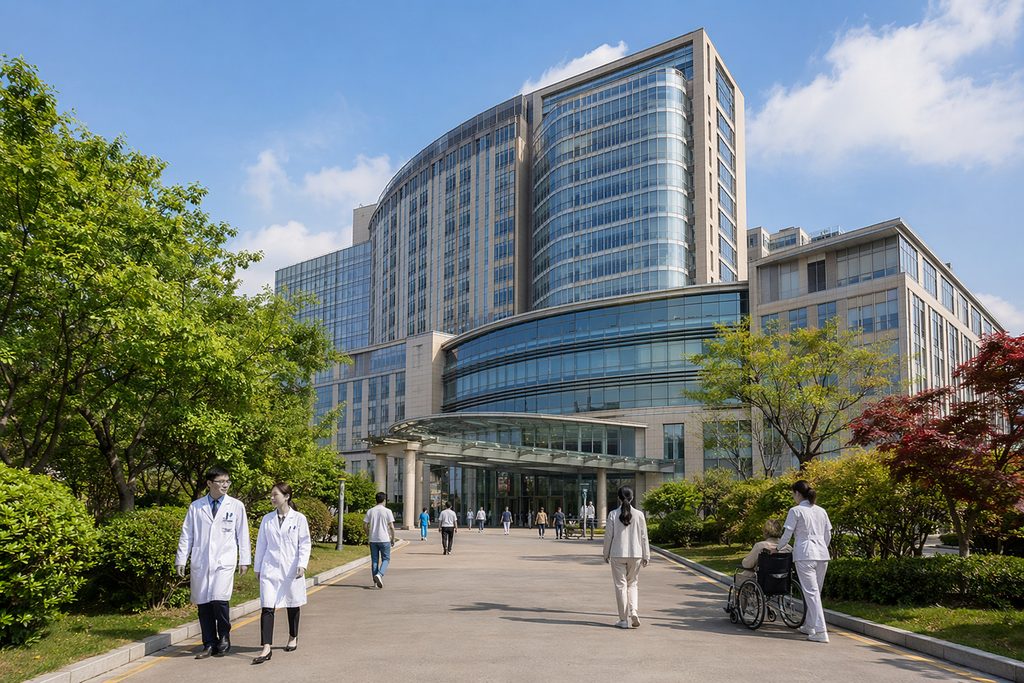
COPD Treatment at Zhongshan Hospital: The Short Answer
Zhongshan Hospital‘s Respiratory Medicine Department treats chronic obstructive pulmonary disease through a staged protocol combining pharmacotherapy, pulmonary rehabilitation, and interventional procedures. For international patients, the COPD treatment cost Shanghai Zhongshan Hospital typically ranges from $3,500 to $18,000 depending on disease severity and required interventions. This covers diagnostic workup, a treatment cycle, and follow-up coordination.
That number means little without context. Stage I COPD management costs a fraction of Stage IV care. A bronchoscopic lung volume reduction runs higher than a medication-only plan. And the international department pricing structure differs from the standard public pathway. We will break down what drives these numbers, who should consider traveling, and how the process actually works.
Who This Is Right For — and Who It Isn’t
Traveling for respiratory care makes sense in specific situations. It also makes no sense in others. Being honest about both saves everyone time.
Typically suitable candidates:
- Patients with confirmed moderate-to-severe COPD (GOLD Stage II-III) who have plateaued on current treatment
- Those seeking advanced bronchoscopic interventions not yet widely available in their home country
- Individuals who need a comprehensive pulmonary rehabilitation program with integrated TCM support
- Patients comfortable with a 2-4 week stay for initial assessment and treatment initiation
Who should reconsider:
- Patients with end-stage COPD (GOLD Stage IV) who are oxygen-dependent at rest and unstable for long-haul travel. The flight itself poses risk.
- Those with active respiratory infection or recent exacerbation requiring hospitalization within the past 4 weeks
- Individuals seeking a guaranteed cure. COPD is a chronic, progressive condition. No center offers a cure.
- Anyone unable to arrange a companion for the trip. Navigating a massive Chinese hospital with breathlessness is not realistic alone.
We say this upfront because a rushed decision helps no one. The respiratory team at Zhongshan will review your complete medical records before confirming suitability. That remote evaluation step exists precisely to filter out cases where travel would not add value.
The Options, Compared
COPD treatment is not one thing. It is a ladder. Understanding what each rung offers — and what it costs — is the only way to make a grounded decision. Here is how the main pathways at Zhongshan Hospital compare for international patients.
| Treatment Pathway | Suitable For | Typical Duration | Estimated Cost (USD) | Key Consideration |
|---|---|---|---|---|
| Medication Optimization + Monitoring | GOLD Stage I-II, stable | 5-7 days | $3,500 – $6,000 | Includes spirometry, imaging, and 3-month medication plan |
| Comprehensive Pulmonary Rehabilitation | GOLD Stage II-III, reduced exercise tolerance | 3-4 weeks | $7,000 – $12,000 | Combines exercise training, nutrition, and breathing retraining |
| Bronchoscopic Lung Volume Reduction (BLVR) | GOLD Stage III-IV with hyperinflation, intact fissures on CT | 2-3 weeks | $14,000 – $18,000 | Requires quantitative CT analysis and Chartis assessment pre-procedure |
| Integrated TCM Adjunct Program | Any stage, as complement to standard care | 2-4 weeks (alongside primary treatment) | $2,000 – $4,000 add-on | Acupuncture, herbal formulas, and qigong breathing techniques |
Most international patients arrive for either the rehabilitation pathway or BLVR evaluation. The medication-only route works for someone already in Shanghai or combining the trip with business. The TCM adjunct makes sense layered onto any of the other three. What these numbers do not include: airfare, accommodation, visa fees, or our coordination service. They cover the hospital-side charges through the international department.
What “COPD Treatment” Actually Means at Zhongshan’s Respiratory Department
The phrase how is COPD treated in China implies a single answer. There is not one. The Respiratory Medicine Department at Zhongshan Hospital — consistently ranked among China’s top respiratory programs in the Fudan University specialty reputation rankings — structures care around a dual approach that many Western centers do not offer under one roof.
Western medicine anchors the protocol. That means GOLD guideline-directed pharmacotherapy: LAMA/LABA combinations, inhaled corticosteroids where indicated, and triple therapy for advanced cases. Pulmonary function testing happens on calibrated Jaeger or CareFusion equipment. The department performs over 8,000 spirometry assessments annually, which matters because technician experience directly affects test reliability.
Where the program diverges is the integration of traditional Chinese medicine as a parallel track. This is not alternative medicine replacing standard care. It is adjunctive. Patients in the rehabilitation program typically receive acupuncture focused on points associated with diaphragmatic function and dyspnea relief — ST36, LU1, BL13. Herbal formulas are prescribed based on pattern differentiation, commonly addressing phlegm-dampness or qi deficiency patterns that TCM theory links to COPD progression.
Does this combination produce better outcomes than pulmonary rehab alone? A 2023 systematic review published in the European Journal of Integrative Medicine analyzed 17 RCTs and found that TCM-integrated rehabilitation improved 6-minute walk distance by an average of 38 meters versus conventional rehab alone, with a clinically meaningful reduction in CAT scores. The effect size was modest but statistically significant. Zhongshan’s own published data on their integrated program reports a 22% reduction in 12-month exacerbation rates compared to pharmacotherapy-only historical controls — though we note this is observational data, not an RCT.
For the patient, this means mornings might involve supervised exercise training and inhalation technique coaching, while afternoons include acupuncture sessions and breathing exercises derived from qigong. The program runs five days per week. It is intensive. Patients who expect a passive experience tend to drop out.
What It Costs — and What Drives the Variance
Let us address the question behind the search Zhongshan Hospital respiratory medicine price for foreigners. The international department operates on a different fee schedule than the domestic public pathway. That is not a markup for being foreign. It reflects concierge-level coordination, English-speaking staff, and expedited scheduling that the standard public channel cannot provide.
Here is what the $3,500 to $18,000 range actually includes and excludes.
Typically included:
- Initial specialist consultation with a respiratory attending physician
- Diagnostic workup: full pulmonary function tests, high-resolution CT chest, arterial blood gas, 6-minute walk test, ECG, and relevant blood panels
- The treatment intervention itself — whether that is a medication plan, a rehab program, or a BLVR procedure
- Inpatient bed charges for the duration of the treatment cycle (standard private room in the international ward)
- Nursing care and routine monitoring
- One follow-up consultation before discharge with a written summary in English
Typically not included:
- Pre-arrival remote evaluation fee ($300-$500 for written second opinion)
- Medication costs for drugs taken after discharge
- Any complication management extending the stay beyond the planned duration
- Accommodation for family members or companions
- Post-discharge telemedicine follow-up (available at $100-$300 per session)
The single biggest cost driver is whether an interventional procedure is involved. BLVR requires device costs — endobronchial valves or coils — plus the procedure itself and a longer inpatient stay. A medication-only plan sits at the low end. Pulmonary rehabilitation occupies the middle.
For reference, a comparable BLVR procedure in the United States typically runs $40,000 to $70,000. In Germany, €25,000 to €45,000. The differential is real, but it exists alongside real logistical complexity. Traveling halfway around the world for a procedure that saves $25,000 may or may not be worth it depending on your circumstances.
Practical Considerations: Records, Visa, and What Happens After You Leave
The medical question — can COPD be cured in Shanghai — has a straightforward answer. No. COPD is not curable anywhere. What a top respiratory center can do is optimize your treatment, improve your functional capacity, and potentially slow disease progression. Setting that expectation matters because disappointment follows unrealistic hopes.
Now the logistics.
Medical records required before anything else. You will need recent pulmonary function tests (within 3 months), a high-resolution CT chest (within 6 months), a complete medication list with dosages, and a summary letter from your current pulmonologist. These must be in English or accompanied by a certified translation. Without these, the remote evaluation cannot proceed.
Visa. Medical treatment in China falls under the S2 visa category — short-term private affairs, annotated for medical purposes. Accompanying family members also apply for S2. This is not the M visa, which is strictly for commercial and trade activities. Processing typically takes 1-4 weeks depending on your home country’s Chinese embassy or consulate. The hospital provides an invitation letter confirming your treatment arrangement, which you submit with your application. We guide you through this but cannot guarantee approval — that decision rests with the visa officer.
Payment. The international department requires upfront deposit payment. Credit cards (Visa, Mastercard) are accepted. Some international insurance plans with out-of-network benefits will reimburse afterward — check your policy. Direct billing arrangements are rare in Chinese public hospitals, even through the international wing.
Language. The international department has English-speaking coordinators and some English-speaking physicians. But the hospital is vast. Getting from the international ward to the pulmonary function lab involves navigating corridors where signs are in Chinese and staff speak Mandarin or Shanghainese. A bilingual companion is not a luxury — it is the difference between a stressful experience and a manageable one.
After you return home. You leave with a treatment plan, a medication regimen, and a discharge summary in English. Your home pulmonologist receives a copy. Continuity of care depends on that handoff. We recommend scheduling a follow-up with your local doctor within two weeks of return. Telemedicine follow-up with the Zhongshan team is available but should supplement, not replace, local care.
Frequently Asked Questions
The international department accepts direct inquiries, but the process is not like booking a hotel. You cannot simply reserve a treatment slot online. The department requires medical record review before confirming any arrangement. If you speak Mandarin and understand the Chinese hospital system, direct contact is possible. Most international patients find the pre-arrival coordination — document translation, specialist matching, scheduling — difficult without help. That is the practical reality, not a sales pitch.
The term medical tourism package COPD China suggests an all-inclusive product with a fixed price. That model works for health checkups. It does not work well for chronic disease management where treatment decisions depend on individual assessment. What exists instead is a coordinated care pathway: remote evaluation first, then a customized treatment plan with associated costs, then logistical support for the stay. The price adapts to what you actually need, not a one-size-fits-all bundle. Be wary of any provider offering a fixed-price “COPD package” without first reviewing your CT scans and PFTs.
This is a real concern. COPD exacerbations can happen. Zhongshan Hospital is a tertiary center with a full ICU capability — if you deteriorate, you are already in the right place. That said, being hospitalized in a foreign country far from family is difficult. The pre-arrival evaluation screens for patients at high risk of acute exacerbation precisely to reduce this likelihood. As for treatment not helping: pulmonary rehabilitation benefits are well-documented but not universal. Some patients see dramatic improvement in exercise tolerance. Others see modest gains. A small percentage see no subjective benefit despite objective improvements on testing. No honest physician guarantees results, and neither do we.
Figure 4-8 weeks. The bottleneck is usually not the hospital. It is gathering your medical records, completing the remote evaluation, waiting for the visa, and arranging travel. The hospital side can typically confirm a treatment plan within 5-10 business days of receiving complete records. The rest depends on your side. Rushing this process is a mistake — incomplete records lead to incomplete evaluations.
Your Next Step
COPD management at Zhongshan Hospital’s Respiratory Medicine Department offers a credible option for patients who have exhausted standard approaches at home or who specifically seek the integrated Western-TCM model. It is not a cure. It is not effortless. It is a serious undertaking that requires realistic expectations and logistical preparation.
Our team at China Medical Services handles the coordination — we are not a hospital, we do not provide medical advice, and we do not make treatment decisions. What we do is connect you with the right specialists at institutions like Zhongshan Hospital, ensure your records are properly prepared, and manage the on-ground logistics so you can focus on your health. If you want to explore whether this path makes sense for your specific situation, a free initial consultation is the place to start. No commitment. Just an honest conversation about what is possible.
For more medical information and treatment options in China, visit chinamedservices.com (China Medical Services).
