Esophageal Cancer Surgery in Shanghai: Chest Hospital vs. Fudan Thoracic Experts
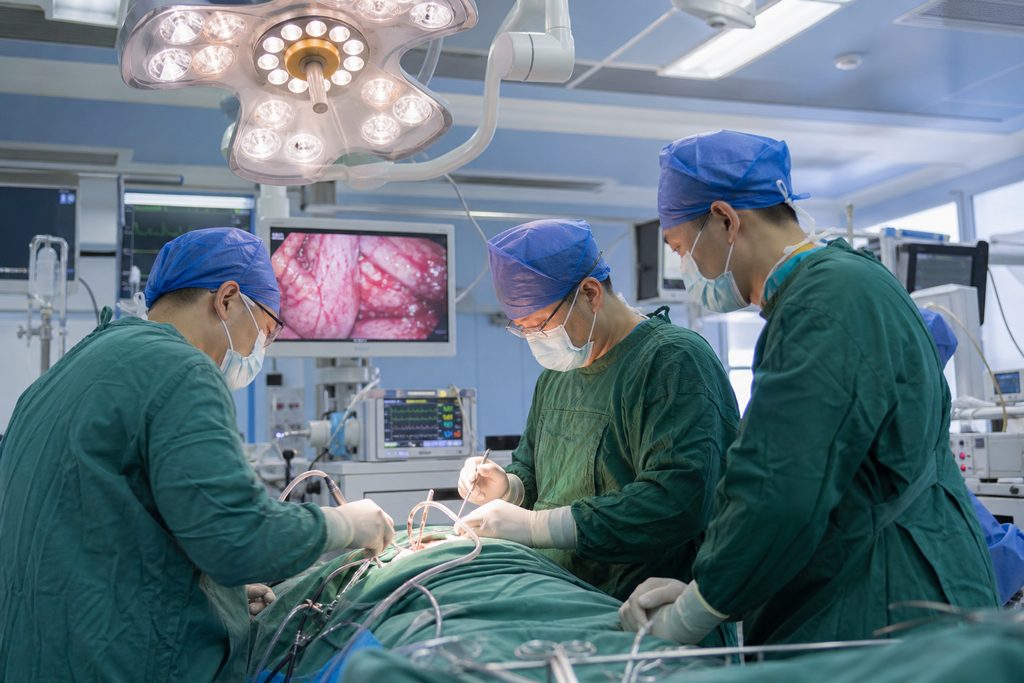
You have probably heard that traveling abroad for cancer surgery means sacrificing quality. The data tells a different story. Shanghai Chest Hospital performs over 1,700 esophagectomies annually, a surgical volume that dwarfs most Western centers. The esophageal cancer surgery cost Shanghai Chest Hospital typically ranges from $18,000 to $35,000 USD, roughly one-fifth of the $120,000 to $180,000 you would face in the United States. But cost means nothing if the outcomes do not match. So the real question is not whether you can save money. It is whether you can trust the hands holding the scalpel.
Key Takeaways
- Shanghai Chest Hospital completes more esophageal cancer surgeries per year than any single center in North America, with published 5-year survival rates comparable to top-tier Western institutions.
- The cost of an esophagectomy in Shanghai runs between $18,000 and $35,000 USD, a fraction of US prices, driven by structural efficiency rather than corner-cutting.
- International patients cannot simply book surgery online. You must navigate visa requirements, document translation, and hospital registration — a process where gaps in planning cause real delays.
- Choosing between Shanghai Chest Hospital and the thoracic surgery department at Fudan University-affiliated Zhongshan Hospital depends on tumor location, staging, and your tolerance for a high-volume versus a more research-integrated environment.
The Problem: A Diagnosis That Demands Precision, Not Just Speed
Esophageal cancer kills roughly 1 in 5 patients within five years of diagnosis in the United States, according to the American Cancer Society. The statistics improve when surgery happens at a high-volume center. A 2015 study in the Annals of Surgery found that hospitals performing fewer than 20 esophagectomies per year had significantly higher 30-day mortality rates compared to centers doing over 50. The problem? Most Western hospitals fall into that low-volume category. You might wait weeks for a surgical slot at a regional center that handles a handful of esophageal cases each month. The surgeon you meet may have performed 15 esophagectomies last year. Not 150. Fifteen.
That volume gap is not a footnote. It is the central variable in whether you wake up with clean margins or face a recurrence. And it is the reason a growing number of patients look beyond their borders.
Why Shanghai’s Thoracic Surgery Centers Deliver Comparable Outcomes at Lower Cost
Shanghai has concentrated esophageal cancer treatment into a few ultra-high-volume hospitals. This is not an accident of geography. It is a deliberate system design. China’s national cancer registry reported over 320,000 new esophageal cancer cases in 2022, and the majority of complex cases funnel into centers like Shanghai Chest Hospital and the thoracic department at Zhongshan Hospital, affiliated with Fudan University. When a surgical team performs the same procedure six or seven times a week, every movement becomes standardized. Complications get anticipated. Recovery protocols get refined through sheer repetition.
Clinical Volume That Reshapes Surgical Outcomes
Shanghai Chest Hospital publishes its surgical volumes openly. In 2023, the hospital reported over 1,700 esophagectomies, making it one of the highest-volume esophageal cancer centers globally. By comparison, MD Anderson Cancer Center in Houston, one of America’s top-ranked cancer hospitals, performs roughly 100 to 150 esophagectomies annually. The difference is not a matter of talent. It is a matter of repetition. A best thoracic surgeon for esophageal cancer Fudan University program graduates will have assisted on or performed more complex resections during their fellowship than many Western surgeons see in a decade of practice.
Does this volume translate to survival? A 2022 study in the Journal of Thoracic Disease analyzing over 5,000 esophagectomy patients at Shanghai Chest Hospital reported a 5-year overall survival rate of approximately 42% for patients with locally advanced disease who underwent complete resection. That number aligns with outcomes published by high-volume centers in Europe and North America. Not superior. But certainly not inferior. And the procedure is delivered at a fraction of the cost.
Technology Adoption Without the Bureaucratic Lag
Minimally invasive esophagectomy (MIE) has become the default approach at Shanghai’s top thoracic centers. Both Shanghai Chest Hospital and Fudan-affiliated Zhongshan Hospital routinely use thoracoscopic and laparoscopic techniques that reduce hospital stays and lower pulmonary complication rates. The da Vinci robotic system is available at both institutions for select cases, though candidacy depends on tumor stage and location. What surprises many Western patients is the speed of adoption. When a technique proves superior in the literature, these centers switch protocols within months, not years. The reason is simple: with 1,700 cases a year, the data accumulates fast enough to make evidence-based changes quickly.
Cost Structure: Why the Numbers Are So Different
Let us address the obvious question. How much is esophagectomy in China? The answer breaks down into components that reveal why the price gap exists without implying compromised care. A standard open or minimally invasive esophagectomy at Shanghai Chest Hospital or Zhongshan Hospital costs between $18,000 and $35,000 USD. This includes the surgeon’s fee, anesthesia, operating room charges, a typical 10-to-14-day inpatient stay, and basic pathology. Complex cases requiring extended ICU stays or robotic assistance push toward the higher end.
| Cost Component | Shanghai (USD) | United States (USD) |
|---|---|---|
| Surgeon & OR fees | $5,000 – $10,000 | $40,000 – $70,000 |
| Hospital stay (10–14 days) | $6,000 – $12,000 | $40,000 – $80,000 |
| Anesthesia | $1,500 – $3,000 | $8,000 – $15,000 |
| Pathology & imaging | $1,500 – $3,000 | $10,000 – $20,000 |
| Total estimated range | $18,000 – $35,000 | $120,000 – $180,000 |
These figures come from published hospital price lists and patient-reported data collected by our coordination team. They are estimates. Final costs vary by tumor stage, surgical approach, and whether complications arise. But the structural gap persists regardless of case complexity. Chinese surgeon salaries are lower. Hospital administrative overhead is leaner. Malpractice insurance costs a fraction of what US surgeons pay. None of these factors touch the quality of the suture line or the thoroughness of the lymph node dissection.
Shanghai Chest Hospital Versus Fudan Thoracic Surgery: How to Decide
Patients researching is Shanghai Chest Hospital good for esophageal cancer are asking the wrong question. The right question is: which center fits your specific disease profile? Both institutions rank among China’s top five for thoracic surgery in the Fudan University hospital rankings. Both publish internationally. Both accept international patients. But they differ in ways that matter.
Shanghai Chest Hospital is a single-specialty powerhouse. Thoracic disease is all they do. The esophageal surgery department runs like a factory optimized for volume and consistency. If you have a straightforward squamous cell carcinoma of the mid-esophagus and want the team that has seen your exact presentation hundreds of times, Shanghai Chest Hospital is hard to beat. The what is the survival rate of esophageal cancer surgery in China question gets answered here with institutional data stretching back decades.
Zhongshan Hospital, part of Fudan University, embeds its thoracic surgery department inside a comprehensive academic medical center. That matters if your cancer involves the gastroesophageal junction or you have significant comorbidities requiring coordination with cardiology, hepatology, or interventional radiology. The best thoracic surgeon for esophageal cancer Fudan University search leads many patients to Professor-level surgeons who split their time between the operating room, clinical research, and international conferences. You get a surgeon who reads the latest trial data the week it publishes. You also get a hospital where scheduling is more complex and waits may stretch longer than at the single-specialty center.
What the Survival Statistics Actually Mean for Your Case
Numbers without context mislead. When patients ask what is the survival rate of esophageal cancer surgery in China, they usually want reassurance that traveling so far is worth the effort. The honest answer depends on stage. For early-stage disease (T1-T2, N0), 5-year survival after complete resection at Shanghai’s top centers exceeds 60 to 70 percent. For locally advanced disease (T3 or node-positive), survival drops to the 35 to 45 percent range even with optimal surgery and adjuvant therapy. These figures mirror outcomes from Memorial Sloan Kettering, the Mayo Clinic, and other Western reference centers.
What the statistics do not capture is the quality of the lymphadenectomy. Chinese thoracic surgeons routinely perform an extended two-field or three-field lymph node dissection, removing more nodes than is typical in many Western centers. A more extensive dissection may identify micrometastases that would otherwise be missed, potentially improving staging accuracy and long-term control. The trade-off is a higher risk of recurrent laryngeal nerve injury and chylothorax. You need to discuss this balance with the surgeon before consenting.
Practical Considerations: Documentation, Visas, and the Real Timeline
You cannot email Shanghai Chest Hospital and book a surgery date. The system does not work that way. International patients follow a defined pathway, and skipping steps causes delays that frustrate everyone involved.
Start with your medical records. You need a complete packet: pathology report confirming esophageal carcinoma, contrast-enhanced CT of chest and abdomen (within 4 weeks of travel), PET-CT if available, pulmonary function tests, and a cardiac evaluation if you are over 60 or have risk factors. All documents must be translated into Chinese. The hospital’s international department will review them before issuing an invitation letter — the document you need for your visa application.
For medical treatment in China, you apply for an S2 visa with a notation specifying medical purposes. This is not an M visa. M visas are for commercial and trade activities and will be rejected if the purpose is medical treatment. The S2 application requires the hospital’s invitation letter, your passport with at least six months of validity, a completed visa application form, and a recent photo. Processing typically takes 5 to 10 business days, though expedited service may be available at some consulates. Your accompanying family member applies for their own S2 visa.
Once you arrive, the hospital’s international department typically schedules a face-to-face consultation with the surgeon, repeats key imaging if your scans are older than four weeks, and conducts pre-operative clearance. Surgery usually follows within 5 to 10 days of arrival, barring medical delays. The total stay in Shanghai, including recovery before being fit to fly, ranges from three to six weeks depending on your post-operative course.
Frequently Asked Questions
Not in the way you might expect. The hospital requires an in-person surgical consultation before scheduling the procedure. What you can do remotely is submit your records for a written second opinion or video consultation. The surgeon reviews your case, confirms surgical candidacy, and provides a treatment recommendation. That recommendation, combined with the hospital’s invitation letter, allows you to apply for your visa and travel with confidence that surgery will proceed once you arrive and complete the pre-operative evaluation.
This is the hardest question and deserves a straight answer. Shanghai’s top thoracic centers provide discharge summaries and operative reports in English. They will share imaging on CD or via secure portal. But once you leave China, your ongoing care falls to your local medical team. Anastomotic strictures, reflux, and delayed gastric emptying are common late complications of esophagectomy regardless of where the surgery was performed. You need a gastroenterologist or thoracic surgeon at home who agrees to manage these issues before you travel. Some Western surgeons are reluctant to handle complications from overseas procedures. Have that conversation early.
No. The cost difference arises from structural factors: lower physician salaries, lower administrative overhead, and dramatically lower malpractice insurance premiums in China’s public hospital system. Shanghai Chest Hospital and Fudan-affiliated centers are accredited by China’s National Health Commission at the highest level (Grade A, Class 3) and undergo regular quality audits. Their infection control protocols, surgical safety checklists, and anesthesia monitoring standards align with international norms. The lower price reflects economic differences between countries, not a willingness to cut corners in the operating room.
Candidacy depends on tumor location, T-stage, and your pulmonary function. Most T1-T3 mid and lower esophageal tumors without extensive lymph node involvement can be approached thoracoscopically at Shanghai’s top centers. Cervical esophageal tumors and T4 tumors invading adjacent structures usually require open surgery or a non-surgical approach. The surgeon makes this determination after reviewing your CT and endoscopic ultrasound results. A remote video consultation can give you a preliminary answer before you commit to travel.
Your Next Step
The decision to travel abroad for esophageal cancer surgery is not one you make from a Google search. It starts with getting your records in front of a surgeon who can tell you honestly whether surgery in Shanghai makes sense for your specific case. Our team at China Medical Services helps you navigate that process — we coordinate written second opinions and video consultations with the thoracic surgery departments at Shanghai Chest Hospital and Fudan-affiliated centers, handle document translation, and guide you through the visa and travel logistics. We do not perform surgery. We do not diagnose. We make sure you have the information and the access you need to make a clear-eyed decision. If you are ready to learn whether Shanghai is a viable option for your esophagectomy, request a free consultation with our coordination team. We will review your situation and outline the path forward, no pressure and no obligation.
For more medical information and treatment options in China, visit chinamedservices.com (China Medical Services).
