Thyroid Cancer Surgery in Shanghai: Fudan Cancer Center Head & Neck Department Guide
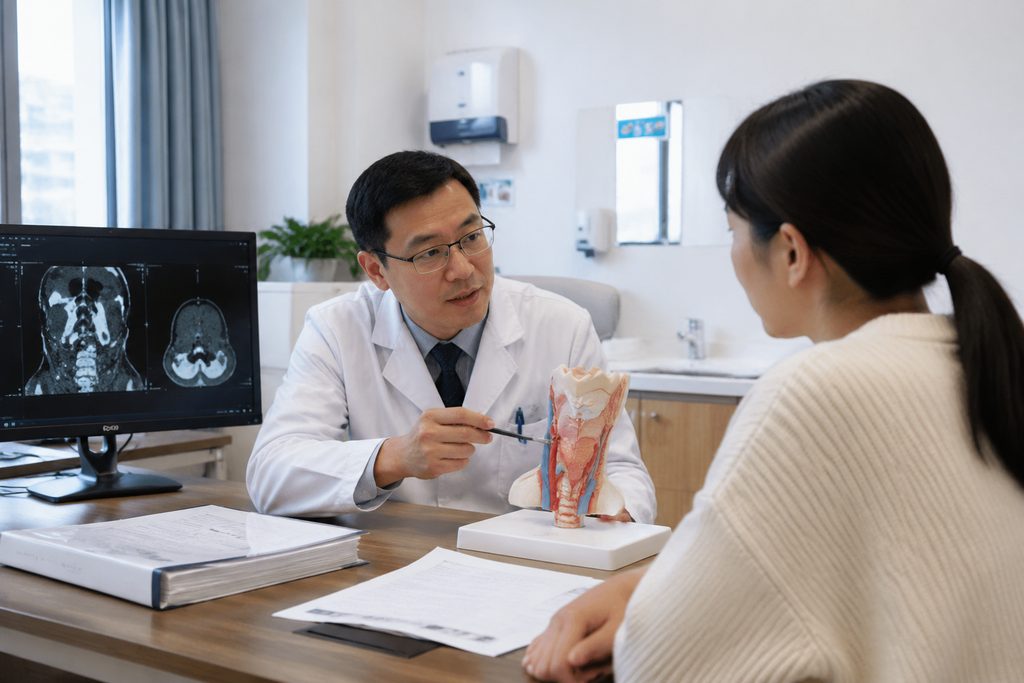
When 42-year-old Michael first heard the diagnosis, he had no idea where to start looking for treatment. The word “cancer” landed like a brick. His local ENT in London had found the nodule during a routine checkup. Papillary thyroid carcinoma. The recommendation was a total thyroidectomy. But the wait time for surgery on the NHS stretched past four months. Going private in the UK meant a bill north of £12,000. So Michael started searching online. That search brought him to a specific query: what is the real thyroid cancer surgery cost Shanghai Fudan Cancer Center, and can an international patient actually access that care?
The short answer is yes. The longer answer requires peeling back layers of logistics, clinical volume, and the specific structure of China’s top-tier oncology hospitals. The Head & Neck Surgery Department at Fudan University Shanghai Cancer Center (FUSCC) handles an extraordinary number of thyroid cancer cases annually. For many international patients, the combination of surgical volume, specialization, and a significantly lower price point makes this a serious option worth investigating.
Key Takeaways
- Fudan University Shanghai Cancer Center’s Head & Neck Department performs over 6,000 thyroid cancer surgeries annually, a volume that dwarfs most Western centers.
- The out-of-pocket cost for a total thyroidectomy at FUSCC’s international wing often ranges from $8,000 to $15,000 USD, roughly 60-80% less than US cash-pay rates.
- Language barriers and hospital navigation are significant hurdles; walking into a Chinese public hospital without a bilingual coordinator is not a realistic plan for most foreign patients.
- No reputable service can guarantee a specific surgeon or surgery date before a patient arrives for an in-person consultation and the hospital’s own workup.
The Problem: A Diagnosis Stuck in Limbo
A thyroid cancer diagnosis is frightening enough. What makes it worse is waiting. In Canada, the median wait time between an ENT specialist visit and thyroid surgery stretches to roughly 13 weeks, according to the Fraser Institute’s 2023 survey of specialist physicians. In the UK’s NHS, the 18-week Referral to Treatment pathway is a target, not a guarantee—many patients wait longer. For a malignancy, even a typically slow-growing one like papillary thyroid carcinoma, that kind of delay gnaws at a person. Every week feels like a month.
And if you lack comprehensive insurance or live in a country with a two-tier system, the financial side hits just as hard. Self-pay rates for a thyroidectomy in the United States can easily exceed $30,000 to $50,000 when you tally the surgeon, anesthesiologist, operating room, and pathology fees. That is a life-altering sum of money. Patients are caught between a system that makes them wait and a system that bankrupts them. Neither option feels like a real choice.
Why Fudan Cancer Center’s Head & Neck Department Delivers Results
FUSCC is not a general hospital that treats some cancer. It is a dedicated cancer center, and its Head & Neck Surgery Department is one of the busiest in Asia. This singular focus creates a clinical environment that is hard to replicate outside of a few global centers. When we connect patients with this department, we are linking them to a team for whom a complex thyroidectomy is not a rare event. It is a Tuesday.
Clinical Volume Drives Better Outcomes
The relationship between surgical volume and patient outcomes is well-documented. A 2016 study in The Lancet found that for a range of surgical procedures, patients treated at high-volume hospitals had significantly lower mortality rates. For thyroid cancer specifically, higher surgeon volume correlates with lower complication rates, particularly regarding the parathyroid glands and recurrent laryngeal nerve. The Head & Neck Department at FUSCC performs over 6,000 thyroid cancer surgeries each year. To put that number in perspective, a busy thyroid surgeon in the US might perform 100 to 200 cases annually. The department’s surgeons are operating on thyroids all day, every day. That volume translates into intraoperative judgment that textbooks cannot teach.
Technology and Efficiency at Scale
The department integrates routine intraoperative nerve monitoring (IONM) to protect the recurrent laryngeal nerve. They deploy rapid intraoperative frozen section pathology to confirm clear margins while the patient is still on the table. Advanced energy devices like harmonic scalpels are standard, not special requests. This is not about futuristic technology; it is about the systematic application of proven tools that reduce operative time and complications. The hospital’s pathology lab is on-site and calibrated for high throughput, meaning final pathology reports come back fast. This operational speed is a byproduct of the sheer volume the center handles.
Cost Advantage Without Quality Compromise
Let’s address the elephant in the room directly: lower cost does not mean lower quality. The structural reasons for the price difference are straightforward. China’s cost of labor, from nurses to anesthesiologists, is lower than in Western countries. Medical device and pharmaceutical costs are also lower. Hospital construction and operational overhead do not carry the same administrative bloat that plagues many US hospitals, where billing and insurance-related activities consume an estimated 25% of total hospital spending, per a 2018 JAMA study. You are paying for the surgery, the expertise, and the recovery—not for a multi-layered insurance bureaucracy. The clinical outcome data for high-volume Chinese centers on thyroid cancer procedures is comparable to international benchmarks, with 5-year survival rates for papillary thyroid carcinoma exceeding 98%.
What the Thyroid Cancer Surgery Cost Shanghai Fudan Cancer Center Actually Looks Like
Numbers matter. Patients need a realistic budget, not vague promises. For an international patient accessing FUSCC through its international medical service channel, a total thyroidectomy typically falls in the range of $8,000 to $15,000 USD. A partial thyroidectomy or lobectomy will sit at the lower end of that spectrum. This figure usually bundles the surgeon’s fee, anesthesia, operating room charges, a standard ward bed for a 2-3 night stay, and basic pathology.
What pushes the cost higher? A few things. A longer hospital stay. The need for a central or lateral neck dissection if lymph nodes are involved. The choice of a VIP or single-room ward, which can add several hundred dollars per night. And the specific pathology—medullary or anaplastic thyroid cancer requires more extensive surgery and longer operative time. The final quote always comes from the hospital’s international department after they review your medical records and imaging. Anyone who gives you a flat, fixed price before the hospital sees your case is guessing.
| Cost Component | Estimated Range (USD) | Notes |
|---|---|---|
| Total Thyroidectomy (Surgeon + OR + Anesthesia) | $6,000 – $10,000 | Core surgical fee through international channel |
| Hospital Stay (2-3 nights, standard ward) | $800 – $1,500 | VIP single room adds $300-$500/night |
| Pre-Op Workup (Labs, Ultrasound, CT if needed) | $500 – $1,200 | Often done within 1-2 days of arrival |
| Pathology (Frozen section + final histology) | $400 – $800 | Essential for confirming clear margins |
| Service Coordination & Bilingual Support | from $300/day | Separate from hospital charges; covers navigation and translation |
| Estimated Total (Typical Case) | $8,000 – $15,000 | Varies by case complexity and ward choice |
How Safe Is Thyroid Cancer Surgery in China at a Top-Tier Center?
The safety question is the one every patient asks, and it is the right question. The answer depends entirely on where you go. China’s 35,000+ hospitals span a vast quality spectrum. We only work with hospitals in the top tier—those ranked by the Fudan Hospital Ranking system and holding JCI accreditation. FUSCC is in that top tier. Its Head & Neck Department operates under strict clinical protocols. Complication rates for recurrent laryngeal nerve injury and permanent hypoparathyroidism are in the low single digits, consistent with international best practices published in journals like Thyroid.
But you must understand the environment. A Chinese public hospital, even a top one, is crowded. The corridors are busy. The nursing model is different—families are expected to be more hands-on with basic patient care than in the West, though VIP international wards mitigate this significantly. The safety of the surgery itself is not the concern at a center like FUSCC. The challenge is the non-clinical friction: the language barrier, the registration process, the payment queues, the follow-up scheduling. That is where having a coordinator on the ground changes the experience from overwhelming to manageable.
Recovery Time After Thyroidectomy: What to Expect in Shanghai
Most patients stay in the hospital for 2 to 3 nights after a total thyroidectomy. The drain, if placed, typically comes out on day two or three. You will be discharged with a small waterproof dressing over the incision. The first week post-discharge involves a soft diet, neck stiffness, and a sore throat from the breathing tube. By day ten, many patients feel ready to fly home, though we always recommend staying in Shanghai for a full two weeks after surgery. Why? Because you need one post-operative checkup with your surgeon to review the final pathology report and check your calcium levels. Transient hypocalcemia is common after a total thyroidectomy. You want to be near your surgical team if you experience tingling in your fingers or around your mouth.
You will leave with a prescription for levothyroxine and possibly calcium supplements. Your surgeon will give you a detailed discharge summary and a follow-up protocol. You then transition your care back to your local endocrinologist at home. The scar will be red and raised for the first six weeks, then gradually fade over a year. Recovery is not a straight line. Some days you will feel almost normal; other days fatigue will hit hard. This is all expected.
Practical Considerations: Your Records, Visa, and Payment
Before you book a flight, you need a paper trail. The hospital will require a recent neck ultrasound report, a fine-needle aspiration (FNA) biopsy pathology report, and thyroid function blood tests. If you had a CT scan, bring the images on a CD. We handle the certified translation of these documents into Chinese for the surgical team. Without these records, the hospital cannot give you a treatment plan or a cost estimate.
For the visa, you will apply for an S2 visa, which is the short-stay category for private affairs including medical treatment. The hospital’s international department will issue an official invitation letter and a treatment confirmation document. You submit these with your visa application. The process typically takes one to two weeks. Do not book a non-refundable flight until the visa is in your passport. Your accompanying family member also applies for an S2 visa.
Payment at the hospital is upfront. You deposit a lump sum at the international patient registration desk upon admission, and the hospital deducts from it. Any remainder is refunded at discharge. Major credit cards and wire transfers are accepted. Your home insurance may reimburse you later, but the hospital itself does not do direct billing with foreign insurers. You pay first, then claim.
Frequently Asked Questions
No, and any service that promises this is being dishonest. A top-tier Chinese public hospital requires an in-person consultation and its own diagnostic workup before scheduling surgery. You can send your records for a preliminary review and a treatment plan estimate, but the final surgical booking happens only after you arrive and see the specialist. What you can arrange in advance is a video consultation with the department to get a written second opinion, which then sets the stage for a smoother in-person visit.
This is a scenario the department is built to handle. If the frozen section or final histology reveals a more aggressive subtype or unexpected lymph node involvement, the surgical plan may have already been adjusted intraoperatively. If further treatment like radioactive iodine (RAI) therapy is needed, FUSCC has a nuclear medicine department that can coordinate this, or you can take the detailed pathology report back to your home country to arrange RAI there. The hospital does not leave you in the dark. You will have a clear report and a recommended next-step protocol.
Some agencies market all-inclusive “packages” that bundle flights, hotels, surgery, and even sightseeing. Be extremely cautious. A reputable medical coordination service focuses on the clinical logistics: hospital matching, record translation, appointment scheduling, and bilingual accompaniment. A bundled “tourism” package often obscures which hospital and surgeon you are actually getting. Your priority is the surgical team’s credentials and the hospital’s thyroid cancer volume, not a bundled hotel deal. Separate your medical coordination from your travel booking. That keeps the incentives clear.
Your Next Step
A thyroid cancer diagnosis puts you at a crossroads. The path forward is not about finding the cheapest option or the most famous name. It is about matching your specific case—your pathology, your timeline, your budget—to a surgical team that handles your exact situation hundreds of times a year. At China Medical Services, our role is to bridge the gap between your diagnosis and a confirmed treatment plan at a center like FUSCC. We do not provide medical advice or diagnoses. We handle the logistics: translating your records, arranging a remote second opinion with the Head & Neck Department, coordinating your S2 visa invitation, and placing a bilingual companion at your side from the moment you land. If you are ready to move from searching to planning, reach out for a free consultation. We will ask about your case, explain the process honestly, and help you decide if this route makes sense for you. No pressure. Just a clear conversation about what is possible.
For more medical information and treatment options in China, visit chinamedservices.com (China Medical Services).
