Heart Bypass Surgery in Shanghai: Why Zhongshan Hospital Fudan Leads Cardiac Care
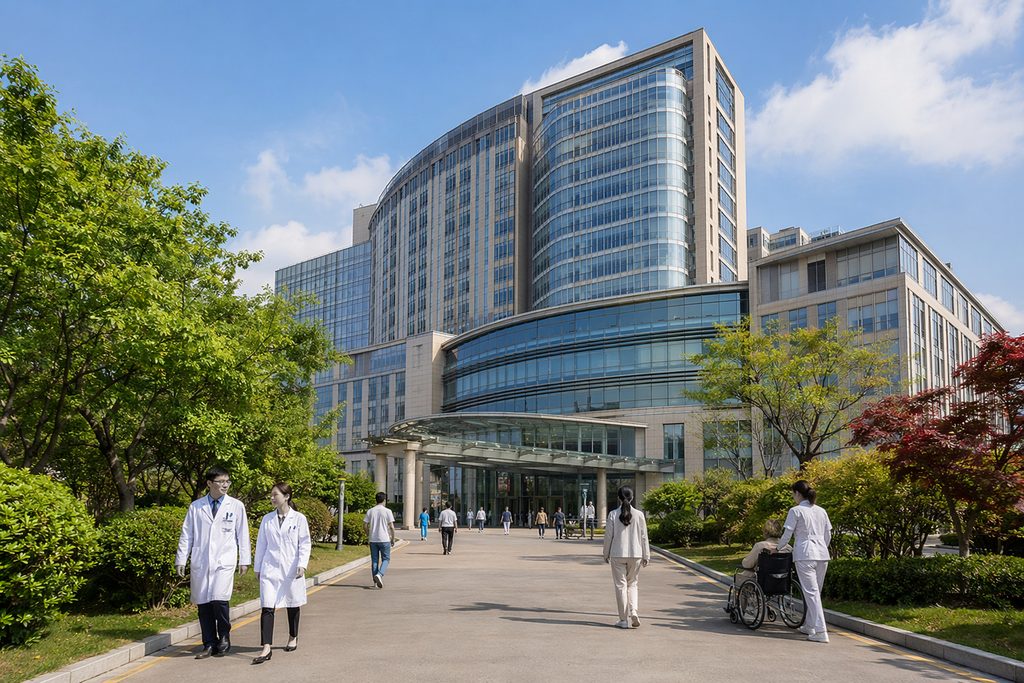
You have probably heard the cautionary tales. Surgery abroad means a gamble on quality, a leap into the unknown where standards might slip and communication breaks down entirely. The data tells a completely different story, particularly in cardiac care. For a patient facing coronary artery disease, the question of where to have a heart bypass is not just about survival. It is about the quality of life in the decades that follow. And the reality is that one of the world’s highest-volume, most meticulously ranked cardiac centers sits in Shanghai. Its name is Zhongshan Hospital, affiliated with Fudan University. Its cardiology and cardiac surgery departments are not merely good. They are ranked second in all of China, a country with over 35,000 hospitals.
We are China Medical Services. Our team does not perform surgery. We handle the complex logistics that stand between you and the operating room. That means translating medical records, scheduling consultations with the right specialist, and ensuring you are not lost in a system that sees over 10,000 outpatient visits a day. We have seen the specific anxiety in a patient’s eyes when they ask about the heart bypass surgery cost Shanghai hospitals charge, and whether that lower number signals a hidden compromise. It does not. It signals a fundamentally different economic structure and a public health system built for massive scale. A coronary artery bypass graft (CABG) at a top-tier Chinese public hospital like Zhongshan typically ranges from $12,000 to $20,000. Compare that to the $120,000 or more that the same procedure costs in the United States. The savings are not from cutting corners. They come from a system engineered for efficiency and volume.
How This Actually Works, Step by Step
The path from a diagnosis in London or Los Angeles to a recovery room in Shanghai is more linear than most people assume. It breaks down into clear, sequential stages. The first step is never buying a plane ticket. It is sending us your existing medical records. We need a recent coronary angiogram. Not a summary. The actual imaging on a CD or a secure DICOM file link. We need your full medical history, echocardiogram reports, and a list of current medications.
Our team translates these documents into clinical Chinese. Not a machine translation. A translation by a medical professional who understands that “LAD has a 90% proximal lesion” requires precise terminology. We submit this package to the international department at Zhongshan Hospital Fudan. A cardiac surgeon reviews your case. This is a formal written second opinion. The surgeon assesses whether you are a surgical candidate, what specific grafts you might need (LIMA to LAD, SVG to OM, etc.), and whether any preoperative optimization is required before you travel. This step costs $300 to $500 and typically takes 5 to 7 business days.
Once the surgical team confirms they can treat you, the logistical phase begins. We coordinate a video consultation with the surgeon. You speak to them directly, through our interpreter. They explain the proposed surgical plan. You ask your questions. This consultation costs $500 to $800. After you decide to proceed, we lock in a surgical date. This requires a deposit paid directly to the hospital. We then guide you through the S2 visa application, which is the correct short-stay visa category for private medical treatment in China. Your accompanying family member applies for the same S2 visa. We provide the official hospital invitation letter and treatment confirmation that the Chinese embassy requires.
You arrive in Shanghai. Our bilingual medical companion meets you at the airport. The next days involve preoperative testing: repeat labs, a chest X-ray, possibly a carotid Doppler. These are done at the hospital. The surgery itself takes place. You spend a night or two in the cardiac surgical ICU, then move to a general ward. The total hospital stay for an uncomplicated CABG is usually 7 to 10 days. After discharge, you stay in Shanghai for at least one more week for a follow-up wound check and suture removal before being cleared to fly home.
Zhongshan Hospital Fudan Rank 2 Cardiology: What That Actually Means
Every year, the Fudan University Hospital Management Institute releases the most authoritative hospital ranking in China. It is a peer-review process. Thousands of clinicians across the country vote on which hospitals have the best clinical reputation. The overall hospital ranking places institutions into tiers: A++++, A+++, A++, A+, and A. Zhongshan Hospital is consistently in the top tier, A++++. But the real story for a heart patient is in the specialty reputation rankings. These are numbered from 1 to 10.
In the cardiology specialty reputation ranking, Zhongshan Hospital holds the number 2 position nationally. In cardiac surgery, it also sits firmly in the top 3. This is not a marketing claim. It is the consensus judgment of Chinese cardiologists and cardiac surgeons about where they would send their own family members. The hospital performs over 4,000 cardiac surgeries annually. A significant portion of these are complex CABG procedures, including off-pump bypass (OPCAB) and minimally invasive direct coronary artery bypass (MIDCAB). The mortality rate for isolated, elective CABG is well under 1%, which aligns with the best international benchmarks. The hospital is a national training center for advanced cardiac techniques. Surgeons come here from across Asia to learn. That is the level of expertise you are accessing.
What does “rank 2” mean for you practically? It means the surgical team has seen and managed almost every possible anatomical variation of coronary disease. It means the perfusionists running the heart-lung machine do this multiple times a day, not a few times a week. It means the ICU nurses recognize a subtle change in a patient’s hemodynamics before a monitor alarms. Volume builds this kind of intuition. Zhongshan has volume that few centers in the world can match.
A Realistic Timeline
People want to know how fast this can happen. The honest answer is that it is a process measured in weeks, not days. Rushing cardiac surgery is a recipe for complications. Here is a realistic, unvarnished timeline from the moment you first contact us.
| Stage | Action | Typical Duration |
|---|---|---|
| Week 1 | You send us all medical records and imaging. We review for completeness. | 2-3 days |
| Week 1-2 | Professional medical translation of your records into Chinese. | 3-4 days |
| Week 2-3 | Written second opinion by a Zhongshan cardiac surgeon. You receive a detailed report in English. | 5-7 business days |
| Week 3-4 | Video consultation with the surgeon. You discuss the plan and ask all your questions. | Scheduled within 1 week of report |
| Week 4-5 | You decide to proceed. We coordinate a surgical slot and you pay the hospital deposit. | 3-5 days for slot confirmation |
| Week 5-7 | S2 visa application process. We provide the invitation letter. You apply at your local Chinese embassy. | 1-2 weeks (varies by country) |
| Week 8 | Travel to Shanghai. Preoperative testing and final surgical planning. | 2-3 days before surgery |
| Week 9 | CABG surgery and in-hospital recovery. | 7-10 days in hospital |
| Week 10-11 | Post-discharge recovery in Shanghai. Wound check. Clearance to fly. | 7-10 days after discharge |
The total time from first contact to flying home is roughly 10 to 12 weeks. The biggest variables are the surgical team’s availability and the visa processing speed at your local Chinese embassy. We cannot control either of those. We can only keep you informed at every step.
What Can Go Wrong — and What Happens Then
Surgery carries risk. Anyone who tells you otherwise is not being honest. The question is not whether risk exists, but what the response looks like when a problem arises. At Zhongshan Hospital, the systems for rescue are robust.
A patient may experience postoperative atrial fibrillation. This is common. It happens in about 20% to 30% of CABG patients. The cardiac ICU team manages this with rate control or rhythm control medications. It often resolves before discharge. A more serious complication is postoperative bleeding requiring a return to the operating room. This occurs in roughly 2% to 3% of cases. The surgical team is in-house 24 hours a day. They can have a patient back on the table within 30 minutes of the decision being made. A sternal wound infection is another feared complication. The rate at a high-volume, meticulous center like Zhongshan is below 1%. If it happens, it is managed with antibiotics, wound vacuum therapy, and occasionally surgical debridement. The hospital has infectious disease specialists who co-manage these cases.
What if the unexpected happens and a patient needs an extended ICU stay? The cost will increase. Our initial cost estimate assumes an uncomplicated course. We are transparent about this from the start. You should plan for a financial buffer of at least 30% above the quoted surgical package price. The hospital will require ongoing payment as the balance accrues. This is standard practice in Chinese public hospitals. It is not a sign of a problem. It is the billing workflow.
What if, after the written second opinion, the surgeon determines you are too high-risk for surgery? This happens. Zhongshan’s cardiologists are not incentivized to operate on poor candidates. The written second opinion will clearly state that the surgical risk outweighs the benefit. In that case, you are not out of options. The same cardiology team can often offer percutaneous coronary intervention (PCI) with stenting as an alternative. Or they may recommend continued optimized medical therapy. The second opinion fee is not refundable. The work was done. But it may have just saved you from a catastrophic outcome.
How Successful Is Heart Bypass Surgery at Zhongshan Hospital Shanghai? Decoding the Numbers
Patients ask us a very specific question: how successful is heart bypass surgery at Zhongshan hospital Shanghai? The term “success” needs a definition. For a cardiac surgeon, success is a patient who leaves the hospital alive with a patent bypass graft and no major complications. For a patient, success is often simpler. It is walking up a flight of stairs without chest pain for the first time in years.
The clinical data is strong. The in-hospital mortality for isolated, elective CABG at Zhongshan is consistently below 1%. The long-term patency rate of a left internal mammary artery (LIMA) graft to the left anterior descending (LAD) artery is over 90% at 10 years. This is the gold-standard graft and the one that most impacts long-term survival. Saphenous vein graft patency is lower, which is a biological reality, not a reflection of surgical skill. The hospital publishes its outcomes data in peer-reviewed international journals. The cardiac surgery department is a recognized center of excellence.
But survival is not the only metric. A successful bypass should also mean freedom from repeat revascularization. At Zhongshan, the 5-year freedom from major adverse cardiac and cerebrovascular events (MACCE) after CABG is in line with the best international registries. The hospital’s cardiologists are also aggressive with secondary prevention. You leave with a clear medication regimen: dual antiplatelet therapy, a high-intensity statin, a beta-blocker. The discharge summary is thorough. It is translated back into English for your home cardiologist. The success of the operation extends into how well your local team can take over your long-term care. We make sure that handoff is seamless.
Practical Considerations: Visa, Payment, and Language
The medical details are only half the picture. The practical layer is where many international plans fail. We focus heavily on this because a missed detail here can derail the entire trip.
Your visa is an S2. This is not negotiable. The M visa is for commercial trade. Applying for the wrong category will result in a rejection at the embassy or a problem at the border. The S2 visa is specifically for private affairs, which includes medical treatment. You will need an invitation letter from Zhongshan Hospital’s international department. We arrange this. The letter states the purpose of your visit and the expected duration of treatment. The visa is typically issued for a stay of up to 180 days. Your spouse or adult child traveling with you applies for their own S2 visa, with you as the inviting party once the hospital letter is in place. We guide you through the exact documentation package.
Payment is another friction point. Chinese public hospitals do not directly bill your international health insurance. You pay the hospital upfront. The hospital provides you with detailed, itemized receipts and a discharge summary in both Chinese and English. You submit these to your insurance company for reimbursement. Some patients use a medical financing company or a personal loan. Others pay from savings. The heart bypass surgery cost Shanghai hospitals quote is a fraction of Western prices, which makes self-pay a viable option for many. But you must have the funds available at the time of admission. The hospital will not schedule your surgery without a deposit. The deposit amount is typically 50% to 70% of the estimated total cost.
Language is the third practical wall. Zhongshan Hospital has an international medical center with English-speaking administrative staff. But the surgical team, the ward nurses, the technicians doing your preoperative tests — they speak Mandarin. Our bilingual medical companion is with you for every critical interaction. They are not just an interpreter. They are a navigator. They know which floor the echocardiography lab is on. They know that you need to take a number and wait for your blood draw. They translate the surgeon’s morning rounds in real time, so you are not lying in bed wondering what was just said about your recovery. This service costs from $300 per day. For a surgical trip, we typically recommend a companion for the day of admission, the day of surgery, and then for a few hours each day during the key recovery period.
Frequently Asked Questions
Zhongshan Hospital Fudan is not currently JCI accredited. JCI accreditation is a voluntary, expensive process that many top Chinese public hospitals do not pursue because their reputation is already established domestically. The hospital’s quality is validated by the Fudan ranking system, which is peer-reviewed and highly rigorous. It is a top ranked cardiology hospital Shanghai JCI accredited or not. If JCI accreditation is a non-negotiable requirement for your insurance or personal comfort, we can discuss private international hospitals in Shanghai that hold JCI status and have strong cardiology departments. The trade-off is typically lower surgical volume.
We cannot guarantee a surgical date before the surgeon sees you in person. What we can do is coordinate a process that makes book heart bypass surgery China international patient a realistic goal. After the written second opinion and video consultation, the surgeon will provisionally agree to operate and a tentative surgical window is reserved. The date is confirmed only after you arrive in Shanghai and the surgeon completes a physical examination and reviews your repeat preoperative tests. This is standard practice. No ethical surgeon will commit to a definitive surgical date for a patient they have never physically examined.
The Zhongshan hospital Fudan heart surgery price for an uncomplicated CABG typically falls between $12,000 and $20,000. This usually includes the surgeon’s fee, anesthesiologist’s fee, operating room charges, standard ICU stay, general ward bed, and basic medications. It does not include the cost of an extended ICU stay, treatment of major complications, your preoperative apartment rental in Shanghai, our companion service fees, or your international flights. A safe total budget, including all medical and non-medical costs, is $25,000 to $35,000. This is still dramatically lower than the $120,000+ price tag in the US.
You are discharged with a detailed medical summary in English. This includes the operative note, a list of all grafts, the discharge echocardiogram, a medication list, and recommendations for cardiac rehabilitation. You hand this to your local cardiologist. The surgical team at Zhongshan does not provide long-term telemedicine follow-up. Your ongoing care is the responsibility of your doctor at home. We can facilitate one follow-up video consultation at 3 months post-op if your local team has specific questions for the surgeon. But the day-to-day management of your INR, your statin dose, and your exercise program belongs to your home team.
Your Next Step
The decision to travel across the world for heart surgery is not a small one. It sits at the intersection of trust, economics, and a very human fear. What we have laid out here is the actual process. The steps, the timeline, the costs, and the risks. Zhongshan Hospital’s number 2 national ranking in cardiology is a data point that should give you confidence in the clinical expertise you are accessing.
Our organization, China Medical Services, exists to translate that clinical expertise into a navigable experience for you. We do not perform medicine. We are case managers who handle the translation, the scheduling, the visa paperwork, and the in-person support. If you are ready to find out whether you are a surgical candidate, the first step is a written second opinion. You can learn more about how we coordinate this on our service page. It is a low-risk way to get an authoritative answer from one of the world’s busiest and most respected cardiac centers. The path forward starts with a single set of medical records and a conversation.
For more medical information and treatment options in China, visit chinamedservices.com (China Medical Services).
