Atrial Fibrillation Ablation Cost China: Catheter Maze and Surgical AFib Treatment Guide
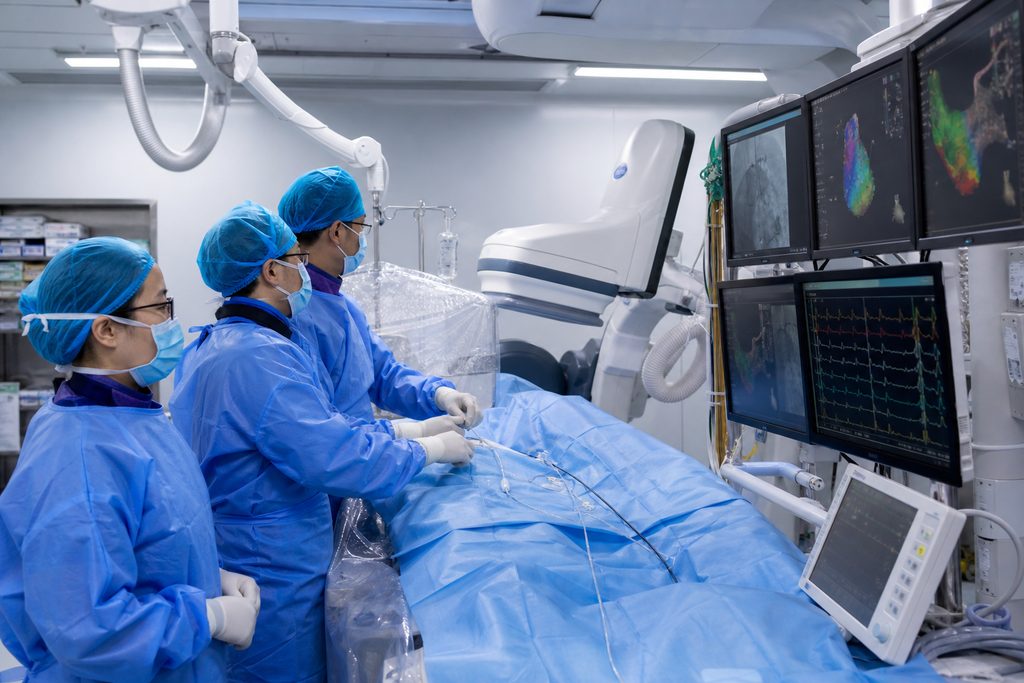
When 42-year-old Michael first heard the diagnosis, he had no idea where to start looking for treatment. Not because options didn’t exist. His cardiologist in Seattle laid them out clearly: medication management with its daily side effects, or a catheter ablation procedure that could address the erratic electrical signals at their source. The problem was the bill. Even with decent insurance, his out-of-pocket estimate for the ablation hovered near $18,000. That’s when he started typing phrases like “atrial fibrillation ablation cost China” into his search bar late at night. He found a landscape that was confusing, promising, and completely foreign. This guide is for Michael, and for anyone else mapping out a cross-border path to a steady heartbeat.
Key Takeaways
- A catheter ablation for atrial fibrillation in a top-tier Chinese hospital typically ranges from $15,000 to $28,000 for international patients, a fraction of the $75,000-$120,000 often billed in the U.S. before insurance.
- China’s highest-volume cardiac centers, such as Fuwai Hospital, perform over 14,000 cardiac surgeries annually, building a level of procedural repetition that directly correlates with lower complication rates.
- Language and logistical barriers are real: navigating a Chinese public hospital without bilingual support can stall your treatment plan, and a standard outpatient visit cannot be booked from abroad without going through a hospital’s international department.
- You should never commit to travel before a remote evaluation of your medical records confirms you are a suitable candidate for the procedure and the specific hospital accepts your case.
The Problem: When the Cost of a Normal Heartbeat Is Out of Reach
Atrial fibrillation affects approximately 1 in 3 adults during their lifetime. For many, the condition is more than an occasional flutter. It’s a constant fatigue that makes climbing a flight of stairs feel like a workout. It’s the anxiety of a stroke risk that hovers in the background of every decision. And when medication stops working, the conversation turns to ablation.
In the United States, the sticker price for a catheter ablation runs between $75,000 and $120,000. Even insured patients can face deductibles and co-insurance that leave them with a $10,000 to $20,000 bill. In the UK, the wait for an ablation on the NHS can stretch beyond a year. Canada sees similar delays. For a patient whose AFib is progressing—moving from paroxysmal to persistent—that time is not neutral. The atrial remodeling continues. The procedure gets more complex. The window for a simpler, more effective intervention narrows.
Why China’s Cardiac Centers Deliver High-Volume, Lower-Cost AFib Care
The structural economics of Chinese healthcare are different. It’s not about cutting corners. It’s about scale, labor costs, and a system where top specialists operate at a pace that most Western surgeons would find hard to imagine. When we connect a patient with a hospital for catheter ablation for afib price Shanghai inquiries, the quote reflects these fundamentals, not a discount on safety.
Clinical Volume That Builds Unmatched Procedural Muscle Memory
Consider the numbers. Fuwai Hospital in Beijing, the National Center for Cardiovascular Diseases, performs over 14,000 cardiac surgeries each year. A single electrophysiology lab in a major Chinese center might complete 15 to 20 ablation procedures in a day. Compare that to a well-regarded U.S. center that performs 8 to 10. Over a year, a Chinese electrophysiologist may perform 400 to 600 AFib ablations. Their American counterpart averages around 100 to 150. This volume isn’t just a statistic. Multiple studies, including a widely cited 2017 analysis in the Journal of the American College of Cardiology, have demonstrated an inverse relationship between hospital procedure volume and adverse outcomes for catheter ablation. The centers that do the most tend to have the lowest rates of complications like cardiac tamponade or vascular injury.
Technology Parity With a Focus on Efficiency
A concern we hear often is whether the technology in Chinese hospitals is outdated. The reality is more nuanced. The top 5% of Chinese hospitals—those ranked by the Fudan University hospital rankings and those with Joint Commission International (JCI) accreditation—operate the same mapping systems used in leading Western centers. You’ll find the CARTO 3 system from Biosense Webster and the EnSite Precision system from Abbott in routine use. Cryoballoon ablation is standard. A patient asking “is catheter ablation safe in China” is really asking about the specific hospital, not the country as a monolith. At a Fudan-ranked cardiovascular center, the technology and protocols mirror what you’d find in a major European teaching hospital. The difference is throughput. The Chinese lab often runs longer hours with dedicated teams that turn over rooms faster, which drives down the per-procedure facility cost without compressing the time the electrophysiologist spends on the critical parts of the case.
Cost Structures That Decouple Quality From Price
The lower cost is not a signal of lower quality. It’s a reflection of three hard facts. First, physician and nurse salaries in China are a fraction of those in the U.S., even for top specialists. Second, hospital construction and operational costs per square meter are lower. Third, the sheer patient volume allows fixed costs—like the multimillion-dollar mapping system—to be amortized over far more procedures. When you ask how much does maze procedure cost abroad compared to at home, the answer for China is often $20,000 to $35,000 for a minimally invasive surgical maze, versus $80,000 to $150,000 in the U.S. That’s not a sale. That’s economics.
Your AFib Ablation Options in China: Catheter vs. Surgical Maze
Choosing to travel for treatment means understanding exactly what you’re signing up for. The two main interventional approaches for atrial fibrillation are catheter ablation and the surgical maze procedure. They serve different patient profiles, and your eligibility determines the cost.
Catheter Ablation: The First-Line Interventional Choice
This is the procedure most patients research first. Thin, flexible catheters are threaded through a vein in the groin up to the heart. Using radiofrequency energy (heat) or cryoablation (freezing), the electrophysiologist creates precise scars around the pulmonary veins to block the erratic electrical signals. The procedure takes 2 to 4 hours. Hospital stay is typically one night for observation. For a patient with paroxysmal AFib—episodes that come and go on their own—the success rate after a single procedure is around 70% to 80% at one year. Some patients need a touch-up procedure later. For international patients, the total cost for catheter ablation, including all hospital fees, physician charges, and one night’s stay, generally falls between $15,000 and $28,000. The range depends on whether you use radiofrequency or cryoballoon, the specific hospital’s international department pricing, and the complexity of your case.
The Surgical Maze: When Catheter Ablation Isn’t Enough
The maze procedure is a different beast. It’s surgery. Originally developed as an open-heart procedure, it’s now often performed with minimally invasive techniques through small incisions on the side of the chest. A surgeon creates a pattern of scar tissue—the “maze”—on the outside of the heart to trap and redirect the chaotic signals. This is typically for patients with persistent or long-standing persistent AFib, or for those who have already had a failed catheter ablation. It’s also commonly done as a concomitant procedure alongside another necessary heart surgery, like a mitral valve repair. The success rate for restoring normal sinus rhythm is higher than catheter ablation for this tougher patient group, often cited around 80% to 90% at one year. The trade-off is a longer recovery and a higher cost. For a standalone minimally invasive maze, the cost for an international patient in China ranges from $22,000 to $35,000. You’ll be in the hospital for 5 to 7 days, and full recovery takes a few weeks longer than a catheter procedure.
What Determines the Final Atrial Fibrillation Ablation Cost China Quote?
No ethical provider will quote you a single fixed price by email without reviewing your records first. Here’s what moves the number.
| Cost Factor | Impact on Price | Notes |
|---|---|---|
| Hospital Tier & Location | $5,000 – $10,000 difference | A Fudan A++++ hospital in Beijing will quote higher than a strong provincial cardiac center. Shanghai and Beijing carry a premium. |
| Procedure Type | $7,000 – $15,000 difference | Surgical maze costs more than catheter ablation due to OR time, surgical team, and longer inpatient stay. |
| AFib Type & Duration | $2,000 – $5,000 difference | Persistent AFib often requires more extensive ablation, longer lab time, and sometimes a hybrid approach. |
| International Department Fees | 20% – 50% surcharge | This is the channel that provides English coordination, faster scheduling, and a private room. It’s not an optional add-on for a foreign patient; it’s the practical gateway. |
| Pre-Op Imaging & Workup | $1,500 – $3,000 | A cardiac CT or MRI and transesophageal echocardiogram are mandatory to rule out left atrial appendage thrombus before ablation. |
When you book afib treatment medical tourism China through a coordinator, the initial quote will bundle the hospital’s international department package with the physician’s fee. It will not include your flight, accommodation outside the hospital, or any companion’s expenses. You should budget an additional $3,000 to $6,000 for a 10- to 14-day stay for a catheter ablation, covering a modest hotel, food, and local transport for you and one companion. The surgical maze requires a longer stay, so add $6,000 to $10,000.
Practical Considerations: Records, Visas, and Payment for Your AFib Treatment Trip
The logistics are not an afterthought. They are the difference between a smooth treatment episode and a stressful one.
Medical Records. Before any hospital will accept your case, you need a complete dossier. This includes a recent 12-lead ECG, a 24-hour Holter monitor report, a transthoracic echocardiogram, and ideally a cardiac CT or MRI from within the last six months. If you’ve had a previous ablation, the operative report is non-negotiable. The hospital’s electrophysiologist will review these to classify your AFib and confirm you’re a candidate. Do not book a flight until this remote review is done.
Visa. You will apply for an S2 visa, which covers short-term private affairs including medical treatment. Your companion applies for the same category. The hospital’s international department will issue an official invitation letter and a treatment confirmation document that you submit with your application. Processing times vary by embassy, but plan for a minimum of two to four weeks. The M visa is for commercial and trade activities and is not applicable for medical travel.
Payment. Chinese public hospitals, even through their international departments, operate on a prepayment model. You will be asked to place a deposit—often the full estimated procedure cost—before the ablation is scheduled. Payment is typically made via wire transfer or in some cases by international credit card at the hospital. Private international hospitals like United Family may offer direct insurance billing, but most public hospital international departments do not. You pay upfront and seek reimbursement from your insurer afterward. Always confirm with your insurance company before you travel that they cover elective procedures performed abroad and understand what documentation you’ll need for a claim.
Follow-Up. An AFib ablation is not a one-and-done event. You’ll need an ECG at 3, 6, and 12 months post-procedure. The Chinese electrophysiologist will provide a detailed discharge summary and follow-up protocol that your home cardiologist can execute. Some centers offer a video consultation follow-up, which we can coordinate for you. The blanking period—the first three months after ablation when early recurrences of AFib are common and don’t indicate failure—requires patience and a local cardiologist who understands the post-ablation healing process.
Frequently Asked Questions
Safety is hospital-specific, not country-specific. At a high-volume center that performs over 500 AFib ablations annually, the major complication rate—stroke, cardiac tamponade, atrio-esophageal fistula—is typically below 1%, which is consistent with international benchmarks. The key is choosing a center with JCI accreditation or a top position in the Fudan cardiovascular rankings. We only match patients with hospitals that meet these criteria and that have a dedicated international department with English-speaking staff.
This is a realistic scenario, especially for persistent AFib. A single catheter ablation has a 70-80% one-year success rate for paroxysmal AFib and a lower rate for persistent forms. You should discuss the hospital’s policy on touch-up procedures before you commit. Some centers offer a reduced rate for a redo ablation within a certain timeframe. We always advise patients to have a local electrophysiologist back home who can manage the follow-up and determine if a redo is necessary before you consider traveling again.
“Best” depends on your specific arrhythmia. For catheter ablation, look at the electrophysiology lab’s annual volume and the technologies they use. For a surgical maze, you want a center with a dedicated arrhythmia surgery program. The Fudan Hospital Rankings’ cardiovascular surgery and cardiology specialty lists are the most authoritative public benchmarks in China. We help you interpret these rankings against your clinical needs, and we always recommend a written second opinion from the specialist before any decision to travel.
You should not plan a leisure trip around an ablation. After a catheter procedure, you’ll have a femoral vein puncture site that needs to heal. You’ll be advised to avoid strenuous activity for a week. You’ll also be tired. If you want to see something of China, plan to arrive a few days before your pre-op workup, do your sightseeing then, and focus entirely on recovery after the procedure. Do not schedule a flight out the day after discharge. Give yourself at least 48 to 72 hours post-discharge before flying, and wear compression stockings on the long flight home to reduce the risk of deep vein thrombosis.
Your Next Step
An AFib diagnosis that isn’t controlled by medication forces hard decisions about money, time, and risk. Our team exists to make the information-gathering part of that decision clearer. We are not a hospital and we don’t provide medical advice. We are a Beijing-based coordination team that connects international patients with China’s top-tier cardiac centers. If you have a recent cardiac workup and want to understand your specific options, you can start with a remote evaluation of your records. Visit our patient coordination page to learn how the process works. No commitment. No pressure. Just a clearer picture of what’s possible.
For more medical information and treatment options in China, visit chinamedservices.com (China Medical Services).
