Sinus Lift Surgery in China: Costs, Safety, and Real Recovery Timelines
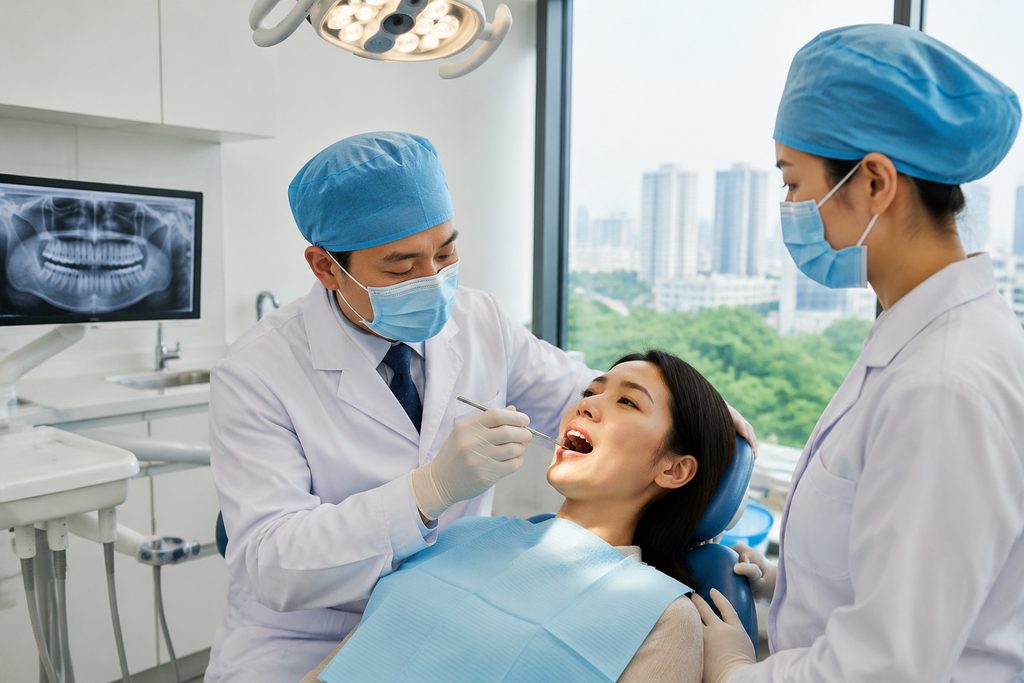
In the United States, a sinus lift procedure typically runs between $3,000 and $6,000 per side — and that is before the implant. In China, the same surgery at a top-tier hospital costs between $1,500 and $4,500, depending on the grafting material and whether you go through a public hospital’s international department or a private JCI-accredited facility. That gap explains why we field weekly inquiries from patients in the UK, Australia, and the Gulf states asking about sinus lift surgery cost China and whether the savings justify the travel.
We are not surgeons. Our team at China Medical Services coordinates care for international patients who need dental and maxillofacial procedures. What follows is a practical walkthrough of the sinus lift process in China — the sequence, the realistic timeline, the failure modes, and the questions you should ask before booking anything.
How This Actually Works, Step by Step
You do not fly to Shanghai, walk into a hospital, and get a sinus lift the next day. The process follows a defined sequence that starts weeks before you board a plane.
First, you send us your existing records: a recent panoramic X-ray, and ideally a cone-beam CT (CBCT) scan showing the maxillary sinus and residual bone height. If you have been told by a Western dentist that you lack sufficient bone for implants, you likely already have these images. We translate the reports into Chinese and forward them to the oral and maxillofacial surgery department at two or three hospitals that match your case complexity.
What comes back is a written assessment. The surgeon reviews the bone height in the posterior maxilla, evaluates sinus membrane thickness, and states whether a lateral window or crestal (osteotome) approach is indicated. You also receive a cost estimate. This remote evaluation costs $300 to $500 and is credited toward in-person coordination if you proceed within 90 days.
Only after you approve the plan do we coordinate the actual appointment. Chinese public hospitals require an in-person consultation before scheduling surgery — there is no way around this. The international department handles the booking, and a bilingual companion meets you at the hospital on the day of your visit.
What a Sinus Lift in China Actually Involves
A sinus lift — technically a sinus floor elevation — adds bone to the upper jaw in the area below the maxillary sinus. It becomes necessary when the residual bone between the sinus floor and the alveolar ridge measures less than 4 to 6 millimeters, which is too thin to anchor a dental implant. The surgeon lifts the sinus membrane and packs bone graft material underneath it. Over several months, that graft integrates with your existing bone.
Two techniques dominate. The crestal approach threads through the implant site itself and suits cases with at least 5 to 6 millimeters of residual bone. The lateral window approach opens a small window in the sinus wall and is reserved for severe bone loss. Chinese oral surgeons perform both routinely. The volume matters here: a busy maxillofacial department at a major Chinese hospital may complete several sinus lifts per week, which translates into procedural familiarity that smaller Western practices cannot match.
Grafting material affects the sinus lift surgery cost China figure you will see quoted. Autogenous bone harvested from your own jaw or chin costs more because it requires a second surgical site. Xenografts (bovine-derived) and alloplasts (synthetic) are cheaper and widely used in Chinese hospitals. Your surgeon will recommend based on the defect size and your healing profile.
Is Sinus Lift Surgery Safe in China?
The honest answer: safety depends on where you go, not on the country. China’s top-tier hospitals — the 340+ facilities in our database, drawn from the Fudan University hospital rankings and JCI-accredited private institutions — operate at international standards for oral surgery. Infection control protocols, imaging technology, and surgical training at these centers are comparable to what you would find in a Western teaching hospital.
But the system is uneven. A small county-level clinic is not the same as the stomatology department at a Fudan-ranked hospital. That is precisely why patients ask us is sinus lift surgery safe in China — and why the answer requires qualifying. The procedure itself carries a complication rate of roughly 5 to 10 percent for membrane perforation, with most perforations repaired intraoperatively without consequence. Serious complications like postoperative sinusitis or graft failure occur in a small minority of cases. Choosing a hospital with high surgical volume and an international department that handles foreign patients reduces the practical risks: language gaps, unclear pricing, and poor follow-up coordination.
A Realistic Timeline
Most patients underestimate the total time from first contact to restored implant. Here is what actually happens, week by week.
| Stage | What Happens | Duration |
|---|---|---|
| Remote evaluation | Records sent, translated, reviewed by Chinese oral surgeon; written plan and cost estimate returned | 1–2 weeks |
| Visa processing | S2 visa application with hospital invitation letter and treatment plan | 2–4 weeks |
| Travel and in-person consultation | Arrival, hospital visit, physical exam, final surgical plan signed | 2–3 days |
| Sinus lift surgery | Outpatient procedure under local anesthesia; 1–2 hours | Same day |
| Initial healing | Suture removal, post-op check, clearance to fly home | 7–10 days in China |
| Graft maturation | Bone graft integrates; no implant placement yet | 4–9 months at home |
| Implant placement | Second trip to China, or continued care with local dentist | 1 week in China |
| Final restoration | Crown placement after implant osseointegration | 3–6 months later |
The waiting step most people forget is the graft maturation window. You cannot place an implant the same month as a sinus lift. Bone needs four to nine months to consolidate before it can support a fixture. Some patients split the process: sinus lift in China, implant placement back home. Others make two separate trips. Your local dentist’s willingness to take over mid-treatment is a factor worth confirming before you commit.
What Can Go Wrong — and What Happens Then
Sinus membrane perforation is the most common intraoperative complication. When it happens, the surgeon either repairs the tear with a resorbable membrane or aborts the procedure and reschedules. Aborted cases are frustrating but recoverable — you wait three to six months and return for a second attempt, often at reduced cost.
Postoperative sinusitis occurs in roughly 2 to 5 percent of cases. Symptoms include congestion, facial pressure, and discharge. Chinese hospitals manage this with antibiotics and nasal decongestants; severe cases may require endoscopic sinus drainage. Graft failure — where the bone material fails to integrate — is rarer but more consequential. If the graft resorbs, the implant plan is delayed by six months or more. Reputable hospitals disclose these risks in the consent process. If a clinic promises zero complications, walk away.
Language failure is a real risk too. A sinus lift is not a procedure where you want to misunderstand post-op instructions through a translation app. That is why our bilingual companions stay with you through the consultation, the surgery day, and the follow-up visit. The cost starts at $300 per day, and it removes one of the most common sources of bad outcomes for foreign patients.
Choosing Where to Have the Procedure
Not every hospital that offers dental implants should perform your sinus lift. The decision criteria look like this.
First, check the department’s surgical volume. A stomatology or oral and maxillofacial surgery department that performs sinus lifts weekly has seen every anatomical variation and complication. Ask directly: how many sinus lifts does this department complete per month? A good answer is ten or more. A vague answer is a red flag.
Second, look at imaging capability. The hospital must have CBCT on-site. A sinus lift planned without three-dimensional imaging is a sinus lift planned blind. Any Fudan-ranked hospital in our database will have this equipment. So will the private international facilities listed on our private hospitals page.
Third, consider the JCI accredited dental hospital Shanghai sinus lift option. JCI accreditation means the facility passed an international audit covering patient safety, infection control, and documentation standards. Shanghai has several JCI-accredited hospitals with strong dental departments, and they tend to offer English-speaking staff and direct insurance billing. The trade-off is cost: expect to pay 30 to 50 percent more than at a public hospital’s international department.
Fourth, evaluate the implant system. Chinese hospitals commonly place Straumann, Nobel Biocare, Osstem, and domestic brands like Wego. The implant brand matters less than the surgeon’s experience with it. Ask which system the surgeon uses most frequently and why.
Practical Considerations: Visa, Payment, and Follow-Up
For a sinus lift and implant package, you will apply for an S2 visa, which covers short-term private affairs including medical treatment. The hospital’s international department issues an invitation letter confirming your treatment plan. Processing typically takes two to four weeks depending on your home country’s Chinese embassy or consulate. Family members traveling with you also apply for S2 visas. No visa category guarantees approval, and requirements shift, so verify current rules with the embassy before booking flights.
Payment works differently than in the West. Chinese public hospitals require prepayment — you deposit an estimated amount at admission and settle the balance at discharge. Most international departments accept major credit cards and bank transfers. Private JCI hospitals often handle direct insurance billing, but public hospitals generally do not. You pay first, then submit claims to your insurer. Confirm your policy’s coverage for out-of-network international care before committing.
Follow-up at home is the piece most people neglect. Your local dentist needs the surgical records, the graft material documentation, and the implant system details to continue care. We ensure you leave China with a complete medical file in English. Without it, a Western dentist may refuse to touch the case, or worse, proceed without knowing what was actually done.
If you are asking how long does sinus lift recovery take before implant, the short answer is four to nine months before implant placement, with most patients cleared at six months. The graft must be dense enough to withstand drilling. Rushing this step is how implants fail.
Frequently Asked Questions
You can arrange the full treatment plan remotely — evaluation, cost estimate, and tentative dates — but Chinese hospitals require an in-person consultation before surgery. The package is confirmed after you arrive and the surgeon examines you. We coordinate the book sinus lift and dental implant package China process so the in-person step is a formality, not a surprise.
The sinus lift surgery cost China figure ranges from $1,500 to $4,500 per side at top hospitals, versus $3,000 to $6,000 in the US and £2,500 to £5,000 in the UK. The implant and crown add $1,200 to $3,000 depending on the system. Total package savings often reach 40 to 60 percent, even after travel costs.
The surgeon repairs small tears with a collagen membrane and proceeds. Larger tears may require aborting the procedure and waiting three to six months for healing before a second attempt. This is a known risk, disclosed in consent, and managed routinely by experienced departments.
Top-tier Chinese hospitals use the same graft materials as Western institutions: xenografts, alloplasts, and autogenous bone. Products are imported or domestically manufactured under national medical device regulations. Ask for the specific material and manufacturer before consenting, and verify it matches what you would accept at home.
The best dental implant clinic China sinus lift depends on your case. For complex bone loss, a Fudan-ranked public hospital’s oral surgery department offers the deepest experience. For English-speaking care and insurance convenience, a JCI-accredited private hospital in Shanghai or Beijing may suit better. We match based on your CBCT findings and budget, not a one-size-fits-all list.
Your Next Step
A sinus lift in China can save you thousands without compromising surgical quality — if you choose the right hospital and understand the timeline. We are not a medical provider. We coordinate the logistics: record translation, hospital matching, appointment scheduling, bilingual companionship, and post-op documentation. If you want a clear-eyed assessment of whether this path makes sense for your case, request a free consultation. Send your records, ask hard questions, and let the data guide your decision.
For more medical information and treatment options in China, visit chinamedservices.com (China Medical Services).
