TCM for Stress and Anxiety in China: How We Arrange Your Treatment
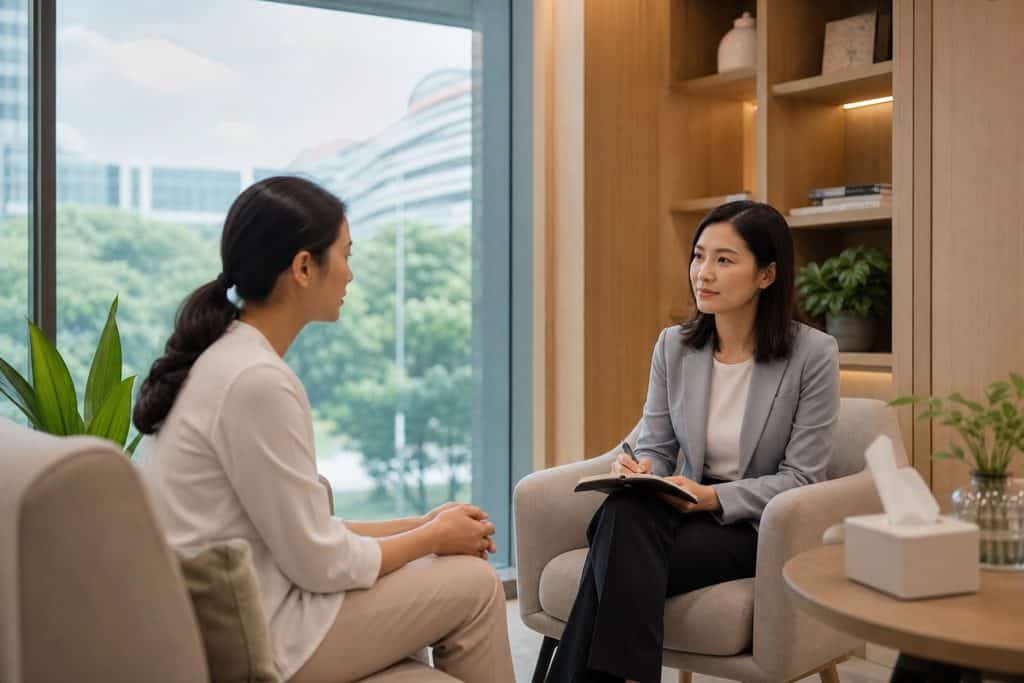
Have you ever wondered whether the constant knot in your chest could finally loosen without another prescription refill? You are not alone. Anxiety disorders affect approximately 1 in 8 adults globally, according to the World Health Organization, and the search for relief has pushed many Western patients toward systems they once dismissed. Our team at China Medical Services helps international patients access Traditional Chinese Medicine (TCM) for stress and anxiety at top-tier hospitals across 37 cities. We handle the logistics, the language, and the hospital coordination — so you can focus on getting better.
Key Takeaways
- TCM for stress and anxiety in China combines acupuncture, herbal formulas, and tuina massage — with acupuncture sessions typically costing $30 to $80 at top public hospitals, versus $75 to $150 in the United States.
- China’s TCM hospitals treat anxiety as a systemic imbalance, not just a brain chemistry issue, using protocols refined over 2,000 years and now studied in modern randomized controlled trials.
- Language barriers and hospital navigation are the biggest obstacles for foreign patients — most TCM departments do not have English-speaking front desks.
- You cannot simply walk into a top TCM hospital and request treatment; you need a plan, the right hospital match, and often a bilingual companion to make the visit productive.
The Problem: Anxiety Treatment Is Expensive, Impersonal, and Often Incomplete
In the United States, generalized anxiety disorder carries an estimated annual economic burden exceeding $42 billion, according to a study published in the Journal of Clinical Psychiatry. But the cost is not just financial. Many patients describe a cycle that feels mechanical: a 15-minute consultation, a new SSRI, a follow-up in three months, and side effects that sometimes feel worse than the original symptoms.
Prescription anti-anxiety medications help millions of people. That is not the argument. The argument is that for a substantial number of patients, the standard biomedical toolkit is not enough. Benzodiazepines carry dependence risks. SSRIs take weeks to work and cause sexual dysfunction, weight gain, or emotional blunting in a meaningful subset of users. A 2022 meta-analysis in JAMA Psychiatry found that approximately 30% of patients with anxiety disorders do not achieve remission after first-line pharmacotherapy.
So patients look elsewhere. They read about acupuncture, herbal medicine, and mindfulness-based stress reduction. They wonder whether a system that treats the whole person — sleep, digestion, energy, emotional state — might offer something that a single-molecule drug cannot. That curiosity is what brings many of them to our inbox.
Why TCM in China Delivers Results for Stress and Anxiety
Traditional Chinese Medicine approaches anxiety not as a single disease but as a pattern of disharmony. A TCM physician will ask about your sleep, your appetite, your digestion, your menstrual cycle if relevant, your sensitivity to temperature, your dreams. The diagnosis might be “liver qi stagnation” or “heart and spleen deficiency” — terms that sound foreign to Western ears but correspond to observable clusters of symptoms. Treatment then targets the pattern, not just the symptom.
Clinical Evidence Is Catching Up to Tradition
Is TCM effective for anxiety disorders? The evidence base has grown substantially. A 2021 systematic review published in Frontiers in Psychiatry analyzed 20 randomized controlled trials involving over 1,600 participants and found that acupuncture significantly reduced anxiety symptoms compared with sham acupuncture and standard care. Another review in the Journal of Alternative and Complementary Medicine reported effect sizes for acupuncture in anxiety comparable to cognitive behavioral therapy in some studies.
How does TCM treat stress and anxiety in practice? It typically combines three modalities. Acupuncture uses fine needles at specific points — often including Shenmen (HT7), Neiguan (PC6), and Yintang (EX-HN3) — to modulate the autonomic nervous system. Herbal formulas such as Xiao Yao San (Free and Easy Wanderer) have been shown in animal and human studies to influence GABA and serotonin pathways. Tuina massage and cupping address muscular tension that both results from and reinforces anxiety.
Volume and Specialization You Cannot Find Elsewhere
China’s TCM hospitals operate at a scale that is hard to comprehend from abroad. Guang’anmen Hospital in Beijing, affiliated with the China Academy of Chinese Medical Sciences, has a dedicated psychosomatic medicine department that treats thousands of anxiety and depression patients annually using integrated TCM protocols. Longhua Hospital in Shanghai, one of the country’s oldest TCM institutions, runs specialized outpatient clinics for stress-related disorders.
A TCM physician at a top Chinese hospital may see 40 to 60 patients per day. That volume produces a clinical intuition that no textbook can teach. But it also means the system is not designed for leisurely, English-language consultations. That is where we come in.
Cost Advantage Without Quality Compromise
Let us talk about TCM acupuncture cost in China directly. At a top public TCM hospital in Beijing or Shanghai, a standard acupuncture session costs between 100 and 300 RMB — roughly $15 to $45. Herbal decoctions add another $20 to $60 per week depending on the formula. A comprehensive initial consultation with a senior specialist at an international department runs $100 to $300.
Compare that to the United States, where a single acupuncture session averages $75 to $150, and a course of 10 to 12 sessions — the typical recommendation for anxiety — exceeds $1,000 before insurance. Most US insurance plans do not cover acupuncture for anxiety. In China, the cash price is the price. There is no surprise billing, no deductible maze, no prior authorization.
| Service | China (Top Public TCM Hospital) | United States (Average) |
|---|---|---|
| Acupuncture session (60 min) | $15–$45 | $75–$150 |
| Initial TCM consultation (senior specialist) | $100–$300 | $200–$400 (integrative medicine) |
| Weekly herbal formula (decoction) | $20–$60 | $40–$100 (compounded) |
| 10-session acupuncture course | $150–$450 | $750–$1,500 |
Choosing the Best TCM Hospital in Beijing for Anxiety
If you search for the best traditional Chinese medicine hospital Beijing for anxiety, you will find several names repeated. Guang’anmen Hospital is the most frequently cited. Its Department of Psychosomatic Medicine integrates acupuncture, herbal medicine, and brief psychotherapy, and it has published extensively on TCM approaches to anxiety disorders. The hospital is a national center for TCM clinical research.
Dongzhimen Hospital, affiliated with Beijing University of Chinese Medicine, is another strong option. Its encephalopathy department (which in TCM classification covers many neuropsychiatric conditions) treats anxiety, insomnia, and stress-related disorders. Xiyuan Hospital, also in Beijing, has a dedicated TCM psychology department and a reputation for treating stress-related digestive and sleep complaints alongside anxiety.
But “best” is not a single answer. The right hospital depends on your symptom profile, your schedule, your budget, and whether you need English-language support. Our team maintains profiles on 340+ top-ranked hospitals across China, including the TCM specialists listed on our TCM hospital directory. We match you to the department that actually treats your pattern, not just the most famous name.
How We Arrange a TCM Stress Treatment Package in Shanghai
Many patients ask us to book a TCM stress treatment package in Shanghai. That request requires some translation — literally and figuratively. Chinese public hospitals do not sell “packages” in the Western spa-retreat sense. What they offer is a structured treatment course: an initial comprehensive evaluation, a series of acupuncture sessions (typically 8 to 12), weekly herbal formula adjustments, and sometimes tuina massage or cupping.
Here is how it works when you work with us. First, you send us your medical history, current medications, and a description of your symptoms. We translate these into Chinese and submit them to the TCM department for a preliminary review. If the department confirms they can help, we coordinate your appointment through the hospital’s official international or VIP channel — the only way to secure a specific time slot before you arrive.
On the day of your appointment, a bilingual medical companion meets you at the hospital. They handle registration, payment, and queue management. They sit with you during the consultation and translate both directions — your description of your anxiety into Chinese, and the physician’s diagnosis and treatment plan back into English. This is not a luxury. It is the difference between a meaningful 20-minute consultation and a confused 5-minute exchange.
Practical tip: If you are considering a longer stay, Shanghai offers several TCM-focused hospitals with international departments, including Longhua Hospital and Shuguang Hospital. A 2-week intensive course — daily or alternate-day acupuncture plus herbal adjustments — is a common structure for international patients seeking meaningful progress in a short window.
What a Traditional Chinese Medicine Retreat for Anxiety Abroad Actually Looks Like
Some patients search for a traditional Chinese medicine retreat for anxiety abroad — imagining a quiet campus, daily treatments, meditation, and recovery. That model exists in China, but it is not what most people expect. It is not a resort. It is a hospital-based or clinic-based program with a structured daily schedule.
A typical 2-week program at a TCM hospital in China might look like this: morning acupuncture at 8:30, followed by a herbal decoction at 10:00, lunch, then tuina massage or cupping in the early afternoon. Some hospitals integrate qigong or tai chi classes. You stay at a nearby hotel or serviced apartment, not on a hospital ward. Our team arranges the full itinerary — hospital appointments, accommodation recommendations, and local transportation.
But be honest with yourself about expectations. TCM is not a quick fix. For chronic anxiety, most TCM physicians recommend at least 4 to 6 weeks of consistent treatment for meaningful, lasting change. A 2-week retreat can break the cycle, reset your nervous system, and give you tools to continue at home. It is a starting point, not a cure.
Practical Considerations: Visas, Payments, and Follow-Up for TCM Treatment in China
If you are coming from the United States, Canada, the UK, or the EU, you will need an S2 visa for medical treatment and private affairs. The S2 visa covers short stays for medical treatment; for stays over 180 days, the S1 visa applies. Your accompanying family member also applies for an S2 visa. The hospital’s international department will provide a medical treatment invitation letter and supporting documents, which you submit with your visa application. Processing times vary by embassy, so apply at least 4 to 6 weeks before your planned travel date.
Payment at Chinese public hospitals is almost always cash or card at the point of service. International departments may accept international credit cards; standard TCM departments often require a Chinese payment platform like WeChat Pay or Alipay, or a domestic bank card. Your bilingual companion can handle payments on your behalf if needed. Some private international hospitals in China — such as United Family or Jiahui — offer direct insurance billing for TCM services, but their prices are 3 to 5 times higher than public TCM hospitals.
After you return home, follow-up is a real challenge. Your TCM physician in China may recommend continuing herbal formulas for several months. Some hospitals offer international herbal shipping services; others do not. We can coordinate with the hospital pharmacy to arrange courier delivery of your prescribed herbs, subject to your home country’s import regulations. You should also identify a local acupuncturist or integrative medicine practitioner before you leave, so you have continuity of care.
Important: Do not stop or reduce your existing anti-anxiety medication without consulting the physician who prescribed it. TCM treatment in China is complementary to conventional care, not a replacement for it. Always inform both your TCM physician and your home doctor about all treatments you are receiving.
Frequently Asked Questions
The short answer: the evidence is stronger than skeptics assume, but weaker than enthusiasts claim. Multiple randomized controlled trials have shown acupuncture outperforms sham acupuncture for anxiety, and some studies suggest effects comparable to cognitive behavioral therapy. Herbal formulas like Xiao Yao San have demonstrated anxiolytic effects in both animal models and small human trials. However, the quality of TCM research varies widely, and large, rigorous, multi-center trials are still needed. We tell patients to approach TCM as a legitimate complementary therapy with a growing evidence base — not a miracle cure.
At a top public TCM hospital in Beijing or Shanghai, expect to pay $15 to $45 per acupuncture session. A full 10-session course runs $150 to $450. In the United States, the same course typically costs $750 to $1,500, and most insurance plans do not cover acupuncture for anxiety. Even when you add our bilingual companion service (from $300 per day), a 2-week treatment course in China often costs less than the equivalent treatment in the US — including flights and accommodation.
That is a legitimate concern, and we address it before you travel. During your initial consultation, the TCM physician will give you an honest assessment of whether your condition is likely to respond to TCM. If they do not believe they can help, they will say so. If you begin treatment and feel no benefit after 4 to 6 sessions, the physician will adjust the formula or protocol. You are never locked into a full course. You pay per session or per week, so you can stop at any time without financial penalty.
Technically, you could try. The hospital’s international department may have some English-speaking staff. But the reality is that most TCM consultations happen in Chinese, and the nuances of describing anxiety symptoms — the quality of your sleep, the nature of your racing thoughts, the physical sensations — get lost in translation. Our bilingual medical companions are trained in medical terminology and TCM concepts, so they can accurately convey what you are experiencing and what the physician recommends. For most patients, this is the difference between a frustrating visit and a productive one.
Your Next Step
If you have been living with stress and anxiety and feel stuck in a treatment loop that is not working, TCM in China offers a different lens and a different set of tools. Our team at China Medical Services is not a hospital and does not provide diagnoses or treatment. What we do is connect you with the right TCM specialists at top-ranked Chinese hospitals, handle the scheduling and paperwork, and put a bilingual companion by your side so nothing gets lost in translation. Start with a free consultation at our patient services page — tell us about your symptoms, your timeline, and your goals, and we will tell you honestly whether this path makes sense for you.
TCM is not a replacement for conventional mental health care. But for many patients, it is the missing piece — a treatment that addresses sleep, digestion, energy, and emotional state as one interconnected system. If that resonates with you, we are here to help you take the next step.
For more medical information and treatment options in China, visit chinamedservices.com (China Medical Services).
