Greater Bay Area Medical Treatment in China: Our Companion Service
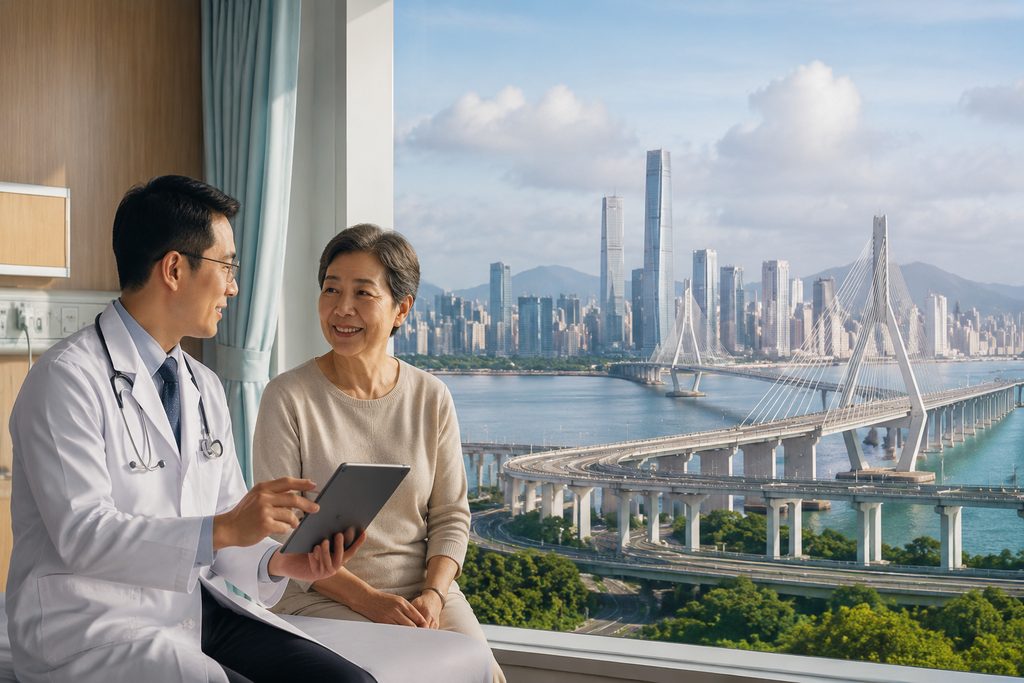
Have you been quoted a treatment price that made your stomach drop, and now you are quietly searching for alternatives outside your home country? You are not alone. Every month, dozens of patients from the United States, Europe, the Middle East, and Southeast Asia contact us asking the same question: what would it actually take to get treated in China’s Greater Bay Area, and what does cancer treatment cost China really look like compared to what they have already been told at home?
The short answer is that top-tier cancer care in Guangzhou and Shenzhen typically runs between one-fifth and one-tenth of comparable U.S. pricing. But the honest answer is more layered than a single number. This article walks through the real process, the hospitals that matter, the safety questions you should be asking, and how a bilingual medical companion changes the experience from overwhelming to manageable.
We are China Medical Services. Our team has spent years helping international patients navigate the Chinese healthcare system — not as doctors, but as the people who make sure you see the right specialist, understand what is being said, and never stand alone in a crowded hospital lobby wondering where to go next.
How This Actually Works, Step by Step
You do not book a flight and hope for the best. The process starts remotely, and it is more structured than most patients expect.
Step 1: You send us your existing records. That means pathology reports, imaging files (CT, MRI, PET-CT), blood work, and any treatment summaries from your current oncologist. You do not need to translate anything. Our team handles medical document translation into Chinese for hospital review.
Step 2: We match your case to the right department. Oncology is not one thing. A lung cancer patient needs a different team than a breast cancer patient or someone with a rare sarcoma. Our database covers 45 specialties with China’s top 10 hospitals in each, so matching is specific, not generic.
Step 3: You choose a review format. A written second opinion from a top specialist costs between $300 and $500 and gives you a documented analysis of your case with treatment direction. A video consultation with a specialist runs $500 to $800 and lets you speak directly with the medical team. Multidisciplinary team reviews are available from $1,500 to $2,000 for complex cases.
Step 4: If you decide to come, we coordinate the ground work. Hospital appointment coordination starts from $300, and our bilingual medical companion service starts from $300 per day. The companion handles registration, queueing, payment, wayfinding, and live interpretation during every consultation and test.
Step 5: You arrive, you are met, and you are never alone in the process. Airport transfer is available at $200 round-trip. From the moment you land to the day you fly home, someone who speaks both languages and knows the hospital system is with you.
What “Best Hospitals in Greater Bay Area for Foreigners” Actually Means
Search for best hospitals in Greater Bay Area for foreigners and you will get a list. But a hospital that is excellent for Chinese patients is not automatically excellent for you. The distinction matters.
The Greater Bay Area — the cluster of cities around the Pearl River Delta including Guangzhou, Shenzhen, Hong Kong, Macau, Zhuhai, and Dongguan — holds some of China’s most advanced medical infrastructure. Fudan University’s hospital rankings, the most authoritative in China, place 10 of the country’s top 100 hospitals in Guangzhou alone. No other city south of Shanghai comes close.
For international patients, we divide options into two broad categories.
Public top-tier hospitals with international departments. These are the heavyweights: the oncology centers, the cardiac surgery units, the neurosurgery departments that handle case volumes no Western hospital sees. Fuwai Hospital in Beijing performs over 14,000 cardiac surgeries annually — the highest volume in the world. Guangzhou’s equivalent institutions handle oncology and complex surgical caseloads at similar scale. The international departments here offer English-speaking coordination, faster appointment scheduling, and access to senior specialists. Pricing runs roughly 1.5 to 2 times the standard public rate — still dramatically below Western private care.
Private international hospitals. If you want JCI accreditation, direct insurance billing, and a Western-style care environment, the private sector is where you look. Our private hospital directory covers JCI-accredited facilities including United Family, Jiahui, Parkway, and Raffles locations. These hospitals feel familiar if you come from a U.S. or European healthcare background, with English-speaking staff throughout and no language barrier at the front desk.
The question is not which category is better. The question is which category matches your clinical needs, your budget, and your comfort level. That is a matching exercise we do daily.
A Realistic Timeline
Patients consistently underestimate how long the pre-arrival phase takes. Here is what a realistic schedule looks like for a cancer patient pursuing treatment in Guangzhou or Shenzhen.
| Stage | What Happens | Typical Duration |
|---|---|---|
| Week 1 | You submit records; we translate and prepare your case file | 5–7 days |
| Week 2–3 | Specialist review; written second opinion or video consultation scheduled | 7–14 days |
| Week 3–4 | Treatment plan confirmed; hospital appointment coordinated | 5–10 days |
| Week 4–6 | S2 visa application with hospital invitation documents | 10–20 days depending on embassy |
| Week 6–7 | Travel to China; airport pickup; first in-person consultation | 2–3 days |
| Week 7–8 | Additional testing if required; treatment begins | 5–10 days |
That is the honest range: six to eight weeks from first contact to treatment start, assuming no complications. Some patients move faster. Some hit delays in visa processing or need additional diagnostic work before the Chinese team will commit to a treatment plan. Do not book flights before your visa is approved and your hospital appointment is confirmed.
What Can Go Wrong — and What Happens Then
We would rather you know the failure modes before you commit than discover them mid-process. Here are the real ones.
Your records are incomplete. Chinese specialists are rigorous about imaging and pathology. If your home hospital did not perform certain tests, the Chinese team may require them before treatment. That means additional testing after arrival, which adds days and cost. What happens: we tell you upfront what is missing so you can complete it at home where possible.
Visa processing takes longer than expected. The S2 visa is the correct category for medical treatment in China, covering short stays for private affairs including medical care. Family members accompanying you also apply for S2. Processing times vary by embassy and season. What happens: we provide the hospital invitation letter and supporting documentation, but approval timelines are set by the embassy, not by us. We never guarantee a visa outcome.
The specialist recommends a different treatment than you expected. This happens more often than patients anticipate. A Chinese oncologist reviewing your case may propose a surgical approach where your home doctor recommended chemotherapy, or vice versa. What happens: you get the written opinion or video consultation first, before you travel, so this conversation happens from home — not in a hospital gown in a foreign country.
You arrive and realize the language barrier is worse than you feared. This is the most preventable failure mode. A top-tier Chinese public hospital can see over 10,000 outpatient visits in a single day. Signage is in Chinese. Queue numbers are called in Chinese. Payment counters, pharmacy windows, and test scheduling desks rarely have English-speaking staff outside the international department. What happens: this is exactly what the bilingual medical companion is for. One person who handles every interaction, every queue, every form, every question the doctor asks you.
Is It Safe to Have Surgery in China? The Data Question
Let us address the question directly, because it is the one every patient asks eventually: is it safe to have surgery in China?
The honest answer is that safety depends on which hospital you choose — not on the country as a monolith. China has over 35,000 hospitals. The quality spread is enormous. A county-level hospital in a rural area is not the same as a Fudan-ranked top 100 hospital in Guangzhou.
Our database covers 340+ top-ranked hospitals across 37 cities — roughly the top 5% of all Chinese hospitals, ranked by Fudan University and JCI accreditation standards. That filtering is the safety mechanism. When you are treated at a Fudan A-tier hospital with an international department, you are receiving care from surgeons who perform the procedure you need at volumes that dwarf most Western centers.
Volume matters in surgery. A cardiac surgeon at a top Chinese center may perform more bypass procedures in a year than a typical U.S. surgeon performs in a decade. For oncology surgery, the pattern holds. High-volume centers have lower complication rates — that is a well-established finding in surgical literature, not a China-specific claim.
What we tell patients is this: do not ask whether China is safe. Ask whether the specific hospital and the specific surgeon are safe. That is a checkable question, and it is the question we help you answer before you commit to anything.
How to Find a Medical Companion in Guangzhou — Without Getting Burned
The search phrase how to find a medical companion in Guangzhou suggests you already understand the value. But the market is unregulated, and quality varies wildly.
Some patients try to hire a freelance translator or a local student. That can work for simple interpretation. It fails when things get complicated — when a specialist changes a medication mid-consultation, when a billing dispute arises, when you need someone to advocate for you at a pharmacy window that just closed for lunch.
A real medical companion does more than translate. They know the hospital layout. They know which window processes what. They know how to read a Chinese prescription and catch dosage errors. They know when a queue number is about to be called and how to position you so you do not miss it.
Our companions are trained on these specifics. The service starts from $300 per day for a full 8-hour day, with half-day options available. What it does not include is a promise to get you an appointment with a specific named specialist on a specific date — that is not how Chinese public hospitals work, and anyone who promises it is not being honest with you.
Public hospital rules in China require in-person consultation before surgery can be scheduled. You cannot lock in a surgical date from overseas. What you can do is secure a consultation with the right department, get a written treatment direction, and have someone on the ground who handles the scheduling fight for you.
Book Medical Treatment Package Shenzhen: What to Expect
Patients searching for book medical treatment package Shenzhen often assume there is a fixed-price bundle they can purchase online. The reality is more flexible, and usually better for you.
Shenzhen’s medical landscape is younger than Guangzhou’s but growing fast. The city has invested heavily in new hospital infrastructure, and several facilities now hold JCI accreditation — the international gold standard for hospital quality and patient safety. If you are looking for top JCI accredited hospitals in Guangdong, you will find them concentrated in Shenzhen and Guangzhou.
Rather than a rigid package, what we offer is a coordination service built around your actual case. You might need only a video consultation first. Or a written second opinion. Or the full ground package: airport pickup, companion service, appointment coordination, and hospital communication. The pricing is transparent — each component has a published starting rate, and the final quote depends on your case complexity and hospital choice.
One thing worth knowing: any consultation fee you pay — whether for a written second opinion or a video consultation — is credited in full toward on-the-ground coordination if you decide to come to China within 90 days. That credit applies to the coordination fee only, never to hospital treatment charges. It is our way of making the try-before-you-travel step risk-free.
Practical Considerations: Records, Visa, Payment, Insurance, Follow-Up
This is the section where most articles get vague. Let us be specific.
Medical records. Bring everything. Original imaging discs, not just reports. Pathology slides if available. A detailed treatment summary from your current doctor, including all medications and dosages. Chinese specialists review primary data, not summaries written by someone else.
Visa. You apply for an S2 visa, which covers short-term private affairs including medical treatment. Your accompanying family members apply for their own S2 visas. The hospital provides an invitation letter and treatment confirmation as supporting documents. If your treatment will exceed 180 days, the S1 category applies. We guide you through the document package but never guarantee approval — that decision rests with the embassy or consulate processing your application.
Payment. Public hospitals in China require prepayment. You deposit funds at admission, and costs are deducted as services are provided. Insurance reimbursement is typically handled after the fact — you pay, then claim. Private international hospitals are different: many offer direct billing with major international insurers, which means the hospital bills the insurer directly.
Language. Outside the international departments of top hospitals, English is rare. This is not a criticism — it is a fact of the system. Your companion is your bridge.
Follow-up at home. Before you leave China, your Chinese medical team will provide a discharge summary and follow-up recommendations. We help you get these documents translated back into English so your home physician can continue your care without gaps.
Frequently Asked Questions
For comparable procedures at top-tier hospitals, expect to pay roughly one-fifth to one-tenth of U.S. prices. A cardiac bypass that costs $120,000 or more in the U.S. runs $12,000 to $20,000 at a top Chinese public hospital. Cancer treatment costs vary significantly by cancer type, stage, and treatment protocol — always request a case-specific quote after specialist review.
No. Chinese public hospital rules require an in-person consultation before surgery can be scheduled. You can secure a specialist consultation, receive a written treatment direction, and have your case reviewed remotely — but the actual surgical booking happens after you arrive and meet the surgical team.
Safety depends on hospital selection. China has over 35,000 hospitals, and quality varies enormously. Choosing a Fudan-ranked top 100 hospital or a JCI-accredited facility is the single most important safety decision you will make. High-volume surgical centers in China have complication rates comparable to or better than Western benchmarks for many procedures.
The S2 visa is the correct category for short-term medical treatment and private affairs. It requires supporting documents from the treating hospital, including an invitation letter. Family members accompanying you apply for their own S2 visas. Stays exceeding 180 days fall under the S1 category. The M visa is for commercial and trade activities and is not appropriate for medical travel.
This is common and is one of the reasons patients seek a second opinion in the first place. You receive the written opinion or video consultation before traveling, so you can discuss the recommendation with your home doctor and make an informed decision. You are never committed to treatment simply because you requested a review.
Your Next Step
You now know the process, the timeline, the risks, and the realistic costs. The next step is to find out whether your specific case is a good fit for treatment in the Greater Bay Area — and that starts with a conversation, not a commitment.
We are China Medical Services, and our job is to connect you with the right Chinese medical expertise and make sure you are supported on the ground. We do not practice medicine, we do not promise outcomes, and we do not sell access. We coordinate, translate, and accompany.
If you want to know what cancer treatment cost China would look like for your specific diagnosis, send us your records for a free initial consultation. We will tell you honestly whether this path makes sense for you — and if it does, we will be there every step of the way.
Start with one conversation. Request a free consultation and let us show you what is possible.
For more medical information and treatment options in China, visit chinamedservices.com (China Medical Services).
