Wuhan Tongji Hospital Gastroenterology for International Patients: Costs, Booking, and What to Expect
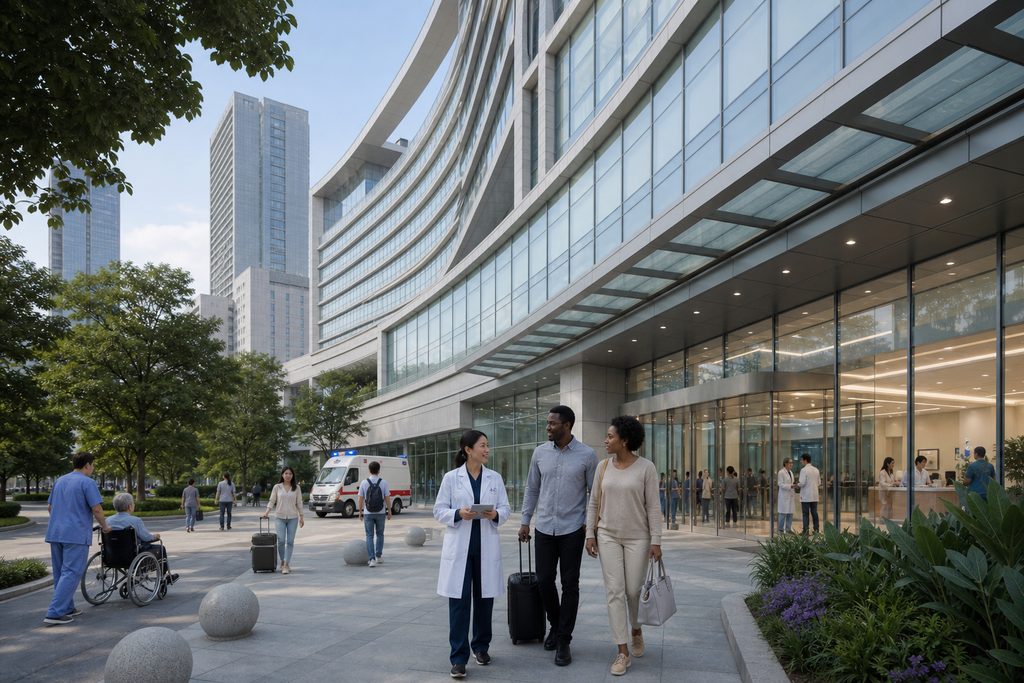
When 54-year-old Daniel from Manchester started researching digestive care options abroad, he hit a wall almost immediately. His local NHS trust had quoted him a 14-month wait for a diagnostic colonoscopy. Private clinics in London wanted £2,800. He had heard about medical travel to China but could not find a single clear page explaining how a foreigner actually gets seen at a hospital like Wuhan Tongji. No clear Wuhan Tongji Hospital gastroenterology price list. No booking pathway. No answers about language support. This article is the page Daniel needed.
Wuhan Tongji Hospital, affiliated with Huazhong University of Science and Technology, runs one of the largest gastroenterology departments in central China. For international patients, the value proposition is compelling: advanced endoscopic technology, high procedural volume, and costs that typically run 60–80% below Western private rates. But the pathway is not self-service. You cannot simply walk in, show a passport, and expect a same-day specialist consultation. This guide explains exactly how the process works, what it costs, and whether Tongji is the right choice for your digestive condition.
Key Takeaways
- Tongji Hospital’s gastroenterology department performs over 80,000 endoscopic procedures annually, giving its specialists a procedural volume most Western gastroenterologists never reach.
- A diagnostic colonoscopy at Tongji’s international department typically costs between $400 and $700 — compared to $2,500–$5,000 in the US or UK private sector.
- International patients cannot book through the standard public registration system. You need the hospital’s international medical services channel or a coordination partner like China Medical Services.
- Language is the biggest practical barrier. Public-facing staff rarely speak English, which is why bilingual support matters more than most patients expect.
The Problem: Digestive Care Delays and Costs in Western Systems
Digestive diseases are not rare. Approximately 1 in 5 adults in the UK and US will experience significant gastrointestinal symptoms requiring specialist evaluation at some point. The American Cancer Society reports that colorectal cancer remains the third most common cancer diagnosis in the United States, with an estimated 106,590 new cases in 2024. Early detection through colonoscopy saves lives. But access is the bottleneck.
In Canada, the median wait time for a gastroenterology consultation after referral exceeds 12 weeks in most provinces. In the UK, NHS diagnostic endoscopy waits stretched past 18 weeks for routine cases in 2023–2024, and some trusts reported waits beyond 12 months. The private alternative is fast but expensive. A private colonoscopy in London runs £1,800–£3,500. In New York or Los Angeles, uninsured patients face bills from $3,000 to $6,000 for the same procedure.
For patients with chronic conditions like inflammatory bowel disease, Barrett’s esophagus, or recurrent gastric ulcers, these delays are not just inconvenient. They mean prolonged symptoms, disease progression, and anxiety. Some patients start exploring treatment abroad. That is where Chinese tertiary hospitals enter the conversation.
Why Wuhan Tongji Hospital Gastroenterology Delivers Results
Clinical Volume That Western Specialists Rarely Match
Tongji Hospital is not a small regional clinic. It is a 5,000-bed academic medical center that consistently ranks among China’s top hospitals. The gastroenterology department runs multiple endoscopy suites daily, handling upper GI endoscopies, colonoscopies, ERCP procedures, and endoscopic ultrasound cases at a scale that is hard to comprehend from a Western perspective. A senior endoscopist at Tongji may perform 1,500–2,000 procedures per year. The average US gastroenterologist performs around 500–800.
Volume matters in endoscopy. Polyp detection rates, cannulation success in ERCP, and complication avoidance all correlate with operator experience. When you sit down for a colonoscopy at Tongji, the hands holding the scope have seen more anatomical variation in a single year than many Western specialists see in five.
Technology Without the Wait
Tongji’s endoscopy center uses high-definition scopes, narrow-band imaging for early cancer detection, and endoscopic ultrasound for staging. The hospital was an early adopter of AI-assisted polyp detection in routine screening. But the real difference is scheduling. A patient who arrives with a referral and completed pre-procedure labs can often get an endoscopic slot within days, not months. The public system in China is crowded, yes. The international channel is a different queue entirely.
Cost Advantage Without Quality Compromise
Lower cost in China is not a sign of lower quality. It reflects structural economics: physician salaries are lower, hospital infrastructure is amortized across massive patient volumes, and administrative overhead is a fraction of what US insurers impose. A colonoscopy at Tongji’s international department costs roughly $400–$700. The same procedure at a top US academic center bills at $3,000–$6,000 before insurance. That is a 75–85% reduction.
The question patients should ask is not “why is China cheaper?” but “why is the US so expensive?” The answer involves insurance complexity, malpractice premiums, and a fee-for-service model that rewards volume of billing codes rather than clinical efficiency.
Is Tongji Hospital Good for Digestive Diseases? What the Data Shows
Tongji Hospital’s gastroenterology department is consistently ranked among the top 10 in China by the Fudan University hospital rankings — a list covering 45 specialties and widely considered the most authoritative hospital ranking system in the country. The department handles complex cases referred from across Hubei province and neighboring regions. Its subspecialty coverage includes inflammatory bowel disease clinics, hepatology, pancreaticobiliary endoscopy, and GI oncology.
For international patients, the relevant question is whether Tongji’s international service matches the clinical reputation. The answer is nuanced. The clinical expertise is real. The international patient infrastructure is functional but not luxurious. You will not find a Western-style concierge lounge. You will find competent doctors, modern equipment, and a system that expects you to have someone helping with logistics.
If you are comparing options, the Fudan-ranked top hospitals database on our site covers Tongji alongside other leading centers in Beijing, Shanghai, and Guangzhou. Some patients prefer Shanghai for its more developed international medical ecosystem. Others choose Wuhan for cost and the specific expertise at Tongji. Both are valid.
Wuhan Tongji Hospital Gastroenterology Price List: What to Budget
Exact pricing at Chinese public hospitals is not published like a restaurant menu. Fees vary by department, physician seniority, and whether you go through the standard public channel or the international department. Based on our coordination experience and current hospital fee schedules, here is what international patients should budget for common procedures at Tongji.
| Service | Estimated Cost (USD) | Notes |
|---|---|---|
| Specialist consultation (international dept) | $80–$200 | Initial visit with a gastroenterologist |
| Diagnostic upper GI endoscopy | $300–$550 | Includes sedation and basic biopsy |
| Diagnostic colonoscopy | $400–$700 | Includes bowel prep guidance and sedation |
| Combined gastroscopy + colonoscopy | $650–$1,000 | Common for unexplained symptoms |
| Endoscopic ultrasound (EUS) | $800–$1,500 | For staging or pancreaticobiliary evaluation |
| ERCP | $1,500–$3,000 | Complex biliary or pancreatic intervention |
| Polypectomy (during colonoscopy) | $100–$500 additional | Depends on polyp size and number |
| Written second opinion (GI specialist) | $300–$500 | Remote review of your existing records |
These figures are reference ranges based on 2025–2026 fee schedules. Final costs vary by hospital and case complexity. The international department charges a premium over public rates — typically 1.5 to 2 times — because it includes English coordination, priority scheduling, and private consultation rooms.
Compare this to US cash prices: a diagnostic colonoscopy averages $2,750 nationally, with some regions exceeding $5,000. An ERCP in the US runs $8,000–$15,000. Even with flights and accommodation in Wuhan, the total cost of care is typically one-third to one-fifth of the US private price.
How to See a GI Specialist at Tongji Hospital Wuhan: The Step-by-Step Path
The process for international patients is different from what Chinese residents experience. Here is the realistic pathway.
Step 1: Prepare Your Medical Records
Before anything else, gather everything: recent endoscopy reports, pathology slides if available, imaging studies (CT, MRI, ultrasound), current medication list, and a summary letter from your local doctor. These must be translated into Chinese for the hospital’s records. If you do not have a translator, a coordination service handles this.
Step 2: Choose Your Entry Channel
You have two options. The first is contacting Tongji’s international medical services department directly. The second is working with a third-party coordinator like our patient coordination team, which handles hospital communication, appointment scheduling, and on-site bilingual support. Direct contact is possible but requires patience and some Chinese language ability.
Step 3: Schedule the Consultation
Unlike Western systems where you book online and show up, Chinese public hospitals — including Tongji — require registration through official channels. The international department can pre-book a specialist slot for you, but this is not a guaranteed same-day appointment. Expect 3–10 days between initial contact and your first consultation, depending on the specialist’s schedule.
Step 4: Attend the Consultation and Pre-Procedure Testing
Your first visit is clinical evaluation. The gastroenterologist reviews your records, asks about symptoms, and orders pre-procedure labs (blood count, coagulation profile, infectious disease screening). These tests are mandatory before any endoscopic procedure in China. Results usually come back within 24 hours.
Step 5: Undergo the Procedure
For a colonoscopy, you will receive bowel prep instructions — typically a split-dose polyethylene glycol solution starting the evening before. The procedure itself takes 20–40 minutes under sedation. You will need someone to accompany you afterward. A bilingual companion is strongly recommended if you do not speak Chinese.
Step 6: Receive Results and Follow-Up Plan
Preliminary findings are available immediately. Biopsy results take 3–7 days. The specialist will provide a written report in Chinese, which you should have translated for your home doctor. If surgery or ongoing treatment is needed, the international department can coordinate admission — but admission always depends on hospital bed availability and clinical assessment.
Booking Endoscopy at Wuhan Tongji as an International Patient: Common Mistakes to Avoid
Patients make predictable errors when navigating this system. The biggest one is assuming the process mirrors Western private hospitals. It does not.
Mistake 1: Flying to Wuhan without a confirmed appointment. You cannot walk into Tongji’s outpatient building and register on the spot as a foreigner without preparation. The public registration system requires a Chinese ID or passport-linked hospital card, and specialist slots fill days in advance. Always secure your appointment before booking flights.
Mistake 2: Underestimating the language barrier. Even in the international department, not every nurse or technician speaks English. Consent forms, prep instructions, and discharge notes are in Chinese. If you cannot read them, you need someone who can. This is not a minor inconvenience — it is a patient safety issue.
Mistake 3: Skipping the pre-procedure testing window. Some patients try to compress everything into a 48-hour trip. That does not work. Blood tests must be processed, bowel prep takes a full day, and the hospital will not sedate you without cleared labs. Budget at least 5–7 days in Wuhan for a colonoscopy from start to finish.
Mistake 4: Assuming insurance will reimburse automatically. Chinese public hospitals — including Tongji’s international department — typically require upfront payment. You receive an itemized receipt and medical report, which you submit to your insurer for reimbursement. Some international insurers have direct billing arrangements with specific hospitals, but Tongji is not on most Western insurers’ direct-billing lists. Check your policy before traveling.
Important: A written second opinion from a Chinese specialist is for reference only — it is not a prescription and does not replace in-person evaluation. No reputable hospital will promise a specific treatment outcome or guarantee that a procedure will be performed on a specific date. Be wary of anyone who does.
Practical Considerations: Visa, Payment, and Follow-Up for Tongji GI Patients
Medical travel to China requires an S2 visa, which covers short-term private affairs including medical treatment. Your accompanying family member applies for the same category. The hospital provides a supporting letter confirming your appointment, which you submit with your visa application. Processing time is typically 5–10 business days, but apply early — consulates can take longer during peak seasons.
Payment at Tongji is by cash, Chinese bank card, or international credit card at the international department. Transaction limits vary by card issuer. Some patients use Alipay or WeChat Pay linked to international cards, which works well once set up. Bring a payment method that works offline in China — not all international cards process reliably.
After you return home, follow-up is straightforward. Tongji can provide digital copies of reports and images. Your home gastroenterologist reviews them and continues your care. If you need a repeat procedure in a year or two, the same coordination pathway applies. Some patients schedule annual screening colonoscopies in China because the cost savings cover the travel expenses.
For patients comparing options across China, our specialty department rankings show how Tongji’s gastroenterology program compares to peers in Beijing, Shanghai, and Guangzhou. And if you are still deciding whether to stay in a major hub or travel to Wuhan specifically, the Wuhan city guide covers logistics, accommodation, and what to expect on the ground.
Frequently Asked Questions
You can contact the international medical services department by email or phone, but direct booking is difficult without Chinese language skills and a local contact. The department can pre-arrange a specialist consultation, but procedural scheduling happens after the in-person evaluation. A coordination service handles the back-and-forth for you, including document translation and appointment confirmation.
At Tongji’s international department, a diagnostic colonoscopy typically costs $400–$700 out of pocket. This includes the procedure, sedation, and basic facility fees. Biopsies and polyp removal add $100–$500 depending on complexity. By comparison, the same procedure costs $2,500–$5,000 in the US and £1,800–£3,500 privately in the UK.
Tongji’s gastroenterology department is Fudan-ranked among China’s top 10 and handles complex inflammatory bowel disease, hepatobiliary, and pancreatic cases referred from across central China. The department runs dedicated IBD clinics and has significant experience with ERCP and endoscopic ultrasound. However, for rare or highly specialized conditions, some patients also consider Peking Union Medical College Hospital in Beijing or Zhongshan Hospital in Shanghai, both of which have strong GI programs.
Chinese tertiary hospitals carry malpractice insurance and follow national clinical guidelines. Complication rates for routine endoscopy at high-volume centers like Tongji are comparable to international benchmarks. If a complication occurs, the hospital manages it — but you should understand that medical liability in China operates differently from Western systems. Legal recourse for foreign patients is limited. This is why choosing a high-volume, reputable hospital matters more than saving a few hundred dollars at a smaller facility.
Yes. Medical treatment falls under the S2 visa category for short stays under 180 days. You will need a supporting letter from the hospital confirming your appointment. The hospital issues this after you have a confirmed consultation slot. Your accompanying family members apply for the same S2 category. The M visa is for commercial and trade activities — it is not appropriate for medical travel.
Your Next Step
If you are considering digestive care at Wuhan Tongji Hospital, the most important thing is to start with
For more medical information and treatment options in China, visit chinamedservices.com (China Medical Services).
