Qingdao Medical Companion Service: Navigate German Medical Heritage Hospitals
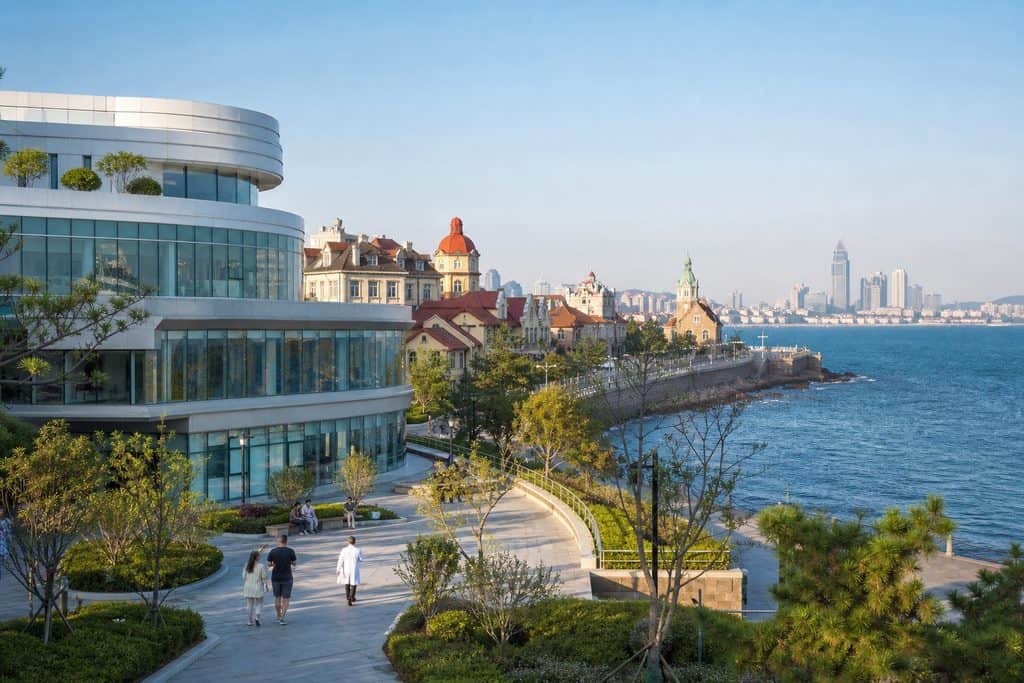
When 58-year-old Klaus from Stuttgart was told he needed a hip replacement, his first reaction was not fear of surgery. It was the 14-month wait time his local hospital quoted him. Then the cost estimate arrived: €18,000 out of pocket after his statutory insurance coverage. He remembered a colleague mentioning medical care in China. Specifically, Qingdao. The city where German hospital traditions stretch back over a century. But Klaus had no Mandarin skills, no idea which hospitals had real German medical heritage, and no way to verify if the care matched what he would receive at home. His search history showed: “Qingdao hospital English speaking staff price” and “German medical heritage hospitals China list.” He was not alone.
Every month, our team fields inquiries from patients across Europe, North America, and the Middle East asking the same questions. They have heard whispers about Qingdao’s unique position in Chinese medical history. A coastal city where German physicians established hospitals in the early 1900s. A place where some institutions still maintain protocols and standards influenced by that legacy. But the gap between knowing Qingdao exists and actually receiving treatment there is wide. Language barriers. Unfamiliar hospital systems. No clear way to verify quality. This guide bridges that gap.
Key Takeaways
- Qingdao hosts at least two hospitals with direct lineage to German medical missions established between 1900 and 1914, with modern departments still reflecting some Germanic clinical organizational structures.
- Bilingual medical companion services in Qingdao start from $200 per day, while top-tier hospital international departments charge consultation fees of $100 to $300 — far below equivalent Western private care.
- Hospitals with German heritage do not automatically guarantee English-speaking staff; most historical institutions operate primarily in Mandarin, making independent navigation extremely difficult for international patients.
- Verify any hospital’s current international patient capabilities before booking travel — heritage alone does not equal accessible care for foreigners.
The Problem: Waiting, Wondering, and the Cost of Inaction
A hip replacement in Germany currently carries a median wait of 8 to 14 months for non-emergency cases. In Canada, the national benchmark targets 26 weeks — and approximately 60% of provinces miss that target each year according to the Fraser Institute’s 2023 waiting list survey. The United Kingdom’s NHS reports over 7.6 million people on treatment waiting lists as of early 2024. These are not abstractions. They are real delays during which osteoarthritis erodes joint function further, cardiac conditions progress, or benign tumors grow large enough to complicate what could have been a simple resection.
The financial side compounds the problem. A total hip replacement at a private German hospital runs €15,000 to €22,000. In the United States, the same procedure averages $40,000 to $65,000 depending on the facility and region. Even insured patients face deductibles and co-insurance that can exceed $10,000.
Qingdao enters this equation differently than Beijing or Shanghai. It is not the absolute cheapest option in China. Nor does it claim the highest surgical volumes. What it offers is a specific combination: internationally influenced medical traditions, a coastal environment conducive to recovery, and price points that undercut Western private care by 60 to 80 percent. But accessing that combination requires navigating a system where the historical German connection is real — and often misunderstood.
Who We Are
We are not a hospital. We do not provide medical treatment, clinical diagnoses, or surgical opinions. Our team functions as logistical architects for international patients seeking care in China’s top-tier hospitals. We handle hospital matching based on your specific diagnosis, coordinate appointments through official international department channels, arrange bilingual medical companions who translate and guide you through every step, and manage the visa, accommodation, and local transport details. We bridge the gap between you and China’s medical expertise. Nothing more, nothing less.
Why Qingdao’s German Medical Heritage Still Matters
The city’s medical history is not marketing fluff. Between 1897 and 1914, Qingdao was a German concession territory. During this period, German physicians established hospitals, medical training programs, and public health infrastructure that laid the foundation for modern Western medicine in the region. The Affiliated Hospital of Qingdao University, for example, traces its institutional lineage to the German-era hospital founded in 1898. The Qingdao Municipal Hospital incorporated German missionary hospital traditions from the same period.
This matters for three concrete reasons today.
Clinical Organizational Structures That Look Familiar
Several Qingdao hospitals with German heritage maintain department structures and clinical protocols that a European patient would recognize. Specialty divisions follow patterns closer to German Fachabteilungen than traditional Chinese hospital departments. Surgical safety checklists, infection control protocols, and documentation standards in these institutions often reflect international norms more consistently than hospitals without this historical influence.
That said, heritage is not a guarantee. A hospital founded by German physicians in 1905 is not the same institution today. Staff have trained in diverse settings. Leadership has changed countless times. The German connection is a starting point for inquiry — not a seal of approval.
Volume and Specialization in Orthopedics and Surgery
Qingdao’s top hospitals perform joint replacement volumes that surpass typical Western community hospitals. The Affiliated Hospital of Qingdao University handles over 2,000 joint replacements annually across its orthopedic departments. This volume drives surgical team familiarity with complex cases, revision surgeries, and managing complications — the same volume-outcome relationship documented in The Lancet and JAMA for surgical specialties worldwide.
For a patient like Klaus, this means his surgeon has likely managed cases similar to his hundreds of times. Not dozens. Hundreds.
Cost Structures That Reflect Chinese Economics, Not German Prices
The most direct answer to the search query “Qingdao hospital English speaking staff price” is this: international department consultations in Qingdao range from $100 to $300 for an initial specialist visit. A bilingual medical companion — someone who physically accompanies you, translates conversations with doctors, handles registration paperwork, guides you between departments, and ensures your prescriptions are filled correctly — starts from $200 per day.
Surgery costs vary by hospital and case complexity. A hip replacement at a Qingdao hospital’s international or VIP ward typically falls between $12,000 and $20,000 all-inclusive of implant, hospital stay, surgeon fees, and basic rehabilitation guidance. Comparable private care in Germany: €15,000 to €22,000. In the United States: $40,000 to $65,000.
The structural reasons for lower costs are straightforward. Chinese physician salaries, while rising, remain far below Western equivalents. Hospital construction and operational costs reflect local economics. Malpractice insurance premiums are a fraction of US levels. None of these factors correlate with surgical skill. They correlate with geography.
What You Need to Know Before Going Alone
The romantic idea of flying to Qingdao, checking into a historic German-founded hospital, and receiving care in English is mostly fiction. Here is the reality.
- Language Barriers Are Pervasive: Even hospitals with German heritage operate almost entirely in Mandarin Chinese at the operational level. Registration forms, consent documents, surgical schedules, medication instructions — all in Chinese. A few senior physicians may speak English or German. The nurses, administrative staff, pharmacists, and technicians almost certainly will not. Searching for “Qingdao hospital English speaking staff price” reflects a real concern because English-speaking staff are the exception, not the norm.
- Appointment Systems Differ Radically: Chinese public hospitals do not allow overseas patients to book surgeries remotely through a website. You cannot email a hospital and reserve a surgery date. The standard pathway requires an in-person consultation first, followed by scheduling based on surgeon availability and bed capacity. International departments and VIP wards offer more flexible booking — but these are not accessible through the hospital’s public-facing registration system.
- Payment Is Upfront and Cash-Based: Public hospitals in China require deposit payments before admission. Credit card acceptance is inconsistent. International insurance direct billing is rare outside of private international hospitals like United Family or Raffles — which do not have a presence in Qingdao. You pay first, then seek reimbursement from your insurer. The financial logistics alone trip up many independent travelers.
How We Help You Navigate This
These barriers exist for structural reasons, not because anyone wants to exclude foreign patients. Chinese public hospitals serve massive domestic patient volumes — the Affiliated Hospital of Qingdao University sees over 10,000 outpatient visits daily. International patients represent a tiny fraction. The system is simply not built around their needs.
Our role is to layer international patient coordination onto this system without disrupting it. Before you travel, we translate your medical records, imaging, and diagnostic reports into Chinese medical terminology. We identify which Qingdao hospitals have relevant specialist departments and current international patient capacity — not just historical reputation. We coordinate appointment scheduling through official international department channels so you arrive with confirmed consultation times, not hope.
During your stay, a bilingual medical companion meets you at the hospital entrance. They handle registration, guide you to the correct department, translate your conversation with the specialist in real time, explain the proposed treatment plan, and manage payment logistics. If surgery is recommended, they coordinate admission, pre-operative testing, and discharge instructions. They ensure you understand every medication, every follow-up requirement, every rehabilitation exercise.
After treatment, we remain available for follow-up coordination. Video consultations with your Qingdao surgeon can be arranged through our remote consultation service. Your recovery does not end when you board the flight home.
The cost of a medical escort service in Qingdao starts from $200 per day. This is not an access fee. It is payment for skilled bilingual labor — someone who navigates a complex hospital system on your behalf so you focus entirely on your health. For patients seeking care at hospitals with German medical heritage, this companion also helps verify what is real versus what is historical mythology. They can ask the right questions about a surgeon’s training background, international fellowship experience, and outcomes data — questions that matter far more than the year a hospital was founded.
Is Medical Care in Qingdao German Standard?
This question appears frequently in our consultations, and it deserves an honest answer. No single standard defines “German medical care.” A university hospital in Heidelberg operates at a different level than a community hospital in rural Saxony. Both are German. Both meet German regulatory standards. But they are not equivalent.
Similarly, Qingdao’s top hospitals meet Chinese Class A Grade 3 standards — the highest domestic classification. Several departments at the Affiliated Hospital of Qingdao University rank among China’s top tier in the Fudan University hospital rankings, particularly in orthopedics, ophthalmology, and endocrinology. Surgical infection rates, complication rates, and patient outcomes at these institutions are tracked and managed through quality control systems that have been strengthened significantly over the past decade.
The comparison that matters is not “Is Qingdao exactly like a German university hospital?” It is: “For your specific procedure, at this specific hospital, with this specific surgical team, are the expected outcomes comparable to what you would receive at home?” Answering that requires looking at real data — surgical volumes, complication rates, implant types used, rehabilitation protocols — not historical narratives about German founding dates.
Our team helps patients make this comparison honestly. We do not claim equivalence where it does not exist. We do not gloss over differences in nursing ratios, pain management philosophies, or post-operative monitoring practices that a Western patient might find unfamiliar. We present the facts and let you decide.
For more context on how top Chinese hospitals are evaluated nationally, our hospital rankings database provides department-level data across all major specialties.
Frequently Asked Questions
How do I find a medical companion in Qingdao who actually speaks medical English — not just conversational English?
This is the right question to ask. Many translation services offer general English speakers who cannot accurately interpret “creatinine clearance rate” or “tranexamic acid.” A proper medical companion should have formal training in medical terminology, experience in hospital settings, and familiarity with the specific department you are visiting. Our companions undergo verification of their medical vocabulary competency before being assigned to cases. Ask any service you consider: “What orthopedic procedures has your companion translated for in the past six months?” If they cannot answer specifically, keep looking.
Can I book a German hospital in Qingdao for medical tourism directly?
No. The historical German-founded hospitals in Qingdao are now Chinese public hospitals. They do not operate as German institutions, do not employ German physicians as a rule, and do not have German-language patient coordination offices. You can book care at these hospitals, but you are booking care at a Chinese hospital with German historical roots — not a German hospital located in China. The distinction matters enormously for setting realistic expectations about language, clinical culture, and administrative processes.
What is the actual cost of a medical escort service in Qingdao for a full surgical stay?
A typical surgical stay involves 2-3 days of pre-operative consultations and testing, the surgery day itself, and 3-7 days of post-operative monitoring depending on the procedure. For a hip replacement, expect 5-7 hospital days plus 2 pre-admission days. A medical companion for this period would cost approximately $1,400 to $2,000 total, based on our daily rate starting from $200. This covers their presence during all critical interactions — surgeon consultations, consent discussions, post-operative rounds, discharge instructions. It does not cover their transport, meals, or accommodation if overnight hospital-area stays are needed.
Are the German medical heritage hospitals in China listed somewhere I can verify?
There is no official government list of “German medical heritage hospitals” in China. The connection is historical, not regulatory. Hospitals that trace roots to German missionary or concession-era medicine include the Affiliated Hospital of Qingdao University, Qingdao Municipal Hospital, and several institutions in Shanghai, Wuhan, and Guangzhou. But their current status as German-influenced institutions varies widely. Some maintain active exchange programs with German hospitals. Others have not had a German-trained department head in decades. Verification requires checking current international partnerships, not relying on historical claims.
What happens if something goes wrong during surgery in Qingdao?
Chinese hospitals carry liability insurance and have established protocols for managing surgical complications. The standard of care for managing adverse events at top-tier hospitals is comparable to international norms — blood banks, ICU capabilities, and emergency intervention teams are available. That said, the patient experience during a complication differs from what a Western patient might expect. Communication may be less frequent. Family members may be expected to make decisions more quickly. Having a bilingual companion present during hospitalization ensures you understand what is happening in real time and can participate in decisions rather than being informed after the fact.
Your Next Step
Qingdao offers a genuine point of entry into Chinese medical care for patients who value its German historical connection and coastal recovery environment. The hospitals are real. The surgical expertise, particularly in orthopedics and several surgical specialties, is substantial. The cost savings compared to Western private care are significant.
But the gap between reading about Qingdao and receiving treatment there is filled with logistical challenges that trip up even experienced international travelers. Language, appointments, payments, post-operative coordination — these are not details to figure out on arrival.
If you are considering Qingdao for a specific procedure, start with a free consultation. We review your diagnosis, identify which hospitals have relevant specialist capacity, and provide a realistic assessment of what to expect — including what might disappoint you. No pressure. No sales pitch. Just the information you need to make an informed decision. Request your free consultation here.
For more medical information and treatment options in China, visit chinamedservices.com (China Medical Services).
