Bariatric Surgery in China: How We Coordinate Your Weight Loss Journey
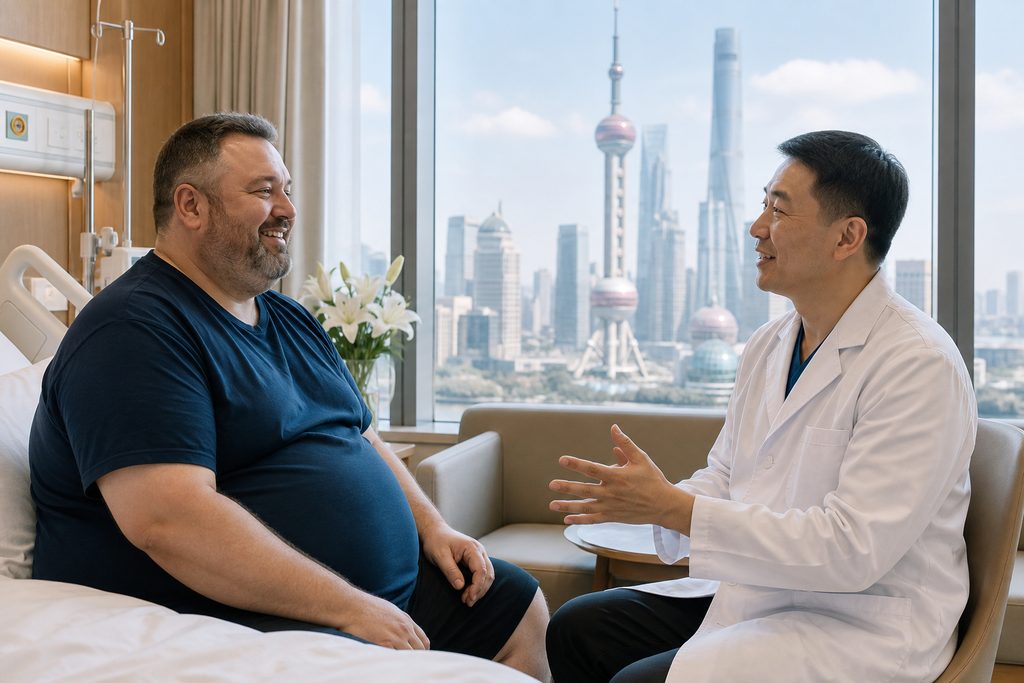
You’ve probably heard that surgery in China means compromising on quality. The reality is exactly the opposite for bariatric procedures at top-tier Chinese hospitals. A sleeve gastrectomy at a Fuwai Hospital or Zhongshan Hospital affiliated center costs roughly $8,000 to $15,000 — while the same procedure in the United States runs $18,000 to $35,000. And the surgeons performing these operations often complete more cases in one year than their Western counterparts do in three. The question is not whether China can handle your weight loss surgery. The question is how you actually make it happen from six thousand miles away.
That is where coordination becomes everything.
Key Takeaways
- Bariatric surgery in China costs 50–70% less than in the US, UK, or Australia — with total package pricing from $8,000 at JCI accredited hospitals.
- Chinese bariatric surgeons perform 300–500 cases annually at high-volume centers, compared to 50–100 for the average Western surgeon.
- You cannot book surgery remotely through public hospital channels. International patients must use hospital international departments or VIP coordination — which is exactly what we handle.
- The S2 visa is the correct category for medical treatment in China. The M visa is for commercial trade and has nothing to do with healthcare.
The Problem: Weight Loss Surgery at Home Is Priced Out of Reach
Obesity affects approximately 42% of American adults, according to the CDC’s National Health and Nutrition Examination Survey. That is more than 100 million people. Yet fewer than 1% of eligible patients actually undergo bariatric surgery each year. Why? Cost is the single biggest barrier.
In the United States, the average cash price for a gastric sleeve runs between $18,000 and $35,000 depending on the state and facility. A gastric bypass typically lands between $25,000 and $45,000. Even with insurance, many patients face deductibles of $5,000 to $10,000 plus coinsurance. In the United Kingdom, NHS waiting lists for bariatric surgery now stretch beyond two years in many regions. In Canada, wait times average 18 to 24 months for publicly funded procedures. Australia tells a similar story: private surgery costs AUD $20,000 to $30,000, while public hospital waits can exceed three years.
So patients are stuck. They cannot afford the surgery at home, and they cannot wait years for a public system to treat them. Meanwhile, their health deteriorates. Type 2 diabetes worsens. Joint pain increases. Sleep apnea becomes more severe. The cost of doing nothing is enormous — both financially and physically.
This is the exact scenario that pushes patients to look abroad.
Why Bariatric Surgery in China Delivers Results
China has quietly become one of the world’s largest centers for metabolic and bariatric surgery. The Chinese Society for Metabolic and Bariatric Surgery reports that annual case volumes have grown more than 400% since 2015. Several centers now perform over 500 procedures per year. That volume matters — and we will explain why.
Clinical Volume Drives Better Outcomes
Bariatric surgery is a technical procedure. The more times a surgeon performs it, the better the results. Studies published in the journal Obesity Surgery consistently show that high-volume centers have lower complication rates, shorter operative times, and better long-term weight loss outcomes. A surgeon who performs 400 sleeve gastrectomies per year simply sees more anatomical variation, manages more complications, and refines their technique faster than one who performs 60.
At top Chinese hospitals — including those on the Fudan University Hospital Ranking — bariatric surgeons routinely perform 300 to 500 procedures annually. That is five to eight times the volume of the average Western surgeon. And the infrastructure around them is built for scale. Operating rooms run at high efficiency. Nursing teams specialize in bariatric recovery. Nutritionists and endocrinologists work as integrated teams.
Volume is not a marketing claim. It is a structural advantage.
JCI Accredited Bariatric Hospitals China: The Quality Filter
How do you know which Chinese hospitals meet international standards? The answer is Joint Commission International accreditation. JCI is the same organization that certifies hospitals in the United States, Europe, and the Middle East. A JCI accredited bariatric hospital in China has passed rigorous audits covering patient safety, medication management, surgical protocols, infection control, and staff qualifications.
Our database includes 340+ top-ranked hospitals across 37 cities, including those with JCI certification and those ranked in the Fudan Top 100. When a patient asks us about bariatric surgery, we filter for two things: documented case volume and international accreditation. Both are verifiable. Both matter.
Cost Advantage Without Quality Compromise
Why is bariatric surgery cost in China so much lower? It is not because the care is worse. It is because the economics are different.
Chinese hospital labor costs are lower. A senior surgeon’s salary in Shanghai is a fraction of what a comparable surgeon earns in New York or London. Hospital construction and equipment costs are amortized differently. And the sheer patient volume spreads fixed costs across far more procedures. The result: a gastric sleeve at a top Shanghai hospital costs $8,000 to $15,000, while the same procedure at a top US academic center costs $25,000 to $35,000.
Lower cost does not mean lower quality. It means lower overhead. The clinical outcomes at high-volume Chinese centers are comparable to — and in some published series, better than — Western benchmarks. The International Federation for the Surgery of Obesity and Metabolic Disorders has published data from Chinese centers showing complication rates below 2% for primary sleeve gastrectomy. That is in line with the best centers anywhere.
How We Coordinate Your Weight Loss Surgery in China: Step by Step
This is the section that answers the question you actually typed into Google. You want to know how the process works. Here it is — honestly and specifically.
Step 1: Remote Evaluation Before You Fly
You do not fly to China on a hope. The first step is a written second opinion. You send us your medical records: BMI documentation, previous weight loss attempts, blood work, sleep study if you have one, and any imaging. We translate everything into Chinese and submit it to a bariatric surgery department at a top hospital. The surgeon reviews your case and provides a written assessment: are you a candidate, which procedure is appropriate, and what additional testing you need.
This written second opinion costs $300 to $500. It is for reference only — not a prescription. But it tells you before you book a flight whether this path is even viable. If you want to speak with the surgeon directly, we arrange a video consultation for $500 to $800 with a top specialist.
And here is the key detail: any consultation fee you pay is credited in full toward on-the-ground coordination if you proceed to China within 90 days. That means the remote evaluation effectively costs you nothing if you move forward.
Step 2: Hospital Selection and Scheduling
Once the surgeon confirms you are a candidate, we help you choose the right hospital. This is not a one-size-fits-all decision. Some patients prioritize JCI accreditation. Others want the highest case volume. Others want a specific city — Shanghai for its international feel, Beijing for its academic depth, or Guangzhou for its lower living costs during recovery.
We present options with real data: case volumes, accreditation status, surgeon experience, and pricing. Then we handle the scheduling. This is where the coordination service matters most. Public hospital outpatient departments in China do not accept overseas reservations. You cannot email a hospital and book a surgery date. You need to go through the hospital’s international department or VIP channel — and that requires Chinese-language documentation, local payment arrangements, and someone on the ground to navigate the system.
That is what we do. Hospital appointment coordination starts from $300, and if we cannot secure the appointment you requested, you get a full refund.
Step 3: Visa and Travel Documentation
You will need an S2 visa for medical treatment in China. The S2 visa is the correct category for short-stay medical treatment and private affairs. Your accompanying family member applies for the same S2 category. The application requires a letter of invitation or medical treatment confirmation from the Chinese hospital, plus your passport, photo, and application form.
We guide you through this process and provide the hospital documentation you need. We do not guarantee visa approval — that decision rests with the Chinese embassy or consulate in your country. But we make sure your paperwork is correct the first time, because visa rejections are almost always documentation failures.
Step 4: Arrival, Admission, and the Procedure
You land in China. Our bilingual medical companion meets you at the airport and handles everything from that moment: transportation to the hospital, registration, payment, preoperative testing, and communication with the medical team. A bilingual companion costs from $300 per day and covers translation, navigation, and coordination — not medical care.
You will typically spend 2 to 3 days in the hospital before surgery for preoperative evaluation. The surgery itself takes 1 to 2 hours for a sleeve gastrectomy. You will stay in the hospital for 3 to 5 days after surgery, depending on your recovery and the surgeon’s protocol.
Step 5: Recovery and Return Home
Most patients stay in China for 10 to 14 days total. The first week is hospital recovery. The second week is hotel-based recovery with follow-up visits to the hospital for wound checks and nutrition counseling. Your companion remains available throughout.
Before you fly home, you receive a complete discharge package: surgical summary, pathology report if applicable, medication list, and a detailed nutrition and activity plan. You also receive contact information for follow-up questions. Once home, you can arrange follow-up video consultations with your Chinese surgeon if needed.
What Is Recovery Time for Gastric Bypass Abroad? A Realistic Timeline
Recovery time for gastric bypass abroad is not dramatically different from recovery at home — but the logistics are. Here is what to expect, week by week.
| Timeframe | What Happens | Where You Are |
|---|---|---|
| Days 1–3 | Hospital stay, pain management, clear liquids only | Hospital in China |
| Days 4–7 | Discharge, transition to full liquids, walking encouraged | Hotel near hospital |
| Days 8–14 | Follow-up visits, suture removal, pureed foods introduced | Hotel in China |
| Weeks 3–4 | Soft foods, light activity, return to work possible for desk jobs | Back home |
| Weeks 5–8 | Regular diet introduced gradually, exercise increases | Back home |
| Months 3–6 | Significant weight loss, energy normalization, lab monitoring | Home with remote follow-up |
Most patients can fly home 10 to 14 days after surgery. Long-haul flights carry a slightly elevated risk of blood clots after any abdominal surgery, so your surgeon will prescribe compression stockings and possibly a short course of blood thinners. You should walk frequently during the flight. If you live in Europe or the Middle East, the flight from China is 8 to 12 hours. From North America, it is 12 to 15 hours. Plan accordingly.
The critical question most patients ask: what if something goes wrong after I get home? The answer is that you need a local follow-up plan. We help you identify a bariatric surgeon or bariatric program in your home country before you leave China. Your Chinese surgeon provides a complete surgical summary and is available for video consultation if your local doctor has questions. This is not a perfect system — remote follow-up has limits. But it works for the vast majority of patients who undergo uncomplicated surgery.
How Safe Is Gastric Sleeve in China? The Data Question
This is the question every patient asks, and it deserves a straight answer.
Gastric sleeve surgery in China, performed at high-volume JCI accredited centers, has a complication profile comparable to the best Western centers. The 30-day mortality rate for primary sleeve gastrectomy at top Chinese centers is below 0.1% — in line with the American Society for Metabolic and Bariatric Surgery’s published benchmarks. Major complication rates (leaks, bleeding, infection) run between 1% and 3% at high-volume centers.
But there is a caveat. These numbers come from top hospitals. China has more than 35,000 hospitals, and the quality range is enormous. A sleeve gastrectomy performed at a low-volume provincial hospital without specialized bariatric infrastructure is not the same procedure. This is why hospital selection is the single most important decision you will make — and why our database filters for the top 5% of Chinese hospitals by Fudan ranking and JCI accreditation.
The international departments at these hospitals are built for foreign patients. English-speaking staff. Western-style patient communication. International insurance coordination. You are not navigating a chaotic public hospital alone — you are in a dedicated international wing with protocols designed for patients like you.
Book Weight Loss Surgery Package Shanghai: What to Compare
Shanghai is the most common destination for international bariatric patients. It has the highest concentration of JCI accredited hospitals, the best English-language support, and the most developed international medical infrastructure in China. If you are searching for a way to book weight loss surgery package Shanghai, here is what a real package should include.
A legitimate package includes: hospital admission for the procedure, surgeon and anesthesia fees, operating room charges, standard preoperative testing, hospital stay of 3 to 5 days, postoperative medications during hospitalization, and follow-up visits before discharge. It should not include: flights, hotel accommodation, meals outside the hospital, visa fees, or companion services — those are separate.
Total package pricing for a gastric sleeve in Shanghai runs from $8,000 to $15,000 depending on the hospital and whether you use the international department or the VIP channel. A gastric bypass runs $12,000 to $20,000. These figures vary by hospital and case complexity. Anyone quoting you a fixed price without reviewing your medical records is guessing.
When comparing packages, ask these questions: Which hospital exactly? Which surgeon, and how many cases has that surgeon performed? Is the hospital JCI accredited? What is included in the package price, and what is billed separately? What happens if there is a complication — who pays for the extended stay? A reputable coordinator answers all of these. A broker who avoids them is a red flag.
Practical Considerations: Documentation, Payment, and Insurance
This is the unglamorous part that determines whether your trip actually happens.
Medical records. You need complete documentation: BMI history, weight loss attempts, comorbidities (diabetes, hypertension, sleep apnea), current medications, previous surgeries, and any cardiac or pulmonary evaluations. We translate all of this into Chinese for the hospital’s review. Incomplete records delay everything.
Visa. As stated earlier: S2 visa for medical treatment. Your family member applies for the same category. Processing typically takes 1 to 4 weeks depending on your country and the embassy’s workload. Apply early. Do not book non-refundable flights until your visa is approved.
Payment. Chinese public hospitals require prepayment for international patients. Most accept international credit cards, wire transfers, or cash. Some private international hospitals accept direct insurance billing, but public hospital international departments generally do not. You pay upfront and seek reimbursement from your insurer afterward. Confirm your insurance coverage before you commit.
Language. Even at international departments, not every nurse or technician speaks fluent English. Your bilingual companion bridges this gap — translating during consultations, reading medication labels, explaining discharge instructions. If you speak no Chinese at all, a companion is not a luxury. It is a necessity.
Follow-up. Bariatric surgery requires lifelong follow-up: vitamin levels, weight monitoring, nutrition adjustments. Your Chinese surgeon will provide a detailed protocol. You need a local provider at home to execute it. Set this up before you leave.
Frequently Asked Questions
Yes, for most patients. A sleeve gastrectomy in China at $8,000 to $15,000 plus $2,000 to $4,000 for flights, hotels, and companion services still totals $10,000 to $19,000. The same surgery in the US without insurance runs $25,000 to $35,000. The savings hold even with travel costs included. For patients with high-deductible insurance or no bariatric coverage, the math is straightforward.
How do I know the surgeon is qualified?
Ask
For more medical information and treatment options in China, visit chinamedservices.com (China Medical Services).
