Stem Cell Therapy in Shanghai: Costs, Safety & Treatment Coordination
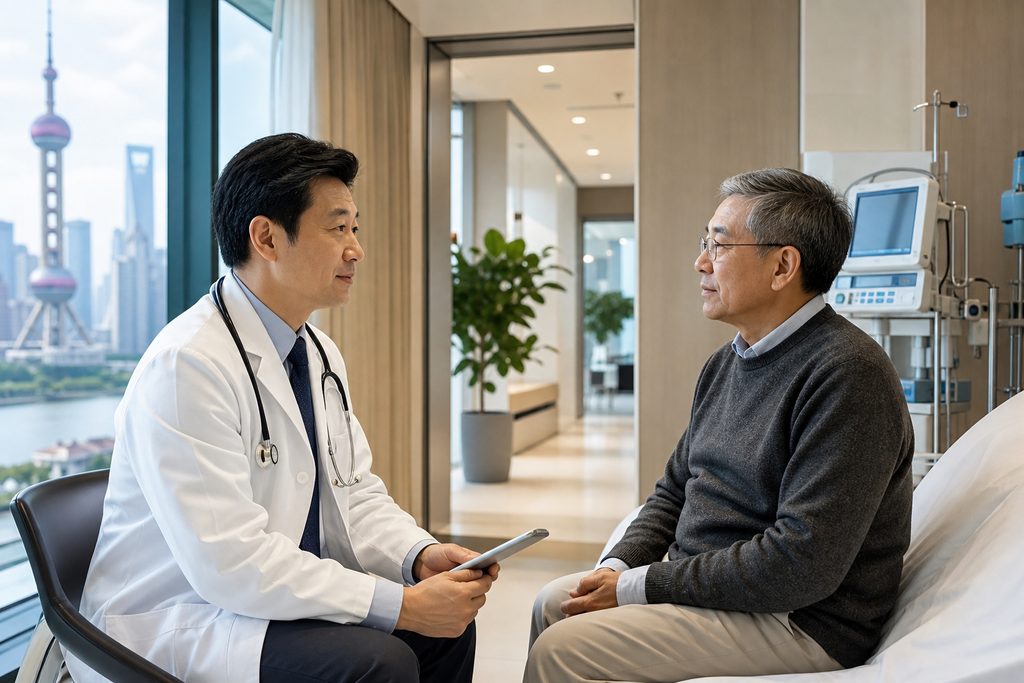
Stem Cell Therapy in Shanghai: Costs, Safety, and Treatment Coordination for International Patients
Have you been quoted a six-figure price for stem cell treatment at home, only to wonder whether there is a credible alternative overseas? You are not alone. The search for affordable regenerative medicine has led thousands of patients to investigate options in China, where the stem cell therapy cost Shanghai clinics quote often runs 50–70% lower than comparable private programs in the United States or Western Europe. But cost is only one part of the equation. Safety, regulatory oversight, hospital quality, and the logistics of coordinating treatment from abroad matter just as much.
This article explains what stem cell therapy actually costs in Shanghai, which hospitals and clinics are credible, how China regulates these treatments, and what a treatment coordination service does — and does not do. We have helped international patients navigate the Chinese healthcare system for years through China Medical Services, and our goal here is to give you the facts you need to make a clear-headed decision.
Key Takeaways
- Stem cell therapy in Shanghai typically costs between $8,000 and $35,000 per treatment cycle, depending on cell type, condition, and hospital tier — roughly one-third to one-half of US private clinic pricing.
- China operates a dual-track regulatory system: clinical trials are tightly controlled, while fee-for-service applications in hospital international departments follow stricter oversight than many patients assume.
- Language barriers, hospital registration systems, and visa requirements make independent coordination extremely difficult — this is where a bilingual treatment coordination service adds real value.
- Not every condition has credible stem cell evidence. Reputable Shanghai hospitals will turn away patients whose indications lack clinical trial backing — and that refusal is a sign of quality, not a red flag.
The Problem: Skyrocketing Costs and Limited Access at Home
Stem cell therapy has moved from experimental science to clinical reality for a narrow set of indications — hematological malignancies, certain orthopedic conditions, some autoimmune diseases, and a growing list of degenerative disorders. But access remains brutally expensive. In the United States, a single mesenchymal stem cell (MSC) injection for knee osteoarthritis at a private clinic can run $5,000 to $15,000 per joint. A full course for neurological or autoimmune conditions? Patients regularly report quotes of $25,000 to $60,000 or more, almost never covered by insurance.
Wait times compound the problem. In the UK, NHS referrals for regenerative medicine trials can stretch 12–18 months. In Canada, many patients wait over a year just for an initial consultation with a specialist who may ultimately tell them they are not eligible for the trial they pinned their hopes on. And in Australia, the Therapeutic Goods Administration has tightened restrictions on autologous cell therapies, pushing some patients to look abroad.
What happens if nothing changes? Patients either drain savings on unproven overseas clinics with no regulatory oversight, or they wait — often while their condition progresses. Neither option is acceptable. This is why Shanghai has emerged as a serious contender: it combines regulated hospital infrastructure, high clinical volume, and a cost structure that reflects China’s broader healthcare economics.
Why Shanghai Delivers Results: Volume, Regulation, and Structural Cost Advantages
Clinical Volume and Research Depth
Shanghai is home to 18 of the hospitals on the Fudan University Hospital Rankings Top 100 list — the most respected hospital quality benchmark in China. Several of these institutions run active stem cell research programs. Ruijin Hospital, affiliated with Shanghai Jiao Tong University School of Medicine, operates one of China’s largest hematology and bone marrow transplant centers. Zhongshan Hospital, affiliated with Fudan University, has published extensively on MSC applications in cardiovascular and liver disease. These are not boutique clinics; they are major academic medical centers with institutional review boards, publication records, and peer-reviewed output.
Volume matters in regenerative medicine. A hospital that treats hundreds of patients with a given cell therapy protocol accumulates data that a low-volume clinic simply cannot match. When complications arise — and they do, in any medical intervention — high-volume centers have the protocols and experience to manage them. This is a structural advantage, not a marketing claim.
How China Regulates Stem Cell Therapy
China’s regulatory framework for stem cells is stricter than most Western patients realize. Since 2015, the National Health Commission and the former CFDA (now National Medical Products Administration) have required that all stem cell clinical applications be conducted either as registered clinical trials or through hospital-based filing systems with ethical committee approval. Unapproved commercial stem cell clinics exist in China — as they do in Mexico, Panama, and parts of the US — but Shanghai’s top-tier hospitals operate under a different set of rules.
For international patients, this means treatment is typically delivered through a hospital’s international medical department or a designated clinical research pathway. You sign informed consent documents. Your case is reviewed by a multi-disciplinary team before treatment is approved. This is not a walk-in spa treatment. It is hospital-based medicine with all the administrative weight that implies.
Cost Advantage Without Quality Compromise
Why is the stem cell therapy cost Shanghai hospitals quote so much lower than Western prices? Three structural reasons. First, labor costs for physicians, nurses, and lab technicians are lower in China — a senior hematologist at a Shanghai teaching hospital earns a fraction of what a comparable specialist earns in Boston or London, and that differential flows directly into procedure pricing. Second, hospital efficiency: Chinese tertiary hospitals operate at extraordinary scale, with streamlined patient flow and high bed turnover. Third, the cost of clinical-grade laboratory production for cell products is lower when done at volume within an integrated hospital system.
None of these factors compromise quality. In fact, the Fudan-ranked hospitals in Shanghai match or exceed Western academic centers on several measurable benchmarks: surgical volume, complication management experience, and publication output in peer-reviewed journals. Lower cost here reflects structural economics, not corner-cutting.
What Stem Cell Therapy Actually Costs in Shanghai
Let us talk real numbers. The stem cell therapy cost Shanghai patients can expect depends heavily on three variables: cell type (autologous vs. allogeneic), indication, and hospital tier. Here is a breakdown based on our coordination experience and published hospital price schedules:
| Treatment Type | Shanghai Price Range (USD) | US Private Clinic Range (USD) | Typical Indications |
|---|---|---|---|
| MSC injection (single joint) | $8,000 – $12,000 | $15,000 – $30,000 | Knee osteoarthritis, cartilage defects |
| MSC intravenous course (3–4 infusions) | $18,000 – $28,000 | $35,000 – $60,000 | Autoimmune conditions, post-stroke recovery |
| Umbilical cord MSC therapy | $15,000 – $25,000 | $25,000 – $50,000 | Diabetes, liver fibrosis, inflammatory bowel disease |
| Hematopoietic stem cell transplant (autologous) | $30,000 – $50,000 | $100,000 – $250,000 | Multiple myeloma, lymphoma |
These figures are ranges, not quotes. Final pricing varies by hospital, case complexity, and whether you go through a standard international department channel or a VIP coordination pathway. The VIP pathway — which includes senior specialist consultations, expedited scheduling, and English-speaking nursing support — typically adds 50–100% to the base price. More on that below.
For context on how Shanghai pricing fits into the broader landscape of Chinese medical costs, see our guide to top-ranked hospitals in China and our dedicated Shanghai hospital directory.
How to Evaluate a Stem Cell Clinic in Shanghai: A Decision Framework
Not every clinic offering stem cell therapy in Shanghai is credible. The city has legitimate academic hospitals — and it also has private clinics that market aggressively to foreign patients with glossy websites and unverifiable claims. How do you tell the difference?
First, check the hospital’s Fudan ranking. If the institution is not on the Fudan Top 100 list or affiliated with a major university medical school, treat its stem cell claims with extreme skepticism. Second, ask for the clinical trial registration number. Any legitimate stem cell intervention in China should be registered with the Chinese Clinical Trial Registry (ChiCTR) or ClinicalTrials.gov. If the clinic cannot provide one, walk away. Third, demand to see the ethics committee approval document. Every hospital-based stem cell protocol in Shanghai requires institutional ethics board sign-off. No approval, no treatment.
And here is the uncomfortable question many patients avoid: is stem cell therapy safe in China? The honest answer is that safety depends entirely on where you go. At a Fudan-ranked academic hospital running a registered protocol, safety standards are comparable to any Western academic center. At an unregistered private clinic operating outside the regulatory framework, the risks include unverified cell products, inadequate infection control, and no adverse event reporting. The difference is not subtle. It is the difference between a hospital and a storefront.
Red flags to watch for: Clinics that promise guaranteed results, treat “everything” with stem cells, refuse to provide trial registration numbers, offer treatment without a prior medical evaluation, or quote prices that seem too good to be true. Legitimate Shanghai hospitals do none of these things.
Practical Considerations: Visas, Documentation, and Logistics
If you are considering stem cell therapy in Shanghai, you need to plan for more than just the medical procedure. The logistics are substantial, and most of them are non-negotiable.
Visa: Foreign nationals traveling to China for medical treatment apply for an S2 visa, which covers short-term private affairs including medical care. You will need an invitation letter or medical treatment confirmation from the hospital, proof of appointment, and standard visa application materials. Family members accompanying you also apply for S2 visas. For treatment courses exceeding 180 days, an S1 visa applies. We advise confirming current requirements with the Chinese embassy or consulate in your country, as documentation rules change periodically.
Medical records: Shanghai hospitals require comprehensive medical history before accepting an international stem cell patient. This typically includes: diagnosis reports, imaging studies (MRI, CT, PET scans), blood work from the past 3–6 months, current medication list, and any prior stem cell or regenerative treatments. Records must be translated into Chinese — a service we provide as part of our coordination package.
Payment: Chinese public hospitals operate on a prepayment model. You deposit funds upfront, and treatment costs are deducted as services are delivered. International credit cards are accepted at most hospital international departments, but wire transfer is often required for large deposits. Private international hospitals in Shanghai, such as Jiahui and United Family, offer direct insurance billing — but their stem cell offerings are more limited than public academic centers.
Language: This is the single biggest barrier. Even at Shanghai’s top hospitals, most nursing staff and administrative personnel do not speak fluent English. Physician consultations may be conducted in English at international departments, but everything from registration to pharmacy pickup to discharge paperwork happens in Chinese. A bilingual medical companion — someone who handles registration, translates during consultations, and navigates the hospital’s physical layout — changes the experience from overwhelming to manageable.
Frequently Asked Questions
Most international patients pay between $15,000 and $30,000 for a complete treatment course, excluding travel and accommodation. Single-joint injections run lower, at $8,000–$12,000. Complex protocols involving multiple infusions or hospital admission can exceed $35,000. Every quote depends on your specific diagnosis, cell type, and chosen hospital.
At Fudan-ranked academic hospitals operating under registered clinical protocols, safety standards are equivalent to Western academic centers. The risk lies in unregulated private clinics, which exist in China just as they do in other countries. The key safety step is verifying the hospital’s regulatory standing before committing to anything.
No reputable Shanghai hospital will sell you a “stem cell package” sight unseen. The process works like this: you submit medical records for remote review, the hospital’s specialists evaluate whether you are a candidate, and only then is a treatment plan and cost estimate provided. Any service offering to book a package without prior medical review should be avoided.
That happens — and it is a good sign. Legitimate Shanghai hospitals reject patients whose conditions lack evidence for stem cell efficacy. If you are declined, ask whether an alternative treatment pathway exists within the same hospital system. Sometimes the honest answer is that stem cell therapy is not appropriate for your case, and no amount of money will change that.
A coordination service handles the non-medical logistics: hospital selection based on your diagnosis, medical record translation, appointment scheduling through official channels, visa document preparation, airport transfer, bilingual accompaniment during hospital visits, and follow-up communication with the medical team after you return home. The coordinator does not make medical decisions and does not guarantee treatment outcomes. What we do is remove the friction that makes navigating a foreign healthcare system so difficult.
Your Next Step
Stem cell therapy in Shanghai is a serious medical decision, not a travel purchase. The right approach is to start with information: understand the cost ranges, verify the hospital’s regulatory standing, and get an honest assessment of whether your condition is a credible candidate for treatment. We are China Medical Services, a treatment coordination organization that connects international patients with top-tier Chinese hospitals. We are not a hospital, we do not provide medical diagnoses, and we will never push you toward a treatment that is not appropriate for your case. If you want to explore whether stem cell therapy in Shanghai is a realistic option for you, request a free consultation through our patient coordination service. We will review your situation and give you a straight answer — including the possibility that Shanghai is not the right choice for you.
That is the honest starting point. Everything else follows from there.
For more medical information and treatment options in China, visit chinamedservices.com (China Medical Services).
