Brain Tumor Surgery in China: How We Coordinate Your Care
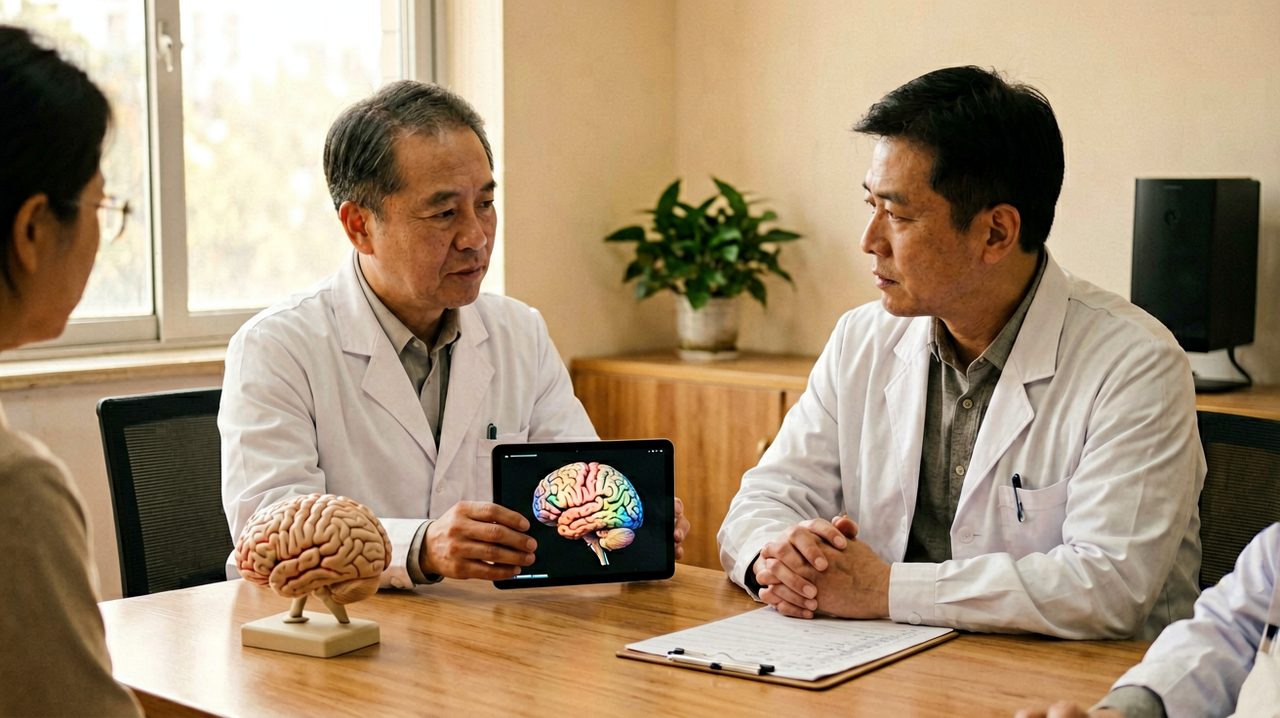
When 42-year-old Michael heard the word “meningioma” from his neurologist in Manchester, his first thought was not about survival statistics. It was about the mortgage. The National Health Service had given him a six-month wait for a neurosurgical consult. Private care in the UK was quoted at £38,000. He started searching for alternatives. That search brought him to a question we hear constantly: what does brain tumor surgery cost China, and is it actually safe to travel that far for a craniotomy?
The honest answer is more nuanced than a price list. The brain tumor surgery cost China is substantially lower than in the United States or Western Europe — often 60 to 80 percent less for comparable procedures at top-tier hospitals. But cost is only one variable. Hospital selection, surgeon volume, recovery infrastructure, and coordination logistics matter just as much. This article walks through what our team actually does when an international patient asks us to coordinate neurosurgical care in China. No marketing fluff. Just the operational reality.
Key Takeaways
- Brain tumor surgery at top Chinese neurosurgery centers typically ranges from $18,000 to $45,000, versus $80,000 to $200,000+ in the US for comparable craniotomies.
- China’s high-volume neurosurgery departments perform thousands of tumor resections annually, with some centers exceeding 3,000 cases per year.
- Public hospital outpatient clinics cannot be pre-booked from overseas — surgical scheduling requires an in-person consultation first, which is why coordination support exists.
- Recovery timelines vary by tumor location and surgical approach, but most international patients plan for 3 to 6 weeks in China before returning home.
The Problem: A Diagnosis That Outpaces Local Capacity
Brain tumors do not respect waiting lists. The World Health Organization reports that primary brain tumors affect approximately 300,000 people globally each year, with incidence rates rising in developed countries. In Canada, the median wait time from specialist referral to neurosurgery is 33 weeks, according to the Fraser Institute’s 2023 report. In the United Kingdom, the NHS Constitution target of 18 weeks from referral to treatment is missed for roughly one in three neurosurgical patients.
For a meningioma or low-grade glioma, a six-month delay may be clinically acceptable. For a high-grade lesion, it is not. Patients face a brutal calculus: wait in a public system and risk progression, or pay private rates that can exceed $100,000 out of pocket. That is the gap China’s top neurosurgery departments fill — but only if the patient can navigate the system.
A patient cannot simply email Beijing Tiantan Hospital and book a craniotomy for next month. The system does not work that way. And that is precisely where coordination becomes the differentiator.
Why China’s Neurosurgery Centers Deliver Results
Clinical Volume Drives Surgical Competence
Volume is the most underrated predictor of neurosurgical outcomes. A 2020 study in The Lancet Oncology found that hospitals performing more than 100 glioma resections annually had significantly lower 30-day mortality rates than low-volume centers. China’s top neurosurgery departments operate at a scale that simply does not exist in most Western hospitals.
Beijing Tiantan Hospital’s neurosurgery department performs over 15,000 neurosurgical procedures annually. Huashan Hospital in Shanghai, affiliated with Fudan University, handles more than 10,000. Compare that to a typical US academic medical center, which might perform 1,500 to 3,000 neurosurgical cases per year. A surgeon at Tiantan or Huashan may complete more tumor resections in one year than a Western neurosurgeon does in five.
That repetition matters. Intraoperative decision-making — how to approach a tumor near eloquent cortex, when to stop resection, how to manage unexpected bleeding — improves with exposure. Volume does not guarantee outcomes, but it creates the conditions for them.
Technology Without the Premium Price Tag
Chinese neurosurgery departments have invested heavily in intraoperative MRI, awake craniotomy protocols, neuronavigation, and fluorescence-guided resection. Huashan Hospital operates one of the largest awake craniotomy programs in Asia. Tiantan runs a dedicated glioma center with integrated molecular pathology. These are not second-tier facilities with outdated equipment.
The structural reason costs stay low is straightforward: labor economics. A senior neurosurgeon’s salary in China is a fraction of a US counterpart’s. Hospital overhead is lower. Malpractice insurance is dramatically cheaper. The technology is the same — the cost structure is not.
Cost Advantage Without Quality Compromise
Let us put numbers on the table. The brain tumor surgery cost China ranges from $18,000 to $45,000 for a standard craniotomy at a top public hospital’s international department. That includes surgeon fees, operating room, anesthesia, ICU stay, and typically 10 to 14 days of inpatient recovery. In the United States, the same procedure at a major center runs $80,000 to $200,000 before insurance negotiations. Germany and Switzerland are comparable to US pricing. Even Thailand and India — often cited as medical tourism destinations — range from $25,000 to $60,000 for complex neurosurgery.
Lower cost does not mean lower quality. The Fudan University hospital rankings place Tiantan, Huashan, and West China Hospital consistently in the top tier for neurosurgery nationwide. Several Chinese neurosurgery departments hold JCI accreditation or equivalent international quality certifications. The cost difference reflects structural economics, not clinical shortcuts.
How We Actually Coordinate a Brain Tumor Surgery in China
The coordination process is not a concierge service where you pay a fee and skip a line. It is case management. Here is the real sequence, step by step.
First, we collect the patient’s existing records: MRI or CT scans in DICOM format, pathology reports if a biopsy exists, neurological examination notes, and a summary of symptoms. Our team translates these into Chinese for the receiving hospital’s neurosurgery department. This translation step is not trivial — a poorly translated radiology report can delay evaluation by weeks.
Second, we identify appropriate hospitals. If the patient specifies Shanghai, we look at Huashan Hospital, Ruijin Hospital, and Shanghai Changzheng Hospital. If Beijing is preferred, Tiantan and Peking Union Medical College Hospital lead the list. We do not choose the hospital for the patient. We present options based on tumor type, surgical complexity, and the patient’s budget and location preferences.
Third, the patient undergoes a remote evaluation. This may be a written second opinion from a neurosurgeon ($300–$500) or a video consultation with a specialist team ($500–$800 for top-tier specialists). These fees are credited in full toward on-the-ground coordination if the patient proceeds to treatment in China within 90 days.
Fourth, if the patient decides to travel, we handle the logistics: S2 visa documentation, hospital appointment scheduling, airport pickup, and a bilingual medical companion for the first hospital visits. The companion handles registration, queue management, payment, and interpretation — not medical advice.
Fifth, the in-person consultation happens. This is non-negotiable. Chinese public hospitals require a face-to-face consultation before any surgery is scheduled. No amount of coordination can bypass this rule. The neurosurgeon reviews the imaging, confirms the surgical plan, and only then is a surgery date proposed.
What Recovery Looks Like: A Realistic Timeline
Recovery after brain tumor removal is not a linear process. The tumor’s location dictates more than the surgery itself. A frontal lobe meningioma resection might allow discharge in 5 to 7 days. A tumor near the motor cortex or language areas could require 2 to 3 weeks of inpatient rehabilitation before flying home.
A typical timeline for an international patient looks like this:
| Phase | Duration | What Happens |
|---|---|---|
| Pre-surgical evaluation | 3–5 days | In-person consultation, repeat MRI if needed, anesthesia assessment, surgical consent |
| Surgery and ICU | 1–3 days | Craniotomy, immediate post-operative monitoring, pain management |
| Inpatient recovery | 7–14 days | Neurological monitoring, wound care, early mobilization, discharge planning |
| Local rehabilitation | 1–3 weeks | Outpatient physiotherapy or speech therapy if needed, follow-up imaging |
| Return home | — | Clearance to fly typically 10–21 days post-surgery, depending on tumor location and complications |
Most patients plan for 3 to 6 weeks total in China. Some leave sooner. Others stay longer if rehabilitation needs are significant. We advise patients not to book return flights until the surgeon confirms fitness to fly — intracranial air and pressure changes during flight are real concerns after a craniotomy.
Is Brain Tumor Surgery Safe in China? What the Data Shows
The question is fair. Western patients often carry assumptions about healthcare quality in China that are outdated by a decade or more. The reality at top-tier neurosurgery centers is different from the stereotype.
JCI accredited neurosurgery hospitals Beijing and Shanghai operate under international quality standards. JCI — Joint Commission International — audits hospitals on patient safety, infection control, medication management, and surgical protocols. Several Chinese hospitals with major neurosurgery departments hold JCI accreditation, including Peking Union Medical College Hospital and Huashan Hospital’s international wing.
Perioperative mortality for elective brain tumor resection at top Chinese centers is comparable to Western benchmarks — typically under 2 percent for meningiomas and low-grade gliomas at high-volume hospitals. The key variable is not the country. It is the hospital and surgeon. A low-volume provincial hospital in China carries the same risks as a low-volume community hospital in Ohio. That is why hospital selection matters more than geography.
But honesty requires acknowledging the friction points. Language barriers in public hospital wards are real. The pace of outpatient clinics is overwhelming — thousands of patients per day at major centers. Food, bedding, and nursing culture differ from Western expectations. These are not safety issues, but they affect the patient experience. A bilingual companion mitigates most of them. It does not eliminate all of them.
How to Choose a Neurosurgeon and Hospital: Decision Criteria That Matter
Patients often ask us to find the “best neurosurgeon for brain tumor in Shanghai.” That is the wrong question. The right question is: which neurosurgeon has the highest volume and best outcomes for my specific tumor type and location?
Here is what we evaluate when recommending a hospital and surgeon:
- Tumor-specific volume: A surgeon who does 200 meningioma resections per year is different from one who does 50 mixed tumor cases. Ask for the specific number.
- Department infrastructure: Does the hospital have intraoperative MRI? Dedicated neuro-ICU? In-house neuropathology for rapid molecular diagnosis?
- International patient experience: Has the department treated foreign patients before? Do they have English-speaking staff or a dedicated international ward?
- Fudan ranking tier: The Fudan University hospital rankings place neurosurgery departments in tiers. Top-tier departments — like those at Tiantan, Huashan, and West China — consistently rank among China’s strongest for neurosurgery.
- Total cost transparency: Public hospital international departments publish fee schedules. Private international hospitals in China — like United Family or Jiahui — offer direct insurance billing but charge 1.5 to 2 times public hospital rates.
If a patient wants to book a brain tumor treatment package China, we clarify what a “package” actually includes. Some private hospitals offer bundled pricing for international patients: surgery, hospital stay, and follow-up imaging for a fixed fee. Public hospital international departments typically bill item by item. Both are legitimate. The package model offers predictability; the itemized model often costs less but requires more administrative handling.
Practical Considerations: Visas, Payments, and Follow-Up
The logistics of traveling to China for neurosurgery are manageable but specific. Get the details right before you book a flight.
Visa: Medical treatment in China falls under the S2 visa category, which covers short-term private affairs including medical treatment. The hospital provides an invitation letter and treatment confirmation that supports the visa application. Accompanying family members also apply for S2 visas. Processing typically takes 1 to 2 weeks at most Chinese embassies or consulates. We prepare the documentation package, but the visa decision rests with the consular officer.
Payment: Public hospitals in China require pre-payment before surgery. The international department typically quotes a deposit — often 50 to 80 percent of the estimated total — with settlement on discharge. International bank transfers are standard. Most public hospitals do not accept foreign health insurance directly; patients pay out of pocket and file for reimbursement from their insurer. Private international hospitals in China are different: many hold direct billing agreements with major insurers like Cigna, Aetna, and Allianz.
Records: Bring everything. Original imaging on CD or USB in DICOM format, pathology slides if a biopsy was done, a list of current medications, and any prior surgical reports. Digital copies are fine for the initial remote review, but the hospital will want originals or certified copies for the pre-surgical workup.
Follow-up after returning home: The neurosurgeon will provide a discharge summary in English (upon request) and a recommended follow-up imaging schedule. Most patients do a follow-up MRI at 3 months and 12 months post-surgery. The Chinese hospital can review follow-up scans remotely if the patient sends them through our coordination team — typically as part of the original service agreement.
Frequently Asked Questions
At a top public hospital’s international department, a standard craniotomy for tumor resection typically ranges from $18,000 to $45,000. Complex cases — tumors in eloquent brain regions, skull base tumors, or cases requiring awake craniotomy — can reach $60,000. Private international hospitals in China charge more, often $50,000 to $100,000. All figures vary by hospital and case complexity.
No. Chinese public hospitals require an in-person consultation before any surgery is scheduled. The neurosurgeon must examine you and review your imaging personally. Remote video consultations can confirm that you are a surgical candidate and accelerate the process, but the final surgical plan is only made after you arrive and meet the surgical team.
Top Chinese neurosurgery departments have dedicated neuro-ICUs and 24-hour neurosurgical coverage. Complication rates at high-volume centers are comparable to Western benchmarks. If a complication occurs, the hospital manages it internally — you do not need to transfer elsewhere. Our coordination team remains involved throughout the hospital stay to facilitate communication between you, your family, and the medical team.
Most patients stay in the hospital for 7 to 14 days after surgery. Full recovery — return to work, driving, and normal activities — typically takes 6 to 12 weeks, depending on tumor location and whether rehabilitation is needed. International patients should plan for 3 to 6 weeks in China to complete the surgical stay and initial follow-up before flying home.
It depends on your policy. Some international health insurance plans cover treatment in China, but most US and European domestic plans do not. Public Chinese hospitals require self-payment upfront, and you file for reimbursement. Private international hospitals in China often bill insurers directly. Check with your insurer before committing to travel.
Your Next Step
The decision to travel abroad for brain tumor surgery is not one to make lightly. The brain tumor surgery cost China offers real savings, and the clinical volume at top neurosurgery centers is genuinely world-class. But the logistics are complex, and the system is not built for foreign patients to navigate alone.
We are China Medical Services, a coordination team that connects international patients with top-ranked Chinese hospitals. We are not a hospital, and we do not provide diagnoses or medical advice. What we do is handle the operational layer: record translation, hospital matching, appointment scheduling, visa documentation, and bilingual companionship during your hospital visits. You can explore our top-ranked hospital database or review neurosurgery department rankings to see your options. When you are ready to discuss your specific case, request a free consultation and we will walk you through the process step by step.
Michael flew to Shanghai eight weeks after his first email to us. His meningioma was resected at Huashan Hospital. He was back in Manchester eleven days after surgery, with a clean post-operative MRI and a bill that was roughly one-fifth of what private UK care would have cost him. His case is not exceptional. It is what happens when the right patient meets the right hospital with the right coordination.
For more medical information and treatment options in China, visit chinamedservices.com (China Medical Services).
