Full Mouth Reconstruction in China: Your Companion for Complex Cases
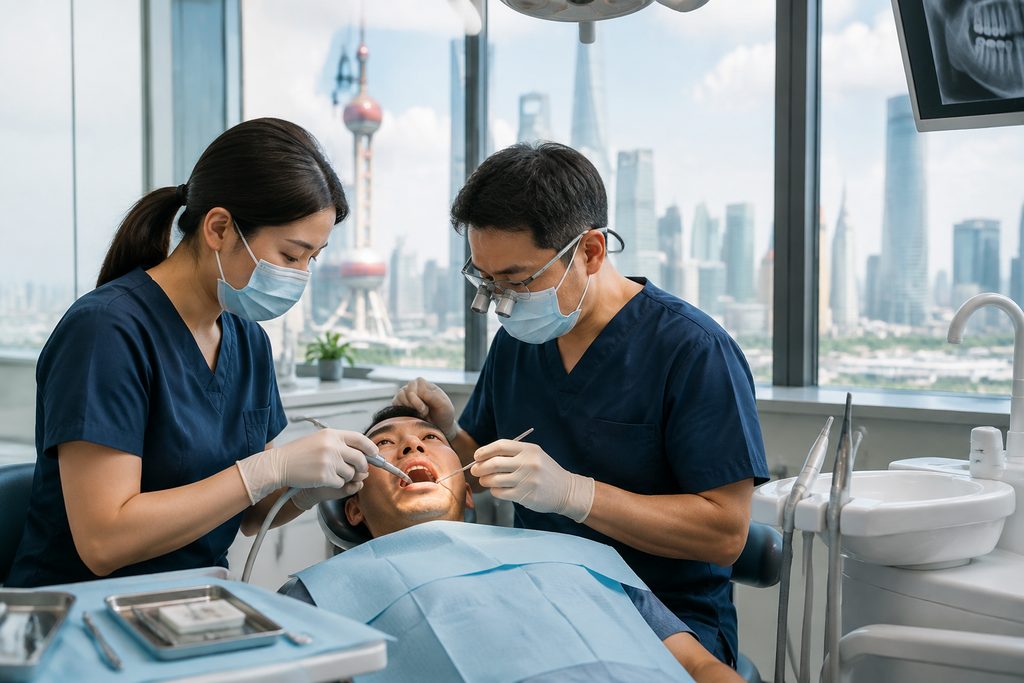
When 47-year-old Daniel from Manchester finally saw his dental CT scan, he felt the floor drop. Twenty years of acid reflux, night grinding, and a failed bridge had left him with eight failing teeth, severe bone loss in his upper jaw, and a bite that no longer met. His UK dentist had one word for it: full mouth reconstruction. The quote came back at £48,000. The wait for the surgical phase alone was eleven months. Daniel started typing into Google at 2 a.m. and landed on a phrase he’d never considered: full mouth reconstruction cost China. That search changed the trajectory of his treatment. He’s not alone. Every month, our team hears from patients in the US, UK, Australia, and across Europe who are weighing the same decision: stay local and pay premium prices, or travel for world-class care at a fraction of the cost. This article walks through exactly what that decision looks like — the real process, the honest risks, the timelines, and the questions nobody thinks to ask until they’re already on a plane.
How This Actually Works, Step by Step
Full mouth reconstruction is not a single procedure. It’s a coordinated sequence of treatments — extractions, bone grafting, implant placement, temporary prosthetics, and final restoration — that can span eight to fourteen months depending on your starting point. The process for an international patient looks like this.
First, you send records. That means a recent panoramic X-ray, a CBCT scan if you have one, your dental history, and a list of medications. Our team translates these into Chinese and submits them to the prosthodontic or implantology department at one of the hospitals in our network. Within five to seven business days, you receive a written treatment plan with a cost range. This is not a binding quote. It’s a clinical assessment based on your imaging.
Second, you decide on the level of coordination you need. Some patients fly to China for the initial consultation and return home to think. Others proceed directly to a treatment visit. Either way, the first in-person appointment is the gatekeeper. Chinese public hospitals do not schedule surgery without an in-person consultation. No exceptions. The implantologist will examine your mouth, review your bone density, and confirm or adjust the plan. If you need bone grafting, that happens first and requires three to six months of healing before implants go in.
Third, the surgical phase. Implant placement is typically done in one or two sessions. You’ll leave with temporary teeth that same week in many cases. Then you go home and wait. The bone needs time to integrate with the implants — usually three to four months for the lower jaw, four to six for the upper. The final restoration visit is when you receive your permanent bridge or full-arch prosthesis. That visit runs seven to ten days.
Full Mouth Reconstruction Cost China: What the Numbers Actually Look Like
The most common question we get is straightforward: what does full mouth reconstruction cost in China? The honest answer is that it depends heavily on the number of implants, the type of restoration, and whether you need bone grafting. But ranges exist, and they are dramatically lower than Western prices.
For a full-arch restoration using six to eight implants per jaw, prices at top-tier public hospitals and reputable private international clinics in China typically run from $18,000 to $35,000 per arch. That includes implant placement, abutments, and a fixed zirconia or porcelain bridge. A complete mouth — both arches — generally falls between $35,000 and $60,000. Compare that to the United States, where the same treatment routinely costs $45,000 to $80,000 per arch, and the UK, where Daniel’s quote of £48,000 for a single arch is not unusual. The savings are real, but they’re not the whole story. The quality of the restoration matters more than the price tag.
| Component | China (USD) | United States (USD) | United Kingdom (GBP) |
|---|---|---|---|
| Full-arch implant bridge (per jaw) | $18,000 – $35,000 | $45,000 – $80,000 | £35,000 – £55,000 |
| Bone grafting (per site) | $800 – $2,500 | $2,500 – $5,000 | £2,000 – £4,000 |
| Single implant + crown | $1,200 – $2,800 | $3,500 – $6,000 | £2,500 – £4,500 |
| Full mouth reconstruction (both arches) | $35,000 – $60,000 | $90,000 – $160,000 | £70,000 – £110,000 |
These figures vary by hospital and case complexity. A patient with severe bone loss who needs sinus lifts and extensive grafting will land at the top of the range. A patient with good bone and no complicating factors will land near the bottom. The only way to get a real number is to send your scans and let a specialist look at them.
A Realistic Timeline
Everyone wants to know how long full mouth reconstruction takes. The clinical answer is eight to fourteen months from first consultation to final teeth. The logistical answer is longer. Here’s the full picture, including the waiting steps nobody budgets for.
| Stage | What Happens | Duration |
|---|---|---|
| Week 1–2 | Record collection, translation, hospital submission | 5–10 business days |
| Week 3–6 | S2 visa application with hospital invitation letter | 2–4 weeks |
| Week 6–8 | In-person consultation, treatment plan confirmation | 1–2 days in China |
| Week 8–12 | Extractions and bone grafting (if needed) | 1 surgical visit |
| Month 3–6 | Healing and graft integration at home | 3–4 months |
| Month 6–8 | Implant placement surgery | 1–2 surgical visits |
| Month 8–12 | Osseointegration (bone fusing to implants) | 3–6 months |
| Month 12–14 | Final restoration, permanent teeth fitted | 7–10 days in China |
Most patients make two to three trips to China. The first for consultation and possibly extractions or grafting. The second for implant placement. The third for final restoration. Some patients combine the first two visits if their bone is healthy enough to skip grafting. Others need an extra visit if complications arise. Budget for three trips. If you only need two, that’s a bonus.
What Can Go Wrong — and What Happens Then
We’re going to be direct about this. Full mouth reconstruction is surgery. Things can go wrong, and you deserve to know what those things are before you commit to traveling for treatment.
Implant failure happens in roughly 2% to 5% of cases, depending on bone quality, smoking status, and systemic health. If an implant fails, it usually fails early — within the first few weeks after placement. The fix is typically straightforward: remove the implant, allow the site to heal for six to eight weeks, and place a new one. Most hospitals in our network include one implant replacement within the original treatment fee. Confirm this before you sign anything.
Prosthetic complications — a cracked crown, a loose abutment, a bridge that doesn’t fit perfectly — are more common. These are annoying but rarely serious. The challenge for international patients is that you’re now back home. Your local dentist may be reluctant to adjust work they didn’t place. Our recommendation: before you leave China, get a written warranty document specifying what’s covered and for how long. Top hospitals typically offer a five-year warranty on implant fixtures and two to three years on prosthetic components. Keep every receipt and every scan.
And then there’s the bone grafting question. If your jawbone is too thin or too soft, the implantologist may recommend grafting. That adds three to six months to your timeline and $800 to $2,500 per site. If you refuse grafting against medical advice, the risk of implant failure rises significantly. This is not a corner to cut.
What about safety? The question “is full mouth reconstruction safe in China” comes up in nearly every consultation. The answer is that safety depends on where you go. China’s top dental hospitals — the ones on the Fudan ranking and those with JCI accreditation — operate at international standards. They use the same implant systems you’d find in London or Los Angeles: Straumann, Nobel Biocare, Zimmer, and Osstem. Infection control protocols are rigorous. The complication rates at these institutions are comparable to Western centers. But China is a big country, and quality varies enormously. A clinic that markets heavily to tourists is not the same as a university-affiliated hospital with a prosthodontics department. Choose carefully.
How to Evaluate a Hospital for Full Mouth Restoration
If you’re searching for the best dental hospital China for full mouth restoration, you’ll find no shortage of options. The question is how to separate genuine expertise from polished marketing. Here’s what we look for when we vet hospitals for our patients.
Look at the implantology and prosthodontics departments separately. Full mouth reconstruction requires both surgical skill and restorative artistry. A hospital with a strong implantology team but weak prosthodontics will give you solid implants and mediocre teeth. Ask how many full-arch cases the department completes per year. A busy hospital-affiliated department might do 200 to 400 full-arch restorations annually. A small private clinic might do 20. Volume matters because it correlates with complication management experience.
Check the implant systems used. Reputable hospitals use internationally recognized brands with long track records. If a clinic pushes a no-name implant system because it’s cheaper, walk away. The implant is the one component that stays in your body permanently. It’s not the place to save money.
Ask about the digital workflow. Modern full mouth reconstruction relies on CBCT-guided planning, digital impressions, and CAD/CAM-milled prosthetics. Hospitals that invest in this technology tend to have more predictable outcomes and fewer remakes. If a clinic is still doing everything with goopy impressions and hand-waxed try-ins, that’s not automatically disqualifying, but it tells you something about their investment in precision.
And here’s a point that surprises many Western patients: China’s top public dental hospitals are enormous. The School of Stomatology at Peking University and the Ninth People’s Hospital in Shanghai each handle patient volumes that dwarf most Western teaching hospitals. That scale means two things. First, the specialists have seen everything. Second, the system is not built around hand-holding. You will wait. You will navigate hallways that feel like airports. You will not get a concierge experience — unless you arrange one. That’s exactly what our bilingual companion service is for, but we’ll get to that.
Practical Considerations: Records, Visa, Payment, and Follow-Up
Let’s talk about the unglamorous logistics that determine whether your treatment actually happens.
Records. You need a recent panoramic X-ray — taken within the last three months — and ideally a CBCT scan. If your local dentist won’t release digital files, get them on a USB drive. We handle translation and formatting. Incomplete records are the number one reason treatment plans get delayed.
Visa. For medical treatment in China, you’ll apply for an S2 visa with a supporting letter from the hospital. The S2 visa is the correct category for short-term private affairs, including medical treatment. Your accompanying family member applies for the same S2 category. Processing takes two to four weeks at most embassies. The hospital’s international department will issue the invitation letter once you’ve confirmed your treatment plan and paid a deposit. Do not book flights until the visa is in your passport.
Payment. Chinese public hospitals require prepayment. You’ll deposit funds at the hospital cashier before each phase of treatment, and costs are deducted as services are rendered. Most hospitals accept international credit cards, but wire transfer is often more reliable for large amounts. Private international hospitals like United Family and Jiahui have direct billing arrangements with many Western insurers. Public hospitals generally do not — you pay upfront and seek reimbursement from your insurer afterward. Check with your insurance provider before you commit. Some policies exclude treatment abroad entirely. Others require pre-authorization.
Language. If you don’t speak Mandarin, you need someone who does. Hospital staff in the international departments generally speak English, but the moment you leave that department — for a blood draw, a pharmacy pickup, a CT scan — you’re in a Chinese-language environment. A bilingual companion who knows the hospital layout and can advocate for you is not a luxury. It’s the difference between a 45-minute appointment and a four-hour ordeal.
Follow-up at home. Before you leave China, get a complete treatment summary in English, all post-operative instructions, and contact information for the treating department. Most hospitals will do video follow-ups for international patients. Your local dentist can handle routine maintenance — cleanings, bite checks, minor adjustments — but major prosthetic work should go back to the treating hospital, at least during the warranty period.
Frequently Asked Questions
Full mouth reconstruction cost China ranges from $35,000 to $60,000 for both arches at top-tier hospitals, depending on implant count, grafting needs, and restoration type. Single-arch treatment runs $18,000 to $35,000. These figures vary by hospital and case complexity, and a written treatment plan after record review is the only way to get an accurate number.
At Fudan-ranked university hospitals and JCI-accredited international clinics, safety standards and complication rates are comparable to Western centers. These institutions use the same implant systems you’d find in the US or Europe. The risk lies in choosing the wrong provider — quality varies widely across China, and marketing claims don’t equal clinical competence.
Plan for eight to fourteen months from first consultation to final teeth. Bone grafting adds three to six months. Osseointegration after implant placement takes three to six months. Most international patients make two to three trips to China, with healing time at home between visits.
Yes, but be cautious of prepackaged deals. Reputable hospitals in Shanghai — including Shanghai Ninth People’s Hospital and the city’s major private international clinics — will want to examine you before finalizing any treatment plan. What you can book in advance is the consultation, the hospital registration, and the coordination support. The treatment itself is confirmed only after the specialist sees your mouth and scans.
Routine maintenance — hygiene visits, bite checks, minor adjustments — can be done by any competent dentist. Major prosthetic repairs or implant issues should go back to the treating hospital, especially during the warranty period. Ask for a written warranty document before you leave China.
Your Next Step
Full mouth reconstruction is a significant decision, and doing it in another country adds a layer of complexity that deserves honest, experienced guidance. That’s what we do. China Medical Services connects international patients with top-ranked Chinese hospitals and provides the on-the-ground support that makes treatment abroad workable — record translation, hospital coordination, bilingual companions, and visa guidance. We are not a medical provider. We don’t diagnose, we don’t treat, and we don’t promise outcomes. What we do is make sure you walk into the right hospital, see the right specialist, and understand exactly what’s happening at every step. If you’re considering full mouth reconstruction in China, send us your records. We’ll get them in front of a specialist and tell you honestly whether this path makes sense for your case. No pressure. No obligation. Just a clear-eyed answer.
For more medical information and treatment options in China, visit chinamedservices.com (China Medical Services).
