Liver Cancer Second Opinion in China: Oriental Hepatobiliary Review
Have you ever received a liver cancer diagnosis and felt the ground shift beneath you? That moment when your local oncologist outlines a treatment path, but a quiet voice asks: is this really the best option for me? For many patients, that question leads to Shanghai, and to a specific institution with a singular focus. Getting a second opinion liver cancer China cost assessment is more accessible than most Western patients assume, but the process has specific steps worth understanding before you commit.
Oriental Hepatobiliary Surgery Hospital (OHSH) in Shanghai is not a general hospital. It is a dedicated hepatobiliary center founded by Dr. Wu Mengchao, who performed over 14,000 liver surgeries in his lifetime. That specialization matters. The hospital handles more liver cancer cases in a month than many Western centers see in a year. When you ask “is Oriental Hepatobiliary hospital good for liver cancer,” the volume data alone suggests you are asking the right question.
This article walks through what a second opinion from this institution actually looks like, what it costs, what you need to send, and what could go wrong. No sugarcoating. No miracle claims. Just the real sequence for an international patient considering a remote review of their liver cancer diagnosis.
How This Actually Works, Step by Step
The remote second opinion pathway starts with your existing medical records. You are not flying to Shanghai yet. You are sending files.
Step one: Gather everything related to your diagnosis. Imaging reports (CT, MRI, PET-CT), pathology slides and reports, blood work including tumor markers like AFP, any prior treatment records, and current medication list. The more complete the picture, the more useful the review.
Step two: Translation. Chinese specialists review records in Chinese. Your documents need professional medical translation — not Google Translate. This is where a coordination team earns its fee. A poorly translated pathology report can change the clinical picture.
Step three: Submission through the hospital’s international department or a coordination service. The records go to a hepatobiliary specialist who reviews them against current Chinese liver cancer treatment guidelines.
Step four: You receive a written second opinion. This typically includes: confirmation or challenge of the original diagnosis, staging assessment, treatment recommendations, and whether the specialist believes coming to China for treatment would change your outcome. The written opinion is for reference only — not a prescription.
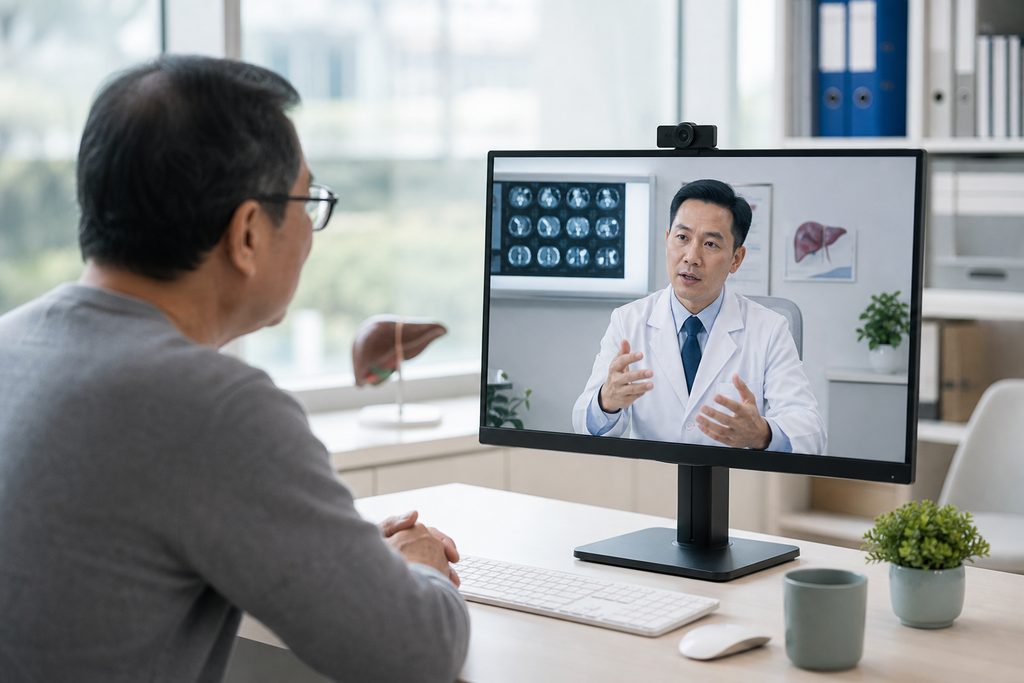
Step five: If you want more than paper, you schedule a video consultation. You speak with the specialist directly, ask questions, and hear their reasoning. This costs more but gives you a real conversation.
What happens next depends on what the opinion says. Some patients get reassurance that their local plan is sound. Others discover a different surgical approach is possible. A minority learn their case is not a good fit for treatment in China at all. All three outcomes are valuable.
Oriental Hepatobiliary Surgery Hospital Second Opinion: What Makes It Different
The hospital reviews international cases through its international department or authorized coordination channels. Acceptance depends on the completeness of your records and whether your case falls within the hospital’s specialty. Not every case is accepted — the hospital prioritizes cases where its surgical expertise is most relevant. You will know within 1 to 3 weeks whether a specialist will review your file.
No. A written second opinion from any Chinese hospital is for reference only. It is not a prescription, not a treatment order, and not legally binding in your home country. Its value is informational: it gives you and your local oncologist additional perspective from a high-volume specialty center. Your local team remains responsible for your actual care.
The opinion still has value. You can share it with your local oncologist, who may adjust your treatment plan based on the specialist’s assessment. Some patients use the written opinion to advocate for a different surgical approach or to seek a referral to a more specialized center in their own country. The $300 to $500 spent on the opinion is a fraction of what surgery costs anywhere.
No. The written second opinion and video consultation are both remote. You send records, receive analysis, and speak with the specialist from home. Travel becomes relevant only if you decide to pursue treatment in China after reviewing the opinion. Many patients use the remote process to decide whether the trip is worthwhile.
Your Next Step
A second opinion liver cancer China cost is modest compared with the decisions it informs. For a few hundred dollars, you gain access to one of the world’s most experienced hepatobiliary teams and a clearer picture of whether treatment in China makes sense for your case. That clarity is worth more than the fee.
Our team at China Medical Services coordinates the entire process: record collection, professional medical translation, submission to the appropriate specialty, and scheduling. We do not provide medical advice and we do not guarantee outcomes. What we do is handle the logistics so you can focus on the medical conversation. When you are ready, request a free consultation to discuss your case and whether a remote review is the right first step.
Frequently Asked Questions
Yes. The hospitals used for international patients are JCI-accredited and follow the same international safety standards as top hospitals in the US and Europe. Surgical teams perform high volumes of procedures — often more than their Western counterparts — which studies show leads to better outcomes.
Costs vary by procedure and hospital, but international patients typically save 40-80% compared to US prices — even when factoring in travel and accommodation. A consultation with our team will give you an exact, all-inclusive quote with no hidden fees.
Send us your existing medical reports to get started. We handle everything from hospital selection and appointment scheduling to visa assistance and post-operative recovery planning. Your medical records are reviewed by the specialist before you even book a flight.
For more medical information and treatment options in China, visit chinamedservices.com (China Medical Services).
