Fertility Testing in China: How We Arrange Your Pre-IVF Workup
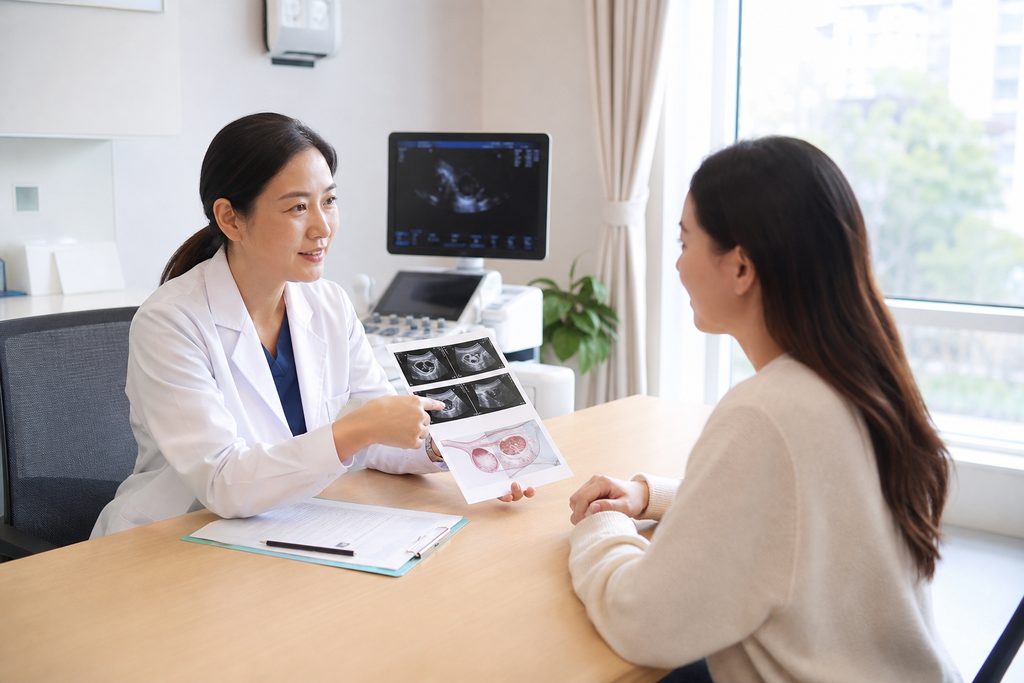
When 38-year-old Sarah from Manchester started researching IVF abroad, she hit a wall. Not about the procedure itself. About everything before it. Her local clinic quoted a six-week wait just for baseline bloodwork. The private lab charged £900 for a panel she didn’t fully understand. And her consultant admitted the NHS wouldn’t cover the repeat testing her chosen clinic in Prague required. She needed a pre-IVF workup done properly, affordably, and fast. That search eventually led her to ask us a very specific question: can you arrange fertility testing in China, and what does it actually cost?
The short answer is yes. We coordinate pre-IVF diagnostic packages at top-tier Chinese hospitals for international patients. A full fertility testing panel — hormone profile, ovarian reserve, infectious disease screen, semen analysis, ultrasound — typically runs between $300 and $800, depending on hospital tier and test scope. That’s the fertility testing cost China range we see most often for foreign patients. Compare that to $2,000+ for equivalent private panels in the US or UK, and the appeal becomes obvious.
But cost is only part of the story. Reliability, speed, and logistics matter just as much. We’ll walk through all of it.
How This Actually Works, Step by Step
You don’t need to fly to China just to figure out if this is viable. The process starts remotely.
First, you send us whatever records you already have — previous bloodwork, ultrasound reports, your IVF clinic’s specific testing requirements if you have them. A Chinese reproductive medicine specialist reviews these. Within 3 to 5 business days, you get a written assessment: what’s missing, what needs repeating, what’s unnecessary. This costs $300 to $500 for a written second opinion from a top hospital expert.
Second, we match you with a hospital. If your priority is speed and English-speaking staff, a private international hospital in Shanghai or Beijing makes sense. If you want the absolute top of China’s reproductive medicine rankings, we look at public hospital international departments. Either way, we confirm the exact test list, the total price, and the earliest available appointment before you book anything.
Third, you travel. A bilingual companion meets you at the hospital, handles registration, payment, and navigation. Blood draws and ultrasounds usually happen the same morning. Semen analysis requires 2 to 5 days of abstinence — we coordinate that timing with your schedule.
Fourth, results. Most fertility panels come back within 24 to 72 hours. We translate everything into English, send you the raw lab data plus a specialist’s interpretation, and forward the complete package to your IVF clinic abroad if you want.
The entire on-the-ground process takes one to two days. The remote preparation takes one to two weeks. That’s the real sequence.
What Tests Are Needed Before IVF in China
A standard pre-IVF workup in China follows international protocols, but the exact list depends on your age, history, and your destination IVF clinic’s requirements. Most packages include:
- Ovarian reserve testing: AMH, FSH, LH, estradiol on day 2-3 of your cycle, plus antral follicle count via transvaginal ultrasound
- Infectious disease screening: HIV, hepatitis B and C, syphilis — required by virtually every IVF clinic worldwide
- Thyroid function: TSH, free T4 — because undiagnosed thyroid dysfunction is a common cause of implantation failure
- General health panel: complete blood count, liver and kidney function, blood type and Rh factor
- Semen analysis: count, motility, morphology, DNA fragmentation if indicated
- Genetic carrier screening: optional, but increasingly requested for patients over 35 or with family history
One thing that surprises many Western patients: Chinese hospitals run these tests with remarkable efficiency. A full blood panel that takes two weeks to schedule in London can often be completed in a single morning in Shanghai. The laboratories are high-volume, the equipment is modern, and the turnaround times reflect that volume.
Fertility Testing Cost China: What You’ll Actually Pay
Let’s break down the numbers. These are ranges we’ve seen across our partner hospitals in 2025-2026. Final quotes always depend on the specific hospital and your case complexity.
| Test Component | Public Hospital International Dept | Private International Hospital | Typical US/UK Private Price |
|---|---|---|---|
| Full hormone panel (AMH, FSH, LH, E2, TSH, prolactin) | $120–$250 | $200–$400 | $600–$1,200 |
| Transvaginal ultrasound with antral follicle count | $80–$150 | $120–$250 | $300–$600 |
| Infectious disease screen (HIV, Hep B, Hep C, syphilis) | $60–$120 | $100–$200 | $250–$500 |
| Semen analysis (basic) | $40–$80 | $80–$150 | $150–$400 |
| Semen DNA fragmentation (if indicated) | $100–$200 | $150–$300 | $400–$800 |
| Complete blood count + biochemistry | $50–$100 | $80–$150 | $200–$400 |
| Total package range | $300–$600 | $500–$900 | $1,900–$3,900 |
These are the pre IVF workup price Shanghai and Beijing ranges we typically coordinate. Add our bilingual companion service from $300 per day, and you’re still well under Western private pricing.
One caveat: if your IVF clinic requires specific tests not in the standard panel — karyotyping, thrombophilia screening, endometrial receptivity testing — those add cost. We always confirm the exact list with your clinic before quoting.
A Realistic Timeline
Here’s what the process actually looks like, including the waiting steps people forget.
| Stage | What Happens | Typical Duration |
|---|---|---|
| Day 1–3 | You send existing records; we review and confirm which tests you need | 2–3 days |
| Day 4–7 | Hospital matching and appointment booking; test list and price confirmed | 3–5 days |
| Day 8–14 | Visa preparation (S2 visa for medical treatment, supporting letter from hospital) | 5–14 days depending on embassy |
| Week 3–4 | Travel to China; testing completed in 1–2 days | 1–2 days on the ground |
| Week 4–5 | Results received, translated, interpreted; forwarded to your IVF clinic | 2–5 days after testing |
Total: roughly 3 to 5 weeks from first contact to having a complete, translated fertility workup in hand. The visa is usually the slowest variable. Some embassies process S2 applications in five days. Others take three weeks. We provide the hospital invitation letter that supports your application, but we never guarantee approval timelines.
And timing matters for another reason. Hormone testing must happen on specific cycle days. AMH can be drawn any day. FSH, LH, and estradiol need day 2-3. If your cycle doesn’t align with your travel window, we adjust — either you time travel around your cycle, or we split testing across two visits. Most patients time it around their cycle. It’s simpler than it sounds.
What Can Go Wrong — and What Happens Then
Let’s be honest about the failure modes. They’re rare, but they happen, and you should know the recourse.
Appointment delays. Public hospital international departments sometimes reschedule. If your booked slot moves, we rebook at the same hospital or transfer you to a comparable one. You don’t pay twice. Our appointment coordination fee is from $300, and if we can’t secure the appointment we promised, that fee is refunded in full.
Test result discrepancies. Occasionally a foreign IVF clinic questions a result or wants a specific lab’s reference ranges. Chinese labs use international standards, but we provide the lab’s reference ranges and methodology notes with every report. If your clinic still objects, we arrange a repeat test at a different hospital at cost — no coordination fee.
Language barriers. Even at international departments, phlebotomists and ultrasound techs may not speak English. That’s exactly why our bilingual companion stays with you through every draw and scan. They don’t just translate — they make sure the right tests are ordered, the right tubes are labeled, and nothing gets lost in the system.
Results you didn’t want. This is the hardest one. Sometimes the workup reveals poor ovarian reserve or a significant male factor issue. We don’t soften that. What we do is connect you with a reproductive medicine specialist who explains what the numbers mean and what your options are — in China or at home. The testing is diagnostic. The decisions are yours.
Is Fertility Testing in China Reliable?
Most will, provided the lab is accredited and the report includes reference ranges and methodology. We work with ISO 15189-accredited and JCI-certified hospitals for exactly this reason. If your clinic has specific requirements, we confirm them before testing begins.
Yes — blood draws and ultrasounds require your physical presence. But the trip is short, usually 2-3 days including travel. Many patients combine it with a consultation with a Chinese reproductive specialist or even a holiday. The testing itself takes one morning.
You’ll get a full explanation from a reproductive medicine specialist, not just raw numbers. If the results affect your IVF plans, we can arrange a video consultation with a Chinese fertility expert to discuss options. You’re never left alone with a confusing lab report.
We recommend starting the process 4 to 6 weeks before your desired testing date. This allows time for records review, hospital matching, appointment booking, and visa processing. If you already have a Chinese visa, we can sometimes arrange testing within two weeks.
Your Next Step
Fertility testing in China isn’t for everyone. If you have a simple case and your home clinic can do the workup affordably, stay home. But if you’re facing long waits, high private prices, or your IVF clinic abroad requires a specific panel you can’t easily get locally, China offers a compelling alternative — fast, accredited, and a fraction of the cost.
We’re China Medical Services. We coordinate pre-IVF workups for international patients at top-tier Chinese hospitals. We don’t perform testing ourselves, and we don’t give medical advice. What we do is handle the logistics — hospital matching, appointment booking, bilingual accompaniment, translation, and follow-up — so you get accurate results without navigating a foreign system alone. If you’d like to explore whether this makes sense for your situation, tell us about your case and we’ll tell you honestly whether China is the right move.
Frequently Asked Questions
Yes. The hospitals used for international patients are JCI-accredited and follow the same international safety standards as top hospitals in the US and Europe. Surgical teams perform high volumes of procedures — often more than their Western counterparts — which studies show leads to better outcomes.
Costs vary by procedure and hospital, but international patients typically save 40-80% compared to US prices — even when factoring in travel and accommodation. A consultation with our team will give you an exact, all-inclusive quote with no hidden fees.
Send us your existing medical reports to get started. We handle everything from hospital selection and appointment scheduling to visa assistance and post-operative recovery planning. Your medical records are reviewed by the specialist before you even book a flight.
For more medical information and treatment options in China, visit chinamedservices.com (China Medical Services).
