ICSI Treatment in China: A Practical Companion for Male Factor Fertility
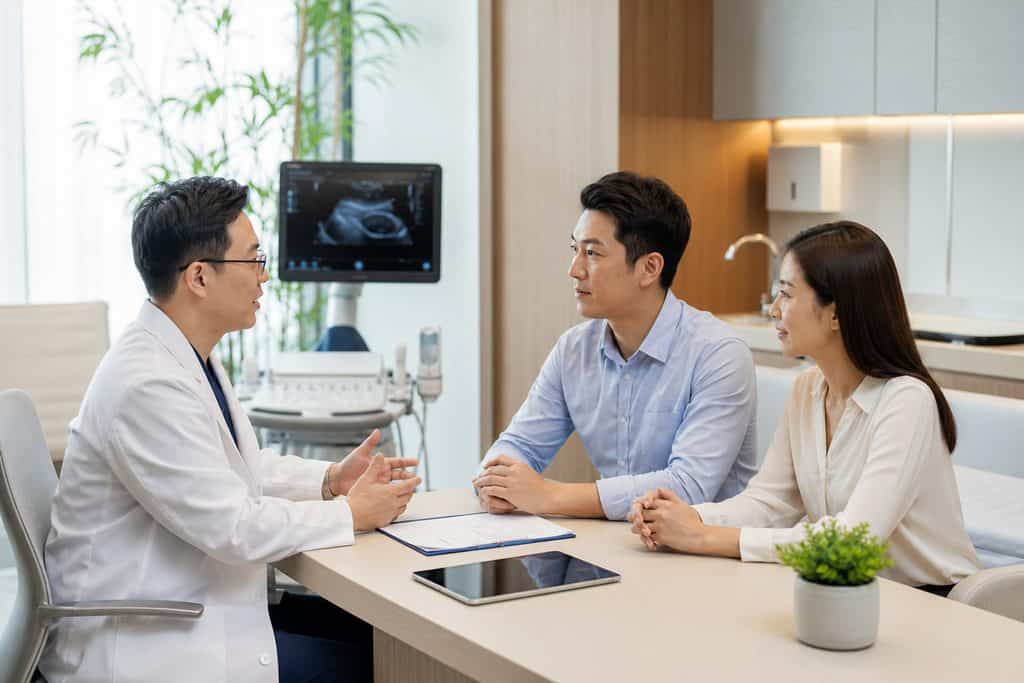
Roughly 1 in 6 couples globally will struggle to conceive, and in about half of those cases, a male factor is either the sole or a contributing cause. That’s not a rare edge case. It’s a quiet, widespread reality. For many of these couples, conventional IVF simply doesn’t work — the sperm can’t penetrate the egg on its own. Intracytoplasmic sperm injection (ICSI) changes that equation by injecting a single sperm directly into the egg. And for international patients weighing where to pursue treatment, the ICSI treatment cost China has become a decisive factor: comparable clinical protocols to Western centers, often at a fraction of the price. Our team at China Medical Services coordinates this journey for couples from Europe, the Middle East, Southeast Asia, and beyond. But before any commitment, you need to understand exactly how the process unfolds, what the real numbers look like, and where things can go sideways.
How This Actually Works, Step by Step
The sequence is not mysterious, but it does have a logic. Here is what actually happens when an international couple pursues ICSI in China through our coordination model.
First, you send us the existing medical records. That means the semen analysis reports — ideally two, done at least three months apart — plus any hormonal panels, genetic screening results, and the female partner’s baseline fertility workup: AMH, antral follicle count, day-3 FSH, and any prior IVF or ICSI cycle summaries. We translate these documents into Chinese and route them to the reproductive medicine department of a suitable hospital. This is the written second opinion step, priced from $300 to $500, and it gives the Chinese team enough data to say whether they can realistically help.
What comes back is a written analysis: whether the male factor diagnosis is consistent, what additional testing they recommend, and a preliminary assessment of protocol options. If that looks promising, the next step is a video consultation with the fertility team, which runs $100 to $300 for a standard international department session, or $500 to $800 for a top-specialist review. You speak directly with the clinicians, ask your questions about ICSI success rates China hospitals report, and hear their honest read on your case.
Only after that remote evaluation does anyone discuss travel. This staged approach exists for a reason: it prevents couples from flying across the world on a hunch. If the remote review suggests a low probability of success, you find out from your living room, not a hotel room in Shanghai.
What ICSI Actually Costs in China — and Why the Gap Is So Wide
You cannot book a full treatment package sight unseen. The process starts with a remote evaluation — written second opinion, then video consultation. Only after the Chinese team reviews your records and confirms a feasible plan do you travel. This staged model protects you from committing to international travel for a case that may not be viable. You can, however, coordinate the evaluation and subsequent on-the-ground logistics through our team.
Success rates depend on female age, embryo quality, and the specific male factor diagnosis. Top Chinese reproductive centers report clinical pregnancy rates per embryo transfer broadly comparable to Western centers — typically 40–55% for women under 35, declining with age. No clinic can promise a specific outcome, and any that does should be avoided.
Start with the Fudan University specialty ranking for reproductive medicine. Hospitals on that top-10 list have demonstrated departmental strength. For male factor specifically, look for centers with integrated andrology and urology departments, because surgical sperm retrieval may be part of your treatment. Our department rankings and hospital database can help you narrow the field.
The ICSI procedure itself is the same micromanipulation technique used worldwide, performed in licensed ART centers by trained embryologists. Safety depends on choosing a licensed, reputable hospital — ideally Fudan-ranked or JCI-accredited — and ensuring complete medical records are reviewed before treatment begins. The remote evaluation stage exists precisely to establish that clinical fit before you travel.
Your Next Step
Male factor infertility is a medical problem with a technical solution, and ICSI is that solution for many couples. China’s combination of clinical volume, experienced embryology labs, and substantially lower costs makes it a rational option — but only if you approach it methodically. Our team at China Medical Services coordinates the full arc: records translation, hospital matching, remote consultations, visa guidance, on-the-ground bilingual support, and appointment coordination. We do not perform medical procedures, and we do not promise outcomes. What we do is make the path legible. If you’re weighing whether ICSI in China makes sense for your situation, start with a conversation — send your records, get a clinical read, and decide from there. One low-pressure step at a time.
Frequently Asked Questions
Yes. The hospitals used for international patients are JCI-accredited and follow the same international safety standards as top hospitals in the US and Europe. Surgical teams perform high volumes of procedures — often more than their Western counterparts — which studies show leads to better outcomes.
Costs vary by procedure and hospital, but international patients typically save 40-80% compared to US prices — even when factoring in travel and accommodation. A consultation with our team will give you an exact, all-inclusive quote with no hidden fees.
Send us your existing medical reports to get started. We handle everything from hospital selection and appointment scheduling to visa assistance and post-operative recovery planning. Your medical records are reviewed by the specialist before you even book a flight.
For more medical information and treatment options in China, visit chinamedservices.com (China Medical Services).
