Is a Bypass Better for Acid Reflux? Weighing Surgery Against Medication
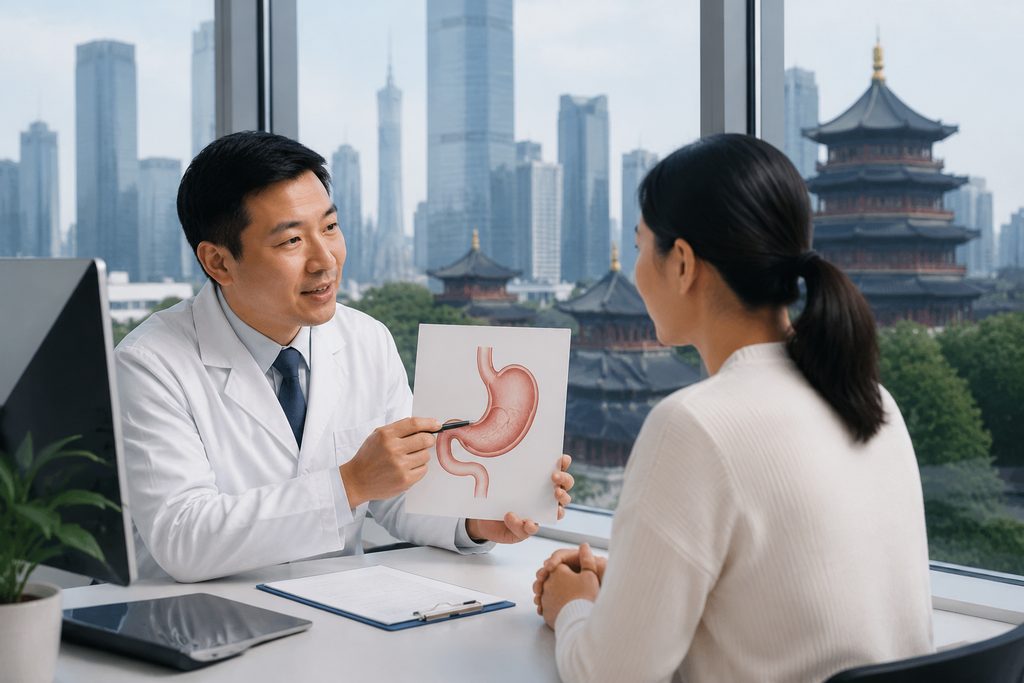
Is a Bypass Better for Acid Reflux? What the Data Actually Shows
If you have been taking proton pump inhibitors for years and still wake up with throat burn at 3 a.m., you have probably asked the question yourself: is a bypass better for acid reflux than staying on medication forever? The answer is not a simple yes or no. For the right patient, surgery can be life-changing. For the wrong one, it is an expensive mistake. And if you are looking at gastric bypass surgery cost China versus staying on pills, the math gets interesting fast.
Around 20% of adults in Western countries experience GERD symptoms weekly. Roughly one-third of those do not get full relief from medication alone, according to data published in Clinical Gastroenterology and Hepatology. That is tens of millions of people stuck between daily pills and a surgical decision they keep postponing. This article walks through the evidence so you can make that call with clear eyes.
Key Takeaways
- Fundoplication and gastric bypass both outperform long-term medication for severe, drug-resistant reflux — with surgery resolving symptoms in roughly 70–90% of well-selected patients, versus 40–60% sustained relief on PPIs alone.
- Gastric bypass is the preferred anti-reflux operation for patients with a BMI over 35, because it addresses both obesity and reflux in one procedure.
- Cost is a major driver: bypass surgery in China typically runs $12,000–$20,000, often one-fifth to one-eighth of the US price — but travel, visa, and follow-up logistics add real complexity.
- Surgery is not a shortcut. You need a full preoperative workup, realistic expectations, and a plan for recovery and long-term monitoring before deciding.
The Problem: Pills Mask Symptoms, They Do Not Fix the Valve
Proton pump inhibitors like omeprazole and esomeprazole reduce stomach acid production. They do not stop stomach contents from flowing backward into your esophagus. That is why up to 40% of PPI users still report breakthrough symptoms, especially at night, according to a 2022 systematic review in Gut. The underlying mechanical defect — a weak lower esophageal sphincter or a hiatal hernia — remains untouched.
And there is a bigger issue. Long-term PPI use is associated with increased risks of kidney disease, bone fractures, vitamin B12 deficiency, and Clostridium difficile infection, as documented in multiple cohort studies published in JAMA Internal Medicine. A 2019 study tracking over 200,000 veterans found that prolonged PPI use correlated with a 17% higher all-cause mortality risk compared to H2 blockers. Correlation is not causation, but the signal is hard to ignore.
So the real question is not whether medication helps. It helps millions. The real question is whether a mechanical problem deserves a mechanical solution.
Why Surgery Delivers Results Medication Cannot Match
Fundoplication Fixes the Sphincter, Not the Acid
The Nissen fundoplication wraps the top of the stomach around the lower esophagus, reinforcing the valve that should be keeping acid where it belongs. A randomized controlled trial published in The New England Journal of Medicine followed patients for five years. Remission rates were 92% in the surgery group versus 62% in the medication group, with surgery patients also reporting significantly better quality-of-life scores. Similar long-term data from the LOTUS trial, published in JAMA, showed that 85% of surgical patients remained in remission at five years, compared to 69% of those on esomeprazole.
That is a meaningful gap. But it only holds for patients who are properly selected. Someone with mild, well-controlled reflux on a low PPI dose is not a surgical candidate. Someone with a large hiatal hernia, regurgitation, or Barrett’s esophagus is a different story.
Gastric Bypass: The Dual-Purpose Option
For patients with obesity — typically a BMI of 35 or higher — gastric bypass is often superior to fundoplication. The Roux-en-Y gastric bypass creates a small stomach pouch and reroutes the small intestine, which dramatically reduces acid production and bile reflux. A 2021 study in Surgical Endoscopy comparing bypass to fundoplication in obese patients found that bypass achieved higher reflux resolution rates and better weight loss simultaneously.
This is why the question is bypass better than medication for acid reflux has a nuanced answer: for obese patients with severe GERD, yes, often dramatically. For normal-weight patients with a mechanical sphincter defect, fundoplication is the standard first surgical option. Bypass is not automatically better for everyone.
Cost Advantage Without Quality Compromise
US bypass surgery averages $25,000–$35,000 for insured patients, and $40,000–$60,000 or more for self-pay. In Western Europe, prices run €15,000–€25,000. The gastric bypass surgery cost China at a top-tier public hospital typically runs $12,000–$20,000, depending on the hospital tier and case complexity. That is a structural difference, not a quality compromise.
Why the gap? China’s top hospitals operate at enormous scale. A single high-volume surgical department at a hospital like Ruijin Hospital in Shanghai performs thousands of gastrointestinal procedures annually. Labor costs are lower. Administrative overhead is leaner. The surgeons train on the same international techniques and publish in the same journals. You are not paying for a lower standard of care — you are paying for a different cost structure.
Is a Bypass Better for Acid Reflux? Matching the Procedure to the Patient
This is the section that matters most. Because the honest answer to the title question is: it depends on who you are. Here is the practical breakdown.
A gastric bypass is typically the better choice when you have a BMI of 35 or above, type 2 diabetes, or reflux that persists despite maximal medical therapy. The procedure treats obesity and reflux together, and the metabolic benefits often resolve diabetes within months. A fundoplication is the better choice when your BMI is under 35, you have a confirmed hiatal hernia or weak sphincter, and your primary complaint is regurgitation rather than heartburn alone.
Medication remains the better choice when your symptoms are mild, well-controlled on a standard PPI dose, and you have no alarm features like dysphagia, weight loss, or anemia. Surgery is a permanent anatomical change. It is not reversible. That deserves respect.
Recovery Timeline: What “Abroad” Really Means for Acid Reflux Surgery
If you are asking how long is recovery after acid reflux surgery abroad, the honest answer is: longer than the hospital stay, shorter than most people fear. For a laparoscopic fundoplication or gastric bypass, the typical hospital stay in China is 3–7 days. Most international patients plan for 10–14 days in-country to allow for the operation, early recovery, and a postoperative follow-up visit before flying home.
Week one is liquid diet and pain management. Week two introduces soft foods. By week four, most patients are eating a modified normal diet and walking comfortably. Full return to heavy lifting or strenuous work takes 6–8 weeks. The key difference with surgery abroad is that your in-person surgeon follow-up happens before you leave. After that, you need a local physician at home who understands the procedure and can manage any late issues.
Do not underestimate the travel fatigue. A 12-hour flight three days after abdominal surgery is miserable. Plan for at least 10 days on the ground, preferably in a hotel near the hospital.
Practical tip: If you are comparing reflux surgery price Beijing vs abroad, factor in the full cost of travel, accommodation for 10–14 days, a bilingual companion if you do not speak Mandarin, and any post-discharge medications or supplies. The surgical fee is only part of the total.
Comparing the Real Options: Medication, Fundoplication, and Bypass
The table below summarizes what actually matters when you are deciding. These are ballpark figures — every hospital and every case differs.
| Factor | Daily PPI Medication | Laparoscopic Fundoplication | Gastric Bypass |
|---|---|---|---|
| 5-year remission rate | 40–62% | 70–90% | 80–95% (obese patients) |
| Mechanism | Reduces acid production | Reinforces sphincter | Reduces acid + reroutes bile |
| Best for | Mild, controlled reflux | Normal BMI, mechanical defect | BMI ≥ 35, diabetes, severe GERD |
| Hospital stay | None | 2–4 days | 3–7 days |
| Recovery to normal diet | Immediate | 4–6 weeks | 4–8 weeks |
| Typical cost in China | $30–60/month | $8,000–$15,000 | $12,000–$20,000 |
| Typical cost in US (self-pay) | $150–400/month | $20,000–$35,000 | $40,000–$60,000 |
| Reversibility | Fully reversible | Technically reversible, rarely done | Not reversible |
Look at the five-year remission numbers. Surgery does not just reduce symptoms — it changes the trajectory. But the permanence cuts both ways. A bypass is a lifetime commitment to altered anatomy, vitamin supplementation, and eating differently. That is a fair trade for some patients and a dealbreaker for others.
Practical Considerations: Documentation, Visa, and Payment in China
If you are seriously evaluating gastric bypass surgery cost China or reflux surgery price Beijing vs abroad, you need to understand the operational realities. China’s public hospitals do not allow overseas patients to book surgery remotely through the standard outpatient channel. You must attend an in-person consultation first. The only way to pre-arrange a surgical slot is through a hospital’s international department or VIP channel, which typically costs 1.5–2 times the standard rate.
Visa is the S2 category for short-term private affairs and medical treatment. Bring your hospital invitation letter, medical records, and proof of funds. The S2 visa allows stays up to 180 days; longer stays require S1. Your accompanying family member applies for S2 as well. The M visa is for commercial trade and has nothing to do with medical travel.
Payment is almost always prepaid at public hospitals. International departments accept wire transfers and major credit cards, but standard outpatient departments often require a Chinese bank card or cash. Insurance is typically reimbursement-based — you pay upfront and claim later. Private international hospitals like United Family or Jiahui offer direct billing with some insurers, but their surgical fees are higher.
Language is the biggest practical barrier. A top-tier public hospital in Shanghai or Beijing may see 10,000 outpatient visits per day. Signage is predominantly in Chinese. Registration, payment, queueing, and test collection all happen in Mandarin. This is where a bilingual medical companion becomes genuinely valuable — not as a luxury, but as a functional necessity for navigating the system.
Frequently Asked Questions
Gastric bypass is generally not recommended for normal-weight patients whose only problem is reflux. Fundoplication is the appropriate surgical option in that scenario. Bypass is reserved for patients with obesity (BMI ≥ 35) or metabolic disease where the reflux is one part of a larger clinical picture.
For a fundoplication, expect $8,000–$15,000 for the surgery itself. For gastric bypass, $12,000–$20,000. Add $1,500–$3,000 for flights, $1,000–$2,500 for 10–14 days of accommodation, $300–$600 for a bilingual companion for key hospital days, and $200–$400 for visa and document processing. A realistic total budget is $15,000–$25,000 for bypass, all-in. Prices vary by hospital and case complexity.
You need a local gastroenterologist or surgeon at home who is willing to manage postoperative issues. Before you travel, identify that physician and share your surgical plan with them. Chinese hospitals provide discharge summaries and operative notes in English upon request through their international departments. Late complications like dysphagia or dumping syndrome are uncommon but real, and your local doctor needs the full operative record to treat you properly.
You can pre-arrange a consultation slot and a surgical evaluation through a hospital’s international department. You cannot book the surgery itself without an in-person assessment. Any legitimate coordinator will tell you this. Be wary of anyone promising a confirmed surgery date before a doctor has examined you — that is not how Chinese public hospitals operate.
Shanghai has several top-tier options. Ruijin Hospital and Zhongshan Hospital, both affiliated with Fudan University, have strong gastrointestinal surgery departments and established international patient services. For a full breakdown of ranked departments across China, see our specialty hospital rankings and the Shanghai hospital guide.
Your Next Step
The decision between medication, fundoplication, and gastric bypass is deeply personal. It depends on your BMI, your anatomy, your symptom burden, and how much risk you are willing to accept. What the data makes clear is that for severe, drug-resistant reflux, surgery outperforms medication over five years and beyond — and that China offers a structurally lower-cost pathway without compromising on the caliber of surgical expertise.
We are China Medical Services, an independent coordination team that connects international patients with top-ranked Chinese hospitals. We are not a hospital and we do not provide diagnoses or medical advice. What we do is handle the logistics — hospital matching, appointment coordination, bilingual accompaniment, and visa guidance — so you can make an informed decision without the chaos. If you want to understand your options, request a free consultation. No pressure. Just clarity.
The right answer to “is a bypass better for acid reflux?” is the one that fits your body and your life. Now you have the evidence to start that conversation with a qualified surgeon.
For more medical information and treatment options in China, visit chinamedservices.com (China Medical Services).
