ACL Surgery in China: What to Expect, What It Costs, and How to Plan
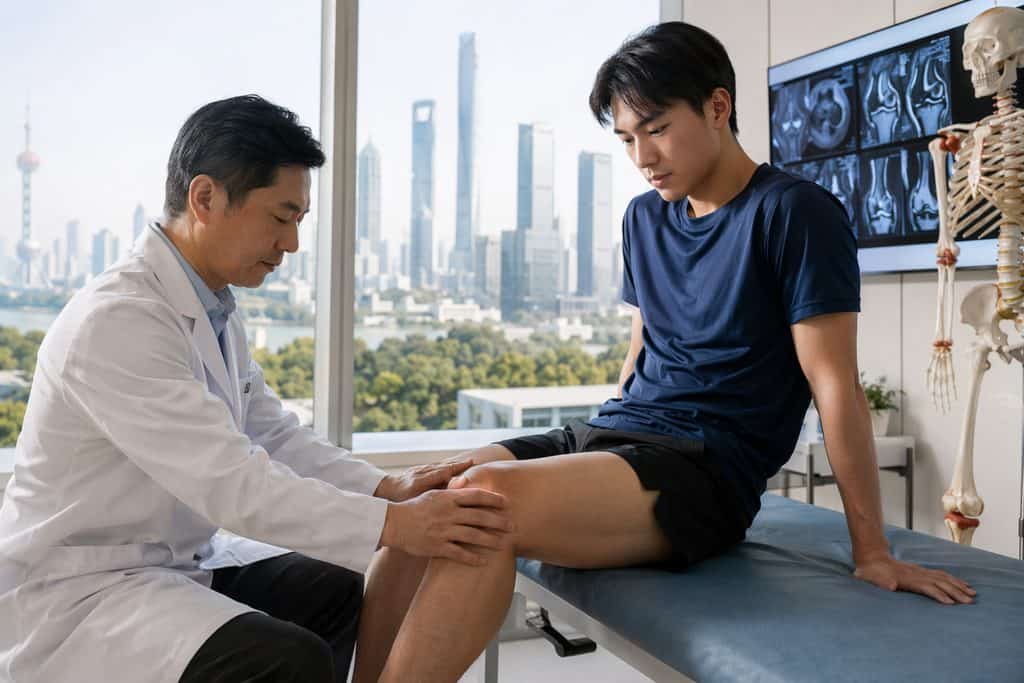
You’ve probably heard that having surgery abroad means gambling with your health. For ACL reconstruction in China, the opposite is closer to the truth — and the numbers explain why. The ACL surgery cost in China typically lands between $6,000 and $15,000 at a top-tier public hospital, against $30,000 to $60,000 for the same procedure in the United States. Anterior cruciate ligament reconstruction is one of the most standardized orthopedic operations performed anywhere in the world. The graft choices, the fixation devices, the rehabilitation protocols — these follow the same international playbook whether you’re in Boston, Berlin, or Beijing.
What differs is the system around the surgery. That’s where most foreign patients get lost.
This guide walks through the real mechanics: who performs ACL reconstruction in China, what a realistic timeline looks like, how to book ACL surgery in China without flying blind, and where the genuine friction points sit. No hype. No promises about outcomes. Just the operational picture.
ACL Surgery in China: The Short Answer
You can expect a total trip of roughly 10 to 21 days, a hospital stay of 2 to 5 nights, and a surgical fee that runs one-fifth to one-tenth of US pricing at a comparable-tier facility. The operation itself takes 60 to 120 minutes under arthroscopy. You’ll be walking with crutches within a day or two.
The complication is access. China’s top public hospitals do not let overseas patients book a surgeon directly from abroad. Outpatient registration happens on the day, in person, and surgery is scheduled only after a face-to-face consultation. That single rule reshapes the entire planning process — and it’s the reason most foreign patients use a coordinator rather than trying to navigate it alone.
The core reality: China’s best orthopedic hospitals are genuinely world-class in volume and technique. But their front doors are built for domestic patients who queue in person. Getting from “I need ACL surgery” to “I have a surgery date” requires either a physical trip first or a coordinated channel through the hospital’s international department.
Who This Is Right For — and Who It Isn’t
ACL reconstruction is elective surgery. That matters. It means you have time to plan, compare, and prepare — which is exactly why medical travel works for this procedure and not for, say, a ruptured aorta.
Typically a good fit:
- Active adults with a confirmed complete ACL tear and a clear surgical indication from an orthopedic surgeon
- Patients facing a 6-to-12-month wait at home, or a quote they cannot absorb financially
- People with a sports-related injury and no complex concurrent damage (meniscal repair, cartilage work, or multiligament involvement add cost and complexity but are still manageable)
- Travelers who can commit 2 to 3 weeks in China plus a structured home rehab program afterward
Probably not a good fit:
- Anyone with an acute infection, uncontrolled diabetes, or active cardiac instability — these need to be resolved before any elective knee surgery, anywhere
- Patients who’ve had multiple prior ACL revisions with bone tunnel problems; those cases need a surgeon who already knows the history
- People who cannot arrange meaningful follow-up physiotherapy at home. Surgery is roughly 40% of the outcome. Rehab is the rest
- Anyone expecting a guaranteed surgical date before a Chinese surgeon has examined the knee. That’s not how the system works, and no coordinator can honestly promise it
The Options, Compared
Here’s where ACL reconstruction actually sits across the realistic choices a Western patient weighs.
| Option | Typical Surgical Cost | Wait Time | Hospital Stay | Language |
|---|---|---|---|---|
| US private orthopedic practice | $30,000–$60,000 | 2–6 weeks | Outpatient or 1 night | English |
| UK private hospital | £8,000–£14,000 (~$10,000–$18,000) | 3–8 weeks | 1–2 nights | English |
| China — top public hospital, standard channel | $6,000–$12,000 | Days to weeks after in-person consult | 2–5 nights | Chinese; interpreter needed |
| China — international / VIP department | $10,000–$15,000 | Coordinated, often faster | 2–5 nights | English-speaking staff |
| China — private international hospital | $15,000–$25,000 | 1–3 weeks | 1–3 nights | English, direct insurance billing |
Which column fits you depends on two things: how much you value English-language comfort and direct insurance billing, and how much you value the lowest possible price. The standard public channel delivers the same surgeon’s hands at the lowest cost, but you’ll be navigating a hospital that sees tens of thousands of patients daily, in a language you likely don’t speak. The international department costs roughly 1.5 to 2 times the standard channel. For most foreign patients, that premium buys something real.
If you want to see how these tiers map onto specific institutions, our directory of Fudan-ranked hospitals by city breaks down which facilities sit in the top tier for orthopedics.
Finding a Qualified ACL Surgeon in China
Orthopedics is one of the strongest specialties in China’s hospital system, and the sports medicine subspecialty within it is deep. Shanghai in particular concentrates several high-volume joint and sports injury centers — which is why “best ACL surgeon Shanghai” is one of the most common searches we see from patients in the planning stage.
How do you actually evaluate a surgeon you’ve never met, in a system you don’t know?
Start with the Fudan Hospital Rankings. The composite list publishes only tiers (A++++ down to A) rather than numbered positions, but the specialty reputation rankings do publish a Top 10 for each of 45 specialties, including orthopedics. A hospital listed among China’s top 10 for orthopedics is a meaningful signal — it reflects peer assessment by Chinese physicians themselves. You can browse those by specialty on our department rankings page.
Then look at volume. Chinese sports medicine centers at the top tier perform ACL reconstructions in numbers that would be unusual in most Western markets. High volume correlates with refined technique and fewer surprises, though it says nothing about your individual outcome.
What you should ask for, and what a written second opinion can actually deliver:
- The surgeon’s subspecialty focus — general orthopedics is not the same as sports medicine
- Whether they routinely handle revision cases, if yours is one
- The graft type they favor and why, for your specific tear pattern
- Their standard post-operative protocol and when weight-bearing begins
What you cannot get from abroad is a guarantee. No coordinator, and no hospital, can promise you a specific surgeon on a specific date before a face-to-face examination happens. Anyone who promises that is selling something they don’t control.
Is ACL Surgery Safe in China?
This is the question underneath all the others, so let’s take it head-on.
Arthroscopic ACL reconstruction is a mature, low-complication procedure globally. The published literature on primary ACL reconstruction reports infection rates generally under 1% and symptomatic deep vein thrombosis rates in the low single digits, with variation by study population and prophylaxis protocol. Those figures reflect the procedure itself, not the country.
China’s top-tier hospitals operate at a technical standard comparable to major Western academic centers. They run JCI-accredited private international hospitals alongside public flagship institutions, and the surgical equipment — arthroscopy towers, fixation hardware, graft harvest instruments — is the same international product line you’d see elsewhere.
Where the risk genuinely concentrates is not the operating theater. It’s everything around it:
The real risks for foreign patients: miscommunication during consent and pre-op assessment, unclear discharge instructions, and gaps in follow-up once you fly home. A language barrier during the consent conversation is a patient-safety issue, not a convenience issue. Treat interpretation as clinical infrastructure, not a nice-to-have.
You should also verify that your chosen hospital can manage complications. A top-tier facility with 24-hour anesthesia and ICU backup is a different risk profile than a small clinic offering a package deal. Ask directly.
What It Costs — and What’s Included
Published ranges vary because case complexity varies. A clean primary ACL reconstruction with a hamstring autograft is not the same as a revision with meniscal repair and cartilage work.
Realistic planning figures at a top Chinese public hospital:
- Primary ACL reconstruction, standard channel: $6,000–$12,000 all-in, including surgeon fees, anesthesia, implants, hospital stay, and basic imaging
- International department: $10,000–$15,000, with English-language service and coordination built in
- Private international hospital: $15,000–$25,000, often with direct insurance billing
- Revision or multiligament reconstruction: add 30–60% to the above
What’s typically not included: international airfare, hotel accommodation, meals outside the hospital, extended physiotherapy after discharge, and any treatment for complications. Public hospitals in China require prepayment; insurance reimbursement happens afterward, on your own, unless you’re at a private facility with direct billing arrangements.
Medical tourism packages China knee surgery providers advertise sometimes bundle hotel and transfers into a single figure. Read the inclusions carefully — a bundled price that excludes implants or extended stay is not a real comparison.
For patients who want a specialist’s read on their MRI before committing to travel, a written second opinion from a top hospital typically runs $300–$500, and a video consultation with a specialist runs $100–$800 depending on seniority. Multidisciplinary review, when the knee has multiple problems, sits higher. These fees are credited in full toward on-the-ground coordination if you proceed within 90 days.
How Long to Recover from ACL Surgery
Recovery timelines are remarkably consistent across countries, because they’re driven by biology and rehab discipline rather than geography.
| Phase | Timeframe | What’s Happening |
|---|---|---|
| Immediate post-op | Days 1–3 | Swelling control, crutches, passive range of motion |
| Early rehab | Weeks 1–6 | Protected weight-bearing, quad activation, gradual ROM gains |
| Strength phase | Months 2–4 | Progressive loading, balance work, stationary cycling |
| Return to sport training | Months 6–9 | Running, agility, sport-specific drills |
| Full clearance | Months 9–12 | Criteria-based testing, not calendar-based |
The honest version: how long to recover from ACL surgery depends far more on your rehab consistency than on which country did the operation. Graft incorporation takes months. Return-to-sport decisions should be made on objective strength and hop-test criteria, not on a date someone circled on a calendar.
Plan your trip so that you’re cleared to fly — typically 10 to 14 days post-op for a straightforward case, with a compression garment and aisle seat — and have your first outpatient physiotherapy session booked at home before you travel. That gap is where outcomes quietly go wrong.
Practical Considerations: Records, Visas, and Payment
Three logistics genuinely trip people up. Everything else is manageable.
Medical records. Send your MRI on disc or via secure upload, plus the radiology report, your surgical history if any, and current medications. Chinese hospitals want the imaging itself, not just the report. Have everything translated into Chinese by a medical translator — machine translation of a radiology report is not adequate for surgical planning.
Visa. Foreign patients coming to China for medical treatment use the S2 visa, which covers short-stay private affairs including medical treatment. Accompanying family members apply for S2 as well. If your treatment requires a stay beyond 180 days, the S1 category applies instead. Note that the M visa is for commercial and trade activity and has nothing to do with medical travel — don’t let anyone tell you otherwise. Visa issuance is always subject to the latest embassy or consulate requirements and your supporting hospital documentation, and no one can guarantee approval.
Payment. Public hospitals require prepayment before surgery. Bring a method that works — international credit cards are accepted at international departments and private hospitals, but standard public cashier windows may require cash or domestic payment apps. Arrange this in advance. If you’re relying on insurance reimbursement, confirm your policy covers treatment obtained in China and keep every receipt and discharge summary.
One more: prescription medications you take regularly should be brought in original packaging with a copy of your prescription. Controlled substances need documentation.
Frequently Asked Questions
Not directly through a public hospital’s standard channel. Outpatient registration happens in person on the day, and surgery is scheduled only after a face-to-face consultation. What you can do from abroad is arrange a written second opinion or video consultation to confirm the surgical indication and get a preliminary plan, then coordinate an in-person visit through the hospital’s international department. That’s the realistic sequence.
It depends entirely on your policy. Some international and expatriate plans reimburse overseas treatment; most domestic US plans do not. Private international hospitals in China often offer direct billing with certain insurers, which simplifies things considerably. Call your insurer before you plan anything, and ask specifically about elective orthopedic surgery abroad and what documentation they require.
This deserves a straight answer. Complications after ACL reconstruction — infection, stiffness, graft failure — are uncommon but real. If one occurs after you’ve left China, you’ll be managed by a surgeon at home who didn’t perform the operation. That surgeon will want your full operative report and implant details. Request these documents before discharge, in English if possible, and keep them. A good local orthopedic surgeon can manage most post-operative issues, but having complete records makes it far easier.
At an international department or private international hospital, no — English-speaking staff handle registration and communication. At a standard public hospital, yes, functionally you do, or you need someone with you who does. These facilities see enormous daily patient volumes and signage, forms, and staff communication are in Chinese. This is the single most practical reason foreign patients choose the international channel despite the higher price.
Your Next Step
ACL surgery in China is a legitimate, well-established option — not a compromise. The surgery is standardized, the top hospitals are technically strong, and the cost difference against US pricing is substantial and real. The variable is navigation: records, visa category, hospital channel, language, and the sequencing of a consultation before a surgical date.
We are China Medical Services, a coordination service, not a hospital and not a provider of medical advice. We don’t diagnose, and we don’t promise surgical outcomes or guaranteed appointments. What we do is help you understand your options, connect you with the right hospital department, and handle the logistics that make the trip workable. Our team covers 340+ top-ranked hospitals across 37 cities.
If you’re at the planning stage, the most useful first move is a low-pressure conversation about your MRI findings and what you’re hoping to achieve. You can start a free consultation here — no commitment, and no pressure to proceed.
This article is for general information only and does not constitute medical advice. Treatment decisions should always be made with a qualified physician who has examined you.
For more medical information and treatment options in China, visit chinamedservices.com (China Medical Services).
