Treatment in China for African Patients: Costs, Hospitals & Visa Steps
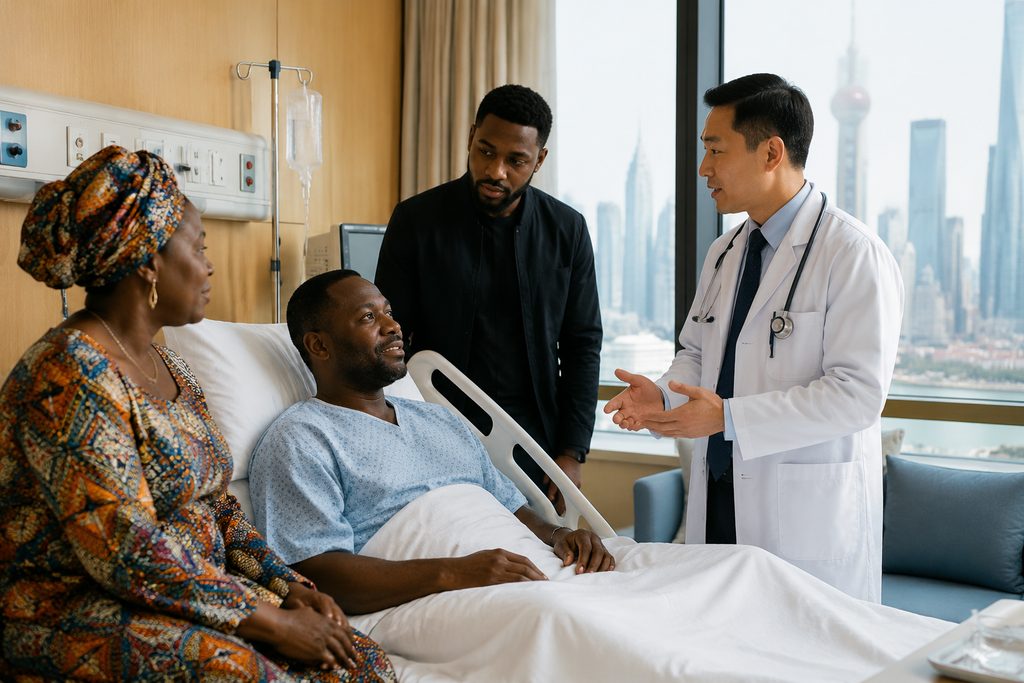
You have probably heard that flying to China for surgery means gambling on quality. The reality runs the other way. Several Chinese hospitals perform more cardiac operations each year than the busiest centers in Europe or the United States, and the cost of heart surgery in China for international patients often lands at one-fifth of the American price. That gap is why families from Nigeria, Kenya, Ghana, Ethiopia and South Africa keep asking us the same question: is this actually workable?
It is workable. It is also more bureaucratic than most people expect. China’s best public hospitals do not run like private clinics in Dubai or Bangkok. You cannot book a specialist online from Lagos and stroll in on Tuesday. Understanding that single fact saves patients weeks of wasted planning.
Treatment in China for African Patients: The Short Answer
Yes, African patients can receive treatment in China, and the savings are real. A coronary artery bypass graft at a top-tier Chinese public hospital typically runs $12,000 to $20,000. The same operation in the United States frequently exceeds $120,000. Cancer surgery, orthopedic procedures and fertility treatment show similar ratios.
The catch sits in the process. Public hospital outpatient departments generally do not accept advance bookings from overseas. You queue for a registration number on the day, and surgery can only be scheduled after an in-person consultation. Patients who need a confirmed surgeon and a locked date before they fly usually go through a hospital’s international department instead, where prices run roughly 1.5 to 2 times the standard channel.
Who This Is Right For — and Who It Isn’t
Medical travel suits some patients far better than others. Being honest about that saves everyone time and money.
Typically a good fit:
- Patients quoted a price at home that exceeds their savings, insurance cap or loan capacity
- Cases needing high-volume surgical specialties — cardiac, orthopedic, oncologic, reproductive
- Patients whose local waitlist runs six months or longer for a time-sensitive condition
- Families able to travel with a companion and stay two to four weeks
- People seeking Traditional Chinese Medicine for chronic pain, stroke rehabilitation or post-surgical recovery
Probably not a good fit:
- Anyone with an unstable cardiac or respiratory condition who cannot tolerate a long-haul flight
- Patients needing immediate emergency intervention — travel time alone rules it out
- Cases where the diagnosis is still unclear and no imaging has been done yet
- Patients who cannot arrange follow-up care once they return home
That last point matters more than people think. A successful operation in Shanghai means little if nobody in Nairobi can manage the recovery.
The Options, Compared
Before committing to anything, look at what each path actually delivers. The table below reflects typical ranges we see discussed with international departments. Every figure varies by hospital and case complexity.
| Path | Typical Cost (USD) | Wait Time | Language Support | Best For |
|---|---|---|---|---|
| Top public hospital, standard channel | $12,000–20,000 (cardiac bypass) | Days to weeks after arrival | Limited; interpreter usually needed | Budget-focused, flexible on dates |
| Public hospital international department | 1.5–2× standard channel | Can be pre-arranged | English-speaking staff | Patients needing a fixed date |
| Private international hospital | Higher; varies widely | Short, appointment-based | Full English service, direct insurance billing | Insured patients, shorter stays |
| Traditional Chinese Medicine hospital | Modest, often outpatient-based | Varies by department | Interpreter typically required | Chronic conditions, rehabilitation |
| Staying home | Local rates, often highest | Often 3–12 months | Native language | Stable, non-urgent cases |
Which column fits you depends on one thing above all: how much certainty you need before boarding a plane. If you can arrive, consult, and wait a few days for a slot, the standard channel is the cheapest route. If your employer expects you back in three weeks, the international department earns its premium.
Finding the Best Cancer Hospitals in China for African Patients
Oncology draws more African patients to China than any other specialty. The reason is volume. Chinese surgical teams in high-volume centers operate constantly, and repetition builds skill in ways that smaller programs cannot replicate.
China has roughly 35,000 hospitals. Our database covers 340+ top-ranked institutions across 37 cities — the top 5% by Fudan University rankings and JCI accreditation. The Fudan general ranking lists only tiers (A++++ down to A) rather than numbered positions, but its specialty reputation lists name the top 10 hospitals in each of 45 fields. So we can tell you a hospital ranks among China’s top 10 for oncology. We cannot tell you it is “number three in the country,” because no such published ranking exists.
Beijing hosts 21 of the Fudan top-100 hospitals. Shanghai has 18. Guangzhou has 10. For cancer care, patients commonly look at specialty rankings by department before choosing a city, since a strong oncology program matters more than a famous postcode.
One practical note: pathology slides and biopsy blocks travel poorly if packed badly. Request unstained slides and a digital pathology report before you fly. Chinese tumor boards can review digital images remotely, which shortens the on-site workup considerably.
What It Costs — and What Drives the Variance
Cost questions dominate every inquiry we receive. Here is the honest structure.
Treatment itself: Cardiac bypass, $12,000–20,000. Complex cancer surgery, $15,000–35,000 depending on procedure and hospital tier. Kidney transplant evaluation and surgery, if a patient qualifies under Chinese regulations with a documented living donor, runs higher and involves legal review that varies by hospital — always confirm current rules directly with the hospital’s international office. For most African patients, the transplant pathway is far more restricted than the surgical price lists suggest.
Services around treatment: A bilingual medical companion runs from $300 per day, covering registration, queuing, payment, navigation and interpretation. Airport transfers cost $200 round-trip. A written second opinion from a top-hospital specialist runs $300–500. Video consultations with a standard international department cost $100–300; with a top specialist, $500–800; a multidisciplinary team review, $1,500–2,000.
Any consultation fee is credited in full toward on-the-ground coordination if you travel within 90 days. That credit applies to the coordination fee only, never to hospital treatment charges.
What pushes costs up: intensive care days, imported implants, extended hospital stays, and the international department premium. What pulls them down: domestic prosthetics where clinically acceptable, shorter stays, and standard-channel admission.
Practical Considerations: Visa, Payment and Records
Published figures are unreliable because Chinese regulations tightly restrict transplant eligibility, and foreign patients face additional legal review. Costs, where a case qualifies at all, run well above routine surgery. Anyone quoting you a fixed transplant price without reviewing your documentation is guessing. Confirm the current rules directly with the hospital’s international department.
Yes, and for most African patients it is the practical choice. Translation and accompaniment cover registration, queuing, payment, pharmacy pickup and doctor communication. What no service can promise is a specific surgeon or a guaranteed surgery date — those depend on the hospital’s own scheduling.
Strongly recommended. A written second opinion or video consultation lets a Chinese specialist confirm whether your case is treatable there, which specialty should see you, and roughly what it will cost. It also prevents the worst outcome: flying 12 hours to be told the procedure is not offered at that hospital.
Arrange follow-up before you leave China. Ask for a discharge summary in English, imaging on physical media, and a clear medication plan. Some patients coordinate a follow-up video consultation with the same department. Complications happen everywhere; the difference is whether anyone at home can recognize and manage them.
Your Next Step
The core message is simple: treatment in China for African patients is genuinely viable, genuinely cheaper, and genuinely more paperwork than most people anticipate. The patients who do well are the ones who plan in stages rather than booking everything at once.
We are China Medical Services. We are not a hospital and we do not diagnose or treat anyone. We translate records, coordinate appointments through official international departments, and provide bilingual companions on the ground. If you want a straight assessment of whether your case fits, start with a free consultation and we will tell you honestly — including when staying home is the better call.
Frequently Asked Questions
Yes. The hospitals used for international patients are JCI-accredited and follow the same international safety standards as top hospitals in the US and Europe. Surgical teams perform high volumes of procedures — often more than their Western counterparts — which studies show leads to better outcomes.
Costs vary by procedure and hospital, but international patients typically save 40-80% compared to US prices — even when factoring in travel and accommodation. A consultation with our team will give you an exact, all-inclusive quote with no hidden fees.
Send us your existing medical reports to get started. We handle everything from hospital selection and appointment scheduling to visa assistance and post-operative recovery planning. Your medical records are reviewed by the specialist before you even book a flight.
For more medical information and treatment options in China, visit chinamedservices.com (China Medical Services).
