Bariatric Equipment China: Safe Surgery for Larger Body Types
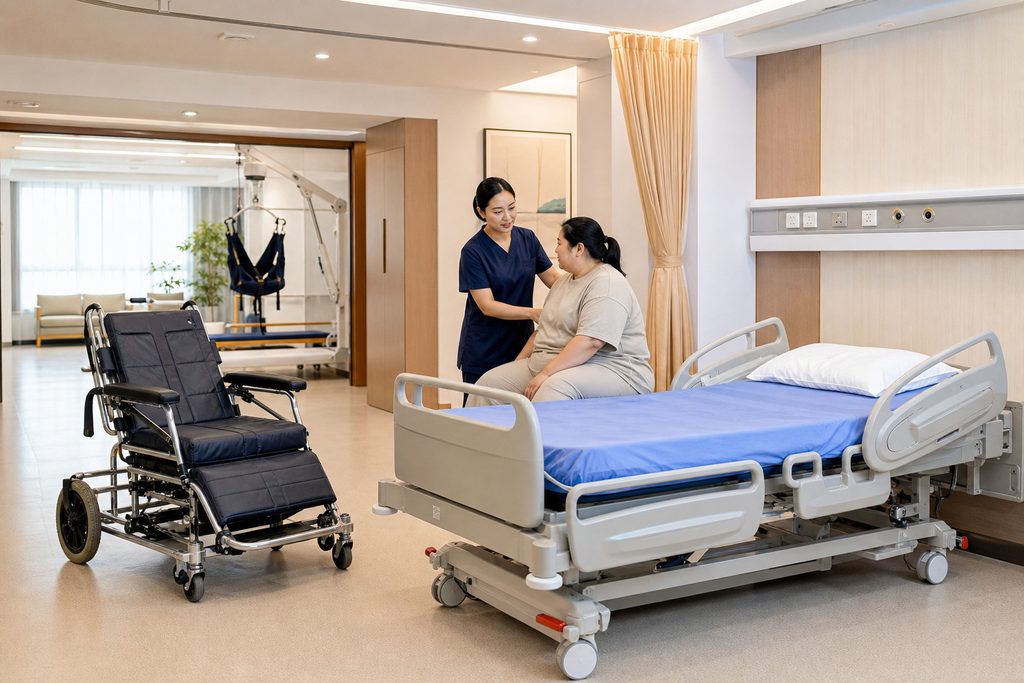
You have probably been told that a high BMI closes the door to weight-loss surgery. That the risk is too great. That the equipment simply will not hold. For many patients above 350 or 400 pounds, this rejection becomes a familiar script, repeated across clinics and countries. The reality in China’s top-tier hospitals is more nuanced.
We are not surgeons. Our team connects international patients with China’s most advanced medical centers—the ones that have invested in the infrastructure and protocols to manage complex cases. Some of these hospitals now routinely accommodate patients weighing 400 pounds and beyond. The critical question is not whether it can be done. It is knowing which specific hospitals have the right bariatric equipment for large patients China, and how to access them without wasting months on dead ends.
How This Actually Works, Step by Step
The path from inquiry to surgery follows a sequence that surprises many patients expecting instant booking. Public hospitals in China, even elite ones, do not let overseas patients reserve a bed or an operating room remotely. The surgeon must see you first. That is non-negotiable.
What we do is compress the preparatory phase so you arrive with a plan, not a hope.
First, you send us your existing medical records. We need your full weight history, any previous bariatric consultations, recent blood work, a sleep apnea diagnosis if you have one, and a cardiac evaluation. The more complete the file, the fewer surprises later.
Our team translates these documents into clinical Chinese and routes them to the bariatric department at one or two hospitals we know have the right equipment. The department chief or a senior surgeon reviews the file. They look at your BMI, your comorbidities, your surgical history. They ask: can our operating table handle this weight? Do we have the reinforced instruments? Is the CT scanner bore wide enough? These are not theoretical questions. They have hard specifications.
What comes back is a preliminary assessment. Sometimes it is a green light with conditions—lose 5% of body weight before travel, get a cardiology clearance, complete a sleep study. Sometimes it is a request for more imaging. Sometimes it is a polite decline if the case exceeds their current capacity. That honesty is valuable. It saves you a flight.
If the assessment is positive, we schedule a video consultation with the surgeon. This costs between $500 and $800 for a top specialist. The surgeon explains the recommended procedure—usually a sleeve gastrectomy for very high BMI patients—and outlines the pre-operative requirements. You see their face. You hear their reasoning. You decide if you trust them.
After you agree to proceed, we coordinate your hospital appointment and your S2 visa support letter. You fly to China, attend the in-person consultation, complete any outstanding tests, and get a surgery date. The entire process from first contact to operating room typically spans six to ten weeks. Not because anyone is slow. Because skipping steps in a 400-pound patient is how complications happen.
What Bariatric Equipment for Large Patients China Actually Means
A hospital that says it handles high-BMI patients must back that claim with specific hardware. The standard operating table in most surgical suites has a weight capacity of 350 to 450 pounds. That works for many patients. It fails for the super-obese.
The hospitals we work with for heavier patients have procured bariatric-specific operating tables rated to 660 pounds or more. These tables are wider. They have reinforced hydraulic systems. They tilt without groaning. More importantly, the hospital has matching equipment across the entire care pathway.
Consider the imaging requirements. A patient weighing 400 pounds may not fit inside a standard CT scanner, which typically has a bore diameter of 70 centimeters and a table weight limit around 450 pounds. Some Chinese hospitals have installed large-bore CT machines with 80-plus centimeter openings and tables rated to 660 pounds. The same applies to MRI units. If a hospital cannot image you properly, it cannot plan your surgery safely.
Then there are the instruments. Standard laparoscopic trocars and graspers are too short for a very thick abdominal wall. Bariatric-length instruments add several inches. The staplers used to divide the stomach during a sleeve gastrectomy must be the extra-long variety. The hospital must stock these. They are not improvisable.
Bedside equipment matters too. Hospital beds rated for 500 pounds or more. Commodes and shower chairs that do not collapse. Blood pressure cuffs in XXL sizes. Patient gowns that fit. These sound minor. They are not. A patient who feels physically unsafe in their bed will not mobilize after surgery. And early mobilization is what prevents blood clots and pneumonia.
The weight limit for gastric bypass in China is not a single number posted on a website. It is a function of the equipment inventory at a specific facility. We have seen hospitals decline a 380-pound patient because their CT table maxed out at 400 pounds and they refused the liability. The same patient was accepted at another hospital with a 660-pound-rated imaging suite. Knowing which is which is our job.
A Realistic Timeline
What follows is the typical sequence for a high-BMI international patient pursuing surgery in China. The durations assume you have a valid passport and can gather medical records promptly. They also assume no major surprises on your pre-operative workup.
| Stage | What Happens | Typical Duration |
|---|---|---|
| Week 1–2 | You collect and send medical records. We translate and submit them to the target hospital’s bariatric department. | 7–14 days |
| Week 3–4 | Department reviews your file. May request additional tests or specialist clearances. If they need a sleep study or cardiac stress test, add time. | 7–21 days |
| Week 4–5 | Preliminary assessment received. If positive, we schedule a video consultation with the surgeon. | 5–10 days |
| Week 5–6 | Video consultation. Surgeon confirms surgical plan and pre-op requirements. You decide to proceed. | 1 day |
| Week 6–8 | We coordinate hospital appointment and issue visa support documents. You apply for your S2 visa at the nearest Chinese embassy or consulate. | 10–14 days for visa processing |
| Week 8–9 | You arrive in China. In-person consultation and pre-operative testing at the hospital (blood work, imaging, anesthesia clearance). | 2–5 days |
| Week 9–10 | Surgery. Typical hospital stay is 3–5 days for a sleeve gastrectomy, longer if complications arise. | 3–7 days inpatient |
| Week 10–12 | Recovery in China. Follow-up visit at one week post-discharge. You fly home once cleared by the surgeon. | 7–14 days after discharge |
The total time away from home is usually three to four weeks. Some patients stay longer if they want extra recovery before a long flight. The pre-operative diet phase—often two weeks of a very low-calorie liquid diet to shrink the liver—can sometimes be completed at home before travel, which shortens the in-country stay. Ask the surgeon whether this applies to you.
What Can Go Wrong — and What Happens Then
The honest failure modes are what separate a trustworthy process from a sales pitch. We have seen them. Patients need to know them.
The most common is the pre-operative clearance failure. You arrive in China, complete your testing, and the anesthesiologist flags an uncontrolled condition. Unstable blood pressure. Undiagnosed coronary artery disease. A hemoglobin A1c above 9%. The surgeon will cancel or delay the case. This is not a rejection. It is medicine working as it should. The recourse is medical management, sometimes with a cardiologist or endocrinologist on site, followed by re-evaluation in weeks or months. We have had patients who needed to return home, get their diabetes under control, and come back. That is disappointing. It is also the right call.
Another failure mode is an intraoperative finding that changes the plan. The surgeon may discover a large hiatal hernia, severe adhesions from prior surgery, or a liver that remains too large despite the pre-op diet. The procedure may be converted from laparoscopic to open. The recovery gets longer. The hospital stay extends. This is a known risk in bariatric surgery, especially for super-obese patients, and the consent form you sign will list it.
Equipment mismatch is a failure we work hard to prevent. A patient arrives and the hospital realizes their CT table is rated for 440 pounds and the patient is 445. This should never happen if the preliminary assessment was thorough. It happens when someone rounds down a weight or assumes a table can handle “a little extra.” We push for exact specifications during the file review to avoid this exact scenario. If it occurs, the hospital may refer the patient to a sister facility with higher-capacity equipment, which adds days and coordination.
Finally, a visa delay can derail the timeline. The S2 visa for private medical treatment typically processes in four to ten business days, but consulates can request additional documentation or take longer during peak seasons. We provide a support letter from the hospital, but we do not control the embassy. Build buffer into your schedule.
What Plus Size Bariatric Surgery Cost Shanghai Actually Looks Like
The cost question is the one every patient asks. It is also the one with the widest range of answers. A sleeve gastrectomy at a public hospital’s international department in Shanghai for a high-BMI patient will run differently than the same procedure at a private hospital, and differently again if the case requires an extended stay or intensive care monitoring.
Let us break down what we see in practice. The figures below are in US dollars and reflect the international department pricing, which is higher than the domestic rate but includes English-speaking coordination and usually a private room.
| Cost Component | Public Hospital International Dept (Shanghai) | Private International Hospital (Shanghai) | Notes |
|---|---|---|---|
| Sleeve Gastrectomy Package | $12,000 – $18,000 | $22,000 – $35,000 | Includes surgeon fee, anesthesia, operating room, standard inpatient stay |
| Extended Stay (per extra day) | $300 – $600 | $800 – $1,500 | Higher-BMI patients often stay 1–2 extra days |
| Pre-Op Workup (if not done at home) | $1,500 – $3,000 | $2,500 – $5,000 | Blood work, ECG, chest X-ray, abdominal ultrasound, anesthesia consult |
| Bariatric-Specific Imaging (if needed) | $500 – $1,200 | $800 – $2,000 | Large-bore CT or specialized ultrasound; not always required |
| Post-Op Compression Garments / Support | $100 – $300 | $200 – $500 | Often out-of-pocket |
These numbers are not a quote. They are the range we have observed across multiple cases. Your actual cost will vary by hospital, by surgeon seniority, and by the complexity of your specific presentation. A patient with well-controlled comorbidities and a BMI of 42 will land at the lower end. A patient with a BMI of 58, sleep apnea, and hypertension will land higher.
For context, the same sleeve gastrectomy in the United States for a high-BMI patient with complications can exceed $30,000 to $50,000, and that assumes insurance coverage. Self-pay patients frequently see higher bills. The cost differential is real, but it should not be the only factor. The hospital’s equipment capacity and the surgeon’s experience with super-obese patients matter more than saving a few thousand dollars.
The question “can 400 lb patient get weight loss surgery in China” has an answer that depends on the hospital, not the country. Some hospitals will say no. Others have built their bariatric program specifically to say yes. Our job is to route you to the latter.
Practical Considerations: Records, Visa, and Follow-Up
The administrative layer of medical tourism bariatric surgery for high BMI abroad is tedious but unavoidable. Neglect it and the clinical plan collapses.
Medical records must be recent and comprehensive. A two-year-old echocardiogram will not satisfy an anesthesiologist evaluating a 400-pound patient. You need a cardiac workup within six months, a sleep study within a year, recent blood work including a full metabolic panel and thyroid function, and a letter from your primary care physician summarizing your weight-loss history and any contraindications. If you have had previous abdominal surgery, the operative report is essential. Adhesions change the surgical approach.
Your visa is an S2, issued for private affairs including medical treatment. The hospital provides an invitation letter and a treatment confirmation document. You submit these with your passport, a completed visa application form, and a passport photo to the Chinese embassy or consulate serving your jurisdiction. Processing is typically four to ten business days. Expedited service may be available for an additional fee. The S2 visa is usually issued for 30 to 90 days. If your recovery requires a longer stay, an extension can be applied for in China at the local public security bureau. Do not overstay. The penalties are serious.
Payment at Chinese public hospitals is upfront. You pay a deposit upon admission—typically 50% to 100% of the estimated surgical package—and settle the balance at discharge. International insurance plans that cover bariatric surgery abroad may reimburse you afterward, but the hospital will not bill them directly. Private international hospitals in China are more likely to accept direct billing from major insurers. Check with your carrier before you commit.
Language is the invisible barrier. Even at international departments, the surgeon may speak functional English but the floor nurses, dieticians, and imaging technicians likely will not. A bilingual medical companion who knows the hospital layout, understands the post-op bariatric diet progression, and can translate your pain level accurately to the nurse is not a luxury. It is the difference between a smooth recovery and a frightening one.
Follow-up at home is the long tail of any bariatric surgery abroad. You need a local provider—a bariatrician, a primary care doctor, or a nutritionist—who will see you at two weeks, one month, three months, six months, and one year post-op. They will check your vitamin levels, your weight trajectory, and your incisions. The Chinese surgeon will provide a detailed discharge summary and a recommended follow-up protocol. You take that to your local provider and establish the relationship before you travel. If you cannot find someone willing to manage a post-op bariatric patient from another country, reconsider the plan. Surgery is a single day. Aftercare is years.
Frequently Asked Questions
There is no national standard. The limiting factors are the operating table, imaging equipment, and instrument length at each specific hospital. Some facilities have tables and CT scanners rated to 660 pounds. Others cap at 400 or 450 pounds. We verify the exact specifications with the hospital’s bariatric department before you travel. If you weigh above 500 pounds, the pool of capable hospitals narrows significantly, but options exist.
Most US and European insurance plans do not cover elective surgery abroad unless they have a specific medical tourism provision. Some international plans and a few employer-sponsored policies do. You pay the hospital directly and file for reimbursement afterward. Request a pre-determination letter from your insurer before committing. The hospital can provide itemized receipts and a discharge summary to support your claim.
This is the hardest question in cross-border bariatrics. The Chinese surgeon remains available for remote consultation—you can send photos, lab results, and questions through our coordination channel. But hands-on care must come from a local provider. Leaks, strictures, and vitamin deficiencies can appear weeks or months after surgery. You need a local bariatric surgeon or gastroenterologist who agrees in advance to manage complications from a surgery performed elsewhere. Some refuse. Find one who will not.
For patients with a BMI above 50 or weight above 400 pounds, many surgeons prefer the sleeve gastrectomy as a first stage. It is technically simpler, has a shorter operative time, and avoids the malabsorptive risks of a bypass in a physiologically stressed patient. Some patients later convert to a bypass if weight loss stalls. The decision is made by the surgeon based on your specific metabolic profile, not by a rulebook. Ask during your video consultation why they recommend one over the other.
How long do I need to stay in China after surgery?
Most surgeons want you within reach for at least ten to fourteen days after discharge. That means a total in-country stay of three to four weeks. A one-week post
For more medical information and treatment options in China, visit chinamedservices.com (China Medical Services).
