Change Appointment Date Chinese Hospital System: How To Navigate Rescheduling
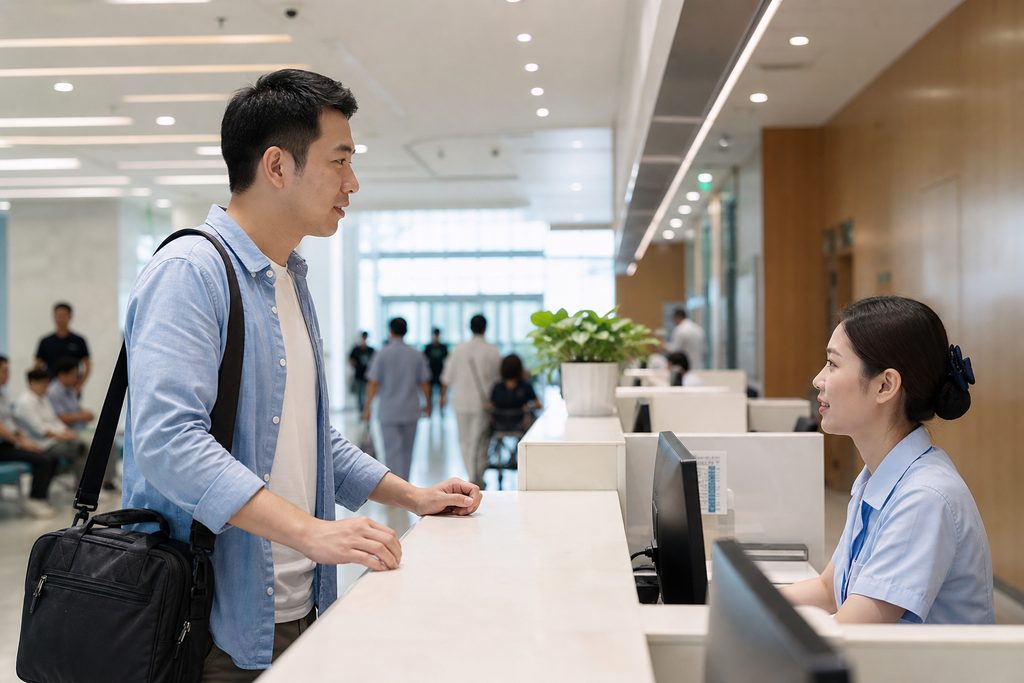
According to the National Health Commission’s 2023 statistical bulletin, China’s tertiary hospitals recorded over 2.2 billion outpatient visits that year. That volume shapes everything about how appointments work here. When a patient needs to reschedule hospital appointment China-side, the process looks nothing like the online portals most Western patients are used to. Our team handles these changes routinely. The system has logic. It also has friction points that catch first-timers off guard.
This is not a matter of clicking “reschedule” in a patient app. For most public hospitals, especially the top-ranked ones in our hospital database, appointment changes run through a specific channel. International patients face an extra layer. The good news: the rules are knowable. We will walk through exactly what happens, what it costs, and where it breaks.
How This Actually Works, Step by Step
Let’s trace the real sequence. You have a confirmed appointment at a Chinese hospital. Something shifts on your end. Now you need a new date.
First, identify your booking channel. This single fact determines everything downstream. Did you book through the hospital’s international department directly? Through a third-party platform? Through a service like ours? Each path has a different rescheduling protocol.
For public hospital international departments, the standard flow runs like this. You contact the international patient coordinator—not the main hospital switchboard. That coordinator checks the specialist’s schedule. They confirm availability for your new preferred date. Then they issue a revised appointment confirmation. That is the clean path. It takes one to three business days on average.
But here is where it gets sticky. If your original appointment was booked through the standard Chinese-language registration system, there is no international coordinator watching your file. You are in the same queue as local patients. Rescheduling means canceling and rebooking. The cancelation must happen before the hospital’s cutoff window—usually 24 to 48 hours before the appointment time. Miss that window, and the system marks you as a no-show. Public hospitals track no-shows. Too many, and some departments restrict future booking privileges.
Also, the specialist you originally booked may not have an open slot for weeks. Top surgeons at hospitals like Fuwai or Peking Union Medical College Hospital have schedules packed months ahead. Changing dates can mean changing doctors. We prepare patients for that tradeoff.
Can You Reschedule Online? The Short Answer Is Usually No
Western patients search for “can I change my hospital appointment date online China” expecting a portal login. That expectation needs recalibration. Most Chinese public hospitals do not offer patient-facing online rescheduling for international visitors. The hospital’s WeChat mini-program or app may allow local patients to modify appointments, but those systems require a Chinese ID number and a local phone number tied to a real-name verification system. Foreign passport holders are rarely able to complete that verification loop independently.
Some private international hospitals—United Family, Jiahui, Parkway—do offer online rescheduling through their patient portals or by email. Those systems are built with an international patient experience in mind. But they represent a small slice of the hospitals in our database. For the 340+ top-ranked public institutions we work with, a phone call or an in-person visit to the international department window remains the most reliable method.
That is not a technology gap. It is a design choice. The registration system prioritizes in-person identity verification. Hospitals want to confirm who is occupying a limited specialist slot. For international patients, that verification happens through the international department staff, not through an app.
Chinese Hospital Rescheduling Fee for Foreigners: What To Expect
The question of a Chinese hospital rescheduling fee for foreigners does not have one clean answer. Fees depend on the hospital tier, the department, and how close to the appointment date you request the change.
For standard outpatient appointments at public hospital international departments, the first rescheduling request is often free if made more than 48 hours in advance. Some hospitals allow one courtesy change. After that, a reprocessing fee applies. That fee typically ranges from 200 to 500 RMB—roughly $30 to $70 USD. It covers the administrative work of reissuing documents and reallocating the slot.
Specialist consultations are a different matter. If you booked a top-tier specialist whose consultation fee was paid upfront, rescheduling may forfeit that fee entirely. The hospital’s policy may treat it as a cancelation-plus-rebooking, not a modification. The consultation fee—which can range from $100 to $300 for international department specialists—is non-refundable in many cases. We always clarify this before the first booking.
| Appointment Type | Rescheduling Window | Typical Fee | Notes |
|---|---|---|---|
| Standard outpatient (international dept.) | >48 hours before | Free (first change) or 200–500 RMB | Varies by hospital; always confirm in writing |
| Specialist consultation (prepaid) | Any window | Consultation fee may be forfeited | Treat as cancel + rebook in most cases |
| Surgery date change | >2 weeks before | Deposit adjustment possible | Surgeon availability is the binding constraint |
| Private international hospital | 24–48 hours before | Often free or minimal | Patient portal rescheduling often available |
For surgery date changes, the stakes are higher. Rescheduling a procedure means re-coordinating the surgeon, the operating theater, the anesthesiology team, and a bed in the recovery ward. That is not a single calendar move. It is a chain of resource reallocation. Hospitals typically require at least two weeks’ notice for a surgery date change without financial penalty. Inside that window, the hospital may retain a portion of the deposit.
Change Surgery Date Shanghai Hospital Policy: A Closer Look
Shanghai’s top hospitals operate under some of the highest patient volumes in the country. Zhongshan Hospital, Ruijin Hospital, and Huashan Hospital run surgical schedules that are booked solid. So the question of change surgery date Shanghai hospital policy comes up frequently among our clients.
Shanghai hospitals generally follow a protocol that distinguishes between patient-initiated changes and hospital-initiated changes. If the hospital postpones your surgery—because of an emergency case bumping the schedule, for example—there is no fee. The international department coordinator works to place you in the next available slot. That can mean a delay of days or, in rare cases, weeks.
If the patient initiates the change, the hospital applies its cancelation policy to the surgical deposit. At Shanghai public hospitals, the surgical deposit for international patients typically runs between 30% and 50% of the estimated procedure cost. Rescheduling more than two weeks out usually preserves the full deposit. Inside two weeks, the hospital may deduct an administrative fee—commonly 5% to 10% of the deposit amount. Inside 72 hours, the penalty can be steeper. Some hospitals have a flat forfeiture for last-minute surgical rescheduling.
One Shanghai-specific nuance: several hospitals in the city have moved to a centralized surgical scheduling system. That means the international department does not control the OR calendar directly. They submit requests to a hospital-wide scheduling office. Rescheduling therefore adds a bureaucratic step that can add two to three business days just for confirmation. We build that buffer into our coordination timeline.
A Realistic Timeline
| Stage | What Happens | Typical Duration |
|---|---|---|
| Day 1 | Patient notifies coordinator of need to reschedule | Immediate |
| Days 1–3 | Coordinator contacts hospital international department; confirms new specialist availability | 1–3 business days |
| Days 3–7 | Hospital processes rescheduling; issues revised confirmation letter | 2–4 business days |
| Days 7–14 | If visa invitation letter needs updating, hospital reissues; patient submits to embassy/consulate | 5–7 business days (visa processing varies by country) |
| Days 14–21 | Travel logistics adjusted; new accommodation booked if needed | 1–7 days depending on season |
| Week 3 onward | New appointment date arrives; patient attends as scheduled | As scheduled |
The timeline above assumes a routine outpatient or consultation rescheduling. Surgical rescheduling stretches longer. The binding constraint is the surgeon’s operating calendar. For a high-demand cardiac surgeon at Fuwai Hospital or a neurosurgeon at Huashan, the next available OR slot may be four to eight weeks out. That is not a penalty. That is the reality of supply and demand at China’s busiest surgical centers.
One step patients often overlook: the visa invitation letter. If your hospital issued an invitation letter with specific dates for your S2 visa application, rescheduling the appointment may require a revised letter. The hospital’s international department can reissue it, but this adds processing time. Embassies and consulates do not always accept amended invitation letters without explanation. We advise patients to factor this into their timeline and to contact the visa-issuing office proactively.
What Can Go Wrong — and What Happens Then
Rescheduling seems straightforward until the system pushes back. These are the failure modes we see most often.
The specialist is no longer available. You booked Professor Li for a specific date. You need to move it. Professor Li’s next open slot is in three months. The hospital offers an associate specialist instead. This is the most common outcome for last-minute rescheduling. The patient faces a choice: accept a different doctor or wait. There is no third door. Some patients find this infuriating. We understand. But the hospital is not being difficult—the specialist’s calendar is simply full.
The rescheduling triggers a new registration fee. Some hospitals treat a date change as a new registration event. The original registration fee—usually 100 to 500 RMB for international departments—is not credited. The patient pays again. This is not universal, but it is common enough that we flag it before any change request.
The hospital’s system loses the rescheduling note. It happens. A coordinator confirms the new date verbally. The patient arrives. The registration desk has the old date. The specialist’s schedule shows no booking. This is why we insist on a written confirmation—email or official hospital letterhead—before any travel arrangements are finalized. Verbal confirmations are not reliable in a system processing thousands of daily appointments.
The patient reschedules too many times. Three changes in a row, and some international departments will decline further rescheduling. They may ask the patient to reapply as a new case. This is rare but real. It reflects the hospital’s need to manage finite specialist time responsibly.
For each of these failure modes, the recourse is the same: work through the international department coordinator. They are the only party with access to the scheduling system and the authority to make adjustments. Going around them—calling the main hospital line, emailing a department secretary—rarely works and often creates confusion.
International Patient Change Appointment Beijing Hospital: What Sets the Capital Apart
Beijing deserves its own section. The question of international patient change appointment Beijing hospital rescheduling comes with a particular set of conditions. Beijing hosts 21 of China’s Fudan-ranked top 100 hospitals. That concentration means high patient volumes and, at the most sought-after institutions, less scheduling flexibility.
Peking Union Medical College Hospital, known universally as PUMCH, runs one of the tightest appointment systems in the country. The international department processes rescheduling requests in the order they are received. There is no priority queue for international patients. A rescheduling request submitted on a Monday may not be processed until Wednesday or Thursday. This is not poor service. It is a function of demand. PUMCH’s international department handles patients from across Asia, the Middle East, and beyond.
Beijing hospitals also tend to have stricter documentation requirements for rescheduling. Some ask for a written explanation of the reason for the change. This is not a bureaucratic hurdle for its own sake. The hospital uses this documentation to justify slot reallocation internally. A patient who provides a clear, reasonable explanation—visa delay, medical reason, family emergency—is more likely to receive a smooth rescheduling than one who simply asks for a different date. We help patients draft these explanations in Chinese, framed appropriately for the hospital’s administrative expectations.
Another Beijing-specific factor: the city’s periodic conference-related travel restrictions. When major state events occur, hotel availability tightens and hospital access procedures may shift temporarily. Rescheduling an appointment into a conference period can be logistically complex. Our team monitors these calendars and advises patients accordingly.
Practical Considerations: Documents, Visas, and Follow-Up
Rescheduling is not just about the hospital calendar. Several practical threads need attention.
Medical records and imaging. If your rescheduled appointment is weeks or months later than the original, the hospital may ask for updated test results. A chest CT from six months ago may not be accepted for a rescheduled thoracic surgery consultation. Some departments require imaging within 30 days of the appointment. Check this before you travel. Sending updated records ahead of time prevents a wasted trip.
Visa validity. An S2 visa is typically issued for a specific duration aligned with the treatment plan. If rescheduling pushes your travel dates beyond the visa’s validity window, you need a new visa. This is not a small detail. Overstaying a Chinese visa carries serious consequences. We coordinate with the hospital to issue a revised invitation letter and guide patients through the reapplication process at their local Chinese embassy or consulate.
Payment and deposits. If you paid a deposit toward a procedure, confirm in writing how the rescheduling affects that deposit. Does it carry forward in full? Is there a deduction? Get the hospital’s finance department to confirm. Verbal assurances from a coordinator are not enough when money is involved.
Insurance authorization. If your treatment is covered by international health insurance, rescheduling may require a new pre-authorization. The insurer approved treatment within a specific date range. Moving outside that range can void the approval. Contact your insurer as soon as you know the new dates. Some insurers process re-authorizations quickly. Others take weeks.
Follow-up care at home. If your China treatment is part of a longer care pathway that includes follow-up with your home-country physician, rescheduling the China appointment can create a gap. Map out the downstream effects. Tell your home doctor about the date change. Adjust any post-procedure monitoring schedule accordingly.
Frequently Asked Questions
For most public hospitals, no. The online systems require Chinese ID verification that foreign passport holders cannot complete. Private international hospitals like United Family and Jiahui do offer online rescheduling through patient portals or email. For public hospital international departments, phone or email contact with the international coordinator is the standard method.
It depends on timing. More than two weeks before the scheduled surgery, most hospitals allow changes without penalty. Inside two weeks, an administrative deduction of 5% to 10% of the surgical deposit is common. Inside 72 hours, penalties can be steeper. Each hospital sets its own policy. Confirm in writing before requesting the change.
If the hospital initiates the change—due to an emergency case, a specialist’s sudden unavailability, or a scheduling conflict—there is typically no fee. The international department works to place you in the next available slot. You should receive a revised confirmation letter. If the new date does not work for you, you can request a refund of any prepaid fees according to the hospital’s cancelation policy.
There is no universal rule, but three rescheduling requests is often the practical limit. After that, some international departments ask patients to reapply as a new case. This is not a punishment. It reflects the need to manage specialist time across a large patient pool. If your circumstances require multiple changes, be transparent with the coordinator about why. A documented medical or visa-related reason is more likely to be accommodated than repeated date changes without explanation.
Yes, if the new travel dates exceed your S2 visa’s validity period. You will need the hospital to issue a revised invitation letter reflecting the new treatment dates. Submit that letter with your visa reapplication. Do not travel on an expired or soon-to-expire visa. Overstaying carries fines, detention risk, and future entry restrictions.
Your Next Step
Rescheduling a hospital appointment in China is manageable when you know which channel to use, what documentation is required, and where the hidden costs live. The system rewards preparation and punishes assumptions. Most complications we see come from patients assuming the process mirrors what they know at home. It does not. But it is navigable.
Our team at China Medical Services handles rescheduling coordination as part of our broader patient support work. We do not control hospital calendars. We do not promise specific dates. What we do is handle the communication, documentation, and follow-up so you are not managing it alone across language and time zone barriers. If you are facing a rescheduling situation or want to understand your options before booking, reach out for a free consultation. You will get a clear picture of what is possible, what it costs, and how long it takes. No pressure. Just the facts you need to make a sound decision.
For more medical information and treatment options in China, visit chinamedservices.com (China Medical Services).
