Varicose Vein Treatment in China: Laser, RF, and Glue Ablation Full Timeline
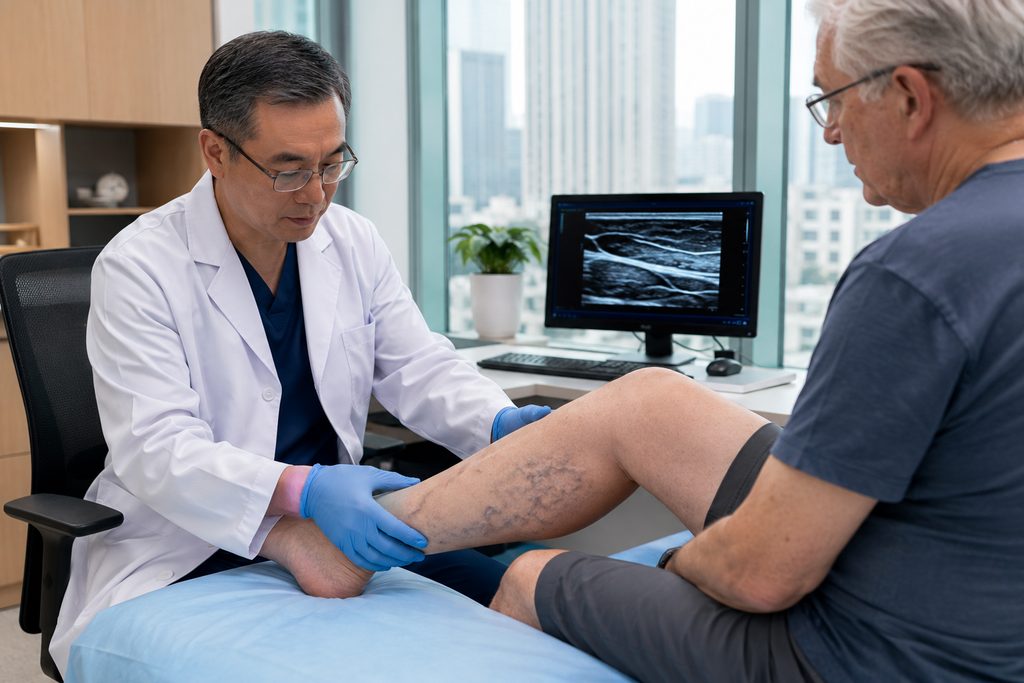
While a patient in London might wait 18 weeks just for a vascular surgery consultation, a top-tier vascular center in Shanghai typically schedules a thermal ablation procedure within 7 to 10 days of your arrival. The varicose vein laser treatment cost China runs roughly $2,500 to $4,500 per leg—a fraction of the $15,000 to $25,000 common in the United States. That contrast in both speed and price is why we field so many inquiries about this exact pathway.
We are not a clinic. We don’t perform procedures. Our team coordinates the logistics—hospital matching, appointment scheduling, visa documentation, and bilingual accompaniment—so you can access China’s vascular surgery expertise without navigating the language barrier alone. This article lays out exactly what the timeline looks like, what each technique involves, and what you need to know before booking a flight.
How This Actually Works, Step by Step
The process begins long before you pack a suitcase. Most international patients start by sending us their existing diagnostic reports—typically a venous duplex ultrasound performed within the last three months. That ultrasound is the single most important document. Without it, no surgeon can give you a meaningful treatment plan.
We translate the report into clinical Chinese and submit it to the vascular surgery department at one or two matched hospitals. The surgeon reviews the reflux patterns, vein diameters, and junctional competence. Within 3 to 5 business days, you receive a written preliminary assessment. This is not a binding surgical commitment. It’s a candid read on whether your case is straightforward, whether the surgeon sees any contraindications, and which technique they’d recommend.
If you decide to proceed, we coordinate a video consultation. You speak directly with the vascular team. They explain the rationale for their approach, walk through the risks, and answer your questions. The fee for this consultation ranges from $100 to $300, depending on the hospital tier. And here’s the part that matters: if you later travel to China for treatment, that consultation fee is credited in full toward our coordination service. You’re not paying twice.
Once you and the surgeon agree on a plan, we lock in a treatment window. You apply for your S2 visa—the short-stay category used for private medical treatment in China—with the hospital’s invitation letter as supporting documentation. Visa processing typically takes 5 to 10 business days, though this varies by consulate. We guide you through the paperwork but never guarantee approval; that decision rests solely with the visa officer.
You fly in, attend a brief in-person duplex scan to confirm the ultrasound findings, and proceed to treatment within a day or two. The procedure itself takes 45 to 90 minutes. You walk out the same day. A follow-up scan 3 to 5 days later checks for deep vein thrombosis and confirms closure of the treated vein. Then you fly home.
Laser, Radiofrequency, and Glue: What Actually Happens During Each Procedure
You cannot book a surgical slot sight-unseen. The surgeon must review your duplex ultrasound and conduct a video consultation before confirming a treatment plan. What you can do is reserve a treatment window—a date range during which the procedure will occur, pending in-person confirmation. Our coordination service handles this reservation and the pre-arrival evaluation. If the in-person scan reveals a contraindication, the procedure is cancelled and you are not charged a surgeon’s fee.
At a major hospital’s international department, yes. The surgeons speak functional medical English, and nursing coordinators handle communication. Outside that pathway—in a standard public hospital ward—you would struggle. The language barrier is real and significant. That’s the primary reason patients use a coordination service with bilingual accompaniment. You’re paying for clarity, not just access.
How long is recovery after varicose vein surgery before I can fly home?
Most patients are cleared to fly 4 to 5 days after a thermal ablation procedure, following a clear follow-up duplex scan. Glue ablation patients may be cleared slightly sooner. Long-haul flights within 72 hours are strongly discouraged due to DVT risk
Frequently Asked Questions
Yes. The hospitals used for international patients are JCI-accredited and follow the same international safety standards as top hospitals in the US and Europe. Surgical teams perform high volumes of procedures — often more than their Western counterparts — which studies show leads to better outcomes.
Costs vary by procedure and hospital, but international patients typically save 40-80% compared to US prices — even when factoring in travel and accommodation. A consultation with our team will give you an exact, all-inclusive quote with no hidden fees.
Send us your existing medical reports to get started. We handle everything from hospital selection and appointment scheduling to visa assistance and post-operative recovery planning. Your medical records are reviewed by the specialist before you even book a flight.
For more medical information and treatment options in China, visit chinamedservices.com (China Medical Services).
