Acute Abdominal Emergency Service China: Appendicitis and Bowel Obstruction Surgery Support
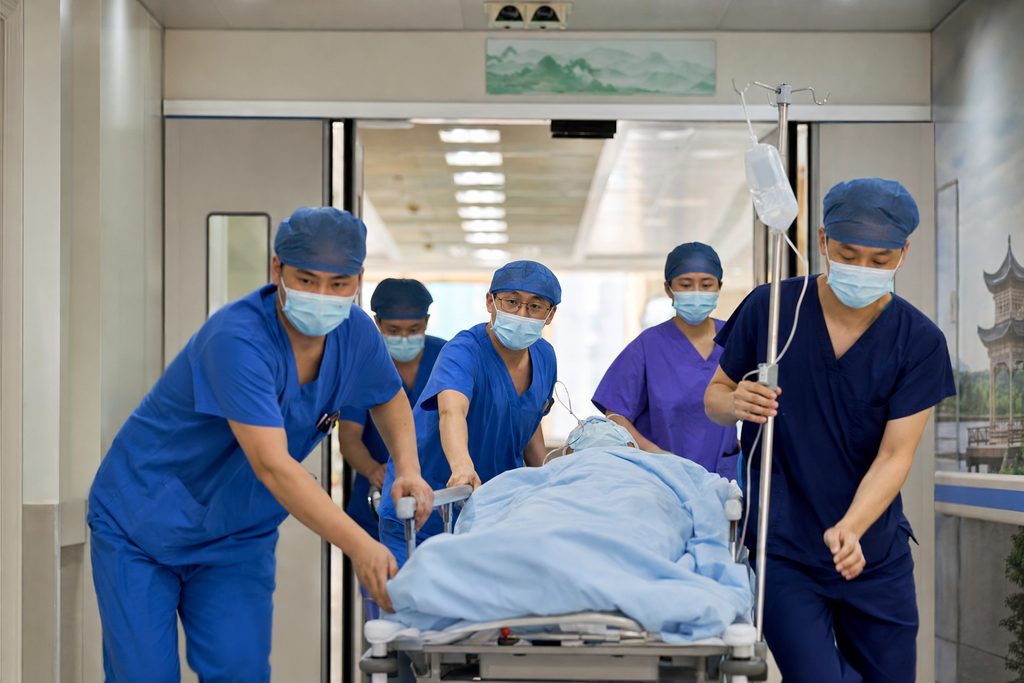
What happens when a sharp pain in your abdomen turns into a race against the clock? You are traveling, or perhaps living abroad, and suddenly you need surgery. Not next month. Now. The panic is real. The logistical nightmare is worse. Our team exists to remove that nightmare from the equation. We connect international patients with China’s top-tier acute abdominal emergency services — specifically for appendicitis and bowel obstruction — so you get definitive surgical care without the devastating delays or costs you might face at home. The appendicitis surgery cost China offers is typically 70–80% less than what you would pay in the United States, and the clinical outcomes are excellent. But cost is just one piece. Speed, safety, and someone who speaks your language in a system that does not — that is the real value.
Key Takeaways
- Laparoscopic appendectomy at a top-ranked Chinese public hospital typically ranges from $2,500–$5,000, compared to $15,000–$35,000 in the US. Bowel obstruction surgery runs $6,000–$12,000 depending on complexity.
- Definitive surgical care can often be arranged within 24–72 hours of arrival through a hospital’s international VIP channel — but only if you have a coordinator who knows the system.
- China’s public hospital system is not built for walk-in international emergency patients. Without a bilingual coordinator and pre-arranged access, you face language barriers, payment friction, and chaotic triage queues that can delay urgent care.
- An S2 visa is mandatory for medical treatment. Tourist visas do not cover surgery. Get this wrong and you will be turned away at the border or refused admission at the hospital.
The Problem: A Ruptured Appendix Will Not Wait for Bureaucracy
Appendicitis affects approximately 1 in 8 people globally over a lifetime. In Western countries, the standard of care is straightforward: diagnosis via CT or ultrasound, followed by a laparoscopic appendectomy, often within hours. The system works — if you are in it. But what if you are an expatriate in Southeast Asia, or a traveler whose insurance has a surgical exclusion, or someone staring at a 12-week wait for non-emergency bowel surgery back home in Canada or the UK? A partial bowel obstruction can turn into a complete obstruction. Ischemia sets in. Tissue dies. What was manageable becomes a life-threatening emergency.
We hear these stories constantly. A patient in London is told their bowel obstruction surgery is scheduled for eight weeks out. They are managing with a liquid diet and painkillers, but they know the clock is ticking. Another patient in Dubai gets a quote for $22,000 for an urgent appendectomy — and their insurance has a $10,000 deductible. The math does not work. They start searching for alternatives. That search leads to questions about how fast one can actually get an appendectomy in China, and whether the quality holds up.
It does. But the path is not obvious. And doing it alone is genuinely dangerous.
Who We Are
Walk into the emergency surgical wing of a Fudan-ranked hospital and you will see 3D laparoscopic systems, intraoperative ultrasound, and enhanced recovery protocols that rival any Western academic medical center. The difference is throughput. Chinese public hospitals are designed for volume. Registration, lab work, imaging, and surgical scheduling are integrated into a single digital workflow. A patient with a suspected bowel obstruction can get a contrast-enhanced CT, have it read by a radiologist, and be reviewed by a surgical attending — all within two hours.
This efficiency is not accidental. It is structural. Hospitals are reimbursed based on service volume, which incentivizes rapid patient turnover without sacrificing care quality — because complication rates are publicly reported and tied to departmental prestige. The result is a system that moves fast and still maintains rigorous clinical standards. For an international patient wondering how fast they can get an appendectomy in China, the answer is often: faster than in their home country, provided the right channel is used.
Cost Advantage Without Quality Compromise
Let us address the elephant in the room directly. Lower cost does not mean lower quality. The appendicitis surgery cost China offers — typically $2,500 to $5,000 for a laparoscopic appendectomy at a top-tier public hospital’s international wing — reflects structural economic differences, not clinical corner-cutting. Surgeon salaries, hospital construction costs, and pharmaceutical pricing in China are all substantially lower than in the US or Western Europe. A surgical attending at a major Chinese hospital earns a fraction of what their American counterpart makes, even though their training and case volume are comparable or superior.
The same logic applies to the bowel obstruction emergency surgery China price. A small bowel resection with primary anastomosis might cost $6,000 to $12,000, including a 5–7 day hospital stay. In the United States, the same procedure without complications routinely exceeds $50,000. These are not discount rates for substandard care. These are the standard rates at hospitals that rank among China’s top 10 for general surgery in the Fudan specialty reputation rankings. The quality is there. The economics are simply different.
| Procedure | China (Top Public Hospital, International Wing) | United States (Average) | United Kingdom (Private) |
|---|---|---|---|
| Laparoscopic Appendectomy | $2,500–$5,000 | $15,000–$35,000 | £4,000–£8,000 |
| Open Appendectomy (complicated) | $4,000–$7,000 | $25,000–$50,000 | £6,000–£12,000 |
| Small Bowel Resection (obstruction) | $6,000–$12,000 | $40,000–$80,000 | £10,000–£20,000 |
| Adhesiolysis (laparoscopic) | $4,000–$8,000 | $20,000–$45,000 | £5,000–£10,000 |
All ranges are estimates and vary by hospital, case complexity, and length of stay. These figures do not include international patient coordination fees.
How to Book Urgent Bowel Surgery Through China Medical Tourism Channels
The phrase “book urgent bowel surgery China medical tourism” sounds transactional. It is not. What actually happens is a carefully sequenced coordination process. You cannot simply browse a website, select a surgery date, and pay with a credit card. The public hospital system in China does not work that way for anyone — domestic or international. What you can do is engage a coordination team that has established relationships with hospital international departments, understands which surgeons have capacity, and can present your translated medical records for rapid review.
For a patient with a known bowel obstruction who is stable enough to travel, the process typically unfolds like this: we receive your CT scans, surgical history, and current lab work. Our team translates these into clinical Chinese and submits them to the international department of the best hospital for acute abdominal surgery Shanghai or Beijing can offer, depending on your preference and the specific pathology. The surgical team reviews your case — usually within 24–48 hours — and provides a preliminary assessment and cost estimate. If you decide to proceed, we coordinate your S2 visa invitation letter, schedule your arrival, and arrange for you to be seen in the international outpatient clinic. From there, surgery is typically scheduled within 24–72 hours of the attending surgeon’s evaluation.
This is not a bypass of clinical triage. It is a streamlined version of the exact same process a Chinese national would follow — minus the language barrier, the queuing confusion, and the payment system chaos.
What You Need to Know Before Going Alone
We have seen patients try to navigate this independently. Some succeed. Many do not. The barriers are real and they are structural, not personal failings. Here is what you face if you attempt to arrange acute abdominal surgery in China without a local coordinator:
- Visa Requirements: Medical treatment in China requires an S2 visa with a specific annotation for medical purposes. A tourist (L) visa will not be accepted by hospital international departments for surgical admissions. The S2 application requires an invitation letter from the admitting hospital — a document that hospitals will only issue after reviewing your case and confirming they will accept you. This is a chicken-and-egg problem that a coordinator solves by managing both sides of the process simultaneously. Get this wrong and you risk visa denial or, worse, arrival in China without the legal right to receive treatment.
- Payment Systems: Chinese public hospitals operate on a prepaid deposit system. You must load funds onto a hospital-issued card before any service is rendered — consultation, imaging, surgery, medication. International credit cards are often not accepted at hospital cashier counters. Alipay and WeChat Pay dominate, but linking a foreign bank account to these platforms is unreliable and sometimes impossible without a Chinese bank account. Our team handles deposit management, payment processing, and real-time cost tracking so you are never stuck at a payment terminal while your surgery slot slips away.
- Medical Records and Language: Your existing imaging studies, operative reports, and lab results must be professionally translated into clinical Chinese. A Google Translate screenshot will not suffice. Surgeons need precise terminology to make safe decisions. Our in-house medical translators understand the difference between “partial small bowel obstruction with transition point at the level of the mid-ileum” and a vague description of stomach pain. That distinction determines whether you get the right operation.
How We Help You Navigate This
These barriers exist for good reasons — patient safety, legal compliance, hospital liability management. They are not designed to exclude international patients, but they functionally do. Our role is to bridge that gap without cutting corners on safety or legality.
Before you travel, we handle the hospital matching process. If your case involves a complex bowel obstruction with multiple prior surgeries, we might recommend a hospital with a dedicated gastrointestinal surgery department ranked in the Fudan top 10. For a straightforward appendicitis, a strong general surgery department at any of our partner hospitals in Beijing, Shanghai, or Guangzhou will serve you well. We present your translated records, obtain the preliminary surgical assessment, and secure the invitation letter for your S2 visa. We also provide a transparent cost estimate so you know what to expect before you book a flight.
During your treatment, a bilingual medical companion accompanies you to every appointment. This person handles registration, payment deposits, queue management, and real-time interpretation during consultations with surgeons and anesthesiologists. They are not clinical staff, but they ensure that nothing is lost in translation when a surgeon explains the risks of an open versus laparoscopic approach, or when you need to communicate a drug allergy before induction of anesthesia.
After surgery, we coordinate your discharge medications, follow-up wound checks, and any necessary documentation for your insurance reimbursement back home. If your recovery requires an extended stay, we can arrange serviced apartments near the hospital at rates far below hotel pricing. The goal is simple: you focus on healing. We handle everything else.
Choosing the Best Hospital for Acute Abdominal Surgery in Shanghai and Beyond
Hospital selection is not one-size-fits-all. Shanghai is home to several hospitals with world-class general surgery departments. Zhongshan Hospital, affiliated with Fudan University, handles an enormous volume of acute abdominal cases and is consistently ranked among the top institutions nationally for general surgery. Ruijin Hospital, affiliated with Shanghai Jiao Tong University School of Medicine, has a distinguished history in surgical innovation and manages complex gastrointestinal emergencies with excellent outcomes. Both hospitals have dedicated international medical centers with English-speaking staff and experience managing foreign patients.
But the best hospital for acute abdominal surgery Shanghai offers might not be the best fit for your specific case. A patient with a history of multiple abdominal surgeries and extensive adhesions might benefit from a hospital with particular expertise in complex re-operative abdominal surgery — perhaps West China Hospital in Chengdu or Peking Union Medical College Hospital in Beijing. Our matching process considers your surgical history, current imaging, and personal preferences to recommend the right institution, not just the most famous one.
Important: Emergency abdominal pain requires immediate local evaluation. If you are currently experiencing severe abdominal pain, fever, vomiting, or signs of peritonitis, seek emergency care where you are. Do not attempt to travel to China with an acute surgical abdomen. Our services are appropriate for patients who are stable enough to travel or who have been diagnosed with a condition that requires surgery within days to weeks, not hours.
Frequently Asked Questions
How fast can I realistically get an appendectomy in China after arriving?
For a straightforward acute appendicitis confirmed by imaging, surgery can typically be scheduled within 24–48 hours of your initial consultation with the attending surgeon. The limiting factor is usually the pre-operative workup — blood tests, ECG, anesthesia clearance — which can be completed in a single morning at a well-organized international department. If you arrive with translated records and a pre-arranged surgical slot, the timeline compresses further. However, no reputable hospital will take you directly from the airport to the operating room without a proper evaluation. That would be unsafe, and any coordinator who promises otherwise should be avoided.
What if complications arise during my bowel obstruction surgery?
Chinese top-tier hospitals are fully equipped to manage intraoperative and post-operative complications. They have surgical ICUs, interventional radiology suites, and 24/7 in-house attending coverage. The concern for most international patients is not clinical capability — it is communication during a crisis. This is why our bilingual companion remains available throughout your hospitalization. If a complication occurs, you will have someone at your bedside who can explain what is happening in real time, coordinate communication between you and the surgical team, and keep your family informed. We also assist with any necessary extensions of your S2 visa if your recovery takes longer than anticipated.
Will my insurance cover emergency appendicitis treatment abroad packages?
It depends entirely on your policy. Some international health insurance plans — particularly those designed for expatriates — include coverage for scheduled treatment abroad. Others explicitly exclude it. Many US-based plans with out-of-network benefits will reimburse a portion of your costs after you submit itemized receipts and translated medical records. We provide the documentation you need for reimbursement, but we cannot guarantee that your insurer will pay. We recommend contacting your insurance provider before travel and asking specifically about coverage for “medically necessary surgery performed at a JCI-accredited or Fudan-ranked hospital outside your country of residence.” Get their answer in writing.
Is a laparoscopic appendectomy in China as safe as one in the West?
At a top-ranked hospital, yes. The laparoscopic technique is standardized globally. Chinese surgeons at Fudan-ranked institutions train on the same equipment and follow the same evidence-based protocols as their Western counterparts. The difference is volume. A surgeon who does 300 appendectomies a year has simply seen more anatomical variation and managed more intraoperative surprises than one who does 40. Infection rates, conversion-to-open rates, and length of stay at China’s best hospitals are comparable to international benchmarks. The key variable is which hospital you choose — and that is where our matching process adds real value.
Your
For more medical information and treatment options in China, visit chinamedservices.com (China Medical Services).
