Why Afghan Patients Choose China for Priority Medical Treatment: Crisis Region Access
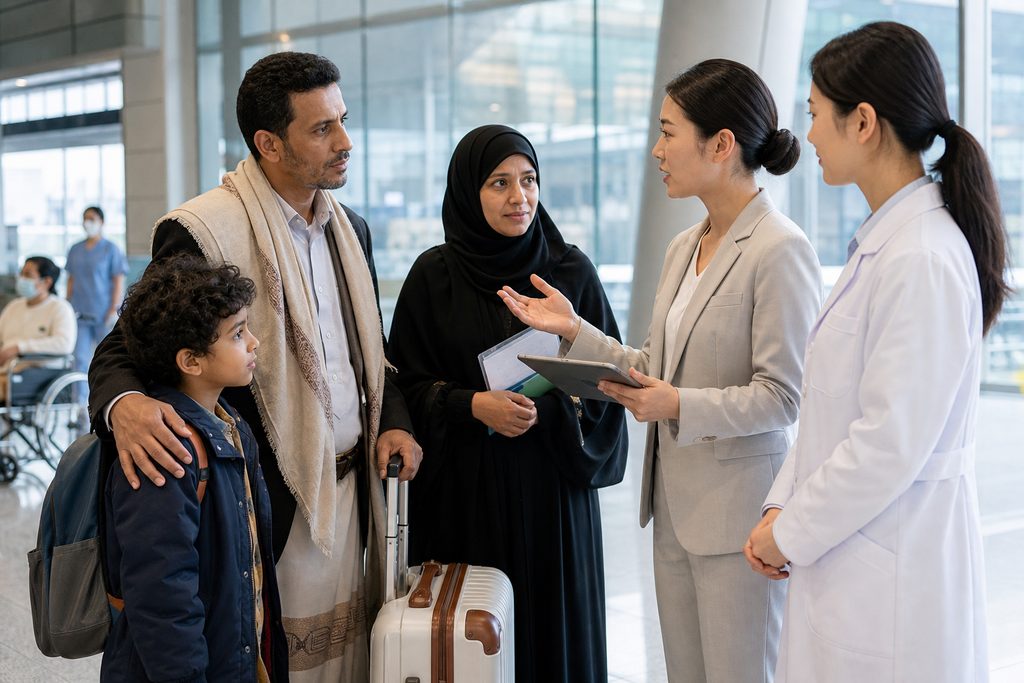
Have you ever wondered what a family does when the local hospital is overwhelmed, the specialist has fled, and the waiting list is measured in years—not weeks? For thousands of Afghan families, this is not a hypothetical question.
The collapse of infrastructure has turned treatable conditions into life-threatening crises. A 2023 report from the World Health Organization noted that over half of Afghanistan’s public hospitals lack basic surgical capacity. Critical medications are out of stock. Diagnostic equipment sits broken. For patients facing cancer, heart defects, or complex orthopedic trauma, the local health system often has one answer: wait. Many cannot afford to wait.
That is why a growing number of Afghan patients are looking east. Not to neighboring countries with strict visa quotas, but to China. They are pursuing cheap medical treatment in China for Afghan patients—not as a luxury, but as a calculated decision when the alternative is no treatment at all.
Key Takeaways
- China’s top-tier hospitals treat complex conditions at costs 70-90% lower than equivalent US facilities, making treatment financially accessible for Afghan families paying out-of-pocket.
- Chinese hospitals with dedicated international departments can coordinate priority appointments and surgery schedules, bypassing the chaotic public queuing system that overwhelms local patients.
- The S2 visa process requires a hospital-issued invitation letter, and approval is never guaranteed—patients must plan for potential delays and document requirements from the Chinese embassy in Kabul or a neighboring country.
- Language remains the single biggest barrier. Without a bilingual coordinator, navigating a Chinese hospital’s massive campus and complex registration system is extraordinarily difficult.
The Problem: When the Local Health System Cannot Deliver
Afghanistan’s health system faces a convergence of crises. The International Committee of the Red Cross reported in 2023 that 33 of the country’s 37 public hospitals are functioning at severely reduced capacity. The departure of international NGOs and the freezing of development funds gutted supply chains. An estimated 17 million people lack access to basic health services, according to the United Nations Office for the Coordination of Humanitarian Affairs.
For surgical patients, the numbers are grimmer. A study published in the British Journal of Surgery in 2022 found that Afghanistan has fewer than 0.3 surgical providers per 100,000 people. To put that in perspective, the United States has roughly 55 per 100,000. The gap is not marginal—it is catastrophic.
What does this mean in practice? A father with a blocked coronary artery cannot get a stent. A child with scoliosis watches their spine curve further each month. A young woman with a treatable tumor is told to go home and manage the pain. These patients are not seeking experimental treatments. They need procedures that are routine elsewhere but unavailable where they live.
Some Afghan families travel to Pakistan or India. But Pakistani hospitals face their own capacity constraints, and Indian medical visas for Afghan nationals have become increasingly difficult to secure since 2021. Flight connections are limited. The window of opportunity keeps narrowing.
Why China Has Become a Viable Destination for Afghan Patients
China’s healthcare infrastructure has undergone a transformation over the past two decades that few outside the medical community fully appreciate. The country now operates over 35,000 hospitals. Among them, a select group of roughly 340 institutions rank in the top 5% nationally by clinical outcomes, research output, and specialist expertise, as evaluated by the Fudan University Hospital Ranking—China’s most authoritative hospital assessment system.
These hospitals are not small clinics. Peking Union Medical College Hospital in Beijing handles over 2.26 million outpatient visits annually. Fuwai Hospital performs more than 14,000 cardiac surgeries each year—the highest surgical volume of any heart center globally. West China Hospital in Chengdu runs 4,300 beds and manages some of the most complex trauma cases in Asia. Scale matters in medicine. Volume drives expertise.
For Afghan patients, three structural advantages make China a practical choice.
Clinical Volume That Translates to Specialist Experience
Surgeons get better with repetition. This is not controversial—it is documented across dozens of peer-reviewed studies. A Chinese orthopedic surgeon at a major public hospital may perform 300 to 500 joint replacements per year. The average US orthopedic surgeon performs roughly 65. When you need a complex spinal fusion or a revision hip replacement, you want the surgeon who did three of them last week, not three last year.
The same pattern holds across specialties. Oncologists at Fudan University Shanghai Cancer Center treat volumes of rare malignancies that would take a decade to accumulate at a regional hospital in many Western countries. Interventional cardiologists at Fuwai Hospital place stents in coronary anatomies that less experienced centers would refer for open surgery. For Afghan patients with advanced or complicated disease, this depth of experience is not a marketing point—it is a clinical necessity.
Cost Structures That Make Treatment Possible
The financial reality for Afghan families is stark. There is no functioning health insurance system. Treatment must be paid for in cash—often pooled from extended family, community donations, or the sale of assets. The question is not “which hospital is best?” but “which hospital can we afford?”
China’s cost advantage is structural, not promotional. A cardiac bypass surgery that costs $120,000 to $180,000 in the United States runs $12,000 to $20,000 at a top Chinese public hospital. Knee replacement: $35,000 to $50,000 in the US, $8,000 to $15,000 in China. Cancer chemotherapy cycles that bill at $10,000 to $30,000 per round in American facilities cost $2,000 to $5,000 in China. These are real, documented price differentials driven by lower labor costs, higher patient volumes, and a pharmaceutical manufacturing base that produces many of the world’s generic drugs.
Let’s be clear about what this means for Afghan patients. The same procedure, performed by a surgeon with comparable or higher case volume, using equipment from the same global manufacturers, costs one-fifth to one-tenth as much. For a family selling land to pay for a loved one’s surgery, that differential is the difference between treatment and no treatment.
Important: Prices vary significantly by hospital tier, specialist seniority, and case complexity. International department services typically cost 1.5 to 2 times more than standard public ward rates due to English-speaking coordination, expedited scheduling, and private recovery rooms. Always request a detailed treatment plan with itemized costs before committing to travel.
International Patient Infrastructure That Bypasses the Queue
China’s public hospital system serves 1.4 billion citizens. The outpatient hall of a major Beijing hospital at 8 AM can look like a train station at rush hour—thousands of people, long lines, a registration system conducted entirely in Mandarin. A foreign patient walking in off the street would be lost, literally and figuratively.
But China’s top hospitals have built parallel systems. International medical departments and VIP wings operate separately from the general public flow. They employ English-speaking staff, offer private consultation rooms, and—crucially—can coordinate appointment schedules and surgical slots in advance. This is how a patient from Kabul can arrive in Shanghai on a Tuesday, see a specialist on Wednesday, complete pre-operative testing by Friday, and have surgery scheduled the following week.
The public queue for a top orthopedic surgeon might stretch months. The international department queue for the same surgeon, booked through the hospital’s official coordination channel, can compress that to days or weeks. This is not queue-jumping in an unethical sense—it is a separate service tier with separate pricing, explicitly designed for patients traveling from abroad who cannot wait indefinitely.
What Afghan Patients Actually Need to Make This Journey Work
Understanding the opportunity is one thing. Executing the journey is another. Afghan patients face specific logistical challenges that patients from wealthier or more stable countries do not. Here is what the path looks like in practice, and where things get difficult.
The Visa Puzzle: S2, Not M
The single most common point of confusion—and the mistake that can derail an entire medical trip—is the visa category. Many applicants assume they need an M visa. That is wrong. The M visa is for commercial and trade activities. Applying for an M visa to receive medical treatment will result in rejection at the embassy or, worse, denial of entry at the border.
Medical treatment in China falls under the S2 visa, classified as a short-term private affairs visit. The S2 requires an invitation letter from the receiving Chinese hospital—a formal document on hospital letterhead specifying the patient’s name, passport number, planned treatment, and duration of stay. Accompanying family members also apply for S2 visas, each with their own invitation documentation.
For Afghan applicants, the practical challenge is the embassy location. The Chinese embassy in Kabul operates with limited consular services. Many Afghan patients must travel to Islamabad, Tehran, or Dushanbe to submit biometrics and attend an interview. This adds cost, time, and uncertainty. Visa approval is discretionary. The consular officer will evaluate the completeness of the hospital documentation, the patient’s financial means, and the credibility of the treatment plan. A poorly prepared application will be refused.
Practical advice: Begin the hospital coordination process 6 to 8 weeks before your intended travel date. The hospital invitation letter is the critical document—without it, the visa application cannot proceed. Factor in 2 to 4 weeks for embassy processing after submission, and build in buffer time for potential document resubmission.
Documentation That Must Travel With the Patient
Chinese specialists will need to review the patient’s medical history before accepting the case. Afghan patients should gather every available medical record: imaging studies on CD or USB (CT scans, MRIs, X-rays), pathology reports, previous surgical notes, medication lists with generic drug names, and a summary letter from the treating physician in Afghanistan or Pakistan. These documents must be translated into English or Chinese.
Incomplete records are the most common reason a Chinese hospital declines a case or delays a treatment decision. The specialist cannot evaluate what they cannot see. If the patient had a biopsy in Peshawar three years ago, that report matters. If there is a post-surgical complication from a procedure done in Iran, those operative notes matter. Gather everything. Digitize everything. Translate everything.
How to Book Priority Medical Treatment in China from Afghanistan: The Practical Sequence
There is no single website where an Afghan patient clicks “book surgery” and receives a confirmation. The process involves sequential steps, each dependent on the previous one succeeding. Understanding this sequence prevents wasted time and money.
Step one is remote evaluation. The patient sends their medical records—translated and organized—to the international department of a target hospital or to a coordination service that works with multiple hospitals. A specialist reviews the case and issues a preliminary opinion: is this condition treatable in China, what is the recommended approach, and what is the estimated treatment timeline and cost range. This step typically takes 5 to 10 business days.
Step two is the formal treatment plan and invitation. If the specialist accepts the case, the hospital drafts a treatment proposal with itemized cost estimates. Upon the patient’s agreement and payment of a deposit, the hospital issues the official invitation letter required for the S2 visa application. This letter is the gateway document.
Step three is visa application. The patient or their representative submits the passport, invitation letter, completed visa form, passport photos, and supporting financial documents to the Chinese embassy or consulate. Processing times vary. Approval is not guaranteed.
Step four is arrival coordination. Once the visa is stamped, the patient books flights and confirms the hospital admission date. The hospital’s international department arranges airport pickup if requested, schedules the first consultation, and assigns a bilingual coordinator to manage registration, payment, and navigation through the hospital’s various departments.
This four-step sequence—remote evaluation, formal plan, visa, arrival—typically spans 6 to 10 weeks from initial inquiry to hospital admission. Patients who try to compress this timeline by arriving in China without a confirmed hospital appointment find themselves in a difficult position: present in the country but unable to access care because no specialist has reviewed their case and no admission slot has been reserved.
Best Hospitals in China for International Patients from Crisis Zones: What to Look For
Not every Chinese hospital is equipped to manage international patients from crisis regions. The best candidates share specific characteristics that Afghan families should verify before committing to travel.
First, the hospital must have a functioning international medical department with English-speaking staff. This sounds obvious, but many excellent Chinese hospitals lack this capability. Their clinical outcomes may be superb, but their administrative systems are designed exclusively for domestic patients. A hospital without an international department cannot issue the S2 invitation letter, cannot coordinate pre-arrival scheduling, and cannot provide interpretation during consultations.
Second, the hospital should have documented experience with the specific condition the patient needs treated. China’s hospital ranking system, published annually by Fudan University, evaluates 45 clinical specialties and ranks the top 10 hospitals in each. For oncology, the top-ranked centers include Fudan University Shanghai Cancer Center and Peking University Cancer Hospital. For cardiac surgery, Fuwai Hospital and Zhongshan Hospital Fudan University lead the rankings. For orthopedics, Peking University Third Hospital and Shanghai Sixth People’s Hospital are consistently top-ranked. A hospital’s presence on these specialty lists is a verifiable quality signal.
Third, the hospital should be located in a city with direct or convenient flight connections from Kabul, Islamabad, or Dubai. Beijing, Shanghai, Guangzhou, and Chengdu all have major international airports with routes served by multiple carriers. Our database of top-ranked hospitals across 37 Chinese cities can help narrow the search by both clinical specialty and travel logistics.
Fourth, the hospital must be transparent about costs. Reputable international departments provide written treatment plans with itemized fee schedules before the patient travels. If a hospital is vague about pricing or asks for large upfront payments without a detailed breakdown, that is a red flag.
Can Afghan Refugees Get Surgery in China? The Honest Answer
This question requires a direct answer without false hope. Afghan nationals holding valid passports—whether residing in Afghanistan, Pakistan, Iran, or elsewhere—can apply for medical treatment in China through the S2 visa process described above. Refugee status itself does not disqualify an applicant. The Chinese consular officer evaluates the visa application based on the authenticity of the medical documentation, the applicant’s financial capacity, and standard admissibility criteria.
But there are hard realities. Travel documents must be valid and unexpired. The patient or their family must have the financial resources to pay for treatment, travel, accommodation, and incidentals. China’s hospitals do not offer charity care to foreign nationals. There is no international patient financial assistance program. The cost, while dramatically lower than Western equivalents, is still substantial in absolute terms—a $12,000 cardiac surgery is out of reach for a family with no assets and no income.
For Afghan refugees holding documents from UNHCR or residing in third countries, the situation is more complex. The Chinese embassy will evaluate travel document validity on a case-by-case basis. A refugee travel document issued under the 1951 Convention may or may not be accepted for visa issuance. No blanket answer applies. Each case must be assessed individually through pre-application consultation with the relevant Chinese embassy.
The key takeaway: surgery in China is accessible to Afghan patients who can assemble the required documentation, fund the treatment, and navigate the visa process. It is not accessible to those who lack these resources. Stating otherwise would be irresponsible.
Medical Tourism Package China Fast Track for Afghans: What That Actually Means
The phrase “medical tourism package” suggests something neat and prepackaged—a brochure with a fixed price and a guaranteed date. The reality is more nuanced. What exists is a coordination service that bundles the component parts of a medical journey into a managed sequence.
A typical coordination arrangement for an Afghan patient includes: translation and organization of medical records for specialist review, identification of appropriate hospitals and departments based on the specific diagnosis, facilitation of the remote consultation and treatment plan process, assistance with the hospital invitation letter required for the S2 visa, scheduling of the initial consultation and pre-operative testing upon arrival, and on-the-ground bilingual support during the hospital stay.
What this does not include—and what no legitimate service can guarantee—is visa approval, a specific surgery date before the specialist has examined the patient in person, or a guaranteed clinical outcome. Any entity promising these things is making claims it cannot fulfill.
The value of coordination for Afghan patients is not in bypassing rules but in navigating complexity. The Chinese hospital system is vast, bureaucratic, and language-dependent. A patient who speaks Dari or Pashto and no Mandarin or English cannot independently register at a hospital counter, understand pre-operative instructions, or communicate symptoms to a nurse. The coordination service bridges that gap.
| Coordination Element | What It Covers | Typical Timeline |
|---|---|---|
| Remote Case Review | Specialist evaluates records, issues preliminary treatment opinion | 5-10 business days |
| Treatment Plan & Cost Estimate | Detailed procedure plan with itemized hospital fees | 3-5 days after case acceptance |
| Visa Support Documentation | Hospital invitation letter for S2 application | Issued after
Frequently Asked QuestionsIs it safe to have surgery in China?
Yes. The hospitals used for international patients are JCI-accredited and follow the same international safety standards as top hospitals in the US and Europe. Surgical teams perform high volumes of procedures — often more than their Western counterparts — which studies show leads to better outcomes. How much does medical treatment cost in China?
Costs vary by procedure and hospital, but international patients typically save 40-80% compared to US prices — even when factoring in travel and accommodation. A consultation with our team will give you an exact, all-inclusive quote with no hidden fees. How do I start the process?
Send us your existing medical reports to get started. We handle everything from hospital selection and appointment scheduling to visa assistance and post-operative recovery planning. Your medical records are reviewed by the specialist before you even book a flight. For more medical information and treatment options in China, visit chinamedservices.com (China Medical Services). |
