ALS Treatment in China: Stem Cell Costs, Hospitals & Real Options
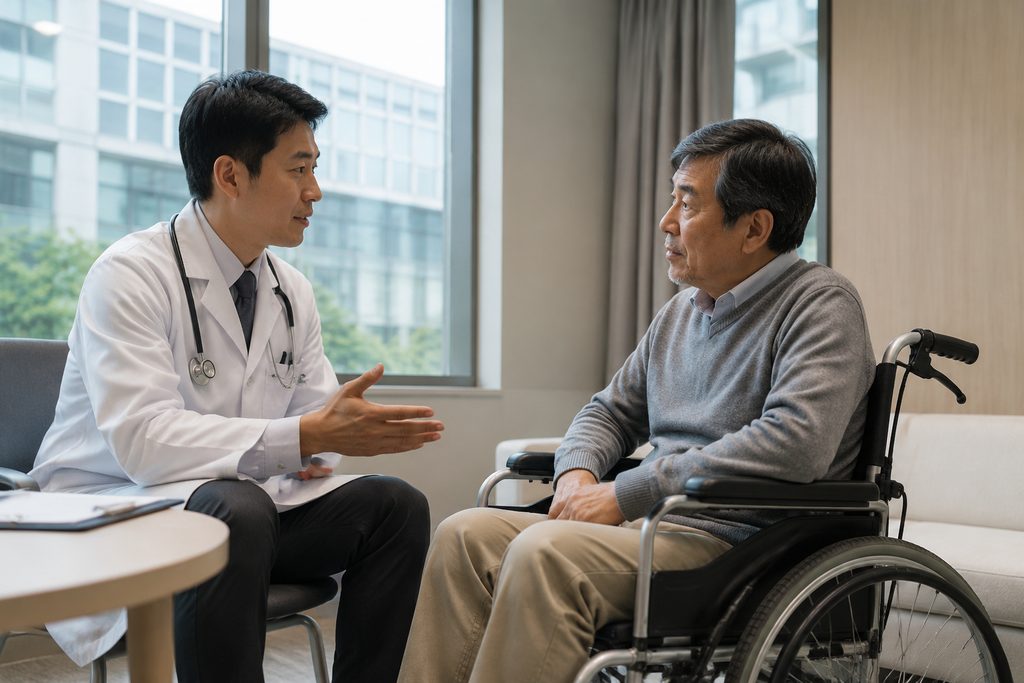
ALS Stem Cell Treatment in China: What It Costs, Where to Go, and What to Know First
Every year, roughly 5,000 people in the United States receive an ALS diagnosis. For many, the search for answers quickly moves beyond national borders. One question we hear constantly: can ALS be treated in China? The honest answer is that no cure exists anywhere. But China has become a serious destination for investigational approaches, particularly around ALS stem cell treatment China cost and access to protocols that are harder to enter in Western systems. Our team at China Medical Services has spent years helping international patients evaluate these options with clear eyes.
A 2023 review published in Frontiers in Neurology identified over 40 registered stem cell trials for ALS globally, with a substantial concentration operating out of Chinese research hospitals. That concentration matters. It means patients can find active programs, shorter screening queues, and transparent pricing that often runs at a fraction of what private clinics charge in North America or Europe. But it also means navigating language barriers, hospital bureaucracy, and significant variation in protocol quality. That is exactly where our team comes in.
How This Actually Works, Step by Step
You do not simply book a flight and show up at a hospital in Shanghai. The process follows a defined sequence, and understanding it upfront saves months of frustration.
Step 1: Records review. You send us existing medical documentation — EMG/NCS reports, pulmonary function tests, recent neurology notes, medication history, and any genetic testing. Our clinical coordinators translate these into Chinese and prepare a summary for the relevant department. This usually takes 3 to 5 business days.
Step 2: Hospital and department matching. Based on your disease progression, respiratory status, and treatment goals, we identify which of our 340+ top-ranked hospitals across 37 cities has an active ALS program or relevant stem cell clinical trial. Some patients are candidates for trials; others are better suited for a written second opinion first.
Step 3: Remote evaluation. The Chinese neurology team reviews your file. They may request additional tests or a video consultation. A written second opinion from a top specialist typically costs $300–500. A video consultation with a senior neurologist ranges from $500–800. These fees are fully credited toward on-the-ground coordination if you proceed within 90 days.
Step 4: Decision and planning. If the team confirms you are a candidate for a specific protocol, we coordinate dates, documentation for your S2 visa, and hospital registration. You travel for an in-person evaluation before any treatment begins.
Step 5: Arrival and treatment. Our bilingual medical companion meets you at the hospital, handles registration, interprets during consultations, and stays with you through the procedure and initial recovery. This is not a concierge luxury. It is the difference between understanding your treatment plan and signing forms you cannot read.
Can ALS Be Treated in China? Understanding What Treatment Actually Means
Let us be blunt about the word “treated.” ALS remains incurable. What China offers is not a reversal of the disease but access to investigational therapies that aim to slow progression, preserve function, or stabilize respiratory decline. The most common approaches include mesenchymal stem cell transplantation, olfactory ensheathing cell therapy, and combined protocols using traditional Chinese medicine as adjunctive support.
Mesenchymal stem cells derived from umbilical cord tissue or bone marrow are the most frequently studied. The rationale is neuroprotection and immunomodulation — not neuronal replacement. A 2022 meta-analysis in Stem Cell Research & Therapy reviewed 11 clinical studies and found that intrathecal MSC administration was generally safe, with some patients showing slowed decline on the ALSFRS-R scale over 6-month follow-up periods. Results vary widely. Some patients report stabilization. Others see no benefit. No reputable Chinese hospital will promise otherwise.
That is the key distinction. Hospitals operating within China’s public academic system publish their protocols, register their trials, and report adverse events. Private clinics that advertise “guaranteed improvement” are a different category entirely. We steer patients toward the former and away from the latter.
For patients asking specifically about best ALS hospital Shanghai options, the conversation usually centers on a few institutions. Shanghai’s neurology departments at major teaching hospitals run active ALS registries and have published on stem cell safety. But Shanghai is not the only hub. Beijing, Guangzhou, and Chengdu all host programs with significant ALS patient volume. The right choice depends on your specific clinical picture, not on city prestige alone.
A Realistic Timeline
Patients consistently underestimate how long the pre-treatment phase takes. Here is what we tell families, based on real coordination experience.
| Stage | What Happens | Typical Duration |
|---|---|---|
| Week 1 | Records submitted, translated, and reviewed internally | 5–7 days |
| Week 2–3 | Hospital matching, department contact, remote evaluation scheduling | 10–14 days |
| Week 3–4 | Written second opinion or video consultation completed | 7–10 days |
| Week 4–6 | Decision on candidacy; treatment plan and cost estimate issued | 7–14 days |
| Week 6–8 | S2 visa application with hospital invitation documents | 10–20 days |
| Week 8–10 | Travel, in-person evaluation, admission, treatment | 10–14 days |
Total: roughly 2 to 3 months from first contact to treatment. Some patients move faster when documents are complete and the hospital has immediate trial openings. Others wait longer if additional testing is required. We have seen the full range.
What Can Go Wrong — and What Happens Then
We would rather you hear this from us than discover it mid-flight. Several things can derail the process.
Ineligibility after remote review. The Chinese team may determine that your respiratory function is too compromised for safe travel or that your disease progression is too advanced for a meaningful trial. This happens in roughly 20–30% of cases we see. What then? You receive a written explanation and, where appropriate, alternative recommendations. The remote consultation fee is not refunded, but it has already provided you with an expert second opinion you can use with your home neurologist.
Visa delay or denial. S2 visa processing times vary by consulate and nationality. Some applicants wait 3 weeks. Others wait 6. We prepare the hospital invitation letter, treatment confirmation, and financial documentation to support the application, but approval is always at the consulate’s discretion. If a visa is denied, any hospital appointment coordination fee is refunded in full.
Treatment does not work. This is the hardest truth. Some patients travel, receive stem cell therapy, and return home with no measurable change. The hospital will not refund treatment costs, and no credible program guarantees results. Our role is to ensure you understood this before you committed — not after.
Unexpected hospital charges. Public hospital billing in China is itemized but not always predictable. A quoted stem cell protocol may not include extended inpatient observation, repeat imaging, or physiotherapy. We ask for written cost breakdowns before you travel and flag any line items that look unusual.
How Much Does ALS Treatment Cost in China? Reading the Numbers Honestly
This is the question behind the search. How much does ALS treatment cost in China depends on the protocol, the hospital tier, and whether you enter a registered trial or pay out of pocket for a clinical service.
Registered clinical trials sometimes cover the investigational therapy itself. Patients pay for travel, accommodation, and standard hospital fees. But trial slots are limited, inclusion criteria are strict, and enrollment can take months. Many international patients do not qualify or cannot wait.
Out-of-pocket stem cell protocols at reputable public hospitals generally range from $18,000 to $35,000 USD for a full course, depending on cell type, number of administrations, and inpatient stay length. That is a wide range, and it should be. A single intrathecal injection costs less than a repeated intravenous protocol with rehabilitation support.
Compare that to private clinics in Mexico, the Caribbean, or Eastern Europe, where prices often run $25,000 to $50,000 with less regulatory oversight. Or to the United States, where access to similar protocols outside clinical trials is essentially nonexistent. The cost difference is real, but so is the variance in quality. That is why hospital selection matters more than price shopping.
| Cost Category | China (Public Hospital) | Private International Clinic |
|---|---|---|
| Stem cell protocol (full course) | $18,000–$35,000 | $30,000–$60,000 |
| Written second opinion | $300–$500 | Often bundled |
| Video consultation with specialist | $500–$800 | $800–$1,500 |
| Bilingual medical companion | from $300/day | Included or unavailable |
| Inpatient observation (per week) | $2,000–$5,000 | $8,000–$15,000 |
These figures reflect what we see in coordination work. They are not quotes. Final pricing always depends on hospital policy and case complexity.
ALS Clinical Trials China 2025: What Is Actually Recruiting
Patients searching for ALS clinical trials China 2025 want current information, not a historical overview. The landscape shifts quarterly. What we can say with confidence is that Chinese institutions have maintained steady recruitment across several trial categories.
Active areas include intrathecal mesenchymal stem cell delivery, small molecule neuroprotective agents, and combination protocols pairing cell therapy with respiratory rehabilitation. Several trials operate through hospital neurology departments rather than centralized registries, which makes them difficult to find from abroad. That fragmentation is a real problem. A trial may be recruiting in Wuhan but not listed on any English-language database.
Our team monitors these programs through direct hospital contacts. When a patient asks about trial access, we check current enrollment status, inclusion criteria, and whether the hospital accepts international participants. Some trials are restricted to Chinese citizens. Others welcome foreign patients but require longer in-country observation periods. There is no shortcut here. You need someone on the ground asking the right questions.
Practical Considerations: Records, Visas, Payment, and Follow-Up
Out-of-pocket protocols at reputable public hospitals typically range from $18,000 to $35,000 USD for a full course. This varies by cell type, number of administrations, and hospital. Registered clinical trials may cover the therapy itself, but enrollment is competitive and inclusion criteria are strict.
Several Shanghai teaching hospitals run active ALS programs with published research on stem cell safety. But “best” depends on your disease stage, respiratory function, and treatment goals. We match patients to departments based on clinical fit, not city reputation. Beijing, Guangzhou, and Chengdu also host strong programs.
Some are. Others restrict enrollment to Chinese citizens. Current status changes frequently, and many trials are not listed in English-language registries. Direct hospital contact is the only reliable way to confirm eligibility. That is part of what our coordination service handles.
You return home with the same disease you arrived with, plus a detailed treatment record. No credible program guarantees results, and treatment fees are not refunded when outcomes fall short. Our job is to make sure you understand this reality before you commit, so the decision is informed rather than hopeful.
Your Next Step
You now know the honest landscape: what treatment means, what it costs, how long it takes, and where the real risks lie. The decision to pursue ALS care in China is deeply personal, and it should be made with complete information — not marketing promises. Our team at China Medical Services does not provide medical advice or guarantee outcomes. What we do is handle the logistics: records translation, hospital matching, appointment coordination, visa documentation, and bilingual support on the ground. If you want to explore whether a Chinese ALS program is a realistic option for your situation, send us your records and questions. We will review them and tell you straight what is possible. Request a free consultation and let us walk you through the next step.
Frequently Asked Questions
Yes. The hospitals used for international patients are JCI-accredited and follow the same international safety standards as top hospitals in the US and Europe. Surgical teams perform high volumes of procedures — often more than their Western counterparts — which studies show leads to better outcomes.
Costs vary by procedure and hospital, but international patients typically save 40-80% compared to US prices — even when factoring in travel and accommodation. A consultation with our team will give you an exact, all-inclusive quote with no hidden fees.
Send us your existing medical reports to get started. We handle everything from hospital selection and appointment scheduling to visa assistance and post-operative recovery planning. Your medical records are reviewed by the specialist before you even book a flight.
For more medical information and treatment options in China, visit chinamedservices.com (China Medical Services).
