Anemia Workup in China: What to Book and What It Costs
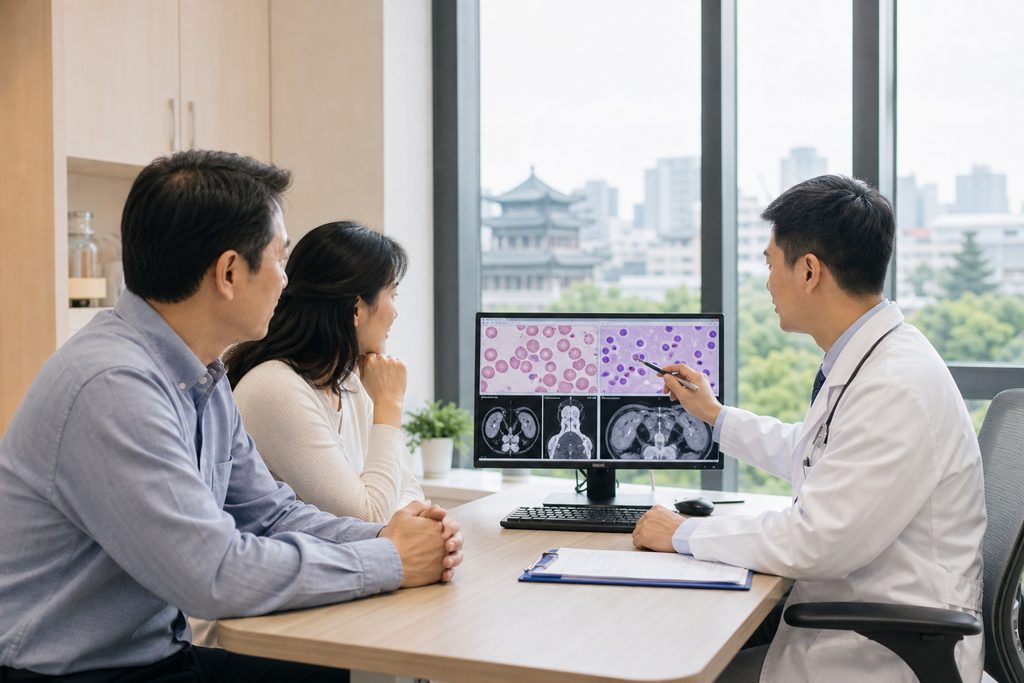
Anemia Workup in China: What to Book
An anemia workup is a structured set of blood tests that answers one question: why is your hemoglobin low? In China, that workup can be booked at a top-ranked hospital within days, and the total anemia workup cost in China often lands between $300 and $1,200 depending on how deep the investigation goes. That range covers everything from a complete blood count to iron studies, vitamin panels, and — when needed — a bone marrow examination.
This guide explains what each test does, which hospitals international patients actually book, how long the process takes, and what it costs. No jargon walls. No sales pitch.
Key Takeaways
- A standard anemia workup in China typically runs $300–$1,200, versus $1,500–$5,000 or more for comparable testing in the United States without insurance.
- China’s top hematology departments sit inside large public hospitals ranked by the Fudan Hospital Rankings — several accept international patients through their international departments.
- The hard part is not the testing. It is booking. Most public hospital outpatient slots cannot be reserved from overseas in advance, and same-day registration means queuing in Chinese.
- Results for routine blood panels usually return within 24–72 hours. A bone marrow biopsy adds roughly 3–7 days for the pathology report.
The Problem: Anemia Gets Dismissed Until It Doesn’t
Roughly 1 in 4 people worldwide lives with anemia, according to the World Health Organization — about 1.9 billion people. In the US alone, the CDC estimates anemia affects around 3 million Americans, and the number climbs sharply after age 65.
Here is the frustrating part. A low hemoglobin result on a routine blood test tells you almost nothing on its own. Iron deficiency, chronic kidney disease, B12 deficiency, thalassemia trait, and bone marrow disorders can all produce the same number on the page. The workup exists to separate them.
In many Western systems, that separation happens slowly. A primary care visit, then a referral, then a hematology appointment six to twelve weeks out, then labs, then a follow-up. Patients with vague fatigue and dropping ferritin often spend three to six months just assembling a diagnosis. For someone paying out of pocket in the US, the bills arrive faster than the answers.
That delay is the real pain point. Not the blood draw.
Why China Delivers a Fast, Reliable Anemia Workup
China’s largest hospitals process extraordinary daily volumes — some see 10,000 or more outpatients per day. That scale changes what is possible in a single visit. On-site labs, same-building imaging, and hematology specialists under one roof compress a workup that might take weeks elsewhere into a few days.
Clinical Volume and Hematology Depth
China’s top hematology departments handle thousands of complex cases annually, including aplastic anemia, myelodysplastic syndromes, and hemolytic disorders. Several appear in the Fudan specialty reputation rankings for hematology, which name a top 10 per specialty. Peking Union Medical College Hospital in Beijing and Ruijin Hospital in Shanghai are among the names international patients most often ask about.
Laboratory Quality You Can Verify
Is anemia testing in China reliable? The short answer: at accredited tertiary hospitals, yes. Many top hospitals hold ISO 15189 accreditation for medical laboratories, the international standard for competence and quality in testing. Several large centers also participate in external quality assessment programs with international bodies. When you book through a hospital’s international department, you are typically routed to the same laboratory that serves its own hematology inpatients — not a separate commercial lab.
Cost Without the Markup
A complete blood count in China costs roughly $10–$25. Iron studies, ferritin, vitamin B12, folate, and reticulocyte counts each add modest amounts. The reason totals stay low is structural: lower labor costs, high-throughput automated labs, and no insurance-driven price inflation on the billing side. The reagents and analyzers are the same global brands used in Western hospitals.
What a Full Anemia Workup Actually Includes
Not every patient needs every test. A hematologist builds the panel based on your history, your existing reports, and the first round of results. Here is the typical sequence.
- Tier 1 — Screening: Complete blood count with indices (MCV, MCH, RDW). This classifies the anemia as microcytic, normocytic, or macrocytic and steers everything next.
- Tier 2 — Cause hunting: Serum ferritin, iron, TIBC, transferrin saturation, vitamin B12, folate, reticulocyte count, and a peripheral blood smear.
- Tier 3 — When Tier 2 is inconclusive: Hemolysis panel (LDH, haptoglobin, indirect bilirubin, direct Coombs test), hemoglobin electrophoresis for thalassemia, and kidney function with erythropoietin level.
- Tier 4 — Bone marrow examination: Reserved for suspected marrow failure, unexplained cytopenias, or suspected malignancy. Performed under local anesthesia, usually as an outpatient procedure.
Most patients stop at Tier 2. A meaningful minority need Tier 3. Tier 4 applies to a smaller group, and a hematologist will tell you plainly if you are in it.
| Workup Stage | Typical Tests | Result Turnaround | Estimated Cost (USD) |
|---|---|---|---|
| Tier 1 | CBC with indices | Same day to 24 hours | $10–$25 |
| Tier 2 | Ferritin, iron panel, B12, folate, reticulocytes, smear | 24–72 hours | $150–$400 |
| Tier 3 | Hemolysis panel, electrophoresis, EPO | 2–5 days | $200–$500 |
| Tier 4 | Bone marrow aspirate and biopsy with pathology | 3–7 days | $500–$1,500 |
Total anemia workup cost in China depends on how many tiers you need and which hospital you choose. A private international hospital will sit at the higher end. A public tertiary hospital’s international department usually sits in the middle. Prices vary by hospital and case complexity, and you should confirm the current fee schedule before booking.
How Long Does a Full Anemia Workup Take in China?
For a patient already in the country, the realistic timeline looks like this. Day 1: registration, hematology consultation, and Tier 1 blood draw. Day 1–3: first results return, and the hematologist orders Tier 2 if indicated. Day 3–5: Tier 2 results reviewed, diagnosis refined. If a bone marrow biopsy is needed, add roughly a week for the full pathology report.
That means a straightforward iron-deficiency diagnosis can be confirmed in two to three days. A complex hemolytic or marrow-related picture may take one to two weeks.
For patients arriving from abroad, add the booking layer. Public hospital outpatient appointments generally cannot be locked in from overseas in advance — you register on the day, in person, in Chinese. This is where the practical friction lives. A hospital’s international department or VIP channel can sometimes arrange pre-scheduled appointments, at roughly 1.5 to 2 times the standard consultation fee. That premium buys scheduling certainty and English-speaking staff, not better medicine.
How to Choose Where to Book
Three criteria matter more than brand name.
Does the hospital have a dedicated hematology department, not just a general internal medicine clinic? Anemia that resists first-line treatment needs a specialist who sees it weekly, not annually.
Can the lab run the full panel on site? Hospitals that send samples out add days to every result. Ask directly whether hemoglobin electrophoresis and bone marrow pathology are handled internally.
Is there an international department or a bilingual pathway? Without one, you will be navigating registration queues, payment windows, and lab collection points entirely in Chinese. That is not a small obstacle in a hospital with 10,000 daily outpatients.
For a city-by-city view of ranked hospitals, the Fudan-ranked top hospitals directory groups China’s leading public hospitals by city and tier. If you are weighing Beijing specifically, the Beijing hospital guide covers which institutions international patients most commonly use for hematology. Private international hospitals — United Family, Jiahui, Parkway, Raffles among them — offer English-speaking staff and direct insurance billing, but their hematology depth for complex cases is generally narrower than the large public centers.
Practical Considerations Before You Book
Records first. Bring every prior blood test, imaging report, and medication list you have, translated into English or Chinese. A hematologist can often skip Tier 1 entirely if you arrive with recent results, which saves both time and money.
Visa category. Medical travel to China uses the S2 visa, which covers short-stay visits for medical treatment and private affairs. Stays beyond 180 days fall under S1. Accompanying family members also apply under S2. Requirements change, so confirm current documentation with your nearest Chinese embassy or consulate — and note that the M visa is for commercial and trade activity, not medical treatment.
Payment. Public hospitals require prepayment for most services; international insurance is typically reimbursed after the fact. Private international hospitals more often bill insurers directly. Bring a payment method that works in China, and expect to settle lab fees before collection.
Follow-up after you return home. Ask for your full lab reports, including reference ranges and the pathology narrative if a biopsy was done. Western hematologists can work from these directly. Requesting them at discharge is far easier than retrieving them later.
Frequently Asked Questions
At accredited tertiary hospitals, yes. Many hold ISO 15189 laboratory accreditation and use the same automated analyzers and reagent brands found in US and European hospitals. The larger variable is not test quality — it is whether you can navigate registration and communication without Chinese language support.
Most patients spend $300–$1,200 total, including consultation fees. A simple iron-deficiency picture sits at the low end. A workup requiring bone marrow biopsy and extended panels sits at the high end. Prices vary by hospital and case complexity, so request a fee estimate before committing.
Generally not through standard public hospital channels — those require same-day, in-person registration. International departments and VIP channels can sometimes pre-arrange appointments for a premium of roughly 1.5 to 2 times the standard fee. Availability is not guaranteed, and no service can promise a specific specialist or date.
China’s top hematology centers treat complex blood disorders routinely, including marrow failure and hematologic malignancies. If your results point somewhere serious, the same hospital can usually continue your care — but admission and treatment planning always follow the hospital’s own clinical rules, and no outcome can be guaranteed in advance.
Your Next Step
A low hemoglobin number is a question, not a verdict. The workup is what turns it into an answer, and in China that answer often arrives within days rather than months.
We are China Medical Services — a coordination team, not a hospital and not a source of medical advice. We help international patients understand their options across China’s top-ranked hospitals, arrange written second opinions, and coordinate appointments and bilingual support on the ground. If you would like a clearer picture of what your workup would involve, you can start with a free consultation and decide from there. No pressure, no obligation.
This article is for general information only and does not constitute medical advice. Anemia has many causes, and testing decisions should be made with a qualified physician who has reviewed your individual history and results.
For more medical information and treatment options in China, visit chinamedservices.com (China Medical Services).
