Xijing Hospital Neurosurgery for International Patients: Real Costs and Booking Path
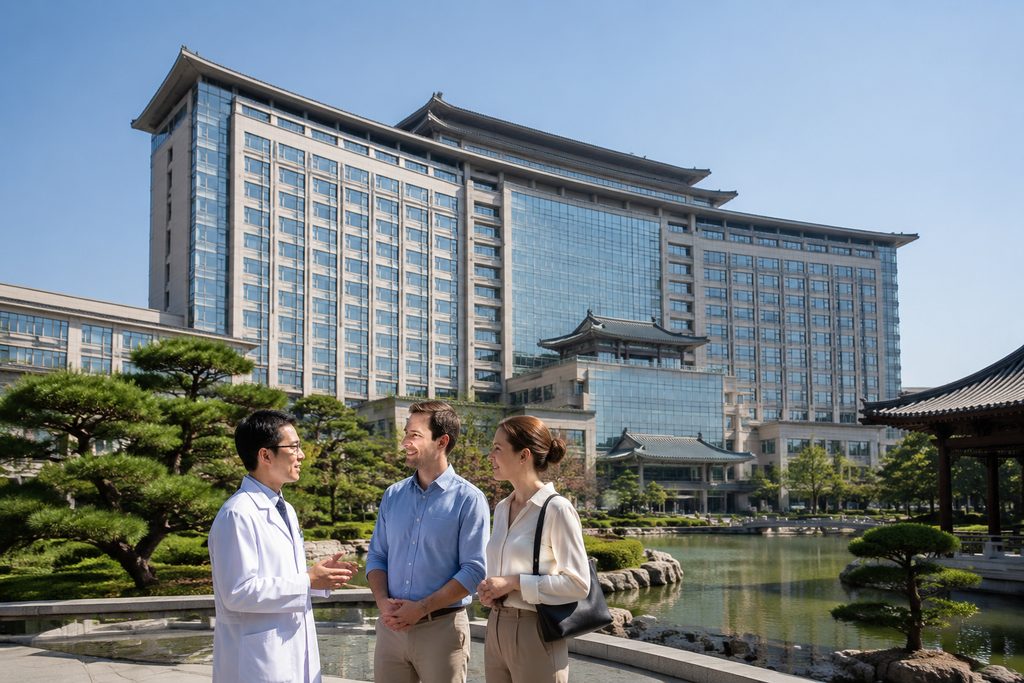
While patients in Canada wait a median 32 weeks to see a neurosurgeon for non-emergency cases, Xijing Hospital in Xi’an performs over 6,000 neurosurgical procedures annually — one of the highest volumes in Asia. That gap matters when a tumor grows or a disc compresses a nerve root. The Xijing Hospital neurosurgery price for foreigners typically runs between $18,000 and $45,000 for major cranial procedures, roughly one-fifth to one-third of comparable U.S. billed charges. But price is only part of the picture. Access, documentation, and the right entry channel determine whether this hospital actually works for your case.
Xijing Hospital Neurosurgery for International Patients: The Short Answer
Yes, Xijing Hospital treats international patients through its International Medical Center. The department performs tumor resections, aneurysm clippings, endoscopic skull-base work, and complex spinal reconstructions. But you cannot simply email the hospital and book a bed. Foreign patients enter through a specific pathway: remote evaluation of your imaging and records first, then a scheduled in-person consultation. Surgery follows only after the attending neurosurgeon reviews your case face-to-face. That is the rule, not the exception.
What makes Xijing worth considering? Volume and subspecialization. The neurosurgery department handles cases most Western centers see a handful of times per year. Skull-base meningiomas, giant pituitary adenomas, brainstem cavernomas — these are weekly work here. The faculty includes surgeons trained across China’s top programs and several with international fellowships. But the hospital is public, enormous, and Mandarin-first. Without coordination, a non-Chinese speaker will struggle from registration to discharge.
Who This Is Right For — and Who It Isn’t
Xijing neurosurgery suits a specific patient profile. You have a confirmed diagnosis from imaging. You have exhausted or been priced out of options at home. Your condition is stable enough to travel. And you are prepared for a different clinical culture — efficient but not hand-holding.
Good candidates typically include:
- Patients with skull-base tumors, pituitary lesions, or vascular malformations requiring high-volume surgical expertise
- Those facing six-month-plus wait times for non-emergency cranial surgery in Canada, the UK, or parts of Europe
- Self-funded patients comparing the Xijing Hospital neurosurgery price for foreigners against $150,000+ quotes in the U.S.
- Patients with complex spine pathology who want a second opinion before committing to surgery at home
Who should not pursue this route? Anyone with an acute, unstable neurological emergency — fly to the nearest capable center, not across the Pacific. Patients with rare genetic tumor syndromes requiring integrated multi-system care may find a Western academic center more appropriate. And if you need extended post-operative rehabilitation with daily physician oversight, the logistics of a long stay in Xi’an deserve careful thought. Be honest about what you can manage.
Is Xijing Hospital Good for Neurosurgery? The Evidence
The short answer: yes, by volume and subspecialty depth. Xijing Hospital is the teaching hospital of the Fourth Military Medical University, one of China’s oldest and most respected military medical institutions. Its neurosurgery department consistently ranks among China’s top 10 in the Fudan University specialty reputation rankings — a distinction based on peer assessment from department chairs nationwide, not marketing.
What does that mean in practice? The department fields dedicated teams for cerebrovascular surgery, neuro-oncology, functional neurosurgery, and spinal neurosurgery. A single attending may perform 200+ tumor resections per year. That repetition produces competence that smaller centers cannot match. But volume does not equal boutique care. Rounds are fast. Family communication is brief. The assumption is that you trust the process. Some international patients find this jarring; others find it refreshingly direct.
For a broader view of how Chinese hospitals compare across specialties, our department rankings by specialty page breaks down the Fudan top-10 lists for neurosurgery, oncology, and cardiac surgery. It is a useful starting point if you are weighing Xijing against other options like Huashan Hospital in Shanghai or Beijing Tiantan.
The Options, Compared
Xijing is not your only path to neurosurgery in China. The right choice depends on your diagnosis, budget, and tolerance for institutional scale. Here is how the main options stack up.
| Option | Typical Cranial Surgery Cost (Foreigner) | Strengths | Trade-offs |
|---|---|---|---|
| Xijing Hospital (Xi’an) | $18,000–$45,000 | Top-10 neurosurgery volume, skull-base expertise, lower city costs | Mandarin-first, public hospital pace, fewer Western amenities |
| Beijing Tiantan Hospital | $25,000–$55,000 | Largest neurosurgery center globally, unmatched tumor volume | Even busier, Beijing costs higher, international pathway competitive |
| Huashan Hospital (Shanghai) | $25,000–$50,000 | Elite neurosurgery, strong international office, Shanghai convenience | Premium pricing, high demand for top attendings |
| Private International Hospital (e.g., United Family) | $60,000–$120,000 | English-speaking, insurance direct billing, Western workflow | Lower neurosurgery case volume, fewer subspecialists on-site |
| U.S. Academic Center (reference) | $150,000–$400,000 | Integrated care, familiar system, no travel logistics | Cost, wait times, insurance hurdles |
If your priority is the lowest credible price for high-volume surgical expertise, Xijing is hard to beat. If you want seamless English communication and will pay for it, a private international hospital in Beijing or Shanghai makes more sense. Tiantan and Huashan sit between those poles — elite public institutions with stronger international infrastructure than Xijing, at a higher cost.
How Much Does Brain Surgery Cost in China? Breaking Down the Numbers
The headline figure — $18,000 to $45,000 at Xijing — covers the hospital’s surgical and inpatient charges for major cranial procedures: tumor resection, aneurysm clipping, microvascular decompression. That includes operating room time, surgeon and anesthesiologist fees, standard ICU days, ward bed, routine medications, and basic post-operative imaging. It does not include premium room upgrades, extended ICU stays beyond the standard protocol, imported hardware like specialized aneurysm clips or neuro-navigation consumables, or any complication management.
Spinal neurosurgery runs lower, typically $12,000 to $28,000 depending on levels fused and instrumentation. Functional procedures like DBS for Parkinson’s disease fall in the $30,000 to $50,000 range, driven largely by hardware costs. Endoscopic transsphenoidal pituitary surgery usually lands between $15,000 and $25,000.
What drives variance? Tumor location and complexity. A convexity meningioma costs far less than a petroclival lesion requiring extended skull-base approaches and longer ICU time. Your choice of attending also matters — senior professors command higher surgical fees through the international channel. And complications, while uncommon in experienced hands, are the single biggest cost multiplier anywhere in the world.
For comparison, the same procedures in the U.S. bill at $80,000 to $300,000 before insurance negotiation. Even with travel, accommodation, and coordination fees, most international patients at Xijing spend less than 30% of the U.S. sticker price. That is the core economic argument for neurosurgery medical tourism package China options.
Book Neurosurgery at Xijing Hospital: The Actual Process
You cannot call the hospital switchboard and reach a neurosurgeon. The realistic path involves these steps:
Step 1: Remote evaluation. Send your complete records — MRI/CT DICOM files, radiology reports, pathology if applicable, current medication list, and a summary of prior treatments. The neurosurgery team reviews these and issues a written opinion on feasibility and approach. This costs $300–$500 for a written second opinion, or $500–$800 for a video consultation with a senior specialist.
Step 2: In-person consultation. If the remote review confirms surgical candidacy, you travel to Xi’an for a face-to-face consultation. The attending examines you, reviews imaging in person, and finalizes the surgical plan. This is mandatory. No reputable Chinese public hospital schedules surgery without it.
Step 3: Pre-operative workup. Blood work, ECG, chest X-ray, and any specialty clearance happen over 2–4 days. For international patients, this runs through the International Medical Center’s fast-track pathway, which reduces waiting compared to the standard public queue.
Step 4: Surgery and recovery. Typical length of stay for a cranial tumor resection is 10–18 days total, including 1–3 ICU days. Spinal cases run 7–14 days.
Step 5: Follow-up. You return home with discharge records in English (arranged through the international office) and a scheduled remote follow-up. Imaging can be done locally and sent back for review.
Practical Considerations: Records, Payment, and the Language Barrier
Xijing Hospital operates on a pre-payment model. You deposit an estimated amount before admission and settle any difference at discharge. Payment is typically by international credit card, bank transfer, or cash — but confirm accepted methods before arrival. Most international patients do not have Chinese health insurance, so this is self-pay unless you hold a policy with overseas treatment coverage. Insurance reimbursement is your responsibility after the fact.
Language is the single biggest friction point. The International Medical Center has English-speaking coordinators, but ward nurses, radiology technicians, and most junior doctors work in Mandarin. A bilingual companion who can translate during rounds, clarify medication instructions, and handle registration logistics changes the experience materially. This is not a luxury; it is the difference between informed consent and trusting the process blindly.
Records matter enormously. Bring every image on CD or USB, not just printed reports. Chinese neurosurgeons want to manipulate the DICOM files themselves. A written summary of your history — dates, prior surgeries, allergies, current medications — saves the first consultation from being a translation exercise.
After you return home, follow-up imaging is typically done locally and sent back for review. Sutures or staples can be removed by any competent local provider. The hospital’s international office can arrange a summary letter in English for your home physician. This is standard practice, not a favor.
If you are still deciding whether China is the right destination, our overview of China’s top-ranked hospitals by city provides context on how Xijing compares to institutions in Beijing, Shanghai, and Guangzhou. And for those weighing public versus private options, the private international hospital guide explains the trade-offs in plain terms.
Frequently Asked Questions
Not for surgery. You can initiate contact through the International Medical Center, but the process requires remote record review, then an in-person consultation, then scheduling. No legitimate Chinese public hospital will confirm a surgical date without the attending having seen you face-to-face. Anyone promising otherwise is not representing the hospital accurately.
The $18,000–$45,000 range covers hospital charges for the surgery itself: operating room, surgeon and anesthesia fees, standard ICU days, ward bed, routine medications, and basic post-operative imaging. It excludes travel, accommodation, visa fees, coordination services, premium room upgrades, imported consumables, and any extended ICU stay beyond protocol. Ask for an itemized estimate in writing before committing.
For surgical volume and technical experience in complex cranial cases, yes — it ranks among China’s top 10 neurosurgery departments and handles case volumes most Western centers never see. For integrated, patient-centered care with extended rehabilitation and psychosocial support, a Western academic center is generally stronger. The right answer depends on what your specific case needs most.
Xijing has full ICU, interventional radiology, and emergency re-operation capability on-site. Complication management is clinically competent. But the experience differs from Western norms: communication during a crisis is more direct and less frequent, and family involvement in decision-making is more limited. You should have a local advocate who can translate and press for information. Post-discharge complications after returning home are managed by your local providers, with remote consultation from Xijing if needed.
Your Next Step
Xijing Hospital offers genuinely world-class neurosurgery at a price that makes financial sense for many self-funded international patients. The challenge is not the medicine — it is the pathway. Records, visas, registration, language, and follow-up all require coordination that the hospital itself is not designed to provide for every foreign patient.
We are China Medical Services, a coordination team that helps international patients navigate Chinese hospitals. We are not a hospital, we do not diagnose or treat, and we do not promise outcomes. What we do is handle the logistics: remote record review with the right department, appointment coordination, bilingual companion support on the ground, and visa documentation guidance. If you are considering Xijing for your case, start with a free consultation to discuss whether this path fits your diagnosis and situation. No pressure, no obligation — just a clearer picture of what is possible.
For more medical information and treatment options in China, visit chinamedservices.com (China Medical Services).
