Anesthesia Safety in Chinese Hospitals: What International Patients Must Know
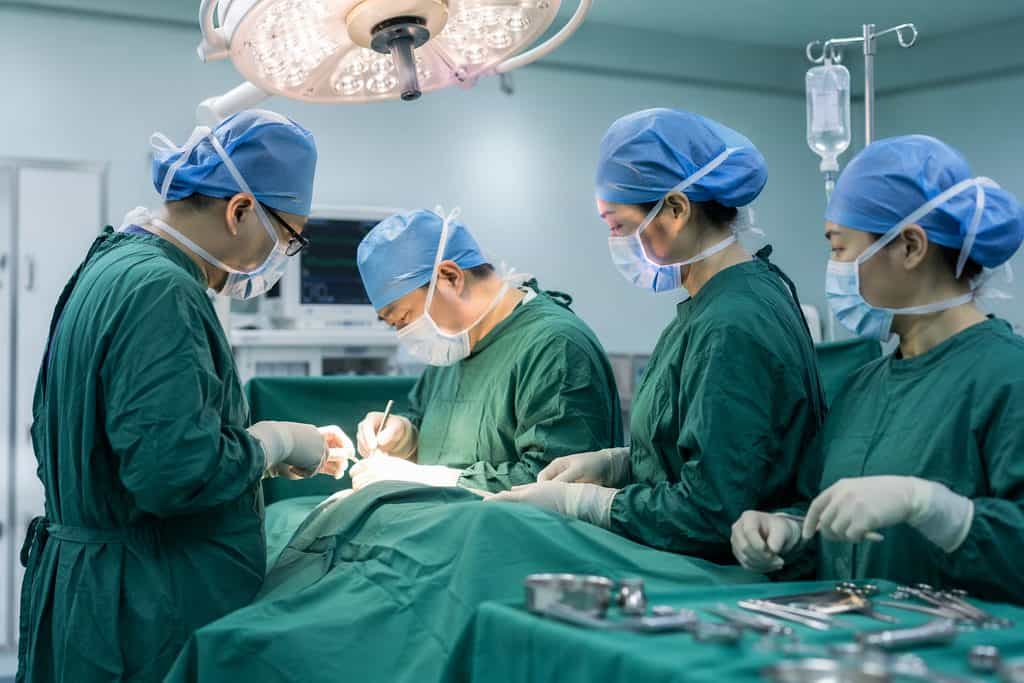
Could you trust a surgical team you’ve never met, in a country where you don’t speak the language, to keep you safely unconscious and then wake you up again? That question sits at the heart of every international patient’s anxiety. The machines beep the same. The drugs follow the same pharmacological pathways. But the systems, the training, the oversight—those feel like unknowns. We’ve spent years bridging that gap for patients traveling to China, and the reality is more nuanced than most assume. Here is what the data actually says, how the protocols compare, and where the friction points still exist.
How This Actually Works, Step by Step
Walking into a Chinese operating theater as a foreigner starts long before you ever board a plane. The process is not mysterious, but it is sequential, and skipping steps creates the kind of confusion that fuels fear.
You begin with records. Not just the surgical referral, but every relevant scan, lab report, and physician’s note from your home country. Our team translates these into clinical Chinese—not a Google Translate job, but a medical translator who understands both terminology and the specific format Chinese anesthesiologists expect. That pre-anesthesia evaluation form you filled out at your local hospital? Its equivalent here is the “麻醉术前访视单” (pre-anesthesia visit sheet), and it asks for the same details: allergies, airway assessment, cardiac history, previous reactions to anesthesia.
Once the records are prepared, they go to the anesthesiology department of your target hospital. This happens through the hospital’s international patient center or VIP channel. A senior anesthesiologist reviews them. You are not booking a surgery yet. You are getting a written assessment of your anesthetic risk, a recommended protocol, and—critically—a determination of whether the hospital will accept your case at all. Some conditions, particularly unstable cardiac disease or difficult airway predictions, may trigger a request for additional testing or a video consultation before any commitment is made.
If the assessment is favorable, the surgical and anesthesia teams coordinate a date. You apply for your S2 visa using the hospital’s invitation letter and treatment plan as supporting documents. You fly in. You undergo a fresh set of pre-operative tests at the hospital itself—no reputable Chinese anesthesiologist will rely solely on foreign labs that are more than a few weeks old. You meet the anesthesiologist in person. They walk you through the plan. You sign the consent. Then, and only then, do you go under.
That is the real sequence. It takes weeks, not days. Anyone promising otherwise is cutting corners you do not want cut.
Anesthesia Safety Standards China Hospital Cost: Where the Protocols Converge and Diverge
The international patient asking about anesthesia safety standards China hospital cost is really asking two things: “Will I be safe?” and “What am I paying for?” The two are linked. In China’s top-tier hospitals, the safety protocols are built on a foundation that will feel familiar to anyone from a Western system—pulse oximetry, capnography, continuous ECG, invasive blood pressure monitoring for major cases, and temperature management. These are not optional. They are mandated by the Chinese Society of Anesthesiology (CSA) for any hospital accredited at the tertiary level.
Where things differ is in the human layer. Chinese anesthesiologists in major centers handle volumes that would stagger a Western colleague. A single anesthesiologist at a hospital like Fuwai or Zhongshan might supervise three or four operating rooms simultaneously, with nurse anesthetists managing the direct patient monitoring. This is not a sign of laxity. It is a staffing model born of necessity in a country performing over 40 million surgeries annually. The lead anesthesiologist is present for induction, emergence, and any critical event. The nurse anesthetist—often with a decade or more of dedicated experience—stays with the patient continuously.
Does this model produce worse outcomes? The data says no, at least not in the centers international patients actually use. A 2022 study published in The Lancet Regional Health – Western Pacific analyzed perioperative mortality across 112 Chinese tertiary hospitals and found an overall in-hospital mortality rate of 0.26% within 30 days of surgery. That figure aligns closely with European benchmarks. In the top 5% of hospitals—the ones in our database—the rate drops further. The gap is not between China and the West broadly. It is between China’s elite centers and its average ones. That is why hospital selection matters enormously.
Cost, then, is not buying safety in the sense of basic monitoring. It is buying access to the anesthesia team that handles 14,000 cardiac surgeries a year and has seen every rare complication twice. General anesthesia for a major procedure at a top public hospital’s international wing typically runs from $800 to $2,500 as a component of the overall surgical package. At a private international hospital like United Family or Jiahui, the anesthesia fee alone may reach $3,000 to $5,000. The difference reflects the staffing ratio—private hospitals more often assign a dedicated anesthesiologist to a single patient for the entire case—and the overhead of JCI-accredited facilities. Neither model is inherently safer. They reflect different philosophies of resource allocation.
A Realistic Timeline
Patients routinely underestimate how long the pre-anesthesia pipeline takes. Here is what a real-world schedule looks like for a planned surgery requiring general anesthesia at a top Chinese hospital.
| Stage | What Happens | Typical Duration |
|---|---|---|
| Days 1–3 | Patient submits complete medical records, imaging, and current medications list to our coordination team. | 2–3 days for collection |
| Days 4–7 | Clinical translation and formatting for Chinese anesthesiology review. Urgent cases can be expedited. | 3–4 working days |
| Days 8–14 | Records submitted to target hospital’s international department. Anesthesiology department reviews and issues a preliminary risk assessment and protocol recommendation. | 5–7 working days |
| Days 15–21 | If accepted, hospital issues formal treatment invitation letter. Patient applies for S2 visa at local Chinese embassy or consulate. | 5–7 working days for visa processing |
| Days 22–28 | Patient arrives in China. In-person pre-anesthesia consultation, fresh labs, ECG, and any required imaging. | 1–2 days at hospital |
| Days 29–35 | Surgery scheduled. Anesthesia consent signed. Procedure performed. | Typically within 5–7 days of in-person clearance |
This timeline assumes no complications in the pre-anesthesia review. A flagged cardiac history or an anticipated difficult airway can add two to three weeks for additional testing or specialist consultation. The S2 visa timeline also varies by country. Some embassies process in three days. Others take two weeks. Build in buffer.
What Can Go Wrong — and What Happens Then
Let’s be blunt about the failure modes, because trust is not built on promises that everything will be fine.
The pre-anesthesia review rejects your case. This happens. A Chinese anesthesiologist reviewing your records may determine that your comorbidities present an unacceptable risk, or that the hospital lacks a specific piece of equipment needed for your airway management. The recourse depends on the reason. If it is a resource gap, we redirect to a larger center—a hospital like Peking Union Medical College Hospital, which handles complex multi-system cases that smaller tertiary centers decline. If the risk is deemed too high for elective surgery in any Chinese facility, the anesthesiologist will state that in writing. That is not a failure of the system. It is the system working.
Your in-person evaluation reveals something the records missed. Old labs, unreported symptoms, a change in medication since you submitted your files. The anesthesiologist may delay surgery. They may order a cardiac stress test or a pulmonary function study. Your timeline extends. This is frustrating. It is also exactly what a competent anesthesiologist should do.
An intraoperative event occurs. Anaphylaxis. Malignant hyperthermia. An unexpected difficult airway. Chinese tertiary hospitals stock dantrolene for malignant hyperthermia—a question worth asking explicitly, as not all hospitals worldwide do. Major centers have difficult airway carts with video laryngoscopes and supraglottic airway devices that mirror Western equipment. The response protocols are internationally standardized. The variable is not the equipment but the experience of the team executing the protocol. In a high-volume cardiac center, the anesthesiologist has likely managed more intraoperative crises in a year than a general anesthesiologist in a low-volume Western hospital sees in a career. Volume is not a guarantee. But it is a meaningful proxy for competence.
Post-operative confusion or awareness. True intraoperative awareness under general anesthesia is rare everywhere—the incidence in Chinese studies hovers around 0.1% to 0.2%, consistent with global figures. Post-operative cognitive dysfunction in elderly patients is a real risk, and Chinese anesthesiologists are increasingly using regional techniques and lighter sedation protocols to reduce it, particularly in orthopedics. If it occurs, the recovery unit manages it supportively. There is no magic reversal. The anesthesiologist will typically follow up on post-op day one to assess cognitive status.
Is General Anesthesia Safe in Chinese Hospitals? Evaluating Your Options Honestly
The direct question—is general anesthesia safe in Chinese hospitals—deserves a direct answer. In hospitals ranked in the Fudan Top 100 or holding JCI accreditation, the safety profile is comparable to that of major Western centers. The monitoring standards, drug formularies, and emergency protocols are not meaningfully different. The anesthesiologists are board-certified through a residency and examination system that, since the 2010s, has standardized training across the country. Many have completed fellowships in the United States, Germany, or Japan.
But “safe” is not a binary. It is a gradient that depends on three things international patients can and should investigate: the specific hospital’s annual surgical volume in your procedure, the anesthesiology department’s experience with foreign patients, and the availability of English-speaking staff in the operating and recovery rooms.
A hospital that does 50 Whipple procedures a year is not the same anesthetic proposition as one that does 500. The anesthesiologists in the high-volume center have seen the bleeding complications, the hemodynamic swings, the prolonged recoveries. They have refined their protocols accordingly. This is why we direct patients toward centers with documented case volumes in their specific procedure. It is not about prestige. It is about pattern recognition.
Language in the OR is a legitimate concern. In top public hospital international wings and private hospitals like those in our private hospital network, the anesthesiologist and circulating nurse often speak functional medical English. In a standard public ward, they likely do not. The pre-anesthesia consent discussion, the commands during induction (“breathe deeply, count backward”), the reassurance upon emergence—all of these happen in Mandarin unless you have arranged otherwise. Our bilingual companions are present through induction and recovery specifically to bridge this gap. It is not a luxury. It is a safety measure.
As for the question of what type of anesthesia is used in China hospitals, the answer is the same as anywhere: general, regional, neuraxial, and monitored anesthesia care. Propofol, sevoflurane, rocuronium, fentanyl—the pharmacopeia is identical. Chinese anesthesiologists are notably aggressive with multimodal analgesia, combining regional blocks with systemic medications to reduce opioid consumption, a practice that aligns with enhanced recovery protocols worldwide. For orthopedic surgery, neuraxial anesthesia with sedation is common and often preferred for elderly patients. The choice is made case by case, not by national habit.
Practical Considerations: Records, Visa, and the Hidden Costs
The practical layer is where anxiety about anesthesia safety bleeds into anxiety about logistics. Addressing both is necessary.
Records. Chinese anesthesiologists want the same pre-operative data as any anesthesiologist: a recent history and physical, medication list, allergy profile, ECG, chest X-ray, and any relevant cardiac or pulmonary studies. If you have had a previous adverse reaction to anesthesia, bring the records from that event. The more documentation, the better. If you have sleep apnea, bring your CPAP machine. If you have a known difficult airway, bring the letter from your previous anesthesiologist describing how it was managed. These details directly shape your anesthetic plan.
Visa. The S2 visa is the correct category for short-term medical treatment. Your hospital’s international department will issue an invitation letter specifying the purpose and duration of your stay. This is not a guarantee of visa approval—embassies make independent decisions—but it is the required supporting document. Family members accompanying you also apply for S2 visas. Do not, under any circumstances, attempt to enter on a tourist visa for planned surgery. The visa category mismatch can cause problems with hospital admission and, in the worst case, with immigration authorities.
Payment. Public hospital international wings require pre-payment of estimated costs, including the anesthesia component. The hospital provides a detailed receipt for insurance reimbursement. Private international hospitals often bill insurance directly. The anesthesia safety standards China hospital cost question is partly answered by the payment model: higher-cost private hospitals offer dedicated anesthesia staffing and English fluency as part of the premium. Lower-cost public international wings offer world-class technical safety with less hand-holding. Neither is the wrong choice. They serve different patient priorities.
Follow-up at home. Your Chinese anesthesiologist will provide a discharge summary including the anesthetic agents used, any intraoperative events, and post-operative instructions. Bring this to your primary care physician and any future anesthesiologist. It completes the record and ensures continuity.
Frequently Asked Questions
The anesthesia complications rate China vs USA comparison yields a nuanced answer. In China’s top 5% of hospitals, perioperative mortality and major anesthetic complication rates are statistically indistinguishable from American benchmarks—roughly 0.2–0.3% 30-day mortality for major surgery. The gap widens dramatically when you include lower-tier Chinese hospitals, which is why international patients should restrict their search to Fudan-ranked or JCI-accredited institutions. The US has tighter minimum standards across all facilities. China has higher variance with elite peaks that match or exceed Western averages. Choose accordingly.
Yes. Through the hospital’s international department, you can arrange a video consultation with a senior anesthesiologist. This typically costs between $300 and $500 for a written second opinion or $500 to $800 for a live video discussion. The anesthesiologist will review your records, ask clarifying questions, and provide a preliminary risk assessment. This is not a binding guarantee of safety, but it gives you a direct line to the person who will manage your case. It also lets you assess their communication style and English proficiency before committing to travel.
Beijing hosts 21 of the Fudan Top 100 hospitals, and several have anesthesiology departments with international reputations. Top anesthesia safety accredited hospitals Beijing include Peking Union Medical College Hospital, which handles complex multi-system cases referred from across the country; Fuwai Hospital, whose cardiac anesthesiologists manage over 14,000 cases annually; and Beijing Tiantan Hospital, a neurosurgery center where anesthesia for awake craniotomies is routine. Each has an international patient center. Each has English-speaking coordination staff. The right choice depends on your procedure, not on a generic ranking. For a deeper look at hospital options, our top hospitals directory breaks down capabilities by specialty and city.
The phrase book surgery China safe anesthesia protocol reflects a common desire for a packaged, guaranteed process. The reality is that you cannot book surgery remotely in a Chinese public hospital. You can, however, secure a pre-acceptance and a preliminary anesthesia plan. The steps: submit complete records for review, participate in a video consultation with the anesthesiology team, receive a written protocol recommendation, and travel for in-person clearance. The protocol itself will be determined by the anesthesiologist based on your specific physiology and the surgical requirements—not by a menu of options you select. The safety comes from the thoroughness of the pre-operative evaluation, not from a branded “protocol” you can order online.
What happens if I have a bad reaction to anesthesia in a Chinese hospital?
Chinese tertiary hospitals follow international emergency response algorithms for anesthetic crises. Anaphylaxis is managed with epinephrine, fluids, and airway support. Malignant hyperthermia is treated with dantrolene, which is stocked in major centers. Cardiac events trigger
For more medical information and treatment options in China, visit chinamedservices.com (China Medical Services).
