Anesthesiology Care in Guangzhou: A Practical Guide for International Patients
Key Takeaways
- Guangzhou is home to ten hospitals in the Fudan Top 100 ranking, the third-largest concentration in China, and several of them run international departments with English-speaking anesthesia teams.
- Anesthesia in China is delivered by specialist anesthesiologists working inside hospital departments — you do not book a standalone “anesthesia clinic” the way you might book a dentist; the anesthesiologist is assigned through the surgical team.
- Public hospital outpatient registration generally cannot be reserved from overseas in advance, and surgery is scheduled only after an in-person consultation — a structural reality that surprises many first-time patients.
- Before committing to travel, understand what a pre-anesthetic evaluation involves, what records to send ahead, and which questions to ask about monitoring standards and post-operative pain management.
If you are searching for where to receive anesthesiology care in Guangzhou, the short answer is this: anesthesia is not a standalone service you shop for independently. It is provided by the anesthesiology department of the hospital where your surgery takes place, and the practical question is therefore which hospital — and which surgical team — will manage your case. Understanding anesthesiology cost Guangzhou China involves, and how the department fits into the wider hospital system, helps you plan realistically.
Guangzhou sits third among Chinese cities for concentration of top-ranked hospitals, behind Beijing and Shanghai. Ten Guangzhou hospitals appear in the Fudan Top 100 ranking, a list that grades hospitals in tiers from A++++ to A rather than assigning individual national positions. For an international patient, that density matters: it means multiple large institutions with dedicated international departments, English-capable staff, and the case volume that comes with treating serious surgical conditions at scale.
The Problem: Anesthesia Is the Part Patients Understand Least
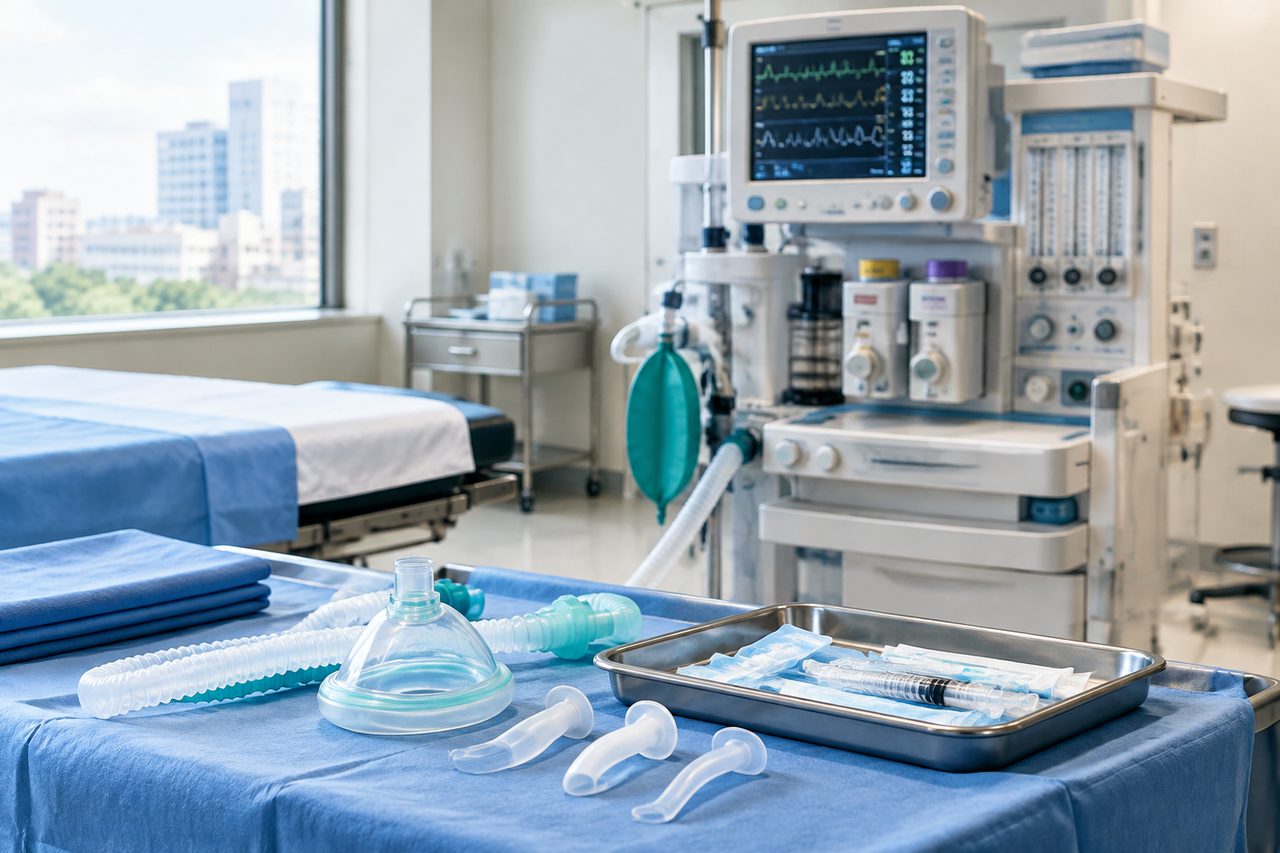
Top-tier Chinese hospitals invest heavily in operating theatre infrastructure. Expect standard monitoring — electrocardiography, pulse oximetry, capnography, invasive arterial pressure where indicated, and depth-of-anesthesia monitoring in many centers. Ultrasound-guided regional anesthesia, which improves nerve blocks and reduces opioid requirements, is widely used in major centers. The equipment itself is rarely the differentiator; the question worth asking is how the department organizes its pre-operative assessment and post-anesthesia care unit.
Anesthesia fees in China are set within hospital pricing schedules and are typically a modest fraction of total surgical cost. The reason is structural: anesthesiologist salaries, operating theatre overhead, and drug pricing in China are far below US or Western European levels. This is the same labor economics that makes cardiac bypass surgery at a top Chinese public hospital cost roughly $12,000–20,000, against $120,000 or more in the United States. Lower cost here reflects the health system’s economics, not a reduced standard of monitoring.
How Anesthesiology Is Organized in Guangzhou Hospitals
Understanding the workflow removes most of the confusion. In a Guangzhou tertiary hospital, the path typically runs as follows.
Step one: surgical consultation. You see the surgeon first. The surgical plan — procedure type, estimated duration, approach — is decided. Anesthesia cannot be arranged before this, because the anesthetic technique depends on the operation.
Step two: pre-anesthetic evaluation. Once surgery is scheduled, an anesthesiologist reviews your history, medication list, allergies, and test results. This may happen at an outpatient visit or after admission. For international patients in an international department, this assessment can often be arranged with English interpretation support.
Step three: the anesthetic plan. General, regional, or combined techniques are selected based on the procedure and your comorbidities. Patients with cardiac, respiratory, or renal conditions may need additional cardiology or internal medicine input before clearance.
Step four: intraoperative management and recovery. The anesthesiologist manages sedation, airway, fluids, and pain control during surgery, then oversees emergence and transfer to a post-anesthesia care unit. Post-operative pain management — patient-controlled analgesia, regional blocks, or oral regimens — is typically coordinated by the same department.
Practical tip: Ask early whether the hospital’s international department can arrange a pre-anesthetic consultation with interpretation before you travel. This converts an uncertain step into a planned one.
Comparing Your Options: Public, International, and Private
Guangzhou offers three broad routes, and they differ in booking mechanics, language support, and price. The table below summarizes the practical distinctions. Figures are indicative ranges and vary by hospital and case complexity; they are not quotes.
| Route | Booking and Access | Language Support | Indicative Cost Context |
|---|---|---|---|
| Public tertiary hospital, standard channel | Outpatient registration generally same-day; surgery only after in-person consultation | Limited English; interpretation usually needed | Lowest fees; anesthesia billed within hospital schedule |
| Public hospital international / VIP department | Appointments can often be coordinated in advance; senior specialists; English service | English-speaking coordinators and interpreters | Roughly 1.5–2 times standard channel pricing |
| Private international hospital | Direct booking; JCI-accredited facilities available in the city | English-speaking staff throughout | Highest; direct insurance billing often possible |
For patients weighing a Guangzhou international hospital anesthesiology department against a private facility, the trade-off is usually access versus cost. International departments inside large public hospitals combine senior specialist expertise with English support at a fraction of private hospital pricing, but appointment coordination is more involved. Private hospitals offer smoother logistics and insurance direct-billing, at a higher price point.
How to Evaluate Anesthesia Safety and Book a Consultation
The question “is anesthesia safe in Chinese hospitals” deserves a direct answer: at top-tier institutions, anesthesia safety standards are comparable to international norms, and major centers follow recognized monitoring and airway management protocols. Safety is not uniform across all 35,000-plus hospitals in China, however, which is precisely why hospital selection matters. The relevant variable is the institution and its department, not the country as a whole.
When evaluating a hospital, ask these concrete questions:
- Does the hospital have a dedicated anesthesiology department with subspecialty coverage for your procedure?
- What monitoring is standard during your type of operation, and is post-anesthesia care unit recovery routine?
- Who manages post-operative pain, and what options are available?
- Is interpretation available for the pre-anesthetic assessment and for the consent discussion?
- How are pre-existing conditions — cardiac, respiratory, diabetes — cleared before surgery?
On booking: a standalone “anesthesiology consultation” is rarely bookable directly from overseas. What can be arranged is a surgical consultation that leads to anesthesia planning, or a remote written review of your records by the relevant specialty. For international patients, the practical route is to send existing examination reports for a written second opinion or video consultation first, clarify the surgical plan and anesthesia implications, and only then commit to travel. This staged approach avoids flying to Guangzhou for a consultation that could have happened remotely.
If you want to identify English-speaking anesthesiologist Guangzhou options, the realistic path is through the hospital’s international department rather than a direct booking. Our team at China Medical Services maintains a database of 340+ top-ranked hospitals across 37 cities, including Guangzhou’s leading institutions, and can help you understand which departments offer English-supported anesthesia planning. You can also review the Guangzhou city page for hospital listings and the specialty rankings for procedure-specific top hospitals.
Practical Considerations for International Patients
Records. Bring or send your full medical history, medication list, allergy record, recent blood work, ECG, echocardiogram if relevant, and any prior anesthesia records. These directly shape the anesthetic plan.
Visa. Medical travel to China uses the S2 visa, annotated for medical treatment purposes; stays exceeding 180 days use S1. Accompanying family members apply under S2 as well. The M visa is for commercial and trade activities and is not the correct category for medical treatment. Requirements are subject to the latest embassy or consulate guidance, and approval is never guaranteed.
Payment. Public hospitals generally require prepayment, with insurance reimbursement handled afterward by the patient. Private international hospitals more often offer direct billing with international insurers. Confirm the payment mechanism before admission.
Language. Consent discussions for anesthesia are detailed and consequential. If you do not speak Mandarin, plan for professional interpretation during the pre-anesthetic assessment and consent process, not only during ward rounds.
Follow-up. Ask how post-operative questions will be handled after you return home, and request a discharge summary and anesthesia record in English for your home physician.
Caution: No hospital or coordinator can guarantee a specific anesthesiologist, a specific surgical date, or a clinical outcome. Any provider that promises these should be treated with skepticism.
Frequently Asked Questions
Can I book an anesthesiology consultation in Guangzhou directly from overseas?
Generally no — anesthesia is arranged as part of a surgical plan, not booked independently. What you can arrange remotely is a surgical consultation or a written review of your records, after which anesthesia planning follows. International departments are the most practical entry point for English-supported coordination.
Is anesthesia safe in Chinese hospitals?
At top-tier hospitals in Guangzhou, anesthesia safety standards and monitoring protocols are comparable to international norms. Safety varies by institution, however, so the meaningful question is which hospital and department will manage your case — not whether “Chinese hospitals” as a category are safe.
What does anesthesiology cost in Guangzhou?
Anesthesia fees are billed within the hospital’s surgical pricing schedule and are typically a modest share of total surgical cost, reflecting China’s lower labor and overhead economics. Exact figures vary by hospital, procedure, and anesthetic technique, so a written estimate should be requested from the specific hospital rather than assumed.
Will an English-speaking anesthesiologist be available?
International departments and JCI-accredited private hospitals in Guangzhou commonly provide English-speaking staff and interpretation. In standard public channels, English support is limited and professional interpretation should be arranged for the pre-anesthetic assessment and consent discussion.
Your Next Step
The core message is straightforward: in Guangzhou, anesthesia care is delivered through the hospital’s anesthesiology department as part of a surgical plan, and the quality of that care depends on the institution you choose. Start by clarifying the surgical question, then the anesthesia implications follow.
China Medical Services is a coordination service, not a hospital, and we do not provide diagnoses or clinical advice. We help international patients review records, arrange written second opinions or video consultations, and coordinate hospital appointments and bilingual support. If you would like to understand your options before making any commitment, you can request a free consultation — no pressure, and no obligation to travel.
This article is for general information only and does not constitute medical advice. Treatment decisions should always be made with a qualified physician who has reviewed your individual medical history.
For more medical information and treatment options in China, visit chinamedservices.com (China Medical Services).
