Anhui Provincial Hospital Respiratory Medicine: A Guide for International Patients
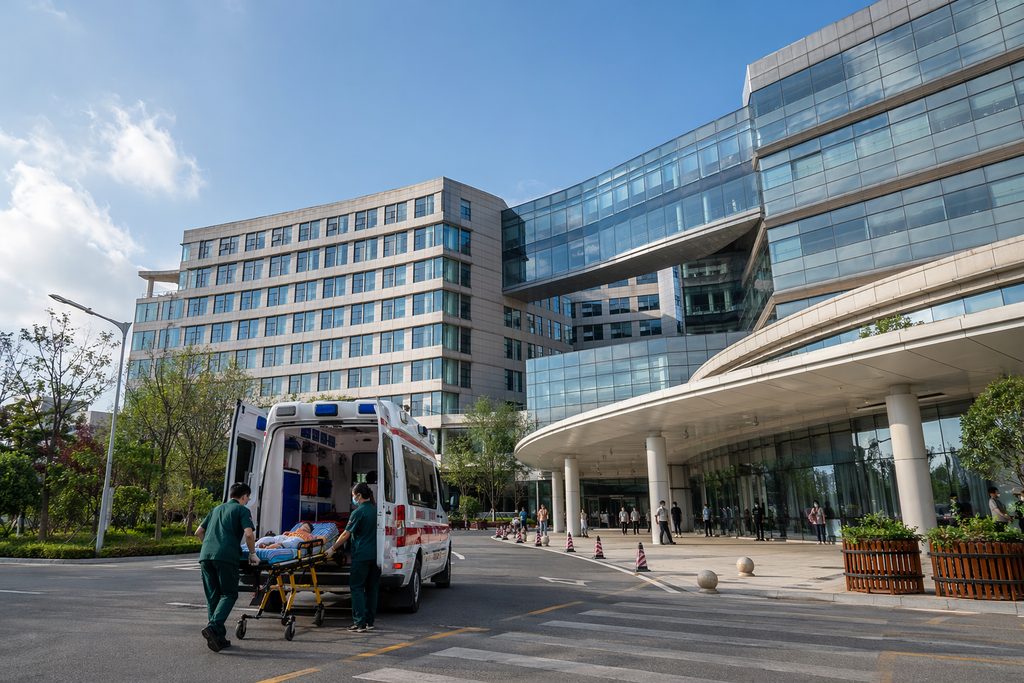
Anhui Provincial Hospital Respiratory Medicine: A Guide for International Patients
Have you been quoted a staggering price for lung disease treatment back home? Or perhaps you are staring at a six-month waitlist just to see a pulmonologist. For many patients, the search for affordable, timely respiratory care leads to an unexpected destination: Hefei, China. Understanding the Anhui Provincial Hospital respiratory treatment cost is often the first step in deciding whether this path makes sense for you.
We have helped patients from over 20 countries navigate the Chinese healthcare system. What we have learned is that the anxiety around cost and logistics often overshadows the clinical reality. Anhui Provincial Hospital is not a household name in the West. But it is one of the largest and most established medical centers in eastern China, with a respiratory medicine department that handles a patient volume most Western pulmonologists would find staggering.
Before you book a flight, you need clear facts. This guide breaks down what international patients can expect from the respiratory medicine department at Anhui Provincial Hospital—the costs, the safety considerations, the appointment process, and the honest trade-offs of seeking lung care in a Chinese public hospital.
Key Takeaways
- Respiratory treatment at Anhui Provincial Hospital typically costs 60–80% less than comparable care in the US or UK, with most diagnostic workups ranging from $300 to $800.
- The hospital is a Grade A tertiary center (the highest classification in China) with a respiratory department that sees over 100,000 outpatient visits annually.
- Public hospital registration is walk-in only for standard outpatient clinics—you cannot pre-book a routine appointment from overseas without using the international or VIP channel.
- Language is the single biggest barrier. You will need a bilingual companion or hospital international coordinator unless you speak Mandarin.
The Problem: Lung Disease Care Is Expensive and Slow in the West
Chronic respiratory diseases affect approximately 1 in 8 people globally. In the United States, a single diagnostic bronchoscopy can cost between $3,000 and $6,000 without insurance. In the United Kingdom, NHS wait times for a first respiratory specialist appointment exceeded 18 weeks in many regions during 2023. For patients with chronic cough, suspected interstitial lung disease, or unresolved pulmonary nodules, that delay is not an inconvenience—it is a clinical risk.
Private care offers faster access but at a price that puts it out of reach for many. A full pulmonary function workup plus high-resolution CT scan in a private London clinic can easily exceed £2,500. In New York, the same package runs $4,000 or more.
And here is the harder truth: even when you pay, you may not get more thorough care. Volume matters in medicine. A pulmonologist who sees 20 complex cases a day develops pattern recognition that a specialist seeing five cases a day simply cannot match.
Why Anhui Provincial Hospital Delivers Results
Clinical Volume Builds Diagnostic Muscle
Anhui Provincial Hospital sits in Hefei, the capital of Anhui province, serving a regional population of over 60 million people. The respiratory medicine department operates as a high-throughput clinical machine. Doctors here see 80 to 120 patients per day during peak outpatient hours. That is not a typo.
What does this mean for you? It means the pulmonologist reading your CT scan has likely seen your exact presentation hundreds of times. Interstitial lung disease patterns, complex pneumonia, COPD with comorbidities—these are daily bread-and-butter cases, not rare referrals.
The department runs subspecialty clinics covering lung cancer screening, asthma management, sleep-disordered breathing, and pulmonary rehabilitation. For a foreign patient, this depth of specialization is accessible at a fraction of Western private-clinic prices.
Technology Without the Premium Pricing
Chinese public hospitals have invested heavily in imaging and diagnostic equipment over the past decade. Anhui Provincial Hospital operates multiple 64-slice and 256-slice CT scanners, high-resolution MRI, and full pulmonary function testing labs. Bronchoscopy suites are equipped for both diagnostic and interventional procedures, including endobronchial ultrasound (EBUS) for lymph node sampling.
The operational model is different from Western hospitals. You do not wait weeks for a CT slot. In most cases, imaging is completed the same day or the next day after your doctor orders it. Results are often available within hours, not days.
This speed comes from the hospital’s design: it is built for volume and throughput. That does not mean rushed care. It means fewer administrative bottlenecks between you and your diagnosis.
Cost Advantage Without Quality Compromise
Let’s address the elephant in the room. The Anhui Provincial Hospital respiratory treatment cost is low by Western standards. Why? Not because the equipment is inferior or the doctors are less trained. It is because of structural economics.
Physician salaries in China are a fraction of what US specialists earn. Malpractice insurance costs are dramatically lower. Hospital infrastructure was built with state funding, not financed through patient billing. The result is that a comprehensive respiratory workup—consultation, chest CT, pulmonary function tests, and blood work—typically runs $300 to $800 at Anhui Provincial Hospital.
Compare that to $2,000–$4,000 for the same package in the US or UK. The savings are real. And the clinicians treating you are often graduates of top Chinese medical schools with international training exposure.
Is Respiratory Care Safe in Hefei China?
Safety is the question every rational patient asks before traveling abroad for medical care. Let’s answer it without sugarcoating.
Anhui Provincial Hospital is a Grade A tertiary hospital—the highest tier in China’s hospital classification system. This designation requires meeting strict standards for staffing, equipment, and clinical outcomes. The respiratory medicine department is a provincial-level key discipline, meaning it receives priority funding and is held to higher quality benchmarks than lower-tier hospitals.
Infection control protocols in Chinese public hospitals follow national standards that have tightened considerably since 2020. The hospital maintains isolation wards and standard precautions consistent with WHO guidelines. For respiratory patients specifically, this matters—you want a facility that takes airborne precautions seriously.
But safety also includes communication safety. Medication errors and misdiagnoses often stem from language gaps, not clinical incompetence. If you cannot explain that you are allergic to penicillin, or that your cough started after a trip to Southeast Asia, your care quality drops. This is not a criticism of the hospital—it is a reality of seeking care in a non-English-speaking environment.
So is respiratory care safe in Hefei? Clinically, yes, at a top-tier hospital like Anhui Provincial. Operationally, only if you solve the language barrier. We will return to that.
How to Book an Appointment at Anhui Provincial Hospital as an International Patient
Here is the step-by-step reality of how to book appointment Anhui Provincial Hospital international patient services. This is where many foreign patients hit a wall—and where preparation makes all the difference.
Step 1: Understand the Two Channels
Anhui Provincial Hospital operates two distinct access routes. The standard public outpatient clinic is walk-in only. You arrive at the hospital, take a queue number, and wait to be seen. You cannot pre-book this from overseas. No online portal, no phone reservation. You show up.
The second route is the hospital’s international or VIP outpatient department. This channel does allow advance scheduling through the hospital’s international coordinator or a third-party service. It costs more—typically 1.5 to 2 times the standard consultation fee—but it provides English-speaking staff, shorter waits, and guaranteed specialist access.
For most foreign patients, the international channel is the only realistic option. Arriving at a walk-in clinic with no Mandarin and no local guide is a recipe for a wasted day.
Step 2: Prepare Your Medical Records
Chinese specialists expect comprehensive documentation. Bring everything: prior CT scans (on CD or USB, not just printed reports), pulmonary function test results, bronchoscopy reports, biopsy pathology slides if applicable, and a complete medication list with generic drug names.
Translation matters. Your records should be translated into Chinese before your consultation. A bilingual medical companion can arrange this. Without translated records, your specialist will rely on verbal summaries—and nuance gets lost.
Step 3: Plan for the Consultation Day
Expect a fast-paced encounter. Chinese outpatient consultations are efficient, sometimes lasting 10 to 15 minutes. The doctor will review your records, examine you, and order tests. You will then navigate the hospital to complete those tests—blood draw, CT, pulmonary function—often in different buildings or floors.
This is where a bilingual companion earns their value. They know where to go, which window to pay at, how to queue properly, and what the doctor actually said when they rattled off instructions in rapid Mandarin.
Step 4: Follow-Up and Treatment Planning
Test results typically come back same-day or next-day. Your specialist will review them and recommend a treatment plan. If you need ongoing care, you will schedule follow-up appointments through the same channel you used initially. If you return home, many specialists are willing to provide written summaries in Chinese that your local doctor can review (with translation).
Practical tip: If you are considering lung disease treatment packages China, ask the hospital’s international department about bundled pricing for common workups. Some departments offer package rates for comprehensive respiratory assessments that are cheaper than itemized billing.
Lung Disease Treatment Packages China: What to Expect in Anhui
Anhui Provincial Hospital does not market “packages” the way private international hospitals do. But the hospital’s international department can often assemble a coordinated care plan for specific conditions. This is especially relevant for three respiratory scenarios:
Chronic cough and asthma evaluation. A typical package includes specialist consultation, high-resolution chest CT, spirometry with bronchodilator response, exhaled nitric oxide testing, and allergy screening. Total cost: approximately $350–$600.
Pulmonary nodule assessment. For patients with incidentally discovered lung nodules, the workup includes consultation, contrast-enhanced CT, and if indicated, EBUS-guided biopsy. Cost range: $800–$1,500 depending on whether biopsy is performed.
Interstitial lung disease evaluation. This is the most complex and expensive package, potentially including bronchoscopy with bronchoalveolar lavage, autoimmune serology panels, and multidisciplinary review. Cost range: $1,200–$2,500.
These figures are estimates based on public hospital pricing schedules. Final costs vary by hospital and case complexity. Always confirm current pricing with the hospital’s international department before committing.
| Respiratory Service | Anhui Provincial Hospital (Estimated) | US Private Clinic (Estimated) | UK Private Clinic (Estimated) |
|---|---|---|---|
| Specialist consultation | $30–$80 | $300–$600 | £200–£400 |
| High-resolution chest CT | $100–$200 | $800–$1,500 | £500–£900 |
| Pulmonary function tests | $50–$120 | $400–$800 | £250–£500 |
| Diagnostic bronchoscopy | $500–$1,000 | $3,000–$6,000 | £2,000–£4,000 |
| Full respiratory workup | $300–$800 | $2,000–$4,000 | £1,500–£3,000 |
These comparisons are approximate and based on published price data from 2023–2024. Actual quotes depend on your specific clinical needs.
Practical Considerations: Documentation, Visa, and Payment in Hefei
Getting medical care in China requires more than a plane ticket. Here is what you need to handle before you arrive.
Visa: You Need an S2, Not an M
For medical treatment in China, the applicable short-stay visa is the S2 visa, which covers private affairs including medical treatment. The M visa is for commercial and trade activities only—it is not a medical visa, and using it for medical purposes can cause problems at the border or during your hospital registration.
Your accompanying family members also need S2 visas. To apply, you will need an invitation letter or supporting documentation from the hospital confirming your appointment. The hospital’s international department typically provides this after you have scheduled your consultation and paid any required deposits. Processing times vary by embassy, but expect 1 to 3 weeks.
Visa approval is never guaranteed. The Chinese embassy or consulate reviews each application on its merits. Having hospital documentation strengthens your application but does not ensure approval.
Payment: Cash, Card, and the Insurance Reality
Anhui Provincial Hospital is a public hospital. That means you pay upfront for services—there is no direct billing to international insurers. You pay at each step: consultation fee, imaging fee, lab fee, procedure fee. The hospital accepts Chinese bank cards, WeChat Pay, Alipay, and some international credit cards, but international card acceptance is not universal across all payment windows.
Carry cash (Chinese yuan) as a backup. ATMs are available in the hospital, but foreign card withdrawal limits may apply.
For insurance reimbursement, you will need itemized receipts and official invoices (fapiao) from the hospital. Request these at each payment point. Your insurer will reimburse you after the fact, not before. If you have a high-deductible plan or no international coverage, you are paying out of pocket—which is why the cost advantage matters so much.
Language and Navigation
Anhui Provincial Hospital is a massive campus. The outpatient building alone is larger than many Western hospitals. Signage is primarily in Chinese, with limited English in some areas. The international department has English-speaking staff, but once you leave that department to get a CT scan or blood draw, you are in a Mandarin-speaking environment.
This is not a barrier you can overcome with a phrasebook. You need a human guide. Options include hiring a bilingual medical companion (service fees typically start around $300 per day) or asking the hospital’s international department to assign a coordinator (if available).
Our team at China Medical Services has helped patients navigate this exact scenario. We are not a hospital, and we do not provide medical advice. We handle the logistics: appointment coordination, document translation, bilingual companionship, and on-the-ground support so you can focus on your health.
Frequently Asked Questions
A standard diagnostic workup—consultation, chest CT, pulmonary function tests, and basic blood work—typically ranges from $300 to $800. More complex evaluations involving bronchoscopy or biopsy can run $1,000 to $2,500. These are public hospital prices; the international channel adds a 50–100% premium on consultation fees. Final costs always vary by hospital and case complexity.
For the standard public outpatient clinic, no—those clinics are walk-in only. For the international or VIP outpatient department, yes, advance booking is possible through the hospital’s international coordinator or a third-party service. This is the recommended route for foreign patients. You will need to provide translated medical records and pay a coordination or deposit fee in advance.
At a Grade A tertiary hospital like Anhui Provincial, clinical safety standards are comparable to good Western hospitals. The hospital follows national infection control protocols and maintains modern diagnostic equipment. The main safety risk for foreign patients is communication failure, not clinical quality. Without a bilingual companion or interpreter, the risk of misunderstanding your diagnosis or treatment plan increases significantly.
If your respiratory evaluation identifies a condition requiring surgery or inpatient care, the hospital will schedule admission through its standard process. You cannot pre-book surgery from overseas—a face-to-face consultation and diagnostic workup must happen first. Admission is subject to bed availability and hospital rules. Your visa may need adjustment if your stay extends beyond the S2 visa’s allowed duration.
What is the best pulmonology hospital in China for foreigners?
There is no single “best” hospital—it depends on your specific condition. For respiratory medicine, several Chinese hospitals rank among the top 10 nationally in the Fudan University specialty rankings, including Peking Union Medical College Hospital, Zhongshan Hospital Fudan University, and West China Hospital. Anhui Provincial Hospital is a strong regional center, not a national top-10 respiratory hospital. If you have a complex or rare lung disease, you may want to consider top-ranked pulmonology departments in Beijing or
For more medical information and treatment options in China, visit chinamedservices.com (China Medical Services).
