How We Arrange Your Respiratory Treatment at First Affiliated Hospital Guangzhou Medical University
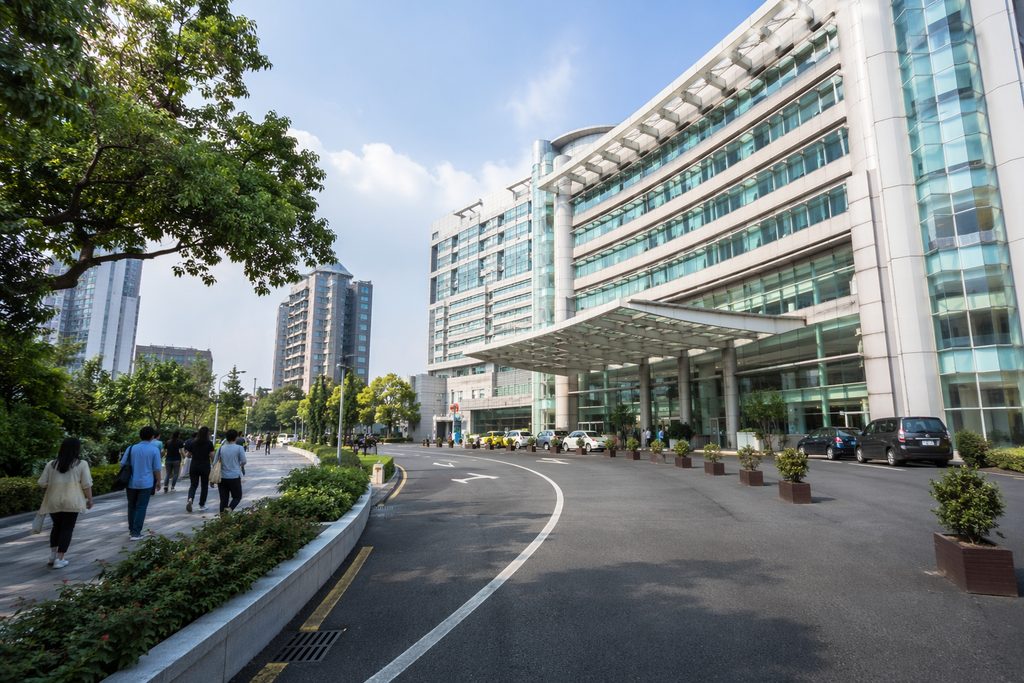
In the UK, a patient with a suspicious lung nodule might wait 62 days from urgent GP referral to first treatment. At the First Affiliated Hospital of Guangzhou Medical University, the same diagnostic workup often completes in under a week. That gap isn’t just inconvenient. For respiratory disease, it changes outcomes. But speed means nothing if you can’t access it. The real question international patients ask isn’t just about clinical quality — it’s about the practical pathway. How do you actually get in the door? What will the respiratory treatment cost at First Affiliated Hospital Guangzhou look like? And who handles the language, the records, the visa?
Our team has coordinated respiratory care here for patients from over a dozen countries. We know the intake process, the documentation requirements, and the honest price ranges. This article walks through exactly how we arrange your treatment — step by step, with real numbers.
The Short Answer
We arrange your respiratory treatment by first securing a remote specialist evaluation — either a written second opinion ($300–$500) or a video consultation ($500–$800) with the hospital’s respiratory team. Once the clinical plan is confirmed, we coordinate your S2 visa documentation, hospital registration through the international department, and on-ground bilingual support. The entire pre-arrival process typically takes 7–14 days. Treatment begins within days of your arrival, not months.
That’s the clean version. The reality has more texture. The hospital’s international patient pathway is well-established but not self-service. You cannot simply email the pulmonary department and book a bed. The system requires a local coordinator who understands both the clinical referral logic and the administrative sequence. That’s where we fit.
Who This Is Right For — and Who It Isn’t
We’re direct about eligibility because wasting your time helps no one. Here’s who typically benefits from this pathway:
- Patients with confirmed or suspected lung cancer requiring rapid diagnostic resolution and surgical planning
- Those with complex interstitial lung disease seeking a second opinion from a high-volume center
- Patients with chronic obstructive pulmonary disease (COPD) considering bronchoscopic lung volume reduction — a procedure where Chinese hospitals have substantial case volume
- Individuals with tracheal or bronchial stenosis needing interventional bronchoscopy, including stent placement
- Anyone with a thoracic CT showing abnormalities that their home system has classified as “watch and wait” but who wants definitive answers now
And here’s who should not pursue this route:
- Patients too unstable to fly — if you’re on supplemental oxygen at rest and cannot maintain saturation above 90% during cabin pressurization, long-haul travel is medically inadvisable
- Those with active pulmonary tuberculosis until sputum smears are negative — this is a public health travel restriction, not a hospital policy
- Patients whose condition is well-managed locally and who are seeking only a marginal opinion difference — the cost and travel burden won’t justify the incremental insight
- Anyone expecting to arrive, walk into a public outpatient clinic, and see a named professor the same day without prior coordination — that model doesn’t exist for international patients in Chinese public hospitals
Being explicit about the last point matters. The public outpatient halls at this hospital see over 15,000 patients daily. Without pre-arranged international department access, you’re in that queue. We don’t let that happen.
Understanding the Hospital: Why This Center for Respiratory Disease
The First Affiliated Hospital of Guangzhou Medical University isn’t just another large Chinese hospital. It houses the National Clinical Research Center for Respiratory Disease — a designation held by only a handful of institutions nationwide. The hospital’s thoracic surgery and pulmonary medicine departments are consistently ranked among China’s top tier in the Fudan University hospital rankings, a distinction covered in our overview of China’s top-ranked hospitals.
What does that mean in practice? Volume. The respiratory endoscopy center performs over 10,000 interventional bronchoscopy procedures annually. The thoracic surgery team completes more than 3,000 lung cancer resections per year. When a surgical team sees that many cases, their ability to handle anatomical variants and intraoperative surprises isn’t theoretical. It’s muscle memory.
For international patients, the relevant entry point is the hospital’s international medical department. This is a dedicated unit with English-speaking coordinators, streamlined billing, and priority scheduling. It operates separately from the public outpatient system. The trade-off is cost — consultations and procedures through this channel are typically 1.5 to 2 times the standard public rate. But for a foreign patient without Mandarin, the public channel is functionally inaccessible anyway.
The Options, Compared
Before committing to travel, patients need a clear view of what different pathways look like. The table below compares three realistic approaches to accessing respiratory care at this hospital.
| Approach | Time to First Consultation | Estimated Cost (Hospital + Coordination) | Language Support | Best For |
|---|---|---|---|---|
| Remote Written Second Opinion | 5–10 business days | $300–$500 (coordination fee) | Full document translation included | Patients uncertain if traveling is warranted; those wanting expert review of existing scans and reports |
| Video Consultation + Treatment Trip | 7–14 days to video consult; treatment begins within 3–5 days of arrival | $500–$800 (video consult) + treatment costs + $300/day bilingual companion | Live interpreter during video; in-person companion during hospital visits | Patients with a confirmed diagnosis ready to plan treatment logistics |
| Direct Arrival with Full Coordination | Treatment begins 3–7 days after arrival | $5,000–$8,000 (VIP end-to-end coordination) + treatment costs | Dedicated bilingual case manager throughout | Patients with urgent clinical timelines or complex multi-department needs |
The remote second opinion is our most common starting point. It answers the threshold question — “Should I get on a plane?” — without requiring you to get on a plane. If the written opinion confirms that the hospital can offer a materially different treatment approach than what’s available at home, we then move to the video consultation or direct coordination phase. Any consultation fee you’ve paid is credited in full toward on-ground coordination if you proceed within 90 days.
What Determines the Respiratory Treatment Cost at First Affiliated Hospital Guangzhou
The hospital’s own charges are transparent but variable. A diagnostic bronchoscopy with biopsy runs approximately $1,200–$2,500. A VATS lobectomy (video-assisted thoracoscopic surgery for lung cancer) typically ranges from $8,000–$15,000, depending on complexity and length of stay. These are the international department rates — roughly 1.5× the domestic price.
Several factors push costs up or down:
- Length of stay. A straightforward lobectomy might mean 5–7 inpatient days. Complications or chest tube management issues can extend that to 10–14 days, adding roughly $300–$500 per extra day in the international ward.
- Molecular testing. If your tumor requires next-generation sequencing for targeted therapy matching, that’s an additional $1,500–$3,000. Not every case needs it. When it’s indicated, it’s non-negotiable for treatment planning.
- Post-surgical rehabilitation. Some patients opt for a week of inpatient pulmonary rehabilitation before flying home. That’s $400–$600 per day and is genuinely valuable for patients with compromised preoperative lung function.
- Companion costs. Our bilingual medical companion service starts at $300 per day. For a 10-day treatment trip, budget $3,000 for this support. It covers hospital navigation, interpretation during consultations, and coordination of discharge paperwork.
These numbers don’t include flights, accommodation, or the S2 visa application fee (typically under $100). A realistic all-in budget for a lung cancer resection with 7 hospital days and full coordination support lands between $18,000 and $28,000. Compare that to the $50,000–$120,000 range for the same procedure in the United States, and the arithmetic becomes clear.
But cost isn’t the only calculation. The real question many patients wrestle with is whether the clinical approach differs enough to justify the journey. For early-stage lung cancer, the surgical technique itself — VATS lobectomy with systematic lymph node dissection — is broadly similar across high-volume centers worldwide. The difference shows up in two places: speed to treatment and experience with borderline-resectable cases that smaller centers might decline.
Practical Considerations: Records, Visa, and the Logistics That Trip People Up
We’ve seen the same friction points enough times to name them plainly. Here’s what actually matters in the preparation phase.
Medical records. The hospital’s respiratory specialists need the following, in English or with certified translation: all CT scans (preferably on CD with DICOM files, not just printed reports), pulmonary function test results, pathology reports if a biopsy has been done, and a summary of any prior treatments including drug names and dates. Scans older than 30 days may be considered outdated for surgical planning. If your imaging is stale, plan for a repeat CT on arrival — that adds a day to your timeline but is often clinically necessary.
Visa category. This is where many online sources get it wrong. The correct visa for medical treatment in China is the S2 short-stay visa, annotated for private affairs including medical purposes. The M visa is for commercial and trade activities — it has nothing to do with healthcare. We provide a formal hospital invitation letter that supports your S2 application. We don’t guarantee visa approval — that’s the consulate’s decision — but we’ve never had a patient refused when the documentation was complete and the purpose was clearly medical. For stays exceeding 180 days, the S1 visa applies.
Payment. The hospital’s international department requires a deposit before admission, typically 50–70% of the estimated treatment cost. Payment is by wire transfer, major credit card, or UnionPay. The hospital does not direct-bill international insurance. You pay upfront, then file for reimbursement with your insurer. We provide itemized receipts and discharge summaries formatted for international insurance claims.
Language. The international department has English-speaking staff, but the ward nurses and technicians mostly speak Mandarin or Cantonese. Our bilingual companion bridges that gap during rounds, procedures, and discharge teaching. Without this support, you’re relying on translation apps and the goodwill of whichever staff member happens to speak some English. That’s not a plan — it’s a gamble.
Follow-up after returning home. The hospital provides a detailed discharge summary in English, including medication instructions, wound care guidance, and recommended follow-up imaging schedules. For surgical patients, we arrange a follow-up video consultation at 4–6 weeks post-discharge to review recovery progress and any interval imaging. Your local physician receives the full treatment record to continue care.
Frequently Asked Questions
Foreign patients are not only accepted — they’re a defined patient population with a dedicated intake pathway. The international department was established specifically to serve non-domestic patients. The clinical teams are the same professors who run the public wards. The difference is administrative: English-speaking coordinators, private rooms, and scheduling priority. You’re not being slotted into a separate, lesser clinical track. You’re seeing the same specialists through a more accessible door.
No. Showing up unannounced is the single most common mistake we see, and it almost always results in frustration. The correct sequence is: remote records review → specialist acceptance → appointment confirmation → visa application with hospital invitation letter → arrival date coordination → registration and deposit payment → consultation and treatment. Skipping steps doesn’t save time. It creates delays because the specialist you need may be in surgery or traveling on the day you arrive. Pre-coordination means your CT is scheduled, your consultant is expecting you, and your interpreter is standing at the arrivals gate.
The international department has English-speaking administrative coordinators, but they are not clinical interpreters. They handle registration, billing, and scheduling — not the nuanced back-and-forth of a pulmonary function test instruction or a surgical consent discussion. The hospital does not provide dedicated bedside interpreters. That’s the gap our bilingual medical companions fill. They’re present for every clinical interaction, from the initial consultation through discharge teaching. If you’re considering navigating this without language support, understand that you’ll be signing consent forms and receiving post-operative instructions in a language you may not read.
This is a legitimate concern. The hospital’s initial cost estimate covers the planned procedure and an uncomplicated length of stay. If intraoperative findings require an extended resection, or if post-operative recovery is slower than expected, costs increase. We’ve seen cases where a planned 5-day stay extended to 12 days due to a persistent air leak after lung surgery. That added roughly $2,500 in ward fees. The hospital is transparent about these charges as they accrue — you won’t face surprise bills after discharge. Our advice: budget a 30% contingency above the initial estimate. Most patients don’t need it. Those who do are grateful for the buffer.
Guangzhou’s First Affiliated Hospital is strongest in interventional pulmonology, thoracic oncology, and complex airway management. If your condition involves a tracheal tumor requiring sleeve resection and reconstruction, or if you need advanced bronchoscopic interventions like thermoplasty for severe asthma, this center is arguably the best in China — and among the best in Asia. For interstitial lung disease requiring rheumatology co-management, Peking Union Medical College Hospital in Beijing may have an edge. For lung transplantation evaluation, Wuxi People’s Hospital performs the highest volume nationally. The right center depends on the specific diagnosis. Our initial records review includes a candid assessment of whether this hospital is genuinely the best match — because sending you to the wrong center burns our reputation faster than anything else.
Your Next Step
The pathway to respiratory treatment in Guangzhou exists. It’s structured, it’s fast, and it’s clinically serious. What it isn’t is self-navigable for someone outside the Chinese healthcare system. Our role is the connective tissue: we translate your records, secure the specialist review, coordinate the visa documentation, and put a bilingual professional at your side from touchdown to discharge. We are not a hospital. We don’t diagnose or treat. We’re the operational layer that makes the clinical layer accessible.
If you’re considering this, start with the remote second opinion. It costs $300–$500 and gives you a concrete answer about whether traveling to Guangzhou changes your clinical options. If the answer is yes, every dollar of that fee applies toward your on-ground coordination. If the answer is no, you’ve saved yourself an international trip and gained clarity — which is worth the fee on its own. Request a free consultation to discuss your case. No commitment, no pressure. Just an honest conversation about whether this makes sense for you.
For more medical information and treatment options in China, visit chinamedservices.com (China Medical Services).
