First Affiliated Hospital of Anhui Medical University Oncology: A Guide for International Patients
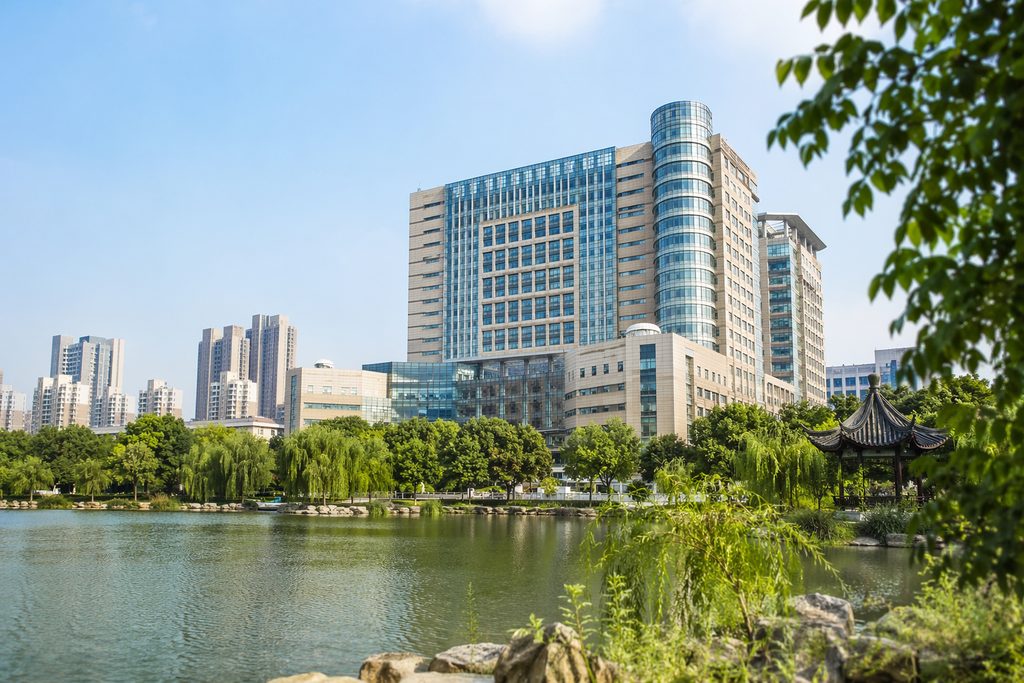
Have you ever wondered whether a top-tier Chinese oncology center could offer you or a loved one a viable treatment path—without the wait times and bills that often come with cancer care in the West? The First Affiliated Hospital of Anhui Medical University (AHMU) in Hefei is one such institution. For international patients weighing their options, understanding the real oncology treatment cost China presents—and what this specific hospital can and cannot offer—matters more than any brochure.
Key Takeaways
- AHMU’s First Affiliated Hospital is a major regional oncology hub, handling a patient volume that far exceeds most Western cancer centers.
- Oncology treatment in China typically runs one-fifth to one-tenth of comparable US costs, with AHMU positioned at the affordable end of the spectrum.
- Public hospital rules in China mean no overseas pre-booking for standard outpatient visits—surgery requires an in-person consultation first, unless you use the hospital’s international or VIP channel.
- Language, logistics, and documentation are the real barriers. Clinical quality is rarely the issue at a hospital of this scale.
The Problem: Cancer Care Costs Are Crushing Patients in the West
Cancer is expensive everywhere. But the gap between what patients pay in the United States and what they pay in China has become impossible to ignore. A 2023 study published in JAMA Network Open found that 42% of newly diagnosed cancer patients in the US deplete their entire life savings within two years of starting treatment. The average cost of a single course of immunotherapy in America now exceeds $100,000. Chemotherapy regimens routinely hit $10,000–$20,000 per month.
Wait times add another layer of suffering. In the UK’s National Health Service, the 62-day cancer treatment target has been missed for years. As of 2024, only 65.3% of patients in England started treatment within that window—meaning roughly one in three cancer patients waits longer than two months just to begin. In Canada, the median wait between specialist referral and radiation therapy can stretch past four months.
For patients with aggressive cancers, those delays are not administrative inconveniences. They are clinical events. A tumor that grows while waiting is a tumor that requires more extensive surgery, more toxic chemotherapy, or becomes inoperable altogether.
Why China—and Specifically AHMU—Delivers Results
China’s top hospitals operate at a scale that fundamentally changes the clinical equation. The First Affiliated Hospital of Anhui Medical University runs over 4,000 beds and records more than 5 million outpatient visits annually. Its oncology department sees thousands of new cancer cases each year. That volume translates into something real: physicians who have managed rare presentations, complex comorbidities, and treatment failures that a lower-volume center might see once a decade.
Clinical Volume Drives Better Outcomes
Volume matters in oncology. Studies repeatedly show that hospitals performing high numbers of cancer surgeries have lower complication rates and better long-term survival. A 2019 analysis in The Lancet Oncology found that for esophageal cancer—a disease with high incidence in Anhui province—surgeons at high-volume centers achieved significantly better 5-year survival rates than those at low-volume facilities. AHMU’s First Affiliated Hospital performs hundreds of esophageal, gastric, and liver cancer resections every year. Its thoracic surgery team handles lung cancer cases daily, not weekly.
That is the structural advantage. You are not buying a single doctor’s skill. You are buying into a system that has seen your disease thousands of times.
Technology and Efficiency at Scale
Anhui Medical University’s affiliated hospital system has invested heavily in modern oncology infrastructure. The First Affiliated Hospital operates multiple linear accelerators for radiation therapy, including intensity-modulated radiation therapy (IMRT) and volumetric modulated arc therapy (VMAT) capabilities. Its interventional radiology suites handle tumor ablation, transarterial chemoembolization (TACE), and other minimally invasive procedures. Robotic surgery platforms are available for urologic and gynecologic cancers.
The workflow is different from what Western patients expect. Diagnostics move fast. A CT scan ordered in the morning is often read the same day. Blood work comes back in hours, not days. That efficiency is not magic—it is the product of a hospital system built around throughput. For a patient with a growing tumor, speed is a clinical intervention in itself.
Oncology Treatment Cost China: The Numbers That Change Decisions
Let us address the obvious question head-on. Is the lower oncology treatment cost China offers a sign of lower quality? No. It is a sign of different economics. Chinese hospital labor costs are a fraction of American or European levels. Facility overhead is lower. Drug pricing, while rising, remains below Western list prices for many generics and even some branded therapies. And the sheer patient volume spreads fixed costs across far more cases.
The result: a course of standard chemotherapy at AHMU’s First Affiliated Hospital that might cost $3,000–$6,000 out of pocket for an international patient, versus $30,000–$60,000 in the US before insurance. A complex cancer surgery—say, a gastric resection with lymph node dissection—might run $8,000–$15,000 in Hefei. The same procedure at a major US academic center routinely exceeds $80,000. These are not promotional figures. They reflect the documented cost differential between Chinese public hospitals and Western systems, adjusted for the international patient channel markup of roughly 1.5–2x standard local pricing.
What the First Affiliated Hospital of Anhui Medical University Actually Offers International Patients
AHMU’s First Affiliated Hospital is not a dedicated international hospital. It is a massive public tertiary facility that treats predominantly local patients. That has real implications for foreign patients—some positive, some challenging.
The positive: you are accessing a hospital with genuine clinical depth. Its oncology department ranks among the strongest in Anhui province and is a referral center for the entire region. The hospital’s pathology lab, imaging center, and surgical suites are modern and well-equipped. For cancers of the gastrointestinal tract, liver, lung, and breast, the clinical teams here manage caseloads that would be the envy of many Western cancer centers.
The challenge: English language support is limited. Standard outpatient registration, queueing, payment, and test collection all operate in Chinese. The hospital does have an international medical service desk, but it is not comparable to the dedicated international departments at Beijing United Family or Shanghai’s Jiahui. If you arrive without a bilingual companion or a coordinator who understands the system, you will struggle. That is not a criticism of the hospital—it is simply the reality of seeking care at a public Chinese institution rather than a private international one.
How to Book Cancer Treatment at Anhui Medical University: A Realistic Walkthrough
There is no online portal where a foreign patient books a surgery slot at AHMU’s First Affiliated Hospital. Anyone who tells you otherwise is selling something that does not exist. Here is how the process actually works.
First, you need a diagnosis and a treatment plan. That means sending your existing medical records—pathology reports, imaging, prior treatment summaries—for review. The hospital’s oncology specialists will evaluate whether they can offer you something your current providers cannot, or whether continuing care at home is the better path. This remote evaluation step is where most patients either move forward or decide to stay put. It is also the step that saves you from flying to China only to learn that your case is not a fit.
Second, you travel to Hefei for an in-person consultation. Chinese public hospital rules require a face-to-face outpatient visit before any surgery or inpatient admission can be scheduled. There is no workaround for this in the standard channel. The international/VIP channel can arrange priority scheduling and English-speaking coordination, but even that requires the patient to be physically present for the initial consultation.
Third, you complete pre-operative testing and schedule the procedure. At AHMU, this typically happens faster than in the West—often within one to two weeks of the initial consultation, depending on the complexity of the case and the department’s surgical calendar.
Important: The S2 visa is the correct category for medical treatment in China. It covers short-term private affairs, including medical visits, when supported by documentation from the treating hospital. The M visa is for commercial and trade activities only—it has nothing to do with medical care. Family members accompanying you also apply for S2 visas. Stays exceeding 180 days require an S1 visa.
Is Cancer Treatment in China Safe for International Patients? What the Evidence Shows
This is the question that keeps people awake at night. And it deserves a direct answer.
Clinical safety at China’s top-tier hospitals is not the primary risk. The First Affiliated Hospital of Anhui Medical University follows national oncology treatment guidelines that align closely with NCCN and ESMO standards. Its surgeons operate at high volume. Its infection control protocols are comparable to international norms. A 2022 study in The BMJ examining surgical outcomes at Chinese tertiary hospitals found that complication rates at top-ranked centers were statistically indistinguishable from those at peer institutions in Europe and North America.
The real risks are operational, not clinical. Miscommunication about medication schedules. Difficulty navigating the payment and insurance process. Confusion about follow-up protocols after you return home. These are manageable risks—but only if you plan for them. A patient who arrives with organized medical records, a clear understanding of the hospital’s workflow, and bilingual support on the ground will have a fundamentally different experience than one who arrives alone with a folder of untranslated documents.
| Treatment Type | Estimated Cost at AHMU (USD) | Typical US Cost (USD) |
|---|---|---|
| Standard chemotherapy course (6 cycles) | $3,000–$6,000 | $30,000–$60,000 |
| Gastric cancer surgery with lymph node dissection | $8,000–$15,000 | $80,000–$120,000 |
| Lung cancer lobectomy | $7,000–$12,000 | $60,000–$100,000 |
| Radiation therapy (IMRT, full course) | $5,000–$10,000 | $50,000–$80,000 |
| Immunotherapy (per cycle, depending on drug) | $2,000–$8,000 | $10,000–$20,000 |
Figures are estimates for international patients using the hospital’s international service channel. Actual costs vary by hospital and case complexity.
Medical Tourism Packages China Oncology: What They Include and What They Do Not
The phrase “medical tourism packages China oncology” gets searched thousands of times a month. Most people imagine an all-inclusive deal: airport pickup, hospital booking, surgery, recovery hotel, and a translator, bundled into one price. That model exists in Thailand and India. It does not really exist at Chinese public hospitals.
What you can actually arrange is a coordinated care journey. A coordinator handles your visa documentation, books your initial consultation, provides a bilingual medical companion for hospital visits, and helps with logistics like accommodation and local transportation. The hospital bill itself is separate. You pay the hospital directly for treatment. You pay the coordinator for coordination. Anyone offering a single bundled price that includes surgery is either marking up the hospital bill or operating in a gray zone.
That transparency matters. It protects you from surprise charges and keeps the hospital accountable. It also means you can comparison-shop: get a quote from the hospital’s international desk, then decide whether you need full coordination or just a translator for the first few days.
Practical Considerations: Documentation, Payment, and Follow-Up
Before you book a flight to Hefei, get your paperwork in order. The hospital will need your complete medical history: pathology slides or reports, imaging files (DICOM format preferred), surgical records if applicable, and a summary of all prior treatments including drug names, dosages, and dates. Translated summaries help. Chinese oncologists read English medical records reasonably well, but a professionally translated summary removes ambiguity.
Payment is upfront. Chinese public hospitals operate on a prepayment model. You deposit funds at admission, and treatment is drawn against that balance. International credit cards are accepted at the hospital’s international service window, but transaction limits vary. Wire transfer is often more practical for large amounts. Insurance reimbursement is retrospective—you pay, then submit claims to your insurer. Some international insurers have direct billing arrangements with private hospitals in China, but rarely with public institutions like AHMU.
After you return home, follow-up is the weak point. Chinese hospitals do not have robust telemedicine follow-up for international patients. You will need a local oncologist willing to continue care based on the treatment summary the Chinese team provides. Arrange this before you travel. The best-case scenario is a handoff: your Chinese oncologist writes a detailed treatment summary, and your home oncologist reviews it and takes over monitoring.
Frequently Asked Questions
No. Chinese public hospital rules require an in-person outpatient consultation before any surgery can be scheduled. What you can do remotely is submit your records for a preliminary evaluation. If the oncology team confirms your case is appropriate for treatment at the hospital, you then travel for the face-to-face consultation. The international service channel can expedite the scheduling after you arrive, but the consultation itself cannot be skipped.
For a typical international patient, budget $15,000–$30,000 for a complex cancer surgery including pre-operative testing and a short inpatient stay. Chemotherapy courses run $3,000–$6,000. Radiation therapy full courses run $5,000–$10,000. Add $1,500–$3,000 for coordination, translation, and local logistics. These are estimates—final figures depend entirely on your specific diagnosis, staging, and treatment plan.
Clinically, yes—at a hospital of this tier, the medical care is comparable to what you would receive at a major Western cancer center. The operational risks are higher: language barriers, unfamiliar workflows, and limited post-discharge support. Mitigate those risks with a bilingual companion and careful planning, and the clinical experience itself should not be your primary worry.
You need an S2 visa, which covers short-term private affairs including medical treatment. You will need supporting documentation from the hospital—typically a treatment invitation letter or appointment confirmation. Family members accompanying you also apply for S2 visas. If your treatment will require a stay longer than 180 days, you need an S1 visa instead. The M visa is for commercial activities and is not appropriate for medical travel.
Most international insurance plans reimburse treatment at Chinese public hospitals, but almost none offer direct billing. You pay the hospital upfront and submit claims afterward. Check with your insurer before committing. Some plans exclude treatment outside your home country unless pre-authorized. Get that pre-authorization in writing before you book anything.
Your Next Step
Choosing where to pursue cancer treatment is one of the most consequential decisions you will ever make. The First Affiliated Hospital of Anhui Medical University offers genuine clinical depth at a cost that makes treatment financially possible for patients who would otherwise face devastating bills. But it is not a turnkey experience. You need records in order, a realistic understanding of the workflow, and support on the ground. That is the work we do at China Medical Services—coordinating hospital access, bilingual companionship, and logistics for international patients. We are not a hospital and do not provide medical advice. What we provide is the bridge between you and the care you are considering. If you want to understand whether AHMU is a realistic option for your specific case, start with a free consultation. No pressure. Just information.
For more medical information and treatment options in China, visit chinamedservices.com (China Medical Services).
