First Hospital Haikou: Your Gateway to Tropical Medical Tourism in China
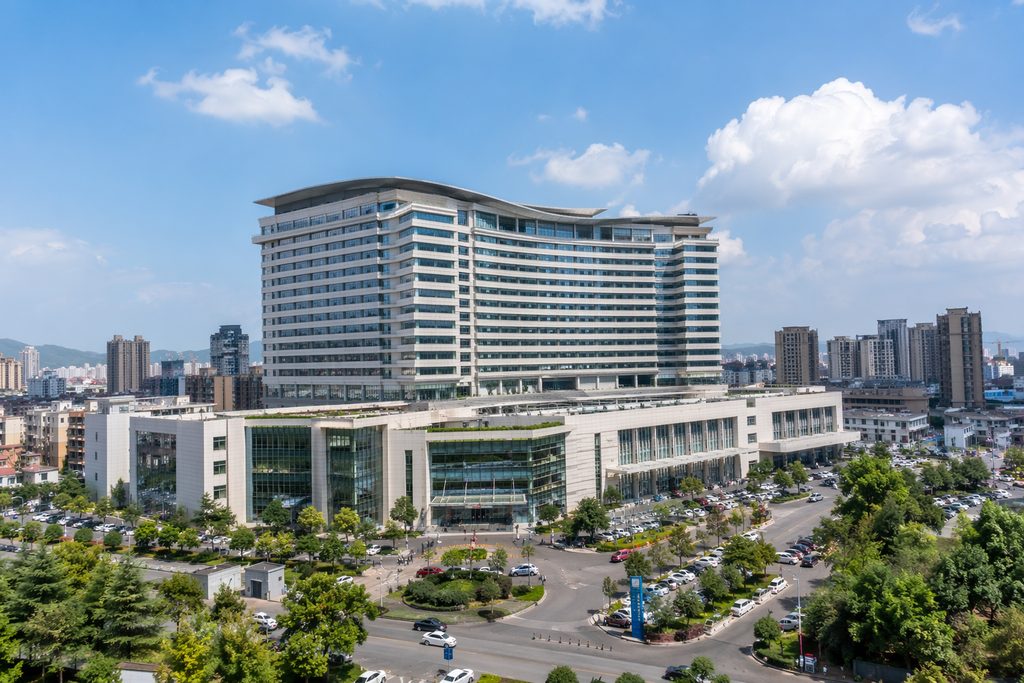
When 54-year-old Linda from Manchester searched for a place to combine her overdue health screening with a genuine break from the English winter, she stumbled on a term she hadn’t heard before: tropical medical tourism China packages. The idea seemed almost too good to be true. World-class diagnostics. A warm island climate. Costs that didn’t make her wince. But a nagging question remained: is the medical infrastructure in a place like Hainan actually equipped to handle serious international patients, or is this just a wellness fad with a fancy label?
The answer is more concrete than most travelers realize. Hainan is not just a resort island. It is a designated international medical tourism pilot zone. At the center of this ecosystem sits one institution that processes a staggering volume of clinical work every single day. We are talking about the First Hospital of Haikou, affiliated with Central South University. Our team at China Medical Services has spent years building the logistical bridge that connects patients like Linda—and perhaps you—to this very hospital. We don’t provide the medicine. We provide the certainty.
Key Takeaways
- First Hospital Haikou handles over 2 million outpatient visits annually, making it one of Hainan’s highest-volume clinical centers for complex internal medicine and tropical diseases.
- As a provincial International Medical Tourism Pilot Zone hub, the hospital offers structured tropical medical tourism China packages that bundle executive checkups with recovery in a subtropical climate.
- The biggest barrier for independent travelers is the S2 medical visa requirement and the lack of a centralized English-language booking system—public registration remains a Chinese-language, in-person queue system.
- Costs for comprehensive health screenings in Haikou typically range from $300 to $1,500 USD, a fraction of equivalent private packages in Singapore or the US, but the trade-off is a system built for domestic efficiency, not Western hospitality.
The Problem: You Can’t Book a “Tropical Medical Gateway” on a Hotel Website
The global market for medical tourism is projected to reach approximately $273 billion by 2027, according to data from Grand View Research. Patients from Europe, the Middle East, and North America are increasingly looking beyond traditional hubs like Bangkok or Seoul. They are chasing something different: a destination where the climate itself aids recovery. That is the promise of Hainan. But here’s the friction. The province’s public healthcare system, including its flagship First Hospital, was not originally designed for the point-and-click expectations of a foreign patient.
You cannot simply log onto a portal and book a “tropical medical tourism China package” the way you’d reserve a spa weekend. The hospital’s digital infrastructure is fragmented. Specialist schedules change rapidly. And the concept of bundling a cardiac CT with a beachfront hotel recovery is still an emerging operational reality, not a polished product. Patients who try to arrange this independently often hit a wall of Mandarin-language forms, WeChat mini-programs that reject foreign credit cards, and visa categories that are easily confused. The medical excellence is real. The access path is not intuitive.
Who We Are
We are China Medical Services. We are not a hospital. We do not offer clinical diagnoses or prescribe treatment protocols. Our role is logistical architecture. We translate your medical history, coordinate directly with the hospital’s international liaison office, secure accurate cash-pay estimates, and deploy bilingual case managers to accompany you through every step of the process at First Hospital Haikou. Think of us as the operational layer that converts a complex public healthcare system into a navigable, transparent pathway for international patients.
Why First Hospital Haikou Anchors the Tropical Medical Tourism Gateway
Hainan’s provincial government has invested heavily in positioning the island as a global destination for what is officially termed the Boao Lecheng International Medical Tourism Pilot Zone. While the high-tech experimental therapies often happen in the Lecheng zone itself, the foundational diagnostics, emergency stabilization, and complex surgical interventions rely on established public institutions in Haikou. First Hospital Haikou is the largest general hospital in the provincial capital. It is a teaching hospital. That means the clinicians treating you are also training the next generation of specialists. The scrutiny is constant. The standards are public.
Clinical Volume That Creates Diagnostic Acuity
There is a direct, evidence-backed correlation between case volume and clinical outcomes, particularly in surgery and complex diagnostics. A surgeon who performs a specific procedure 300 times a year simply sees patterns that a lower-volume peer might miss. First Hospital Haikou’s emergency department alone is one of the busiest on the island. Its infectious disease and tropical medicine departments manage a caseload that few Western hospitals ever encounter—dengue, scrub typhus, leptospirosis. For a patient with an undiagnosed febrile illness picked up during years of travel in Southeast Asia, this is not a minor advantage. It is potentially the difference between a correct diagnosis and months of misdirected treatment.
This volume extends to routine but critical procedures. The hospital’s health management center processes thousands of physical examinations each month. The radiologists reading your low-dose lung CT have seen more incidental nodules—and know which ones to worry about—than a general radiologist in a low-volume European clinic might see in a year. That is not a marketing claim. It is a function of population math in a province of over 10 million residents.
A Structural Cost Advantage in the Health Checkup Market
Let’s address the question that drives most initial inquiries: what is the first hospital Haikou international patient cost compared to alternatives? A comprehensive executive health screening—we’re talking brain MRI, cardiac ultrasound, abdominal CT, full tumor marker panel, and specialist consultation—typically runs between $800 and $2,000 USD at First Hospital Haikou through the international VIP channel. A comparable package at a private hospital in Singapore might start at $3,500 and climb quickly. In the United States, without insurance, the same suite of tests could exceed $8,000.
The cost difference is not a reflection of lower quality. It is a structural reality. Chinese public hospitals operate on high-volume, low-margin models for diagnostics. Labor costs for skilled technicians and nurses are lower than in Western markets. Equipment utilization rates are extraordinarily high—an MRI machine in Haikou might scan patients 16 hours a day, seven days a week, amortizing its cost across thousands more studies annually than a comparable machine in a Western private clinic. The result for you is an affordable health checkup Hainan China base price that leaves room in the budget for a genuine recovery period by the sea.
Tropical Medicine Expertise You Won’t Find in Temperate Climates
What is the best hospital for tropical diseases in China? That question matters if your health concerns relate to pathogens that simply don’t circulate in colder latitudes. First Hospital Haikou maintains a dedicated tropical disease research institute. Its clinicians manage the full clinical spectrum of mosquito-borne illnesses, parasitic infections, and fungal diseases that thrive in humid, subtropical environments. For expatriates who have spent years working in West Africa, South Asia, or the Amazon basin and now carry a lingering, undiagnosed condition, this hospital offers a diagnostic lens that a top-ranked hospital in Beijing or Shanghai might not replicate. The pathogens are familiar here. They are part of the local clinical reality.
What You Need to Know Before Going Alone
The medical capabilities are real. So are the logistical barriers. We need to be blunt about what happens if you try to arrange treatment independently, because the friction points are not obvious from outside China.
- Medical Visa Hainan Island Hospital Requirements: You cannot enter China on a tourist visa (L) and legally undergo a scheduled surgery or extended inpatient treatment. The correct channel is an S2 visa, annotated for medical treatment purposes. The hospital must issue a formal invitation letter confirming your appointment and treatment plan. Without a pre-arranged clinical acceptance, the visa application stalls. Consulates will not process an S2 based on a vague intention to “get a checkup.” They require documentation.
- Payment Infrastructure: First Hospital Haikou’s standard billing system operates on a prepaid balance model linked to a Chinese ID or a hospital-issued physical card. International credit cards are not accepted at the outpatient payment windows. The VIP international department can process wire transfers or cash deposits, but the workflow is manual. Expect to prepay an estimated deposit before major diagnostics begin. The system is not built for post-service invoicing.
- Language and Navigation: The hospital campus is large. Signage in English is limited to the international department wing. A standard outpatient visit involves queueing at a registration window, moving to a specialist waiting area, completing a payment step, then queueing again for the actual test. Each step requires interaction in Mandarin. Google Translate will not suffice for discussing abnormal imaging findings or clarifying medication contraindications.
How We Help You Navigate This
These barriers are not failures of the hospital. They are features of a system optimized for domestic patients. Our job is to layer an international patient pathway on top of that system without disrupting the clinical workflow that makes the hospital excellent in the first place.
It starts with your medical history. You send us your records. We translate them into clinical Chinese and submit them to the relevant department head for a preliminary review. This step answers the most critical question before any travel: is your case appropriate for this hospital? If the answer is yes, we secure a formal acceptance letter and a detailed cost estimate. That letter unlocks the medical visa Hainan island hospital process. We guide you through the consular application, ensuring the supporting documents match exactly what the visa officer needs to see.
Once you land in Haikou, a bilingual case manager meets you. This person handles registration, payment deposits, queue management, and real-time interpretation during every consultation. You are not handed a map and wished luck. You are accompanied through the physical and administrative maze. After discharge, if your treatment plan allows, we can coordinate a structured recovery period at a nearby hotel or serviced apartment. The subtropical air and fresh seafood diet are not clinically proven to accelerate wound healing. But they make the recovery feel less like a medical ordeal and more like a deliberate, restorative pause. That is the essence of a well-executed tropical medical tourism China package—not a gimmick, but a sensible integration of climate and care.
For those who need to understand how to book treatment at Haikou international hospital without navigating this complexity alone, the answer is straightforward: you don’t book the hospital directly. You book the coordination layer first. The hospital’s international department works with vetted service agencies precisely because the alternative—handling foreign patient logistics internally—would overwhelm a system designed for domestic throughput.
Frequently Asked Questions
Technically, yes. You can walk into the main lobby, present your passport, and attempt to register at the general outpatient window. You will likely succeed in obtaining a hospital card. What happens next is the problem. You will be directed to a Chinese-language queue for a general specialist who may have no warning of your arrival, no prepared English-language communication strategy, and no context for your international medical history. The consultation will be brief—public hospital outpatient visits in China often last under ten minutes. You will leave with a stack of Chinese-language test orders and no clear path forward. It is a functional entry point. It is not a medical tourism experience.
We quote from $800 USD for a thorough executive screening that includes imaging, cardiac assessment, and laboratory panels. A more exhaustive package with advanced MRI sequences and specialist consultations can reach $2,000 USD. These are cash-pay prices through the VIP international channel. They do not include our coordination fees, which start from $300 for appointment logistics. The total is still dramatically lower than private-pay equivalents in Western markets. But it is important to understand that the hospital’s own pricing is opaque and subject to change based on the specific tests ordered by the admitting physician. We provide a binding estimate before you travel, not a menu of fixed-price packages that exist independently of clinical judgment.
This is the scenario where pre-arranged coordination proves its value. If a suspicious lesion appears on a lung CT, or a cardiac echo reveals a valve issue requiring intervention, you are already inside a hospital capable of handling it. Our case manager immediately shifts from screening mode to treatment coordination mode. We facilitate an urgent specialist consultation, often within the same day, and begin the process of adjusting your visa if an extended stay for surgery becomes necessary. The alternative—receiving a worrying result via email after returning home and trying to re-enter the Chinese system from scratch—is significantly more stressful and logistically complex.
The climate itself is not a medical intervention. But the environmental context of recovery matters. Warm, humid air can be gentler on respiratory patients than cold, dry winter conditions. Sunlight exposure supports circadian rhythm regulation, which affects sleep quality and immune function. The psychological benefit of recovering in a setting that feels like a retreat rather than a hospital ward is well-documented in health psychology literature. These are adjunctive factors. They do not replace clinical care. They support it. For a patient facing a long recovery from a major surgery, doing that recovery in a place where you can sit outside in January is not trivial.
Your Next Step
First Hospital Haikou represents a genuine intersection of high-volume clinical expertise and a geographic setting that makes the concept of tropical medical tourism China packages more than a brochure phrase. The hospital treats real pathology. It manages complex tropical diseases. It runs a diagnostic engine that processes volumes most Western institutions cannot match. What it does not do is hold your hand through the administrative thicket that separates a foreign patient from the care they need.
That gap is what we fill. If you are considering a medical journey to Hainan—whether for a comprehensive screening, a second opinion on a tropical disease diagnosis, or a planned procedure—start with a conversation about logistics. The clinical excellence is already in place. The question is whether the pathway to it is clear. We make it clear.
Learn more about how we coordinate international patient care at our patient services page. For a deeper look at the full landscape of elite Chinese hospitals, including those in Hainan, visit our top-ranked hospitals directory.
For more medical information and treatment options in China, visit chinamedservices.com (China Medical Services).
