Associate Chief Physician in China: The Surgery Workhorse and What This Tier Means for Your Treatment Plan
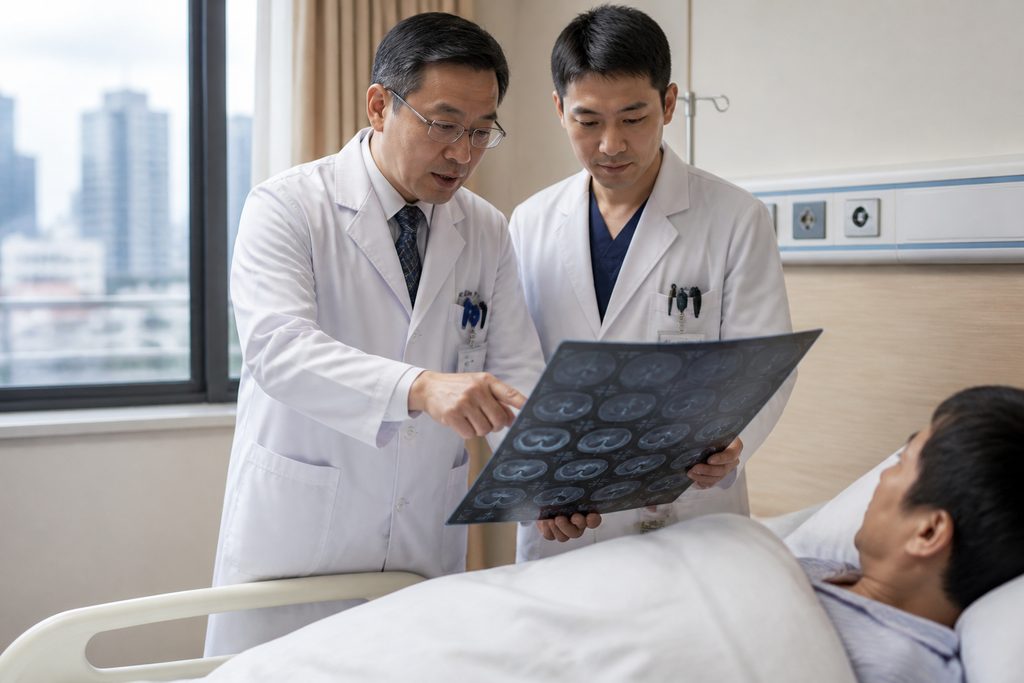
What Is an Associate Chief Physician in China, Really?
An associate chief physician is not a junior doctor. Not even close. In a Chinese hospital, this title means you are looking at a specialist who has already put in at least 10 to 15 years of clinical work after medical school. They have passed a grueling national promotion exam. They have published research. They have handled thousands of cases independently. The title translates literally from fuzhuren yishi — but the word “associate” trips up Western patients. It sounds like a deputy. A trainee. Someone warming the seat for the real boss.
That reading is wrong.
In China’s public hospital hierarchy, the associate chief physician is the operational backbone of every surgical department. They lead ward rounds at 7 a.m. They perform the majority of complex elective surgeries. They train the residents and fellows. The chief physician sets strategy and takes the most difficult cases. But the associate chief physician executes. Every day. For international patients trying to understand what is an associate chief physician in China, the simplest answer is this: you are looking at the surgeon most likely to hold the scalpel during your operation.
The rank structure in a Chinese tertiary hospital goes like this: Resident, Attending Physician, Associate Chief Physician, Chief Physician. Each jump requires years of service, a mountain of case logs, published papers, and a formal review by a provincial or national medical board. An associate chief physician typically has 12 to 18 years of post-graduate experience. Many are in their late 30s or early 40s — the peak years for surgical stamina. They operate at high volume. Their hands are steady. Their complication rates are tracked and benchmarked. For a patient flying in from abroad, this is exactly the profile you want leading your care.
How This Actually Works, Step by Step
Let’s say you have a diagnosis already. MRI scans, biopsy reports, maybe a surgical recommendation from your doctor back home. You want a Chinese associate chief physician to handle the procedure. Here is the sequence.
First, you send us your medical records. All of them. Imaging files on a CD or cloud link, pathology slides if available, and a summary of your treatment history. Our team translates these into clinical Chinese — not machine translation, but medically precise terminology that a Chinese surgeon can act on. This step alone takes 3 to 5 business days, depending on the volume of records.
Second, we route your case to the relevant department at a top-ranked hospital. The department head or a senior associate chief physician reviews the materials. They assess whether your case is suitable for treatment in China. They may request additional imaging or lab work. This review typically takes 5 to 7 business days.
Third, you receive a written second opinion. This document outlines the Chinese team’s assessment, proposed surgical approach, expected hospital stay, and a treatment cost estimate. The written second opinion service costs from $300 to $500, and if you proceed with surgery in China within 90 days, that fee is credited in full toward our coordination service.
Fourth, if you decide to move forward, we coordinate a video consultation with the associate chief physician who would perform your surgery. You speak directly. You ask your questions. You see the face behind the title. This consultation costs from $500 to $800 for a top-specialist session.
Fifth, we handle hospital appointment coordination, visa support documentation for your S2 visa, and on-ground logistics. You fly to China. You meet your surgeon. Surgery happens. Our bilingual medical companion stays with you through admission, pre-op, and discharge — translating every conversation, every consent form, every post-op instruction.
The Surgery Workhorse: Why Associate Chief Physicians Carry the Load
You can verify their credentials. Every licensed physician in China is registered with the National Health Commission. Their license number, specialty, and hospital affiliation are public record. We provide this information before you commit. You can also review their publication record — most associate chief physicians at top hospitals have published in international peer-reviewed journals indexed on PubMed. If they have not, ask why.
This is the hardest question. Revision surgery is complex and expensive. The Chinese hospital’s liability for complications treated abroad is limited. You should discuss this explicitly during your video consultation. Ask the surgeon: what is your revision rate for this procedure? What is your protocol if I need revision after leaving China? Some hospitals offer a discounted rate for readmission within a defined period. Get this in writing. Our team helps document these commitments, but we are not a party to the medical liability relationship between you and the hospital.
Yes — and this is common. If you have researched a particular surgeon at a hospital like Peking Union Medical College Hospital or Ruijin Hospital in Shanghai, we can request them specifically. The hospital will confirm availability. If the surgeon is unavailable, we present alternatives of equivalent rank and specialty. We never substitute a less experienced surgeon without your explicit consent.
Your Next Step
The associate chief physician tier is where China’s surgical system delivers its greatest value to international patients: deep experience, high current volume, and cost that makes financial sense. You do not need to navigate this alone. Our team handles the translation, the hospital matching, the scheduling, and the on-ground support so you can focus on your health. We do not practice medicine. We do not guarantee outcomes. We connect you with the right surgeon, in the right hospital, and make sure nothing gets lost in translation. If you are considering surgery in China, start with a free consultation. Send your records. Let us show you what is possible.
Frequently Asked Questions
Yes. The hospitals used for international patients are JCI-accredited and follow the same international safety standards as top hospitals in the US and Europe. Surgical teams perform high volumes of procedures — often more than their Western counterparts — which studies show leads to better outcomes.
Costs vary by procedure and hospital, but international patients typically save 40-80% compared to US prices — even when factoring in travel and accommodation. A consultation with our team will give you an exact, all-inclusive quote with no hidden fees.
Send us your existing medical reports to get started. We handle everything from hospital selection and appointment scheduling to visa assistance and post-operative recovery planning. Your medical records are reviewed by the specialist before you even book a flight.
For more medical information and treatment options in China, visit chinamedservices.com (China Medical Services).
