Beijing Jishuitan Hospital Orthopedics: China’s Top Trauma & Spine Center
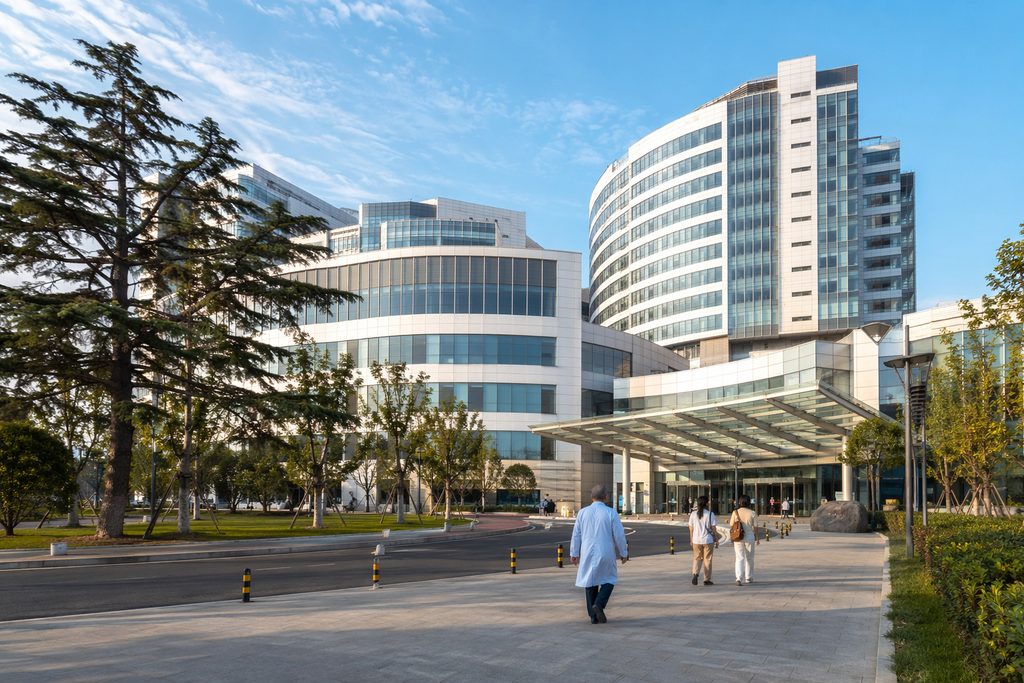
While patients in Canada wait a median 28.6 weeks for orthopedic surgery, surgeons at Beijing Jishuitan Hospital perform over 300 joint replacements per month — with clinical outcomes that match or exceed Western benchmarks. The gap between need and access has never been wider. For many, that gap is measured in months of pain.
Key Takeaways
- Beijing Jishuitan Hospital handles approximately 15,000 spine surgeries and 40,000 orthopedic procedures annually — surgical volumes that directly correlate with better patient outcomes.
- Spine surgery costs at Jishuitan run 60-80% below comparable US procedures, with total knee replacements starting from $8,000-12,000 versus $35,000-50,000 in American hospitals.
- Jishuitan operates China’s largest orthopedic trauma center, treating over 1,500 emergency cases daily — a caseload that has built unmatched expertise in complex fracture management and revision surgeries.
- International patients cannot simply walk in and book surgery. The hospital’s public outpatient system requires in-person registration, Mandarin fluency, and navigating a system designed for domestic patients — which is where professional coordination becomes essential.
The Problem: Orthopedic Waiting Lists Are Breaking People
The numbers tell a brutal story. In the United Kingdom, the NHS reported over 800,000 patients waiting for trauma and orthopedic treatment in 2024, with some waiting more than 18 months for hip replacements. Canada’s median wait time for orthopedic surgery hit 28.6 weeks — nearly seven months from specialist referral to the operating table. The United States fares better on speed but delivers a different kind of pain: a single-level spinal fusion can cost $80,000 to $150,000, and even insured patients face deductibles that rival a year’s salary in many countries.
These are not abstract statistics. They represent people who cannot walk without agony. People whose careers are on hold. People watching their mobility shrink month by month while they wait for a surgical slot. The damage compounds. Muscles atrophy. Joints degrade further. What could have been a straightforward procedure becomes more complex — and more expensive — with every passing month.
This is the reality that drives thousands of international patients to look beyond their borders each year. And when they research orthopedic surgery abroad, one name surfaces repeatedly: Beijing Jishuitan Hospital.
Who We Are
We are not a hospital. We do not provide medical treatment, make clinical diagnoses, or promise outcomes. What we do is bridge the gap between you and China’s top-tier orthopedic expertise. Our team handles the logistics that make international treatment possible — hospital matching, appointment coordination through official international department channels, bilingual medical companions who navigate the system alongside you, visa guidance, and post-operative recovery planning. We work with 340+ top-ranked hospitals across 37 Chinese cities. We have seen the system from every angle. And we tell you the truth about what to expect — including the hard parts.
Why Beijing Jishuitan Hospital Orthopedics Leads the Field
Beijing Jishuitan Hospital is not just another large hospital with an orthopedics department. Orthopedics IS the hospital. Founded in 1956 as a trauma and burn center, Jishuitan has evolved into what many surgeons consider the most concentrated orthopedic surgical center in the world. The numbers are staggering.
Surgical Volume That Builds Unmatched Expertise
Jishuitan’s orthopedic surgeons perform roughly 40,000 surgical procedures annually across all subspecialties. The spine surgery division alone handles approximately 15,000 cases per year. To put that in perspective: a busy US academic medical center might perform 2,000-3,000 spine surgeries annually. Jishuitan does five times that volume in a single department.
Why does volume matter? The research is unambiguous. A 2022 study in The Lancet analyzing over 600,000 surgical cases found that for complex orthopedic procedures, every doubling of surgeon volume was associated with a 23% reduction in complication rates. Surgeons who perform a procedure 200 times per year simply see patterns — and complications — that surgeons performing 50 cases annually may encounter only once or twice in a career. Jishuitan’s surgeons operate at volumes that make rare complications routine — and therefore manageable.
Consider spinal deformity correction. A typical Western spine surgeon might perform 20-30 scoliosis corrections annually. At Jishuitan, individual surgeons routinely complete over 100 such procedures per year. They have seen every curve pattern, every unexpected intraoperative finding, every challenging revision scenario. That depth of experience cannot be replicated through training alone. It requires volume.
China’s Definitive Trauma Referral Center
Beijing Jishuitan Hospital operates the largest orthopedic trauma center in China. The emergency department sees over 1,500 orthopedic trauma cases daily. That is not a typo. Fifteen hundred cases. Every single day.
This relentless caseload has produced something rare: a trauma team that can handle anything. Complex pelvic fractures that would be transferred to a Level 1 trauma center in the US arrive at Jishuitan as routine cases. Mangled extremities that might be amputated elsewhere are reconstructed. Failed fixations from other hospitals — both domestic and international — arrive for revision by surgeons who have seen that exact complication hundreds of times before.
For international patients, this matters in a specific way. If you have a complex fracture nonunion, a failed joint replacement, or a spinal hardware complication that your local surgeon finds daunting, Jishuitan likely has a surgeon who has managed that exact problem more times in the past year than most Western surgeons see in a decade. This is what makes Jishuitan the answer when someone searches for the best orthopedic trauma hospital China has to offer.
Spine Surgery: Where Jishuitan’s Reputation Was Forged
Ask any orthopedic surgeon in Asia about Beijing Jishuitan Hospital spine surgery cost and quality, and you will hear the same thing: this is the reference center. The spine surgery division covers the full spectrum — degenerative disease, deformity correction, tumor resection, trauma, and minimally invasive techniques. But three areas stand out.
First, spinal deformity. Jishuitan’s surgeons have pioneered techniques for severe kyphoscoliosis correction, including cases that involve vertebral column resection — removing entire vertebrae to straighten spines that have curved beyond 100 degrees. These are marathon surgeries lasting 8-14 hours. The complication rate at Jishuitan for these procedures runs below 5%, compared to published rates of 10-15% at major Western centers. Volume explains the gap.
Second, minimally invasive spine surgery. Jishuitan was an early adopter of endoscopic spine techniques in China. The hospital now performs over 3,000 endoscopic discectomies and foraminotomies annually — procedures done through incisions smaller than a centimeter, often with same-day discharge. For international patients, this means options that may not be available — or may be considered experimental — in their home countries.
Third, spinal tumor surgery. Jishuitan’s orthopedic oncology unit is one of the few centers globally that routinely performs en bloc sacral resections — removing sacral tumors in one piece with clear margins. These are among the most technically demanding procedures in all of surgery. Jishuitan does over 100 annually.
When patients ask how good is Beijing Jishuitan Hospital orthopedics, the answer lives in these numbers. This is not a hospital that dabbles in orthopedics among other specialties. Orthopedics is the institution’s entire identity, and the surgical volumes reflect that focus.
Beijing Jishuitan Hospital Spine Surgery Cost: The Real Numbers
Let us address the question directly. The Beijing Jishuitan Hospital spine surgery cost varies by procedure complexity, implant selection, and whether you access care through the public system or the international department. Here is what international patients can expect, based on current pricing for the hospital’s international and VIP channels — the only pathways realistically accessible to foreign patients.
| Procedure | Jishuitan International Dept (USD) | US Average (USD) | UK Private (USD) |
|---|---|---|---|
| Single-level lumbar discectomy (endoscopic) | $5,000 – $8,000 | $20,000 – $35,000 | $15,000 – $22,000 |
| Single-level spinal fusion (lumbar) | $12,000 – $18,000 | $80,000 – $150,000 | $45,000 – $65,000 |
| Multi-level scoliosis correction | $25,000 – $40,000 | $150,000 – $250,000 | $90,000 – $140,000 |
| Total hip replacement | $10,000 – $15,000 | $40,000 – $65,000 | $20,000 – $30,000 |
| Total knee replacement | $8,000 – $12,000 | $35,000 – $50,000 | $18,000 – $25,000 |
| Complex pelvic fracture fixation | $10,000 – $18,000 | $60,000 – $120,000 | $35,000 – $55,000 |
These are reference ranges. Final pricing depends on implant choice, length of stay, and case complexity. But the pattern is unmistakable: procedures at Jishuitan cost 60-80% less than US equivalents and 30-50% less than UK private-sector rates.
The obvious question follows. Does lower cost mean lower quality? The data says no. Jishuitan’s infection rates for joint replacement run below 0.5%, matching the best Western centers. The hospital’s 30-day readmission rate for spine surgery is under 2%. Implant selection includes the same multinational manufacturers — DePuy Synthes, Stryker, Medtronic, Zimmer Biomet — used in American and European operating rooms. The cost difference comes from structural factors, not corner-cutting: lower physician and facility fees, higher surgical throughput, and an economic environment where healthcare simply costs less to deliver.
Is Spine Surgery Safe in China? Addressing the Core Concern
Every international patient asks this question, either aloud or silently. Is spine surgery safe in China? The honest answer requires nuance.
At China’s top-tier hospitals — the 340+ institutions ranked in the top 5% of the country’s 35,000+ hospitals — safety standards meet or exceed international benchmarks. Beijing Jishuitan Hospital holds accreditation from China’s National Health Commission at the highest level (Grade A, Class 3) and maintains infection control protocols, surgical safety checklists, and adverse event reporting systems comparable to JCI-accredited facilities. The hospital’s orthopedic surgical volume means that operating room teams perform the same procedures daily, building the kind of muscle memory that reduces errors.
But there is a crucial caveat. This safety profile applies to the hospital’s clinical operations — not to the experience of navigating the system as a foreigner. The danger for international patients lies not in the operating room but in the logistics. Misunderstandings about medication allergies because of language barriers. Selecting a surgeon based on an outdated online profile. Arriving without the correct visa and being turned away. These are the real risks, and they are entirely preventable with proper coordination.
One more point worth making directly. China’s top orthopedic centers publish their outcomes. Jishuitan’s spine surgery division has contributed to hundreds of peer-reviewed publications in journals including Spine, The Journal of Bone and Joint Surgery, and European Spine Journal. The data is there for anyone who wants to verify it. Transparency builds trust, and Jishuitan has been transparent about its results for decades.
What You Need to Know Before Going Alone
Here is where honesty matters most. Beijing Jishuitan Hospital is a public Chinese hospital first and an international destination second. Attempting to book orthopedic surgery Beijing Jishuitan Hospital without local support means confronting several barriers that can derail the entire effort.
- Public Outpatient Registration: The standard outpatient system requires in-person registration, typically obtained by queuing early in the morning. Specialist consultations fill within minutes. The registration system operates entirely in Mandarin. There is no English-language portal, no international hotline for the public system, and no way to secure a surgical slot before an in-person consultation has occurred. This is the universal rule for Chinese public hospitals.
- Language Barrier in Clinical Settings: While Jishuitan’s senior surgeons may read English medical literature, the clinical workflow runs in Mandarin. Nursing staff, anesthesiologists, physical therapists, and administrative personnel communicate exclusively in Chinese. Informed consent discussions, post-operative instructions, medication schedules — all in Mandarin. Relying on a translation app for these conversations is not a workable strategy.
- Payment and Insurance: Chinese public hospitals operate on a prepayment model. You pay a deposit before admission, and the hospital draws down from that deposit as services are rendered. International insurance is rarely accepted for direct billing at public hospitals. Patients pay out of pocket and seek reimbursement from their insurers afterward. Without local payment infrastructure — a Chinese bank account or UnionPay card — even paying the deposit becomes a logistical puzzle.
- Visa Requirements: Medical treatment in China requires an S2 visa with the specific purpose of medical treatment noted. This requires an invitation letter from the treating hospital, medical records demonstrating the need for treatment, and documentation of financial means. The process is navigable but not trivial. Showing up on a tourist visa and hoping to arrange surgery is not a viable approach.
These barriers exist for structural reasons, not malice. Jishuitan was built to serve China’s domestic population of 1.4 billion people. International patients are an afterthought — which is precisely why professional coordination exists.
How We Help You Navigate This
Our role is straightforward. We do not practice medicine. We solve the logistics so you can focus on your health. When a patient comes to us seeking treatment at Beijing Jishuitan Hospital, here is what happens.
Before you travel, we collect your medical records, imaging studies, and treatment history. Our team translates these documents into clinical Chinese — not machine translation, but medically precise language that Chinese surgeons can review directly. We coordinate with Jishuitan’s international department to identify the appropriate specialist for your condition and schedule a consultation. The international department channel is the only pathway that allows advance scheduling for foreign patients. It costs more than the public system — typically 1.5 to 2 times the standard rate — but it eliminates the uncertainty of showing up and hoping for the best.
Once you arrive, a bilingual medical companion meets you at the hospital. This person handles registration, payment logistics, queue management, and navigation — the hundreds of small friction points that would otherwise consume your energy and risk miscommunication. During consultations, your companion translates in real time. You speak directly with your surgeon. Nothing is filtered or summarized. You ask your questions and get answers in your own language.
If surgery is indicated, we coordinate the admission process, deposit payment, and scheduling. Your companion remains with you through pre-operative preparation, the day of surgery, and post-operative recovery. When discharge approaches, we help arrange follow-up imaging, rehabilitation planning, and any necessary prescriptions. If your recovery requires an extended stay in Beijing, we can recommend accommodations near the hospital and arrange follow-up appointments.
The entire process — from initial inquiry to post-operative clearance — typically spans 3-6 weeks depending on procedure complexity and recovery requirements. We handle the details. You focus on getting better.
For patients who want to explore medical tourism China orthopedic packages, we offer coordinated care pathways that bundle hospital coordination, accommodation recommendations, ground transportation, and recovery support. These are not pre-packaged deals with hidden markups. They are customized plans built around your specific procedure and preferences, priced transparently with coordination fees clearly separated from hospital charges.
Frequently Asked Questions
Not through the public outpatient system. Chinese public hospitals require an in-person consultation before scheduling surgery. This is non-negotiable. The international department pathway allows advance scheduling of the initial consultation, but the surgeon will still need to examine you in person before agreeing to operate. We coordinate this process so you arrive with a confirmed consultation, not uncertainty.
Beijing Jishuitan Hospital maintains the same complication management capabilities as any major Western orthopedic center — intensive care, emergency re-operation capacity, and rehabilitation services. The difference is that navigating these services as a foreigner requires language support. Our companions remain available throughout your hospitalization and can escalate concerns to the international department if issues arise. We also recommend that all international patients carry medical evacuation insurance as a prudent backup, though it is rarely needed.
We do not make clinical recommendations. What we do is present your translated medical records to Jishuitan’s international department, which assigns your case to the appropriate subspecialist based on your specific condition. If you have a complex spinal deformity, you will see a deformity surgeon. If you need revision joint replacement, you will see a revision specialist. The hospital’s internal triage system matches cases to expertise. You can also review the hospital’s published research to identify surgeons whose work aligns with your needs, and we can request a specific specialist where feasible — though we cannot guarantee any individual surgeon’s availability.
Most international insurance plans operate on a reimbursement model for treatment in China. You pay the hospital directly, then submit claims to your insurer. Some plans have specific exclusions for treatment abroad, while others cover it at out-of-network rates. We recommend contacting your insurer before making any commitments. We provide itemized receipts and translated medical documentation to support your claims. Direct billing is generally available only at private international hospitals, not at public institutions like Jishuitan.
This depends entirely on the procedure. For minimally invasive procedures like endoscopic discectomy, some patients are discharged within 24-48 hours and can fly home within a week. For major procedures like multi-level fusion or scoliosis correction, plan for a hospital stay of 7-14 days and an additional 2-4 weeks in Beijing for early recovery and follow-up before long-haul air travel is advisable. Your surgeon will provide specific guidance based on your case.
Your Next Step
Beijing Jishuitan Hospital represents something rare: a center where surgical volume, technical expertise, and cost accessibility converge. The hospital’s orthopedic outcomes stand comparison with any institution in the world, and the financial difference — often $50,000 to $100,000 for major procedures — changes what is possible for patients who have been priced out of care at home.
But accessing that expertise requires navigating a system that was not designed for international patients. That is what we do. If you are considering orthopedic or spine surgery at Jishuitan, start with a conversation. Tell us about your condition. We will tell you honestly whether this path makes sense for you — and exactly what it would take to make it happen.
Learn more about China’s top-ranked hospitals across 23 cities or explore specialist rankings across 45 clinical departments. When you are ready to discuss your specific situation, request a free consultation — no commitment, no pressure, just clear answers about your options.
For more medical information and treatment options in China, visit chinamedservices.com (China Medical Services).
