Boao China: How to Access Unapproved Drugs and Devices Legally
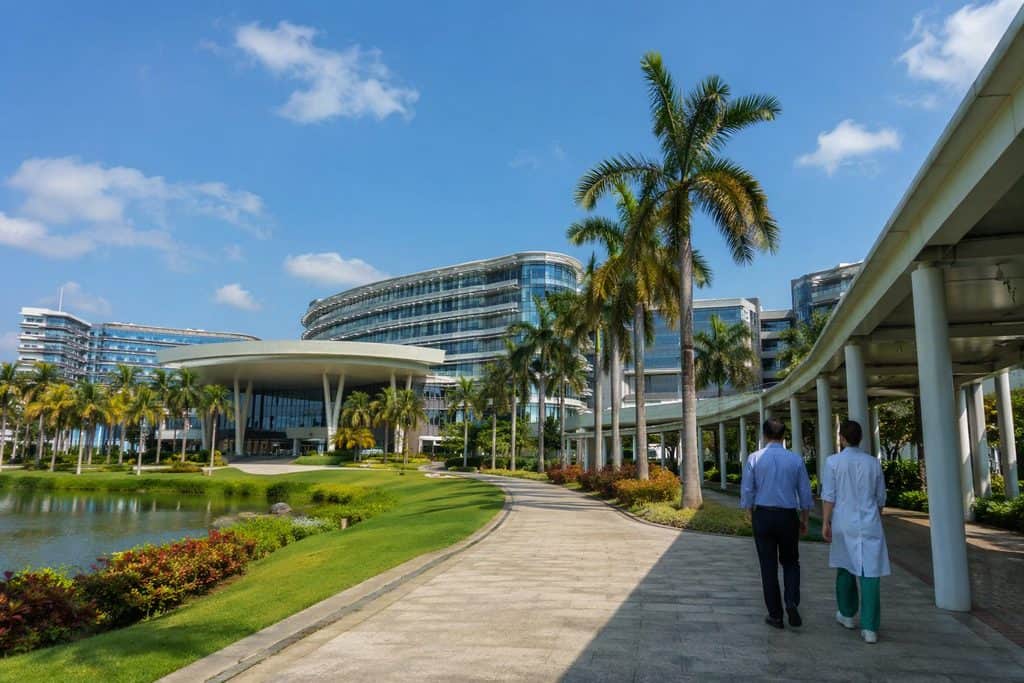
You have probably heard that if a cutting-edge drug is not approved in your home country, your only options are a clinical trial or waiting years. That is not entirely true. There is a third door, and it is open in China. Hainan’s Boao Lecheng International Medical Tourism Pilot Zone operates under a special national policy that allows physicians to use drugs, devices, and vaccines that are approved in the US, EU, or Japan but not yet available in the rest of China. No clinical trial enrollment. No multi-year wait for domestic regulatory clearance. For patients facing serious conditions without time to spare, this changes the calculus.
Key Takeaways
- Boao’s policy permits the clinical use of overseas-approved drugs and devices that lack China NMPA approval, a unique legal exception in the country.
- The pathway is not a loophole. It requires a prescribing physician at a licensed Boao hospital to determine medical necessity and obtain regulatory filings for each patient.
- Costs are entirely out-of-pocket. A single treatment cycle can range from $25,000 to over $120,000, depending on the drug and protocol, and insurance almost never covers it.
- This is for patients who have exhausted approved options and need a treatment that exists but is simply out of reach geographically. It is not a first-line solution.
The Problem: Effective Treatments Exist, But You Cannot Legally Access Them
The global drug approval timeline is brutally slow. A medication approved by the FDA today may not receive China’s National Medical Products Administration (NMPA) approval for another three to five years. The same lag applies in reverse. A breakthrough cancer therapy available in Shanghai might take half a decade to reach a clinic in London or Toronto. For a patient with recurrent glioblastoma or a rare pediatric epilepsy, that timeline is not an inconvenience. It is the entire window of action.
This regulatory gap affects approximately 1 in 10 patients with serious or life-threatening conditions who have exhausted all locally approved standard-of-care options. They know the name of the drug they need. They have read the phase III data. Their physician agrees it is the logical next step. But it sits behind a wall of marketing authorization they cannot climb. The traditional workaround—traveling to the country where the drug is approved and establishing care there—often means relocating for months, navigating a foreign healthcare system alone, and paying cash prices without any institutional support. For many, that is not realistic.
Why the Boao Special-Use Pathway Changes the Equation
In 2013, China’s State Council designated a 20-square-kilometer zone on Hainan Island as a pilot for international medical tourism. The core policy innovation came later: under the “special-use drug and device” framework, a licensed medical institution in Boao can apply to the Hainan provincial regulator to import and use a drug or device that has marketing approval in a recognized overseas jurisdiction—the US FDA, the European Medicines Agency, or Japan’s PMDA—but no NMPA approval. This is not a clinical trial. It is a real-world treatment pathway with regulatory oversight, designed for urgent clinical need.
Legal Access, Not a Loophole
Every use of this pathway requires a specific application. The treating physician must document the patient’s diagnosis, treatment history, and the medical rationale for why no approved domestic alternative is suitable. The hospital’s ethics committee reviews the case. The provincial Medical Products Administration reviews the drug’s overseas approval status and the import documentation. Only then does the product physically enter the zone. This is a tightly controlled process. It is also, for the right patient, the fastest legal route to a treatment that would otherwise require moving to another continent.
What the Policy Covers—and What It Does Not
The policy applies to drugs, vaccines, and medical devices. In practice, the highest-volume applications have been in oncology, rare disease, and advanced implantable devices. Examples include next-generation antibody-drug conjugates for breast cancer, gene therapies for spinal muscular atrophy, and novel transcatheter heart valves that are standard in Europe but not yet launched in Asia. The pathway does not cover experimental compounds that lack any major-market approval. A drug must have at least one recognized overseas authorization. It also does not bypass the medical necessity determination. A physician in Boao must independently conclude that the treatment is appropriate for you. You cannot simply order a drug and have it administered.
The Real Special Use Drug China Cost: What You Will Actually Pay
Let us address the question every patient and family asks first: what is the special use drug China cost? The honest answer is that no fixed price list exists. Each case involves the drug’s ex-manufacturer price, cold-chain logistics, hospital administration fees, and the required inpatient monitoring. Our team has coordinated cases across multiple therapeutic areas, and the total cost for a single treatment cycle typically falls into these ranges.
| Treatment Category | Example | Estimated Cost Per Cycle (USD) | Notes |
|---|---|---|---|
| Targeted Oncology Therapy | Next-gen ADC for metastatic breast cancer | $35,000 – $65,000 | Varies by weight-based dosing and cycles needed |
| Rare Disease Gene Therapy | Gene replacement for SMA | $80,000 – $120,000 | One-time administration; requires extended inpatient monitoring |
| Advanced Cardiovascular Device | Transcatheter valve not yet NMPA-approved | $55,000 – $85,000 | Includes device, cath lab, and surgeon fees |
| Special-Use Vaccine | RSV vaccine for high-risk adults | $500 – $1,200 | Lower cost; documentation and observation still required |
These figures are all-in for the treatment episode at the Boao hospital. They do not include international travel, accommodation on Hainan, or any pre-treatment diagnostic workups conducted in your home country. They also assume you are paying out-of-pocket. A small number of international insurance plans with true worldwide coverage may reimburse a portion, but this is rare. Most patients fund treatment through savings, family support, or medical crowdfunding. We tell every patient to budget for the treatment cost plus 20-30% for associated travel and lodging expenses over a 2-4 week stay.
How to Access Unapproved Drugs in China: The Step-by-Step Reality
The phrase how to access unapproved drugs in China implies a simple process. It is not simple. But it is structured. Here is what actually happens from the moment you decide to explore this pathway to the moment an IV line is placed.
Step 1: Remote Eligibility Assessment
You cannot simply arrive in Boao and request a drug. The first step is a remote evaluation. You submit your complete medical records—diagnostic reports, imaging, pathology slides, treatment history, and a letter from your current physician explaining why approved options are exhausted. A specialist at one of the licensed hospitals in Boao reviews these materials. This is a written second opinion, typically costing $300-500. The physician determines whether the requested treatment is medically appropriate and whether the Boao pathway is the right mechanism. Not every patient who inquires is accepted. The clinical bar is high because the regulatory filing requires a documented medical necessity.
Step 2: Regulatory Filing and Drug Import
If the physician agrees to proceed, the hospital initiates the special-use application with the Hainan Medical Products Administration. This filing includes the patient’s clinical summary, the overseas drug’s approval documentation, and the treatment plan. Processing time varies. For a drug that has been used in Boao before, the filing may clear in 5-10 business days. For a first-use drug that requires new documentation, it can take 3-4 weeks. Once approved, the hospital places the order with the manufacturer or its designated distributor. Cold-chain logistics bring the product into the zone under customs supervision. The drug is stored at the hospital pharmacy and released only for the approved patient.
Step 3: Travel, Visa, and Admission
With regulatory clearance in hand, you travel to Hainan. Foreign nationals use an S2 short-stay visa for private affairs, which covers medical treatment. Our team provides the hospital invitation letter and guides the visa application, but approval always rests with the Chinese embassy or consulate in your country. Upon arrival in Boao, you are admitted to the hospital. A full pre-treatment workup is repeated to confirm your clinical status has not changed. The treatment is administered under inpatient observation. For a one-time infusion, the hospital stay may be 3-5 days. For a surgical device implant, expect 7-14 days. Post-treatment monitoring continues until the medical team clears you for discharge.
Who This Pathway Is Really For—and Who It Is Not
We need to be direct here. The Boao special-use pathway is not a medical tourism amenity. It is a last-resort or time-sensitive option for specific patient profiles. You are a strong candidate if you have a confirmed diagnosis, have exhausted or cannot tolerate approved therapies in your home country, and have a specific overseas-approved drug or device that your physician agrees is the appropriate next step. You also need the financial resources to pay out-of-pocket and the physical stability to travel internationally.
You are not a good candidate if you are seeking a first-line therapy, if you have not yet tried standard approved treatments, or if you are looking for an experimental compound with no major-market approval. The pathway requires an existing FDA, EMA, or PMDA authorization. It also requires a Boao physician to independently conclude that the treatment is medically necessary for you. This is not a self-service pharmacy. It is a regulated clinical pathway with real medical gatekeeping, which is exactly what makes it credible.
The question can foreigners get new drugs in Hainan comes up in nearly every initial consultation. The answer is yes. The policy does not restrict access by nationality. The criteria are clinical, not citizenship-based. International patients have received treatment in Boao for conditions ranging from HER2-low breast cancer to Duchenne muscular dystrophy. The barrier is not your passport. It is whether your clinical situation meets the medical necessity threshold and whether you can manage the logistics and cost.
Practical Considerations: Logistics, Money, and the Paper Trail
Knowing the Hainan Boao innovative treatment price range is one piece of the puzzle. The practical logistics are another. Boao is on Hainan Island, a tropical province in southern China. The nearest international airport is Haikou, about an hour and a half by car. Some patients fly into Sanya, which is closer. The hospitals in the pilot zone are modern, purpose-built facilities with English-speaking international departments. But outside the hospital walls, Boao is a small town. For extended stays, many patients and families prefer to base themselves in Haikou or Sanya and travel to Boao for appointments.
Payment is upfront. Hospitals in the zone require a deposit before ordering the drug or device, typically 100% of the estimated treatment cost. Wire transfers, major credit cards, and sometimes cash are accepted, but you must confirm the payment method with the specific hospital before traveling. China has strict capital controls, and large international wire transfers can take several days to clear. Plan for this delay. As for insurance, do not assume coverage. Contact your insurer directly, provide the treatment plan and the drug’s overseas approval documentation, and request a pre-determination. In our experience, most insurers classify this as an out-of-network, non-formulary exception. Reimbursement, if any, is retrospective and partial.
Language is a real barrier. While the international departments in Boao have English-speaking coordinators, the nursing staff, pharmacists, and administrative personnel may not. You will need interpretation support during the admission process, consent discussions, and discharge planning. This is not a luxury. It is a safety requirement. Misunderstanding a post-treatment medication instruction because of a language gap is a preventable risk.
Frequently Asked Questions
Yes, it is fully legal. The pathway operates under State Council policy and provincial regulatory oversight. The drug import is documented and approved by the Hainan Medical Products Administration. You receive treatment inside a licensed hospital. You are not carrying unapproved drugs across a border. The customs documentation is handled by the hospital and the drug distributor. Your role is to be the patient, not the importer.
This is a serious concern and one the system is designed to handle. Treatment is administered in an inpatient setting with full emergency capabilities. The prescribing physician is responsible for adverse event management and must report outcomes to the provincial regulator. That said, you are receiving a drug outside its approved jurisdiction. The manufacturer’s liability and support infrastructure may be more limited than what you would expect at home. You should discuss this risk directly with the treating physician during the informed consent process.
No. The special-use authorization covers administration within the Boao pilot zone only. You cannot take the drug out of the hospital or out of the zone. If the treatment protocol requires multiple cycles, you will need to return to Boao for each cycle. Some patients negotiate with their home-country physician to switch to a different maintenance therapy after the initial Boao treatment, but that is a separate clinical decision made outside the special-use framework.
There is no public online catalog of every drug used in Boao. The first step is to contact a service that can liaise with the licensed hospitals and determine whether your specific drug has been used before or can be sourced. A written second opinion is the standard starting point. The reviewing physician will assess both your clinical suitability and the feasibility of importing the specific drug you need. If the drug has never been used in Boao, the hospital will need to establish a new import channel, which adds time and complexity.
For a drug that has been used in Boao before and a patient who is clearly eligible, the fastest timeline we have seen is about 3-4 weeks. That includes the remote evaluation, regulatory filing, drug ordering, visa processing, and travel. For a first-use drug or a complex case requiring additional diagnostics, plan for 6-8 weeks. This is not an emergency pathway. It is an accelerated one relative to waiting years for domestic approval, but it still requires patience and methodical preparation.
Your Next Step
The Boao special-use pathway exists to solve a specific, painful problem: you know which treatment you need, and you cannot get it where you live. It is not a cure-all, and it is not cheap. But for patients who fit the profile, it is a legitimate option worth understanding fully. Our team at China Medical Services helps international patients navigate this process—from the initial remote evaluation to travel logistics and on-the-ground support in Boao. We do not practice medicine or guarantee treatment outcomes. We handle the coordination so you and your physician can focus on the clinical decisions. If you want to know whether your specific case is a fit, start with a written second opinion. The answer may surprise you.
For more medical information and treatment options in China, visit chinamedservices.com (China Medical Services).
