Bone Augmentation for Implants in China: Real Costs and Top Clinics
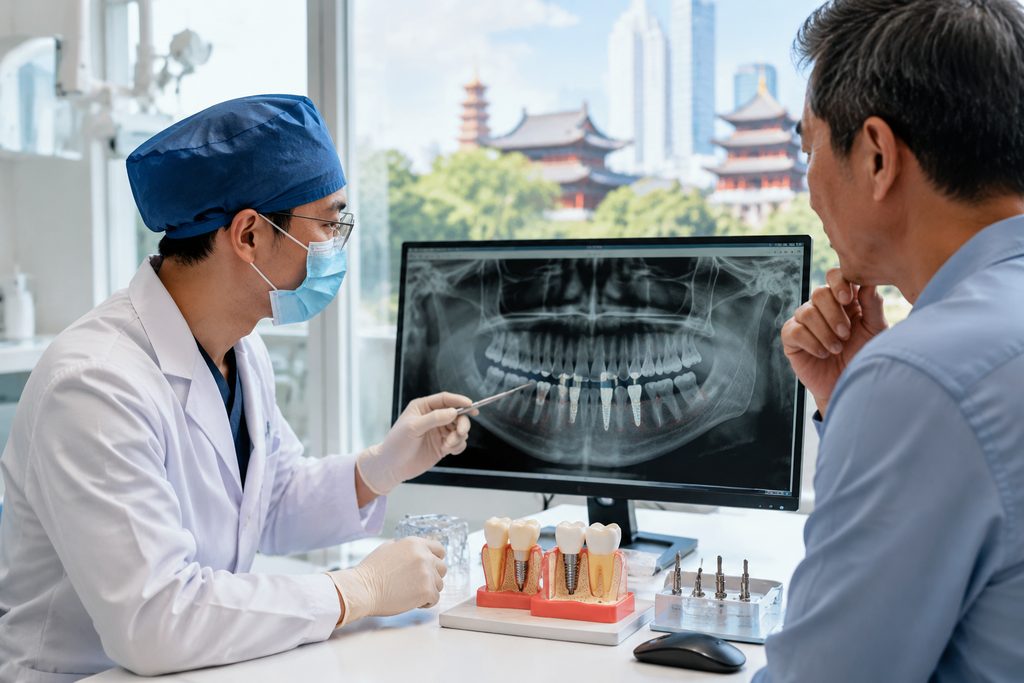
Bone Augmentation for Implants in China: Costs, Clinics, and What to Expect
Roughly 1 in 4 adults who lose a tooth also lose enough jawbone that a standard implant cannot be placed without first rebuilding the site. That single statistic explains why searches for bone augmentation for dental implants cost China have climbed so sharply among international patients. In the United States, a socket preservation graft averages $600 to $1,200, a block graft can exceed $3,000, and a full sinus lift often runs $2,500 per side — before the implant itself is even quoted. In China, the identical procedures are typically performed at a fraction of those figures, in hospitals that handle more implant cases per year than most Western clinics see in a decade. This guide walks through the numbers, the safety record, the timeline, and the practical logistics of having ridge augmentation done in China.
How This Actually Works, Step by Step
Bone grafting abroad is not a walk-in transaction. The sequence matters, and skipping steps is how patients end up paying twice.
Step one — records first. You send what you already have: a recent panoramic X-ray (orthopantomogram), a CBCT scan if one exists, photos of the mouth, and any prior dental notes or implant quotes. If you have no CBCT, that is normal. It gets done on arrival.
Step two — remote review. A Chinese oral and maxillofacial surgeon or implantologist reviews the imaging and estimates the defect: horizontal width, vertical height, and whether the maxillary sinus or inferior alveolar nerve is involved. This is where you learn whether you need a simple socket graft, a lateral window sinus lift, or a more involved block graft from the chin or ramus.
Step three — a written plan and a cost range. You receive the proposed graft type, the biomaterial likely to be used (autogenous, allograft, xenograft, or synthetic), the number of implant sites, and a price band. Not a final invoice — a band, because nobody can quote precisely from a photograph.
Step four — travel and in-person examination. The surgeon confirms the plan with a fresh CBCT, checks soft tissue quality, and takes blood work. Only then is the graft actually scheduled. This is the honest part most overseas marketing omits: no reputable Chinese hospital commits to a surgical date before seeing you in person.
Step five — the graft, then the wait. The augmentation is performed, and a healing period begins. Implant placement follows weeks to months later, depending on the graft type.
What Bone Augmentation Costs in China Versus the US, UK, and Australia
Prices vary by hospital tier, city, and case complexity, so treat the table below as a planning range rather than a quotation. Private international departments and VIP channels sit at the higher end; standard public tertiary stomatology hospitals sit lower.
| Procedure | China (USD) | United States (USD) | United Kingdom (USD) |
|---|---|---|---|
| Socket preservation graft (single site) | $250 – $600 | $600 – $1,200 | $500 – $1,000 |
| Lateral window sinus lift (per side) | $900 – $2,000 | $2,000 – $3,500 | $1,800 – $3,000 |
| Block bone graft (chin or ramus) | $1,200 – $2,800 | $2,500 – $4,500 | $2,200 – $4,000 |
| Guided bone regeneration with membrane | $500 – $1,400 | $1,200 – $2,500 | $1,000 – $2,200 |
| Dental implant (fixture + abutment + crown) | $800 – $2,000 | $3,000 – $5,000 | $2,500 – $4,500 |
The pattern is consistent: the dental implant bone graft price abroad in China generally lands between one-quarter and one-half of US private-practice rates, and roughly 40 to 60 percent below UK private fees. Biomaterial brand is a real variable. A premium European xenograft costs more than a domestic synthetic graft, and the difference is not always clinically meaningful for every defect type.
One caution worth stating plainly. The cheapest quote is frequently not the cheapest outcome. A graft that fails because the membrane was inadequate or the healing time was rushed means paying for the procedure twice, plus travel. Ask what happens if the graft does not integrate.
A Realistic Timeline
Patients consistently underestimate this. Bone does not care about your flight schedule.
| Stage | Typical Duration | Notes |
|---|---|---|
| Record collection and translation | 3 – 10 days | Imaging and notes translated into Chinese for the reviewing surgeon |
| Remote written review | 3 – 7 days | Plan and cost band returned |
| Appointment coordination | 1 – 3 weeks | Top specialists book out; VIP channels move faster |
| Visa (S2) processing | 1 – 3 weeks | Requires hospital invitation and supporting documents |
| Arrival, in-person exam, CBCT | 1 – 2 days | Graft scheduled after this |
| Bone graft surgery | 1 day | Usually 45 – 120 minutes depending on sites |
| Healing before implant placement | 3 – 6 months | Socket graft 3–4 months; sinus lift or block graft 4–6 months |
| Implant placement | 1 day | Second trip, or extended stay |
| Osseointegration before crown | 3 – 4 months | Then final restoration |
Total elapsed time from first email to finished crown: commonly 9 to 14 months. Anyone promising a graft and a loaded implant in a single two-week trip is describing a narrow subset of cases, not the norm.
What Can Go Wrong — and What Happens Then
Graft failure is the main risk, and its reported incidence in the literature for guided bone regeneration sits in the range of roughly 5 to 15 percent depending on defect severity, smoking status, and site. That is not a China-specific number. It is a biology number.
Membrane exposure. The barrier membrane can become exposed during healing, which compromises the graft. Recourse: early review, possible membrane removal, and a second graft after soft tissue heals. This is why follow-up timing matters even after you fly home.
Infection. Uncommon in healthy non-smokers, higher in uncontrolled diabetics. Chinese tertiary hospitals prescribe prophylactic antibiotics and schedule a review within the first two weeks.
Nerve proximity. In the posterior mandible, a graft or implant placed too close to the inferior alveolar nerve can cause temporary or, rarely, permanent numbness. CBCT planning reduces this risk substantially, which is why a clinic that skips CBCT should be disqualified immediately.
Sinus complications. After a sinus lift, a perforation of the Schneiderian membrane occurs in a minority of cases and is usually managed intraoperatively. Persistent sinusitis afterward requires ENT review.
Follow-up gap. The most common real-world failure is not surgical. It is a patient who returns home and never gets the graft assessed. If your local dentist is unwilling to monitor work performed abroad, plan a second short trip or arrange a remote review with images sent back to China.
Choosing a Clinic: What Actually Predicts a Good Outcome
China has more than 35,000 hospitals. Only a small fraction are equipped and staffed for advanced bone augmentation, and the difference between an adequate clinic and an excellent one is not visible on a price list.
Look for a stomatology hospital or a major tertiary hospital with a dedicated oral and maxillofacial surgery department, not a general dental chain. Volume matters: a department placing thousands of implants annually has seen your defect type many times before. If you are searching for the best dental implant clinic Shanghai, the same logic applies as in Beijing, Guangzhou, or Chengdu — department depth beats brand name.
Three questions separate serious providers from the rest. Do they require a CBCT before quoting? Do they specify which biomaterial and membrane they intend to use, by name? And do they put the graft failure policy in writing? A clinic that answers all three clearly is worth the premium. One that answers vaguely is not worth the discount.
It also helps to know where the country’s strongest departments actually sit. China’s top-ranked hospitals cluster in Beijing, Shanghai, and Guangzhou, and the Fudan specialist reputation rankings list the leading institutions by discipline. Our department rankings by specialty let you filter for stomatology and oral surgery rather than guessing from marketing pages.
Practical Considerations: Records, Visa, Payment, and Language
Socket preservation typically requires 3 to 4 months of healing. Sinus lifts and block grafts generally need 4 to 6 months, and some complex cases extend to 9 months. Your surgeon will confirm the interval at the post-operative review, and rushing it is the single most common cause of implant failure.
Only in selected cases, and usually only when the defect is minor and a simultaneous approach is clinically appropriate. For most moderate to severe defects, the graft and implant are staged across two visits. Any clinic guaranteeing a single-trip solution before examining you in person is overpromising.
Some international policies reimburse overseas dental treatment, but many exclude elective dental work entirely. Check your policy before traveling and request an itemized receipt and operative report, which most insurers require for reimbursement claims.
Start with a remote review rather than a package purchase. Send your imaging, get a written assessment and cost band, then decide whether to travel. Packages sold before a clinical review tend to fit the seller’s schedule, not your jaw.
Your Next Step
Bone augmentation in China is a genuine option for patients facing four-figure Western quotes, provided you accept the timeline and do the preparation properly. The savings are real. So is the healing period, and no price justifies skipping it.
We are China Medical Services, a coordination team that connects international patients with top-ranked Chinese hospitals. We are not dentists and we do not provide medical advice. What we do is arrange written second opinions, video consultations with the relevant specialty, appointment coordination, bilingual medical companionship, and visa guidance — so that a decision this consequential is made with real information rather than a brochure. When you are ready, you can start with a free consultation and we will tell you honestly whether your case is a good fit for treatment in China.
This article is for general information only and does not constitute medical advice. Treatment decisions should always be made with a qualified clinician who has examined you in person.
Frequently Asked Questions
Yes. The hospitals used for international patients are JCI-accredited and follow the same international safety standards as top hospitals in the US and Europe. Surgical teams perform high volumes of procedures — often more than their Western counterparts — which studies show leads to better outcomes.
Costs vary by procedure and hospital, but international patients typically save 40-80% compared to US prices — even when factoring in travel and accommodation. A consultation with our team will give you an exact, all-inclusive quote with no hidden fees.
Send us your existing medical reports to get started. We handle everything from hospital selection and appointment scheduling to visa assistance and post-operative recovery planning. Your medical records are reviewed by the specialist before you even book a flight.
For more medical information and treatment options in China, visit chinamedservices.com (China Medical Services).
