Bone Loss and Dental Implants: Your Real Options in China
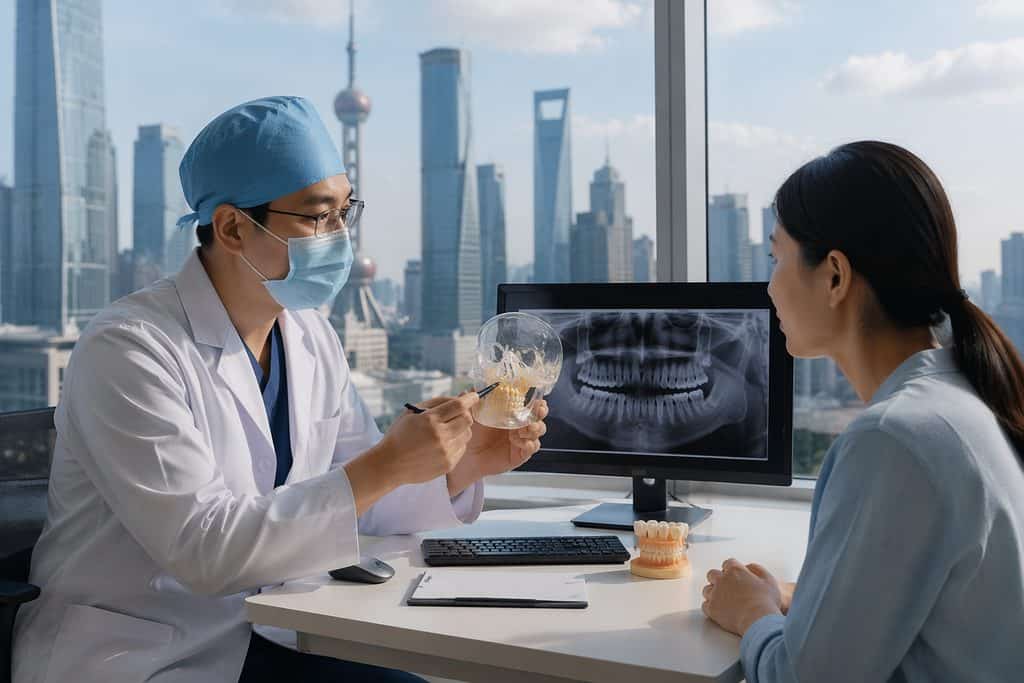
According to a 2023 systematic review published in the Journal of Stomatology, Oral and Maxillofacial Surgery, the global prevalence of edentulism combined with significant alveolar bone atrophy continues to rise in patients over 50. The study noted that up to 40% of patients initially rejected for conventional implants are candidates for advanced techniques. That statistic matters if you have been told your jawbone is too thin or too soft. The question is not simply “Can I get implants if I have bone loss?” The better question is: which technique fits your specific bone volume, and what does the dental implants with bone loss cost China look like compared to the quote sitting on your kitchen counter back home? Our team has coordinated care for patients facing exactly this dilemma. We have seen the X-rays. We have also seen the relief when a plan that seemed impossible becomes routine in the right hands.
How This Actually Works, Step by Step
You have been told you need a bone graft. Or perhaps you were told you are not a candidate at all. Here is the sequence we walk patients through when they ask us about how do dental implants work with bone loss.
First, you send us a recent panoramic X-ray or, ideally, a CBCT scan. The CBCT is the gold standard because it shows bone width and height in three dimensions. A standard dental X-ray is flat; it hides the true volume. We arrange for a review by an oral and maxillofacial team. They measure the residual ridge. If there is at least 4–5 mm of vertical bone height in the posterior maxilla, a short implant or a standard implant with a simultaneous minor graft might work.
Second, the surgeon classifies your bone loss. Mild horizontal loss often needs a particulate graft at the time of surgery. Severe vertical loss in the upper jaw changes the conversation. That is where zygomatic implants price China becomes relevant because the technique anchors into the zygomatic bone instead of the maxilla. No graft. Immediate loading in many cases.
Third, you receive a written treatment plan. It includes the technique, the number of implants, the type of prosthesis, and the staged timeline. You do not need to be in China for this step. We handle the translation of your records and the coordination with the hospital’s international department.
Fourth, you decide. If you proceed, we move to the visa and scheduling phase. If you need time, the plan remains valid for a defined window. There is no pressure. The goal is clarity.
Can I Get Implants with Severe Bone Loss? The Techniques That Actually Work
Yes, in most cases. The real question is which surgical pathway. Let us be direct about the three main routes when a standard implant fails due to insufficient bone.
Guided Bone Regeneration (GBR) with Particulate Graft. This is the workhorse. The surgeon opens the gum, places a bone substitute or autogenous bone chips, covers it with a collagen membrane, and closes. You wait 4–6 months for the graft to integrate. Then the implant goes in. Then another 3–4 months for osseointegration. Total time before teeth: roughly 8–10 months. It works beautifully for moderate defects. For severe atrophy, it is less predictable.
Zygomatic Implants. Designed for the upper jaw with almost no remaining bone. The implant is longer—30 to 52.5 mm—and anchors into the zygomatic bone. The procedure skips the graft entirely. Many patients receive a fixed bridge within 24–72 hours. The learning curve is steep, which is why you want a surgeon who performs these weekly, not annually. When patients ask about zygomatic implants price China, they are often comparing it to a quote in the US where the same procedure can exceed $40,000 per arch. In China, the range is typically $12,000–$25,000 per arch, depending on whether you choose a public hospital’s international wing or a private dental hospital.
All-on-4 or All-on-6 with Tilted Implants. Here, the surgeon tilts the posterior implants to avoid the sinus cavity and engage more bone. This reduces the need for grafting. It is not for every case, but it is a strong middle path when bone loss is moderate to advanced.
A Realistic Timeline
Patients often underestimate the waiting built into dental implant treatment. Here is what a typical international patient timeline looks like for a graft-based approach, from first contact to final teeth.
| Stage | What Happens | Duration |
|---|---|---|
| Day 1–7 | You send CBCT and medical history. We translate and forward to the oral surgery team. | 1 week |
| Week 2–3 | Written treatment plan and cost estimate returned. Video consultation scheduled. | 1–2 weeks |
| Week 4–6 | S2 visa application with hospital invitation letter. Flight and accommodation planning. | 2–3 weeks |
| Week 7 | Arrival in China. In-person examination and final surgical consent. | 2–3 days |
| Week 8 | Bone graft surgery (if required). You stay 7–10 days for initial healing check. | 1–2 weeks on-site |
| Month 3–6 | Graft integration at home. You send follow-up X-rays to the Chinese team. | 3–4 months |
| Month 7 | Return to China for implant placement surgery. | 1 week on-site |
| Month 10–12 | Final prosthesis delivery. Bite adjustment. You fly home with teeth. | 1–2 weeks on-site |
Zygomatic or immediate-loading protocols compress this dramatically. You might fly in, have surgery, and leave with a fixed bridge in under two weeks. But that speed assumes you are a good candidate and no complications arise.
What Can Go Wrong — and What Happens Then
We do not sugarcoat this. Dental implant surgery fails. The failure rate for standard implants in healthy bone is around 2–5%. In grafted bone, especially in the posterior maxilla, failure rates can reach 10–15% according to long-term cohort studies. When a patient asks us can I get implants with severe bone loss, they deserve the risk profile, not just the success story.
The most common failure is early osseointegration failure. The implant simply does not fuse to the bone. It feels loose. The surgeon removes it. The good news: removal is minor, and you can often retry after 3–4 months of healing. In our experience, the second attempt succeeds in the majority of cases.
Sinus membrane perforation is a specific risk for upper-jaw implants. If the surgeon tears the Schneiderian membrane during a sinus lift, they may abort the procedure and let it heal. That adds 2–3 months to your timeline. It is not malpractice; it is anatomy.
Zygomatic implants carry a different risk: the implant path passes near the orbit. A surgeon without sufficient cadaver and live-surgery training can misplace the apex. That is why we only coordinate zygomatic cases with a short list of surgeons who perform high volumes. If you are quoted a suspiciously low price for zygomatic implants in a clinic that does one per month, walk away.
What happens if something goes wrong after you fly home? You need a local dentist willing to manage another surgeon’s work. Not all dentists will. We advise patients to identify a local provider before traveling. Send them the treatment plan. Ask if they will handle follow-up. If they say no, find another one.
How to Evaluate a Clinic for Implants with Bone Loss
Not every clinic that advertises “dental tourism” can handle severe atrophy. Here is the filter we use when patients ask us to help them choose a best dental implant clinic for bone loss Shanghai or any other Chinese city.
Look at the surgeon’s case log. A surgeon doing 300 implants a year but only 10 zygomatic cases is not your zygomatic surgeon. Ask for the specific number for your procedure. A good answer is a number. A bad answer is “we do many.”
Look at the imaging protocol. If the clinic does not require a CBCT before quoting a price, that is a red flag. You cannot plan a graft or a tilted implant off a flat X-ray. The clinic should insist on the scan, not treat it as optional.
Look at the lab. The final teeth matter as much as the implants. Ask where the prosthesis is fabricated. In-house digital labs with CAD/CAM milling tend to deliver better fit and faster turnaround than outsourced labs. Shanghai and Beijing have several clinics with in-house labs; smaller cities often outsource.
Look at the guarantee. Reputable clinics in China typically offer a warranty on the implant fixture itself—often 5–10 years from the manufacturer—and a separate warranty on the prosthesis, usually 1–3 years. The surgical placement itself is not “guaranteed” because biology does not work that way. If a clinic promises a 100% success rate, leave.
Practical Considerations: Records, Visa, and Payment
You will need a current CBCT scan, ideally taken within the last 3 months. Older scans may not reflect current bone volume if you have had extractions since. You also need a medical history summary, especially if you take blood thinners or bisphosphonates. Bisphosphonate use is a major contraindication for implants because it raises the risk of osteonecrosis of the jaw. Disclose it.
For the visa, the S2 category is the one used for short-term medical treatment and private affairs in China. The hospital’s international department will issue an invitation letter and treatment confirmation. That letter is part of your visa application. Processing typically takes 1–3 weeks depending on your home country’s Chinese embassy or consulate. We guide you through the document checklist but do not guarantee approval; that decision belongs to the visa officer.
Payment is almost always upfront. Public hospitals and most private dental hospitals in China do not bill international insurance directly. You pay, then submit for reimbursement. Some private international clinics in Shanghai and Beijing do offer direct billing with major insurers. That convenience is priced into their fees. If direct billing matters to you, tell us early so we can shortlist accordingly.
Language is the friction point most patients forget. A top oral surgeon in Shanghai may speak excellent clinical English. The registration desk, the imaging technician, the pharmacist, and the billing office may not. That is why a bilingual medical companion changes the experience. They handle the queuing, the payment counters, the prescription pickup, and the translation during pre-op and post-op instructions. You focus on healing.
Frequently Asked Questions
Often yes, but not always. If the bone loss is in the upper jaw, zygomatic implants or a sinus lift with grafting may be viable. If the loss is in the lower jaw, nerve repositioning or short implants may work. A CBCT review by an experienced oral surgeon is the only way to know for certain.
The range is wide. A single implant with a minor graft typically runs $1,200–$2,800 in a top public hospital’s international department. A full-arch zygomatic reconstruction ranges from $12,000–$25,000 per arch. A full-arch All-on-4 with grafting typically lands between $8,000 and $18,000. These figures vary by hospital tier, city, and case complexity.
No. Tilted implants, zygomatic implants, and short implants can bypass grafting in selected cases. The decision depends on the location and severity of the bone defect. Get a second opinion before accepting a graft as inevitable.
You will need a local dentist willing to evaluate and possibly remove the failed implant. Removal is a minor procedure. After 3–4 months of healing, you can often have a new implant placed, either in your home country or back in China. We advise patients to establish a local follow-up provider before traveling.
Most international health insurance plans exclude dental implants as elective. Some dental-specific plans or premium policies cover a portion. Check your policy’s fine print before committing. Chinese public hospitals do not bill foreign insurers directly in most cases.
Your Next Step
Bone loss does not automatically disqualify you from dental implants. It changes the technique, the surgeon you need, and the price you pay. The dental implants with bone loss cost China is often a fraction of Western quotes, but cost should not be the only filter. Surgeon volume and imaging protocol matter more.
China Medical Services maintains a database of 340+ top-ranked hospitals across 37 cities, including oral and maxillofacial departments with high-volume implant programs. We do not perform surgery. We connect you with the right team, translate your records, and coordinate the logistics so you can make a clear decision. If you want a realistic assessment of your CBCT and a straightforward cost estimate, request a free consultation. Send the scan. We will take it from there.
You have more options than you think. But you need the right information first. That is where we start.
For more medical information and treatment options in China, visit chinamedservices.com (China Medical Services).
