Brain Injury Neuro-Rehabilitation China: Rebuilding Cognitive and Physical Function After Trauma
Key Takeaways
- China’s top neuro-rehabilitation centers manage patient volumes that few Western facilities can match, giving clinical teams deep experience with complex traumatic brain injury (TBI) and post-surgical recovery cases.
- Intensive inpatient rehabilitation programs in China typically cost 60-80% less than comparable programs in the United States, without sacrificing the technology or therapeutic intensity required for meaningful neurological recovery.
- Language barriers and fragmented hospital systems make independent navigation extremely difficult. A patient without a bilingual coordinator risks critical miscommunication during cognitive assessments and therapy planning.
- Neuro-rehabilitation is not a quick fix. Realistic timelines, family involvement, and continuity of care matter as much as the facility you choose. Understand the commitment before you book a flight.
The Problem: Brain Injury Recovery Is a Long Road That Most Systems Aren’t Built For
Approximately 1.5 million Americans sustain a traumatic brain injury each year. About 80,000 of them will experience long-term disability. That number doesn’t include the thousands more who face cognitive and physical deficits after brain tumor surgery, stroke, or aneurysm repair. What happens after the ICU discharge is where the real struggle begins. In the United States, the average inpatient rehabilitation stay for moderate-to-severe TBI has shrunk to under three weeks. Insurance reimbursement dictates the timeline, not the patient’s actual progress. Families watch their loved one plateau, then scramble to find outpatient therapy that is often fragmented, understaffed, and spread across multiple clinics.
The financial pressure is brutal. A comprehensive inpatient brain injury rehabilitation program in the US can run $1,500 to $2,500 per day. A 30-day stay easily exceeds $50,000. Many families drain savings or skip recommended therapy because the math simply doesn’t work. The question that brings patients to our door is painfully simple: Is there another way to get intensive, evidence-based neuro-rehabilitation without financial ruin?
Who We Are
We are China Medical Services, a medical concierge team based in China. We are not a hospital. We do not provide medical treatment, clinical diagnoses, or rehabilitation therapy. What we do is connect international patients with China’s top-tier neuro-rehabilitation hospitals and manage every logistical detail of the journey. Our network spans 340+ top-ranked hospitals across 37 cities. We handle hospital matching, appointment coordination, bilingual medical companion services, visa guidance, accommodation advice, and interpreter-supported therapy sessions. We are the operational layer between you and the clinical expertise you need.
Why Brain Injury Neuro-Rehabilitation in China Delivers Results
Clinical Volume Creates Pattern Recognition
China’s top rehabilitation hospitals treat an extraordinary volume of neurological cases. A single center like the Rehabilitation Hospital affiliated with China Rehabilitation Research Center in Beijing or the Department of Rehabilitation Medicine at Huashan Hospital in Shanghai manages thousands of brain injury inpatients annually. This volume matters. It means the therapy team has seen your loved one’s specific pattern of deficits before. They recognize subtle signs of emerging consciousness, know when to push harder in physical therapy, and understand the non-linear nature of cognitive recovery. Compare this to a general rehabilitation unit in a Western community hospital where a therapist might see a handful of complex TBI cases each year. Volume does not guarantee quality, but in neuro-rehabilitation, pattern recognition is clinical gold.
These hospitals also integrate Traditional Chinese Medicine (TCM) techniques, including acupuncture and therapeutic massage, into recovery protocols. The evidence base for acupuncture in post-stroke motor recovery is well-documented. For brain injury patients, these adjunct therapies can address spasticity, sleep disruption, and pain in ways that complement conventional physical and occupational therapy. You can explore our TCM hospital network for a deeper look at how these therapies fit into a comprehensive rehabilitation plan.
Technology and Therapy Intensity at Scale
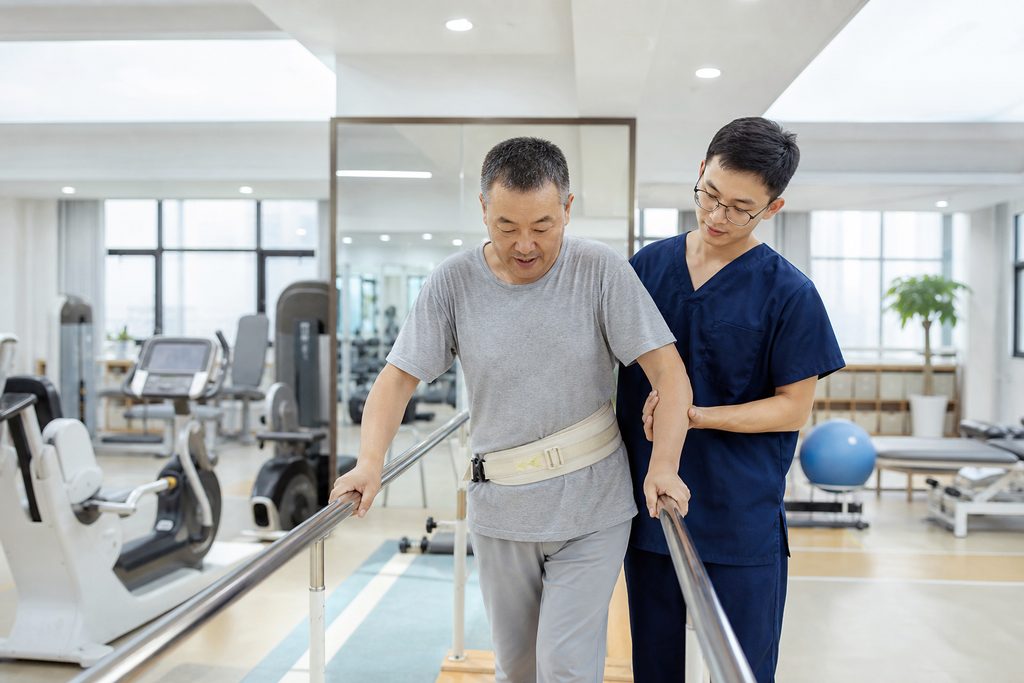
The best neuro-rehabilitation hospital Shanghai has to offer deploys robotic exoskeletons, virtual reality cognitive training platforms, and brain-computer interface systems in daily therapy. These are not research prototypes. They are clinical tools used with dozens of patients each day. Lokomat robotic gait trainers, Armeo upper extremity systems, and transcranial magnetic stimulation (TMS) units are standard in top-tier Chinese rehabilitation hospitals. The difference is operational: these hospitals run therapy six days a week, often with multiple daily sessions. A patient might do robotic gait training in the morning, speech therapy at midday, and occupational therapy in the afternoon. This intensity is difficult to replicate in most Western settings.
Also, the integration of diagnostic imaging with rehabilitation planning is tighter. Many large rehabilitation hospitals in China are physically connected to or closely affiliated with general hospitals that have 3T MRI, CT perfusion, and EEG monitoring on-site. When a patient plateaus or regresses, the clinical team can order imaging and adjust the therapy plan within days, not weeks.
The brain injury rehabilitation cost China Reality
Let’s talk numbers. Intensive inpatient neuro-rehabilitation in a top Chinese hospital, including daily physical therapy, occupational therapy, speech therapy, and nursing care, typically ranges from $400 to $800 per day. A full 30-day program costs between $12,000 and $24,000. Compare this to $45,000-$75,000 for a similar program in the United States. The cost advantage is structural. Lower labor costs for therapists and nurses, higher patient-to-therapist ratios, and lower administrative overhead drive efficiency without cutting therapy minutes. A patient in a Chinese rehabilitation hospital often receives more hands-on therapy time per day than they would in a US inpatient rehabilitation facility, at a fraction of the daily rate.
Does lower cost mean lower quality? Not in the hospitals we work with. Many are JCI-accredited or hold China’s highest national hospital rating. Their clinical outcomes for motor recovery and cognitive function improvement are published in peer-reviewed international journals. The cost difference reflects economics, not a compromise on care standards.
What You Need to Know Before Going Alone
China’s healthcare system is not designed for independent foreign visitors. Here are the barriers that trip up even the most determined families:
- Visa Requirements: Medical treatment in China requires an S2 visa with a specific annotation for medical purposes. This is not a tourist visa. The hospital must provide an official invitation letter and treatment confirmation. Applying without proper documentation leads to rejection. Family members accompanying the patient must also apply for S2 visas. We guide you through this process step by step.
- Hospital Registration and Payment: Public rehabilitation hospitals in China do not accept international insurance at the point of service. You pay upfront, then seek reimbursement from your insurer. Hospital billing is in Chinese, and the payment systems (WeChat Pay, Alipay, or UnionPay) often reject foreign credit cards. A blocked payment at the admission desk is a crisis you don’t need. We manage payment coordination and provide translated billing records for insurance claims.
- Cognitive Assessment Requires Language Precision: This is the barrier that matters most. Cognitive rehabilitation depends on accurate assessment of memory, attention, executive function, and language. A therapist who does not speak the patient’s native language cannot reliably administer standardized cognitive tests. Miscommunication here leads to misdiagnosis and wasted therapy time. Our bilingual medical companions are present during key assessments to ensure the clinical team gets accurate data.
How We Help You Navigate This
We start with a conversation. You tell us about the brain injury, the current functional status, the medical records you have, and what recovery looks like from your perspective. Our team translates and summarizes the clinical history for the rehabilitation hospitals we recommend. We do not guess at which hospital is best. We match based on the specific injury pattern, the patient’s age, the required therapy mix, and practical factors like city accessibility and accommodation options.
Before you travel, we coordinate a video consultation with the rehabilitation team. This lets the clinical director assess the case and confirm that the patient is appropriate for intensive inpatient rehabilitation. The consultation fee, which ranges from $100 to $300, is fully credited toward our coordination service if you proceed with treatment within 90 days. We handle the hospital invitation letter, the S2 visa application package, and airport transfer arrangements.
On the ground, a bilingual medical companion meets you at the hospital. They handle registration, payment, and scheduling. They sit in on the initial assessment to ensure the therapy team understands the patient’s baseline. They translate daily therapy instructions so the patient and family know exactly what to expect. And they remain available throughout the stay to resolve any issue that arises. Our coordination fee for a brain injury rehabilitation program starts from $300, with the final amount depending on the hospital and the complexity of the case.
How Long Does Cognitive Recovery Take After Brain Trauma?
This is the question every family asks, and the honest answer is unsatisfying: it depends. The first six months after injury see the fastest rate of spontaneous recovery. But meaningful cognitive gains continue for two years or longer with consistent, targeted therapy. Patients with diffuse axonal injury recover differently than those with focal contusions. Age, pre-injury cognitive reserve, and family support all influence the trajectory. What we can say from experience is that intensive, multi-modal therapy delivered daily over several weeks often produces functional gains that surprise families. The key is not expecting a cure in 30 days. The goal is to build a foundation, teach compensatory strategies, and send the patient home with a structured maintenance plan.
Is Neuro Rehab in China Safe for Foreigners?
Safety in neuro-rehabilitation has two dimensions: clinical safety and personal safety. On the clinical side, the hospitals we work with are accredited, English-speaking staff are available, and infection control standards meet international benchmarks. We would not place a patient in a facility we would not trust with our own family. On the personal safety side, China’s major cities are generally safe for foreigners, with low rates of violent crime. The practical risks are more mundane: getting lost, misunderstanding medication instructions, or struggling with food and dietary needs. Our companion service is designed to eliminate those risks.
Can I Book a Post Surgery Brain Rehab Package Abroad in Advance?
Yes, with a caveat. You can arrange a post surgery brain rehab program abroad before the patient travels, but the hospital will require a thorough pre-admission assessment. This usually means a video consultation and a review of medical records, imaging, and surgical reports. The hospital needs to confirm that the patient is medically stable, free of uncontrolled infection, and appropriate for the intensity of inpatient rehabilitation. We coordinate this entire process. Once the hospital accepts the case, we lock in the admission date and therapy schedule. This is not a vacation package. It is a clinical program with medical criteria for entry. We help you meet those criteria.
What If Recovery Stalls or Complications Arise?
Rehabilitation is rarely a straight line. Plateaus happen. When they do, the clinical team in a top Chinese rehabilitation hospital can quickly access neurology, neurosurgery, and radiology consultations within the same hospital system. This is a structural advantage of large integrated medical centers. If a patient develops hydrocephalus, a seizure disorder, or a behavioral crisis, the specialists are down the hall, not across town. Our team stays in communication with the hospital and the family to flag concerns early and keep the recovery plan on track. We cannot guarantee outcomes. We can guarantee that you will not face a complication alone, in a foreign language, without a clear path forward.
Your Next Step
Brain injury neuro-rehabilitation is one of the hardest journeys a family can face. The decision to pursue treatment abroad adds complexity, but for many families, it also opens a door that would otherwise remain closed due to cost or limited options at home. You do not need to make this decision today. What you need is clear, specific information about whether your loved one is a candidate for a program in China and what the realistic timeline and cost would be. That is what we provide. Start with a free consultation. We will listen to your situation, review the basics of the case, and give you an honest assessment of your options. No pressure. No hard sell. Just the information you need to make the next decision.
Request your free consultation today. Let’s figure out the path forward together.
Frequently Asked Questions
Yes. The hospitals used for international patients are JCI-accredited or major Grade 3A tertiary centres and follow the same international safety standards as top hospitals in the US and Europe. Surgical teams perform high volumes of procedures — often more than their Western counterparts — which studies show leads to better outcomes.
Costs vary by procedure and hospital, but international patients typically save 40-80% compared to US prices — even when factoring in travel and accommodation. A consultation with our team will give you an exact, all-inclusive quote with no hidden fees.
Send us your existing medical reports. The relevant specialty reviews them and gives you a written opinion, including treatment direction and options, before you commit to any travel. From there you can add a video consultation with the doctor, or have us attend an appointment on your behalf.
For more medical information and treatment options in China, visit chinamedservices.com (China Medical Services).
